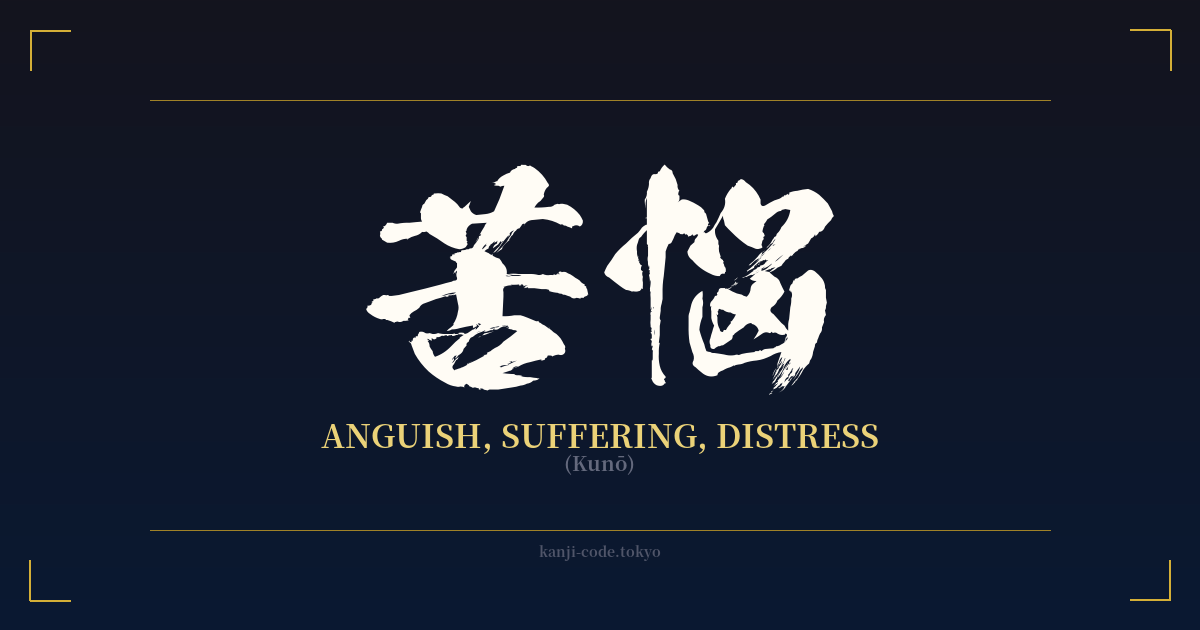
✍️ 苦悩 (Kunō) — Cultural Context
苦悩 (Kunō) is a Japanese word that delves far deeper than simple sadness or worry. It represents a profound, often prolonged state of mental and spiritual anguish, distress, and agony. It’s the kind of suffering that weighs on the soul, stemming from deep internal conflict, existential crises, or overwhelming life circumstances.
The concept is deeply intertwined with Buddhist philosophy, which has profoundly shaped Japanese culture. The first character, 苦 (ku), is the same character used for Dukkha, the First Noble Truth in Buddhism—the fundamental unsatisfactoriness and suffering of life. Kunō, therefore, carries this philosophical weight, describing not just a fleeting feeling but a core aspect of the human condition.
In Japanese literature and art, Kunō is a recurring theme. Classic works like Natsume Sōseki's "Kokoro" explore the deep anguish of its characters, grappling with guilt, isolation, and modernity. Modern manga and anime, from "Berserk" to "Neon Genesis Evangelion," are famous for their unflinching portrayals of characters consumed by Kunō, battling inner demons and external horrors. These narratives use Kunō to explore complex themes of trauma, resilience, and the search for meaning in a painful world.
While 苦しみ (kurushimi) can refer to physical or general pain, and 悩み (nayami) often refers to more mundane worries, Kunō is reserved for a more severe, torturous mental state. It's the word you would use to describe the agony of a profound betrayal, the despair of losing a loved one, or the torment of a life-altering dilemma. It speaks to a struggle that is both internal and existential, a battle fought within the confines of one's own heart and mind.
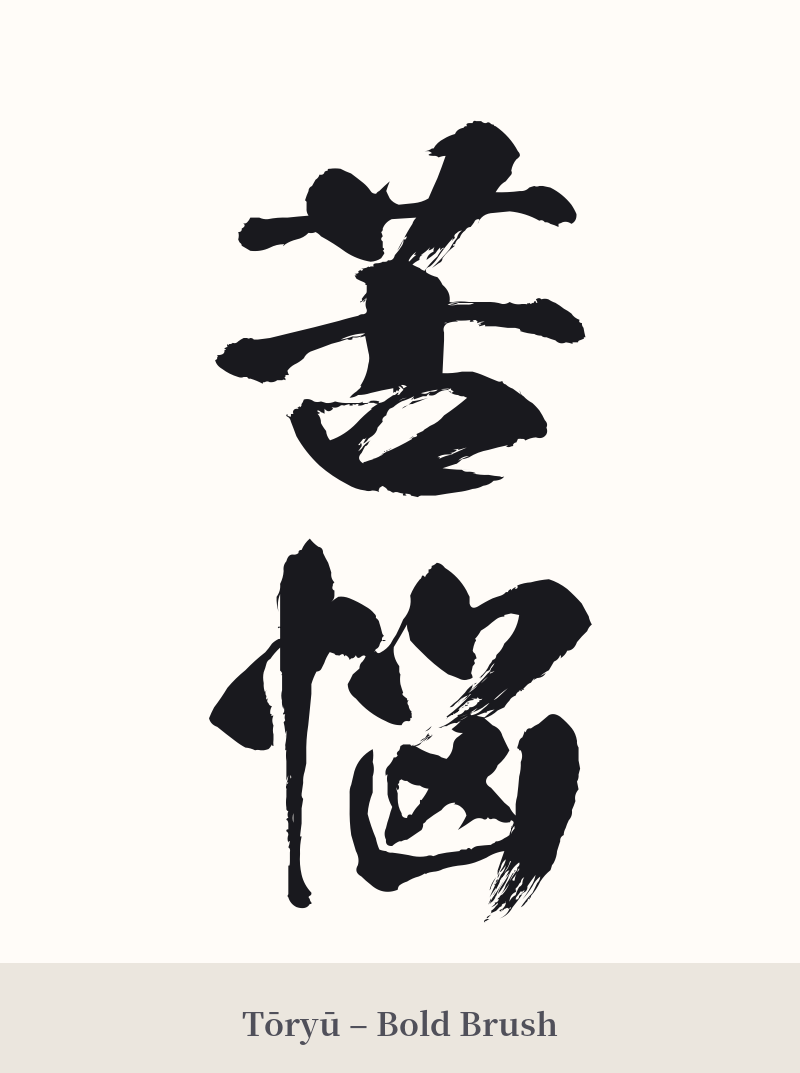
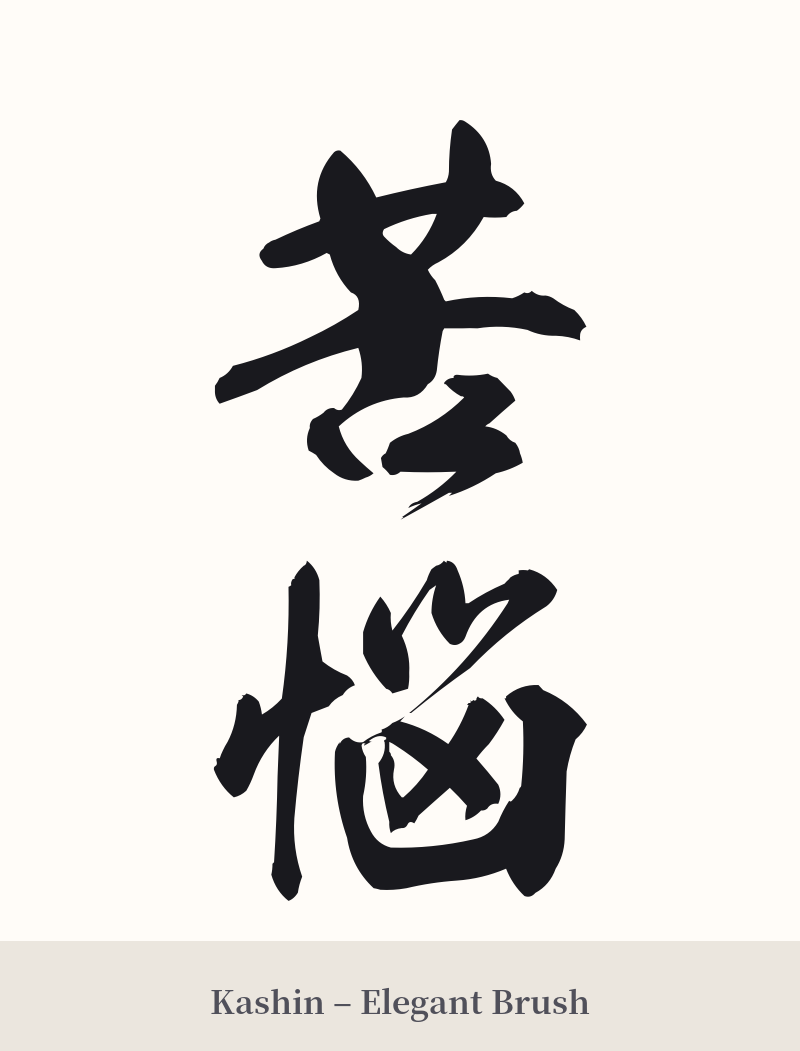
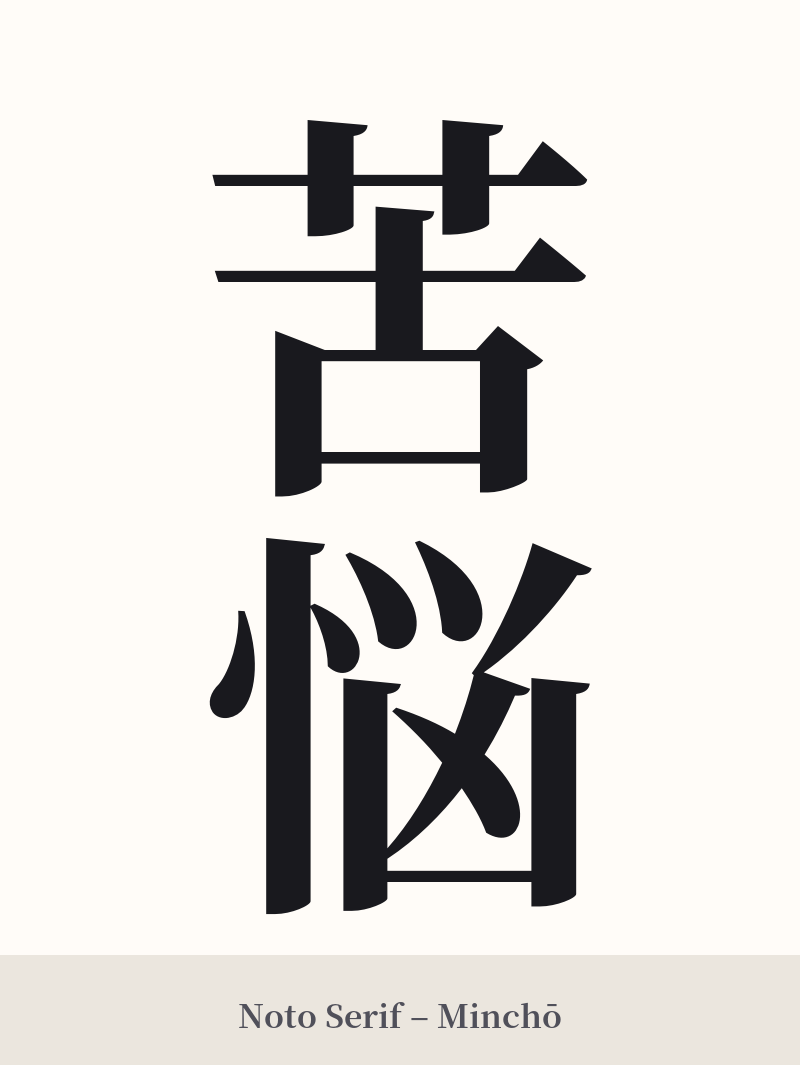
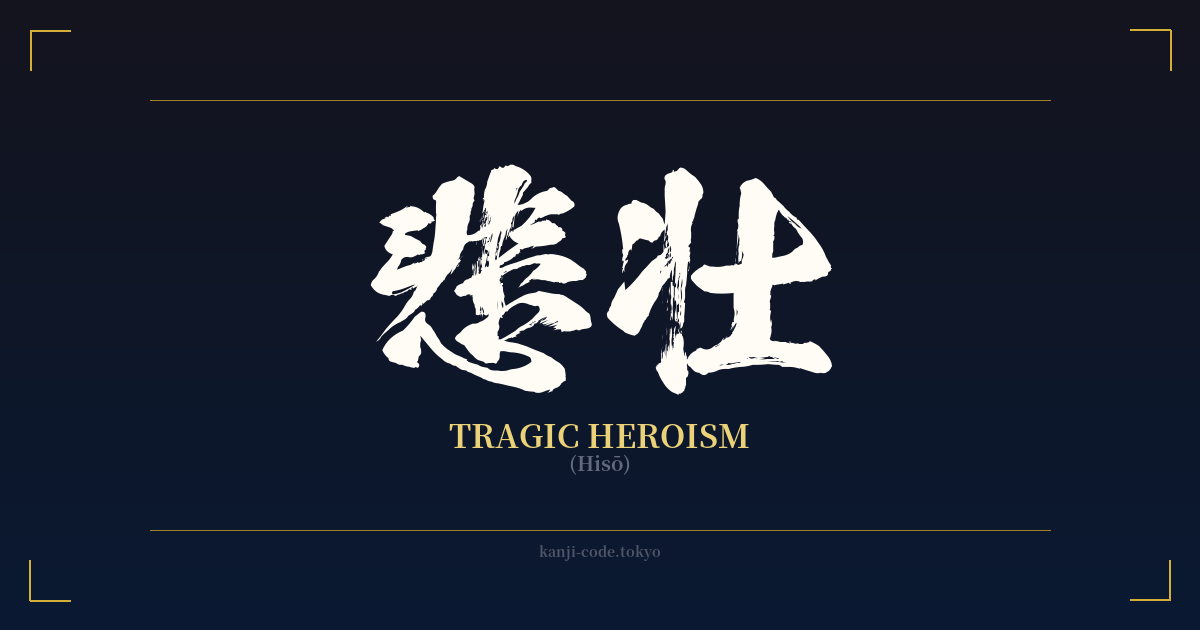
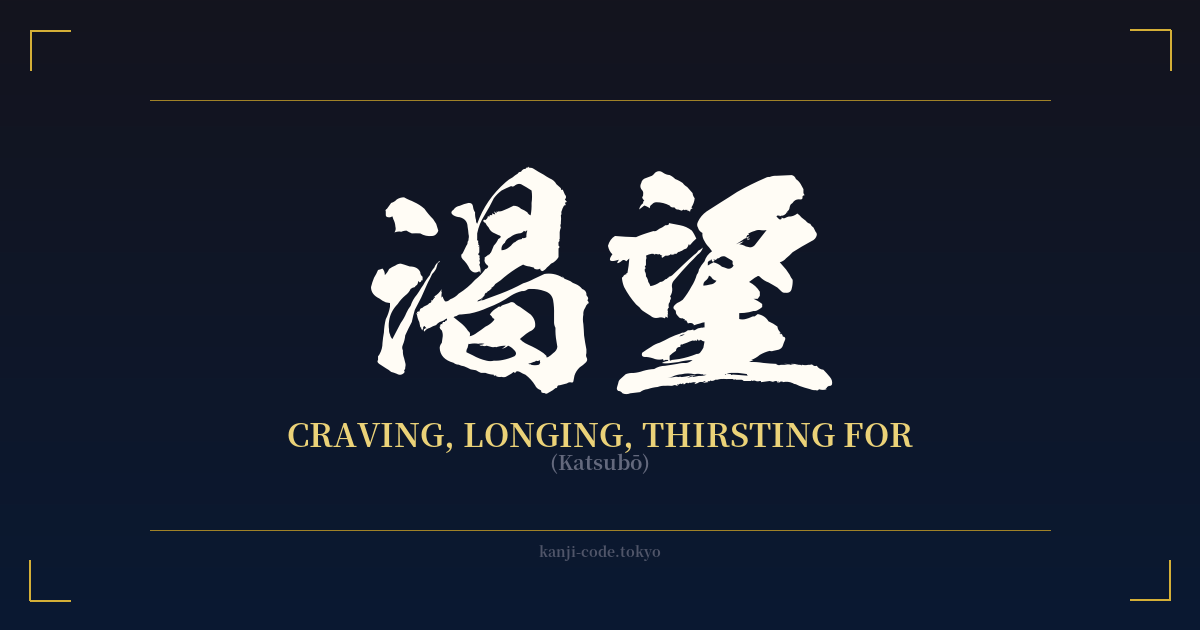
🖌️ Font Styles for 苦悩
The same kanji can look dramatically different depending on the calligraphy style. Choose a font that matches the mood you want for your tattoo or design.
🎨 Tattoo Suitability
📐 Tattoo Design Guide
A tattoo of 苦悩 is a heavy and personal statement. The design should reflect this weight and intention.
– Placement: Areas associated with internal feelings or burdens are fitting, such as the chest over the heart, the upper back between the shoulder blades, or the inner forearm. A vertical orientation on the spine can create a powerful visual.
– Font Style: The choice of font can drastically alter the mood. A rough, semi-cursive, or 'scratchy' calligraphy (shodō) style can emphasize the pain and struggle. Conversely, a clean, sharp Minchō or Gothic font can represent a more contained, stoic, or intellectualized form of anguish.
– Visual Elements: To shift the narrative from pure suffering to overcoming it, consider adding symbolic imagery. A lotus flower rising from below the kanji signifies purity and enlightenment emerging from mud. Kintsugi-style cracks running through or around the kanji can represent healing and finding beauty in imperfection. A broken chain or a bird taking flight from the characters can also symbolize liberation from this suffering.
Comments