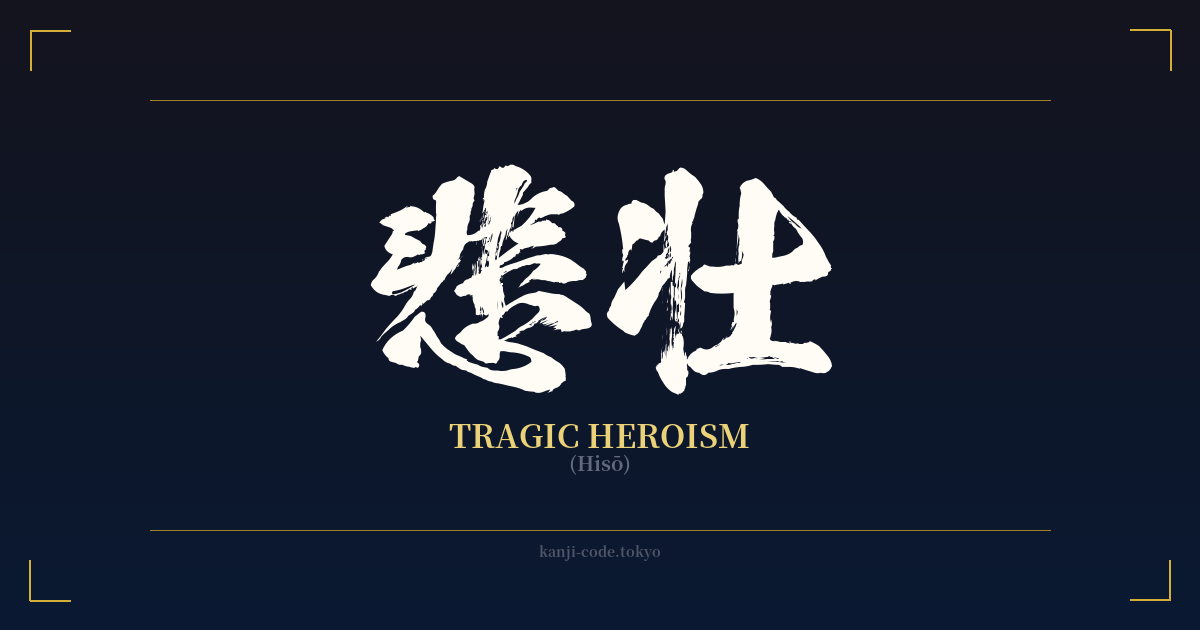
✍️ 悲壮 (Hisō) — Cultural Context
悲壮 (Hisō) is a deeply resonant term in Japanese culture that defies simple translation. While it's often rendered as 'tragic heroism' or 'pathos,' its essence is more nuanced. It describes a state of solemn grandeur and determination in the face of a grim, often tragic, fate. It is not about wallowing in sadness, but about finding a sublime beauty and dignity in a heroic struggle, even when that struggle is doomed.
This concept is woven into the fabric of Japanese history and literature. Think of the classic tale of the 47 Rōnin. Their quest for revenge to honor their fallen master, knowing it would end in their own state-mandated suicide (seppuku), is the epitome of Hisō. Their actions were tragic, yet their unwavering loyalty and resolve are seen as heroically beautiful. They chose honor and duty over life itself, and in that choice, they achieved a kind of noble immortality.
Hisō is distinct from simple sadness (悲しみ, kanashimi) because of the element of '壮' (sō), which means 'grandeur' or 'robustness.' This kanji elevates the emotion from personal grief to something magnificent and admirable. It’s the feeling you get watching a lone warrior make a final stand against an overwhelming army, or an athlete pushing their body to the limit in a valiant but losing effort. There is no victory, but there is immense honor and spirit.
In modern Japan, the term might be used to describe the spirit of a team fighting impossible odds in a sports match, or the quiet determination of communities rebuilding after a natural disaster. It represents the conscious choice to act with courage and dignity, fully aware of the potential for a sorrowful outcome. It’s the beauty of a cherry blossom, which reaches its peak splendor just before scattering in the wind—a poignant, heroic, and beautiful end. Hisō finds strength not in winning, but in the nobility of the fight itself.
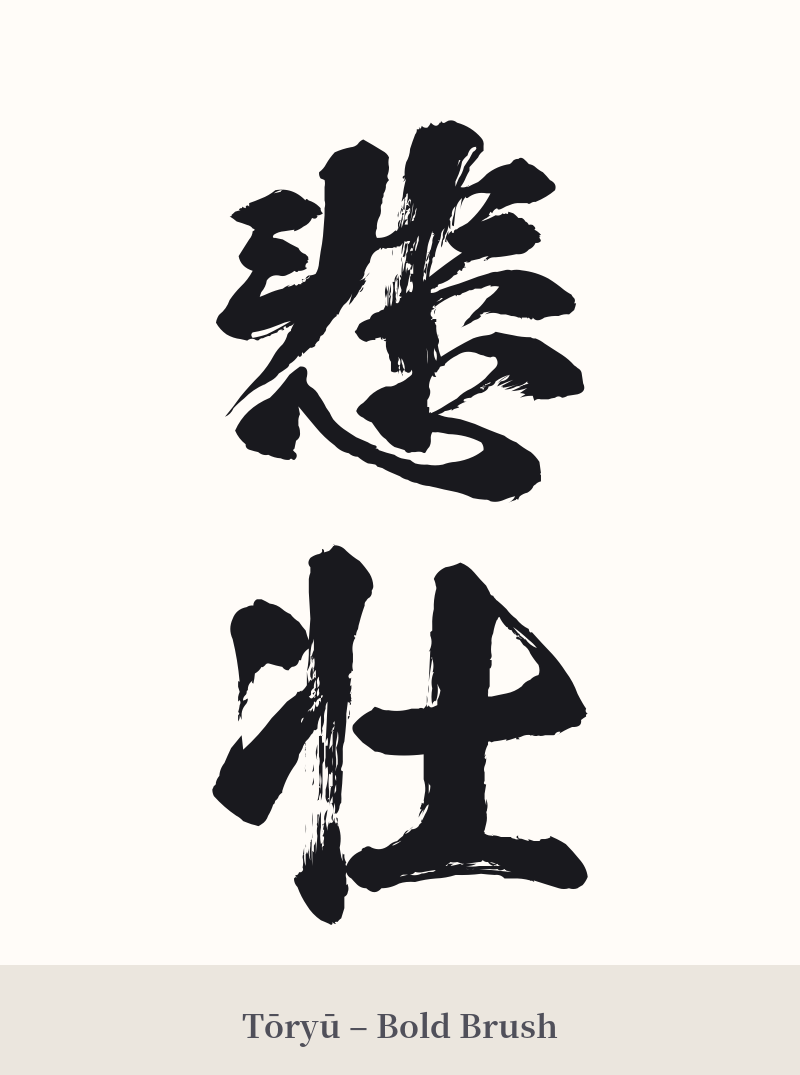
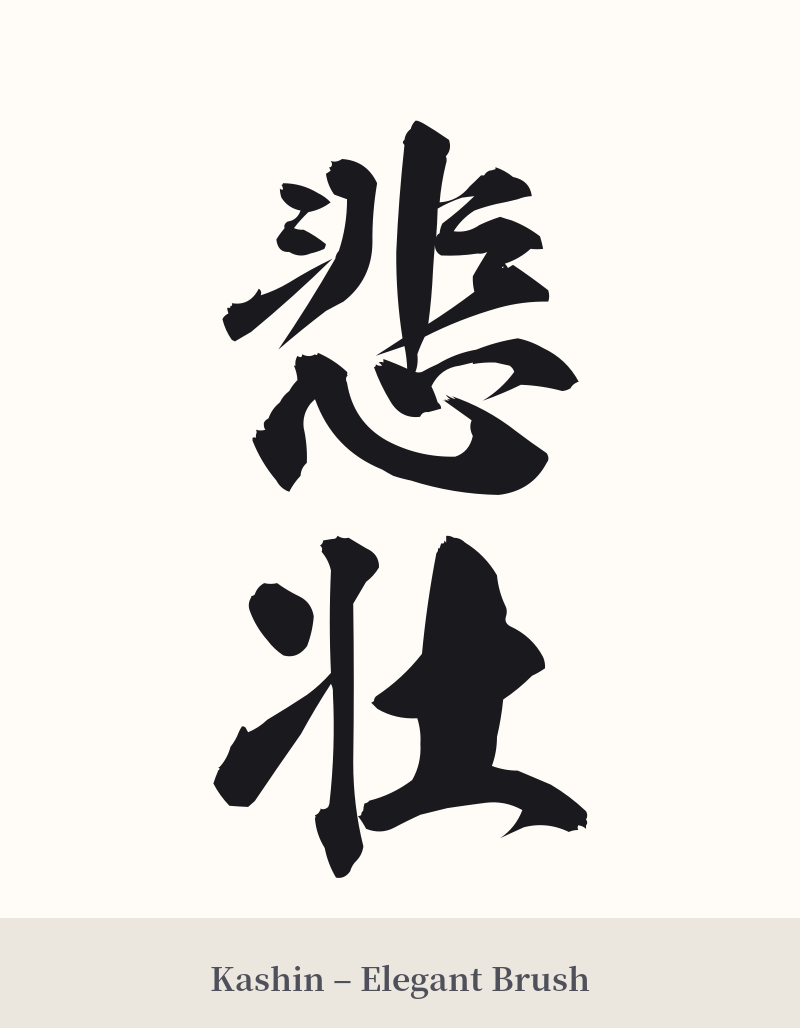
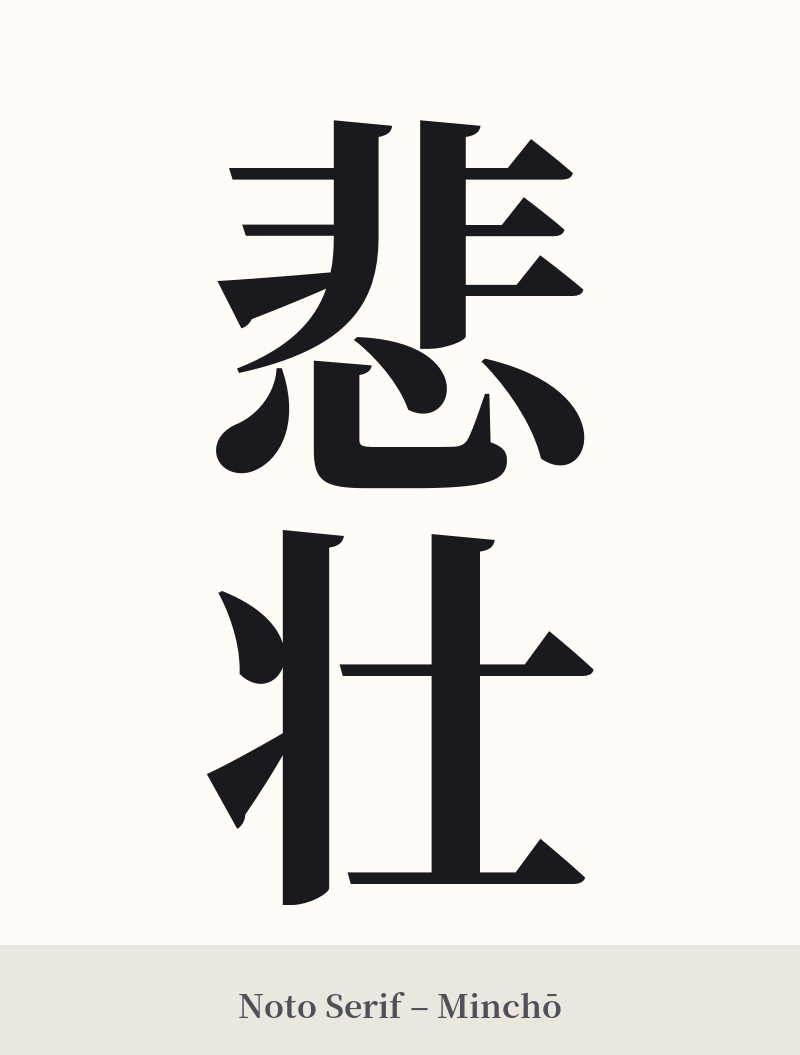
🖌️ Font Styles for 悲壮
The same kanji can look dramatically different depending on the calligraphy style. Choose a font that matches the mood you want for your tattoo or design.
🎨 Tattoo Suitability
📐 Tattoo Design Guide
The powerful and somber nature of 悲壮 (Hisō) lends itself to thoughtful design choices that honor its meaning.
– Placement: Consider areas that feel personal and strong. A vertical placement on the forearm allows for a classic calligraphic look. The back of the shoulder or along the calf can also provide a strong canvas. For a more private and intimate tattoo, the ribs or chest are excellent choices.
– Font Style: A dynamic, semi-cursive brush script (gyōsho) is highly recommended. This style can capture the emotional tension and heroic energy within the word. For a more solemn and dignified feel, a clean and formal block script (kaisho) would emphasize the 'grandeur' aspect of the kanji.
– Visual Tips: While the kanji stands powerfully on its own, it can be paired with complementary imagery. Consider a backdrop of fading cherry blossoms to represent transient beauty and noble sacrifice. A single, falling maple leaf could also evoke a similar sense of beautiful melancholy. Avoid overly aggressive imagery; the strength of Hisō is internal and dignified, not outwardly violent.
Comments