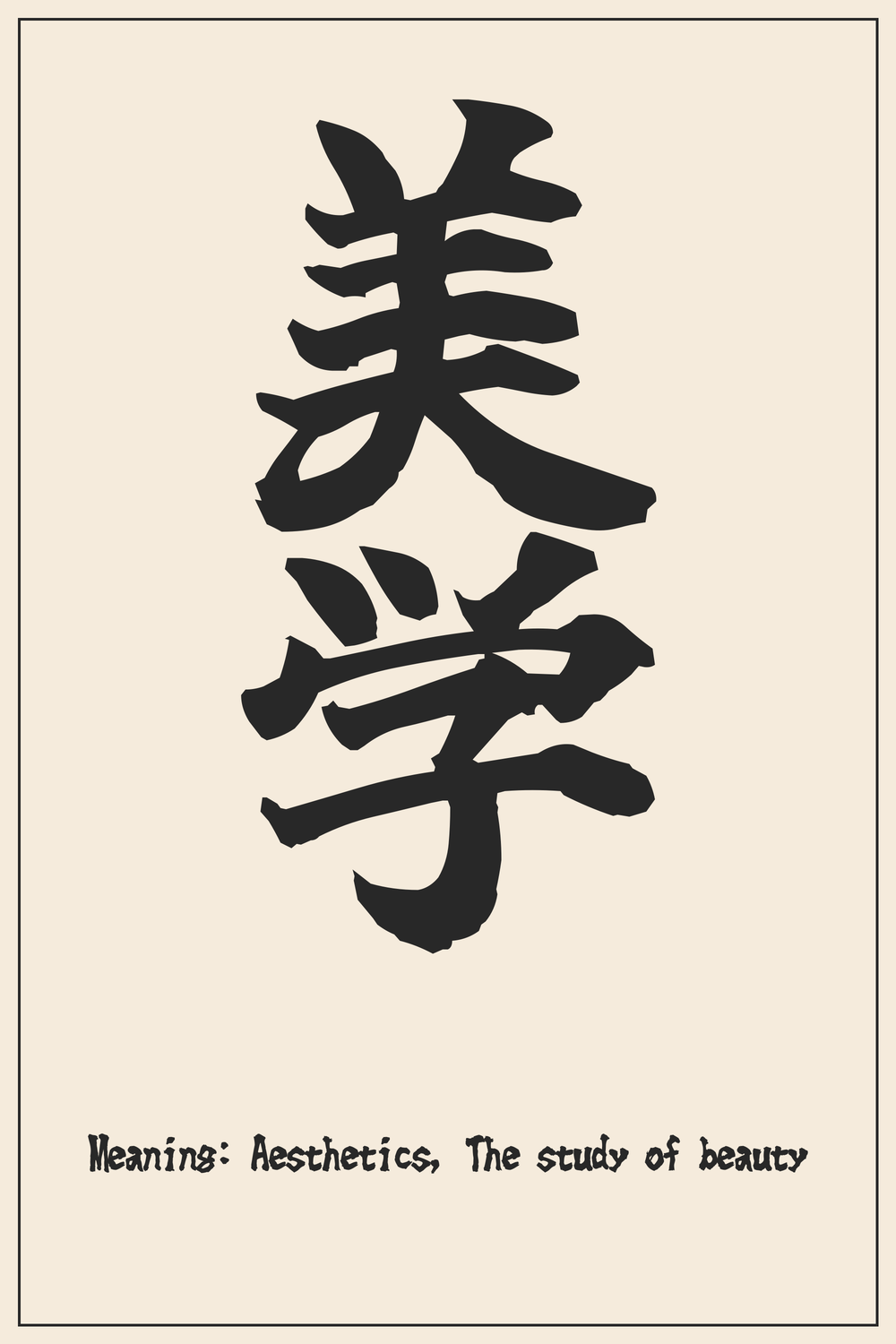
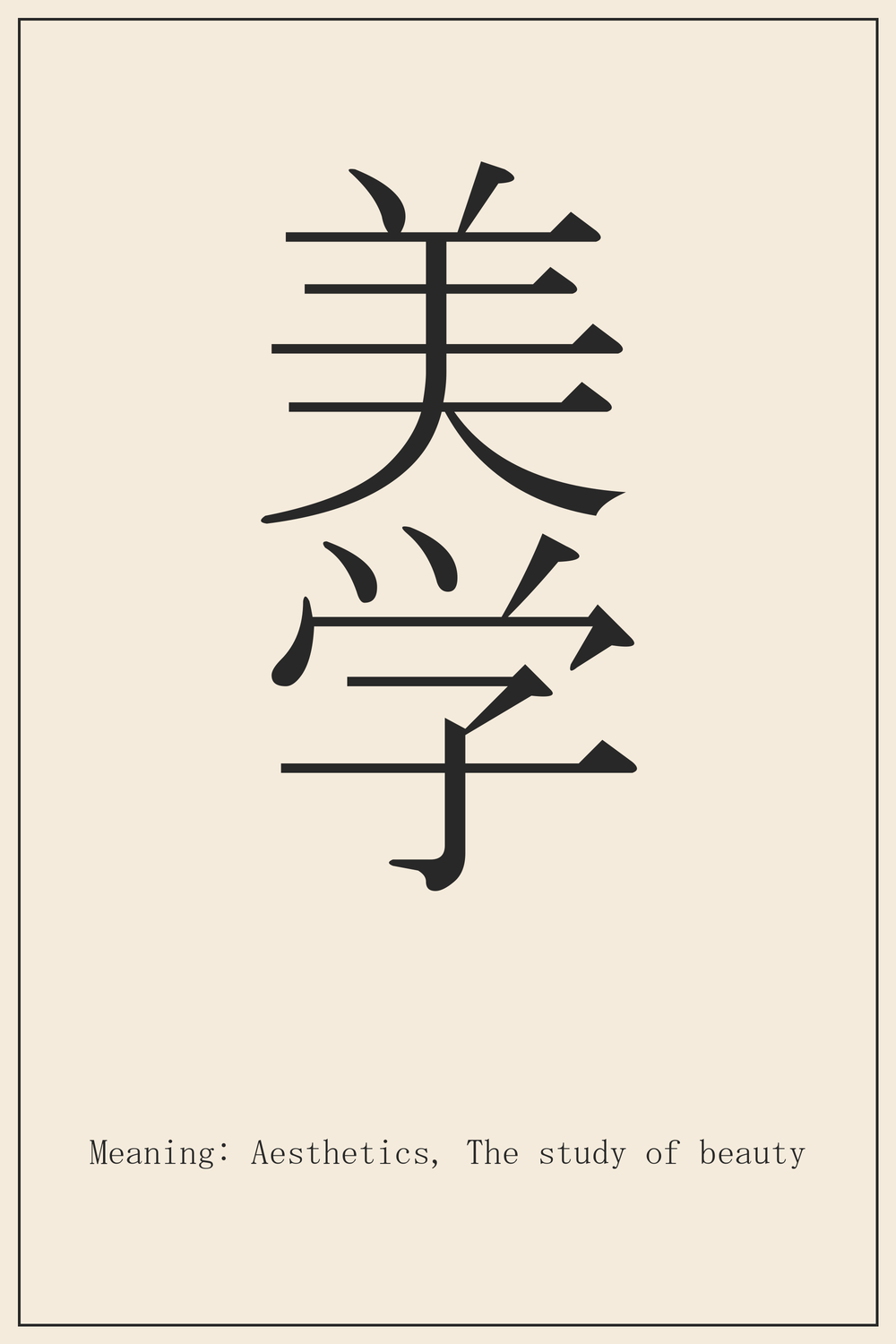
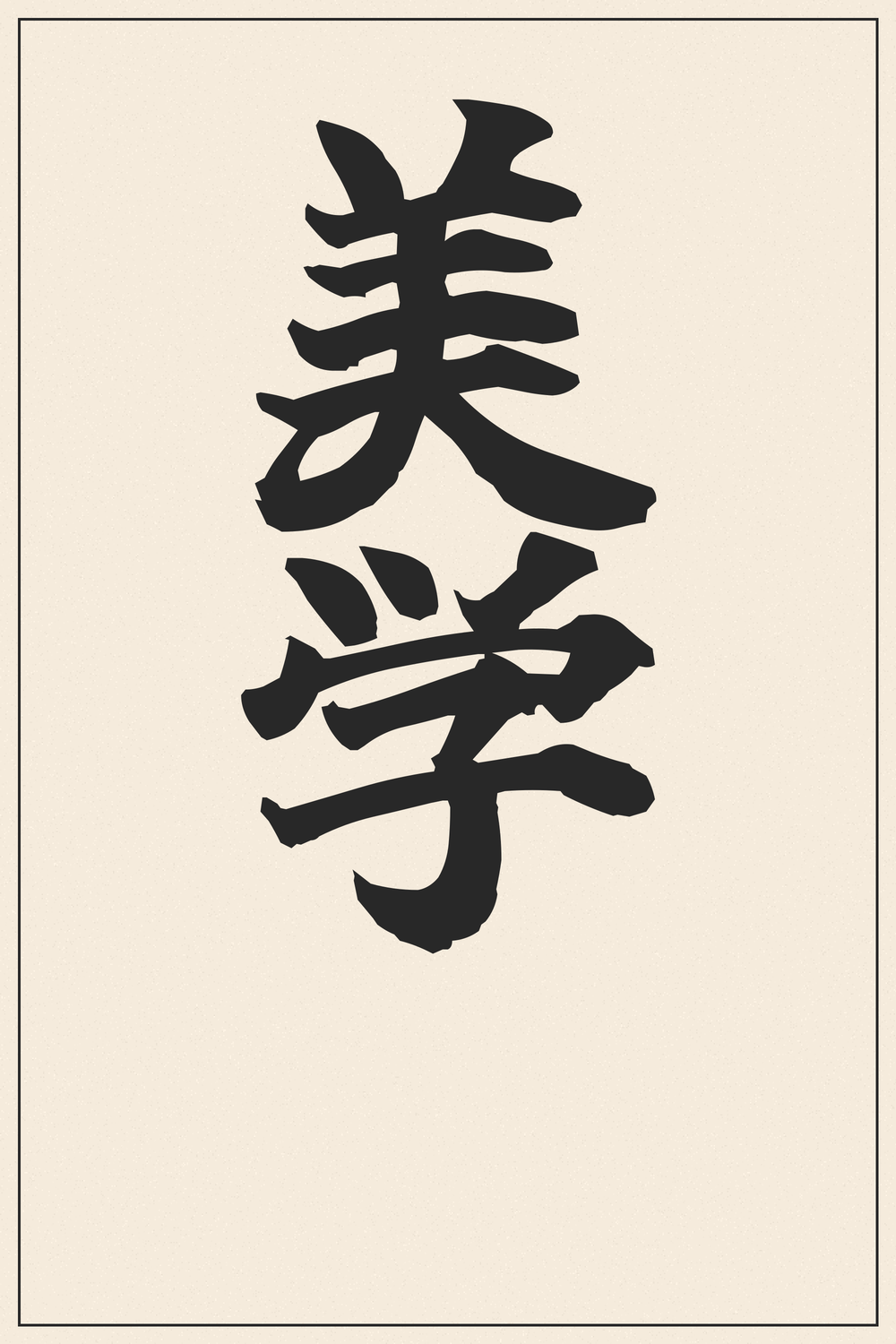
Delve into the profound world of ‘Bigaku,’ where the essence of beauty is explored. This Kanji compound represents the philosophical inquiry into aesthetics, offering a sophisticated symbol for those who appreciate art and intellectual depth.
The atmosphere of a Kanji character changes dramatically depending on the font style. A character that looks elegant in a brush style might look bold and modern in a different font.
Recommendation:
Since a tattoo is permanent, we strongly recommend comparing various font styles beyond what is shown here. Use our designs as a trusted reference for the correct structure, but feel free to explore different artistic variations to find the perfect match for your vision.
The Deep Meaning Behind 美学
The term ‘美学’ (Bigaku) literally translates to ‘beauty study.’ It is a modern Japanese coinage, adopted to translate the Western concept of ‘aesthetics’ which emerged in the 18th century. The character ‘美’ itself depicts a person adorned with a large head ornament, symbolizing beauty and grace, while ‘学’ evolved from an image of hands teaching a child in a house, signifying learning and knowledge.
In Japanese culture, the appreciation of beauty is deeply ingrained, often linked to impermanence (mono no aware) and simplicity (wabi-sabi). ‘Bigaku’ formalizes this intrinsic value, establishing it as a field of rigorous intellectual inquiry. It reflects the nation’s profound respect for both artistic expression and scholarly pursuit.
Kanji Breakdown
The compound ‘美学’ is formed from two powerful and evocative characters, each contributing significantly to its overall meaning.
Meaning: Beauty, beautiful. The kanji ‘美’ represents beauty or beautiful. Its ancient form depicted a person wearing an elaborate feathered headdress, signifying adornment and aesthetic appeal. It embodies grace, elegance, and visual delight.
Meaning: Study, learn, science. The character ‘学’ signifies study, learning, or knowledge. Its original form depicted a roof (representing a school or building) with hands holding books or teaching, emphasizing the act of acquiring wisdom and intellectual pursuit.
Conclusion
The Kanji compound ‘美学’ is a sophisticated representation of aesthetics—the philosophical exploration of beauty and art. It speaks to a deep appreciation for artistic expression, intellectual curiosity, and the pursuit of understanding what makes something beautiful.
Choosing ‘美学’ for a tattoo is a declaration of your commitment to intellectual growth and your appreciation for beauty in all its forms. Its balanced characters and profound meaning make it a truly inspiring and elegant choice, suitable for a prominent display that celebrates both mind and spirit.
Comments