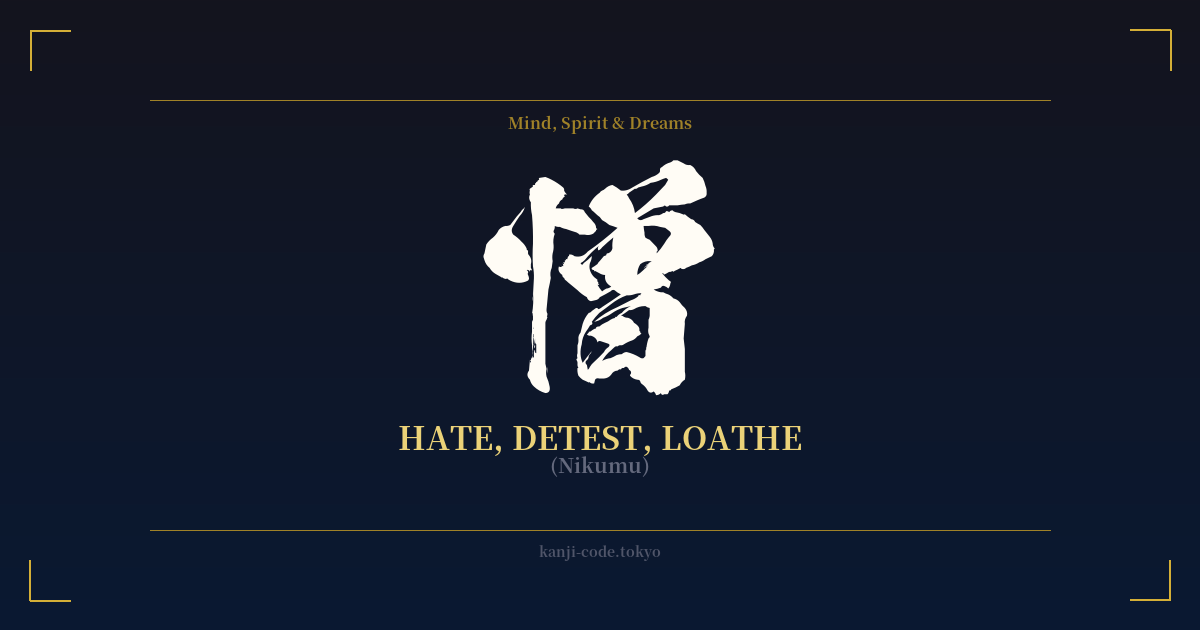
✍️ 憎 (Nikumu) — Cultural Context
The kanji 憎 (niku) is one of the most direct and potent characters in the Japanese language for expressing a negative emotion. It embodies a deep-seated feeling of hatred, loathing, and detestation. Its raw power is evident in its very structure: the left side is the 'heart' radical (心), indicating that this is an emotion rooted deep within one's being. The right side, 曾, acts as a phonetic component but also carries a sense of 'layering' or 'accumulation,' visually suggesting a buildup of negative feelings in the heart until they solidify into pure hatred.
In everyday Japanese, this character is not used lightly. The verb form, 憎む (nikumu), means 'to hate,' and the noun, 憎しみ (nikushimi), means 'hatred.' These words are reserved for profound feelings of animosity, far stronger than simple dislike. To say you 'nikumu' something or someone is a serious declaration.
It's important to distinguish 憎 from similar emotions. While 怒り (ikari) is a flash of anger and 恨み (urami) is a lingering grudge or resentment, often born from being wronged, 憎しみ (nikushimi) is a more active, all-consuming form of hatred. It is the emotion that drives villains in countless stories, from folklore to modern anime. Think of the onryō (怨霊), the vengeful ghosts of Japanese tales, whose entire existence is fueled by a burning hatred for the living who wronged them. This character captures that kind of profound, world-altering animosity.
There is a fascinating Japanese proverb, 「憎まれっ子世にはばかる」(Nikumarekko yo ni habakaru), which translates to 'A hated child makes their way in the world.' This suggests that those who are disliked or unconventional often end up being successful or influential, perhaps because they are not bound by the need for social approval. It adds a layer of complexity, acknowledging that being the object of hatred, or being a non-conformist, can paradoxically lead to a form of power. However, this does not redeem the inherent negativity of the character itself; it merely observes a social phenomenon related to it.
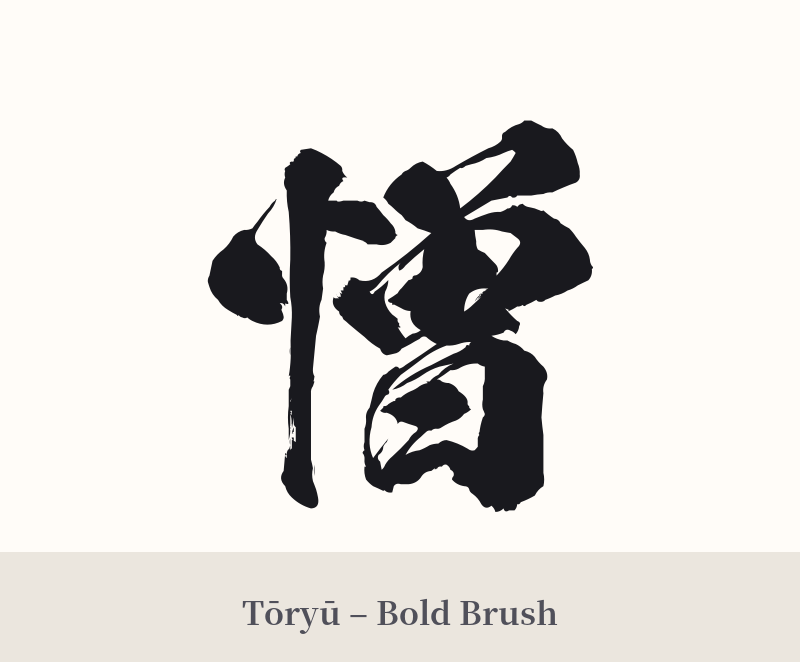
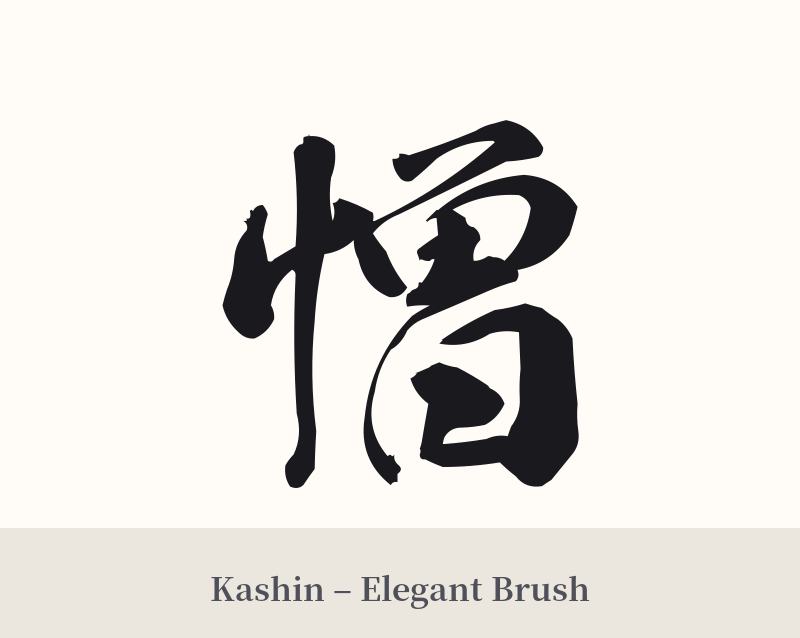
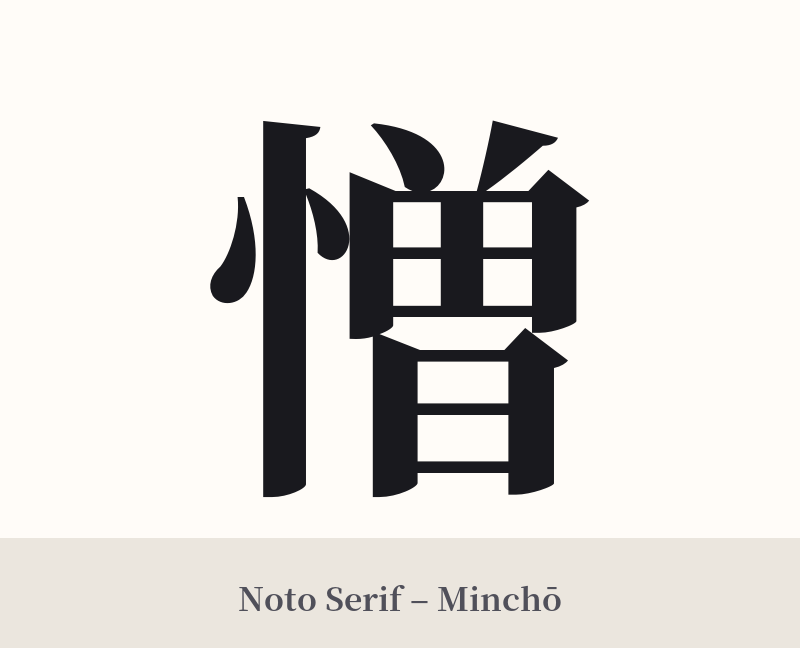
🖌️ Font Styles for 憎
The same kanji can look dramatically different depending on the calligraphy style. Choose a font that matches the mood you want for your tattoo or design.
🎨 Tattoo Suitability
📐 Tattoo Design Guide
Given the intense negativity of this kanji, careful consideration of its design and placement is crucial. If you are set on this character, here are some recommendations:
– Placement: Consider a private, personal placement like the ribs, inner bicep, or back of a shoulder. A highly visible area like the forearm or neck would send a very aggressive and potentially confrontational message.
– Font Style: The style can dramatically alter the feeling. A chaotic, scratchy calligraphy (shodō) style can emphasize the raw, visceral nature of hate. In contrast, a sharp, angular Mincho or Gothic font can represent a colder, more calculated form of loathing.
– Accompanying Imagery: Pairing 憎 with other elements can help contextualize its meaning. For example, a design showing the kanji shattering or being broken could symbolize overcoming hatred. Alternatively, weaving it into a design with thorns or withered flowers can create a dark but artistic representation of the pain associated with this emotion.
Comments