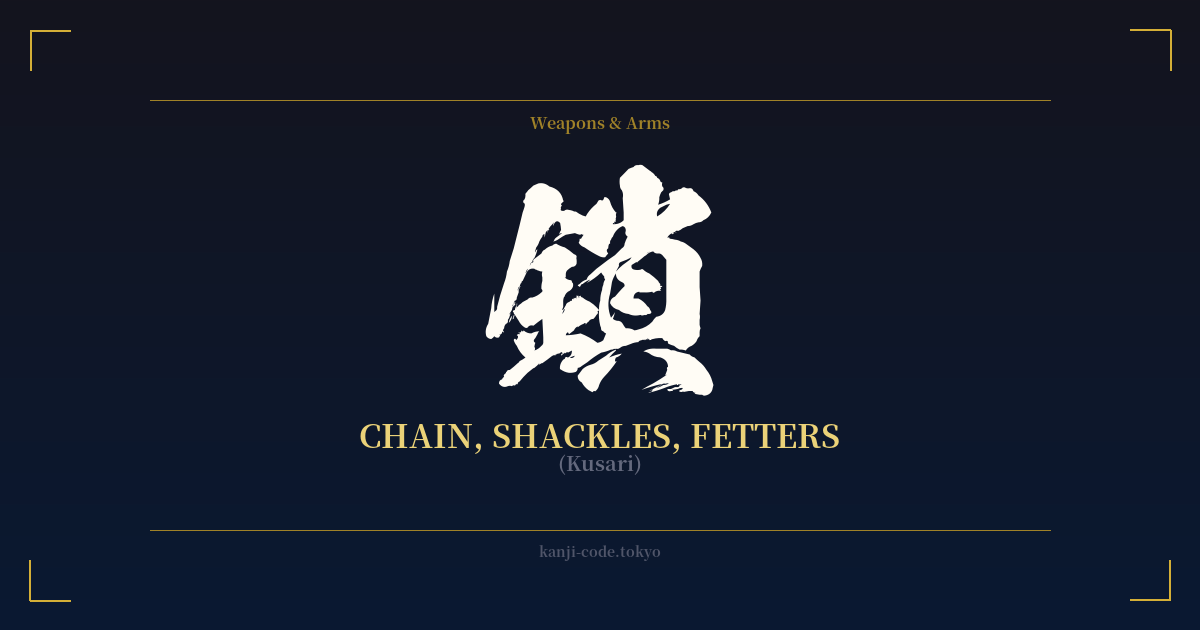
✍️ 鎖 (Kusari) — Cultural Context
The kanji 鎖 (kusari) is a visually and conceptually potent character, embodying the tangible weight of metal and the abstract idea of connection or restraint. Its construction tells a story: the left-side radical, 金 (kin), means 'metal' or 'gold,' firmly rooting the character in the world of physical, metallic objects. The right side provides the phonetic sound, but together they create a powerful image of interlinked metal.
Historically, the most literal meaning is that of a physical chain. This could be an anchor chain for a boat, a chain for locking a gate, or the sinister shackles used for prisoners. This association with binding and confinement is its most primal and powerful meaning, one that persists in the modern Japanese imagination.
This imagery was famously adapted into weaponry. The kusarigama (鎖鎌), a sickle attached to a long chain with an iron weight at the end, is an iconic weapon from feudal Japan, often associated with ninja and samurai. It represents a mastery of connection and distance, using the chain not as a restraint but as a flexible, unpredictable tool of combat. In martial arts and pop culture, the kusarigama symbolizes ingenuity and deadly grace, turning a simple chain into a formidable weapon.
Metaphorically, 鎖 extends into profound philosophical territory. It's often used to describe an inescapable sequence or connection, as in 食物連鎖 (shokumotsu rensa), the 'food chain,' or 連鎖反応 (rensa hannō), a 'chain reaction.' In this sense, the chain is a neutral force of cause and effect.
However, it frequently carries a more somber, deterministic tone. The concept of the 'chains of karma' or 'chains of fate' uses 鎖 to evoke a sense of being bound to a destiny or a past that one cannot escape. It speaks to burdens, duties, and societal pressures that can feel like fetters. While 絆 (kizuna) is used for the positive, emotional bonds between people, 鎖 often represents the ties that bind, for better or worse, sometimes against one's will.
In modern times, you see the concept in loanwords like チェーン (chēn) for 'chain stores,' but the kanji 鎖 itself retains its heavy, historical weight. It can be found in words like 閉鎖 (heisa), meaning 'closure' or 'lockdown,' reinforcing its connection to sealing, blocking, and restraining.
🖌️ Font Styles for 鎖
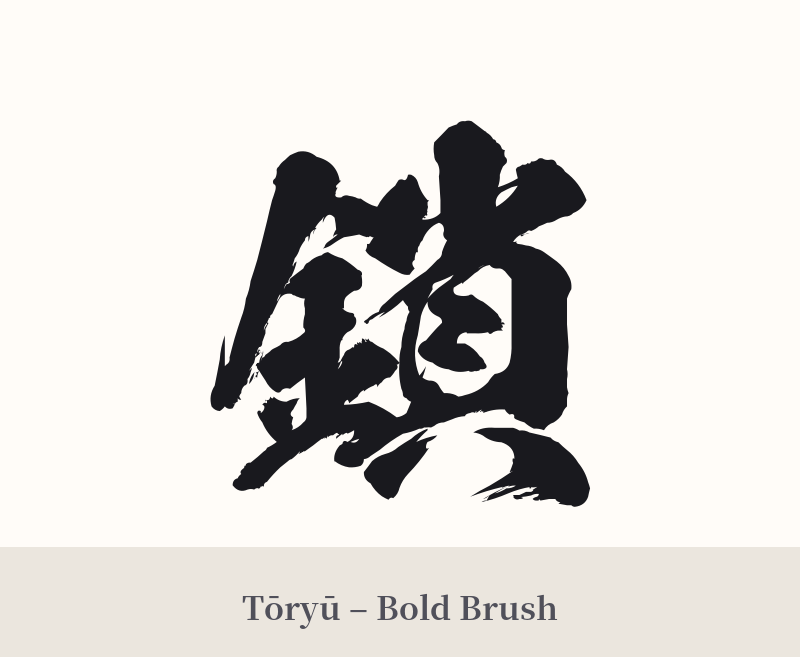
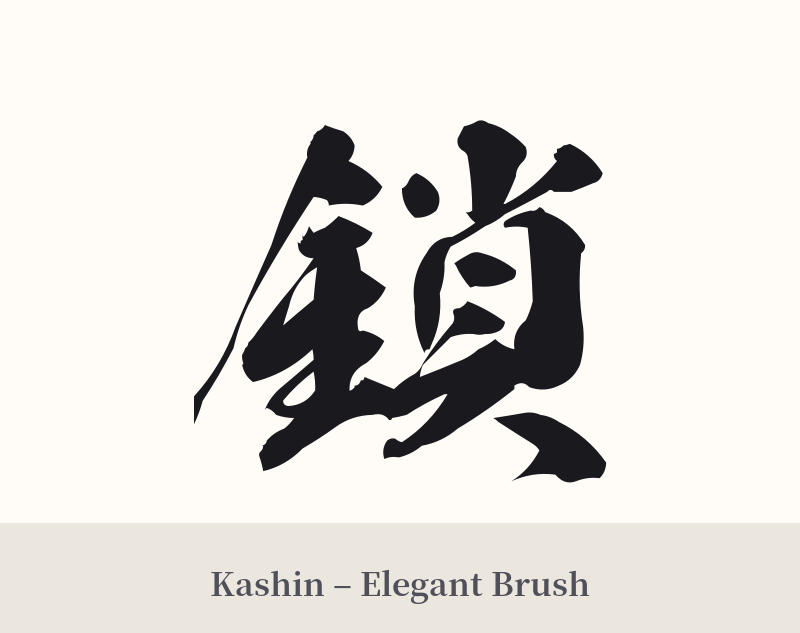
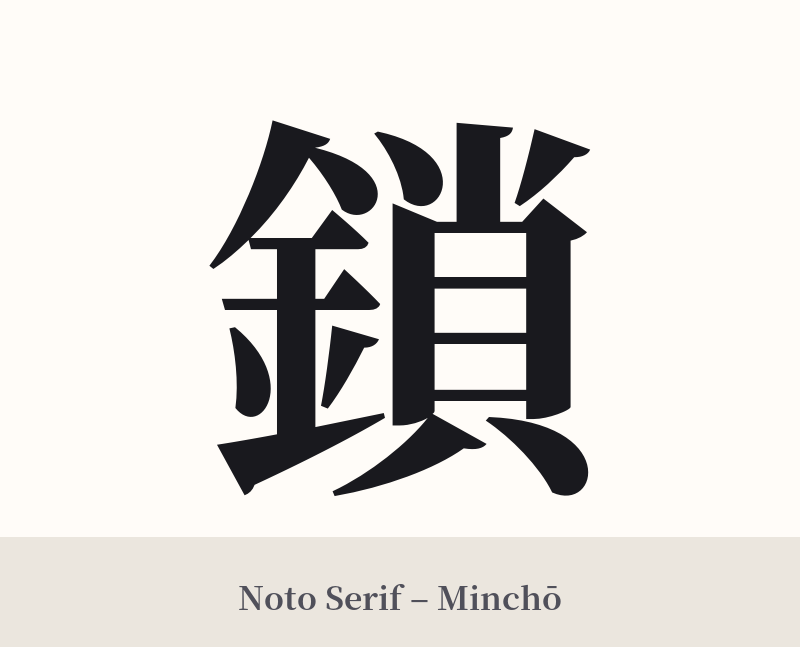
The same kanji can look dramatically different depending on the calligraphy style. Choose a font that matches the mood you want for your tattoo or design.
🎨 Tattoo Suitability
📐 Tattoo Design Guide
For a tattoo of 鎖, the design should honor its visual complexity and symbolic weight.
– Placement: This kanji works well in vertical placements like the forearm, calf, or along the spine. Horizontally, it can fit on the chest or upper back. It needs enough space to ensure the detailed strokes remain clear over time.
– Font Style: A bold, angular script like Kaisho or a blocky Mincho style can emphasize the 'metal' and 'shackle' aspect, giving it a strong, industrial feel. Conversely, a flowing, semi-cursive style (Gyosho) could be used to mimic the look of a physical chain draping or twisting.
– Visual Embellishments: Consider integrating the kanji with imagery of an actual chain. The character could be depicted as being made of chain links, or have a broken chain wrapped around it to symbolize breaking free from restraints. Shading it to have a metallic texture—like rusted iron or polished steel—can dramatically enhance its impact.
Comments