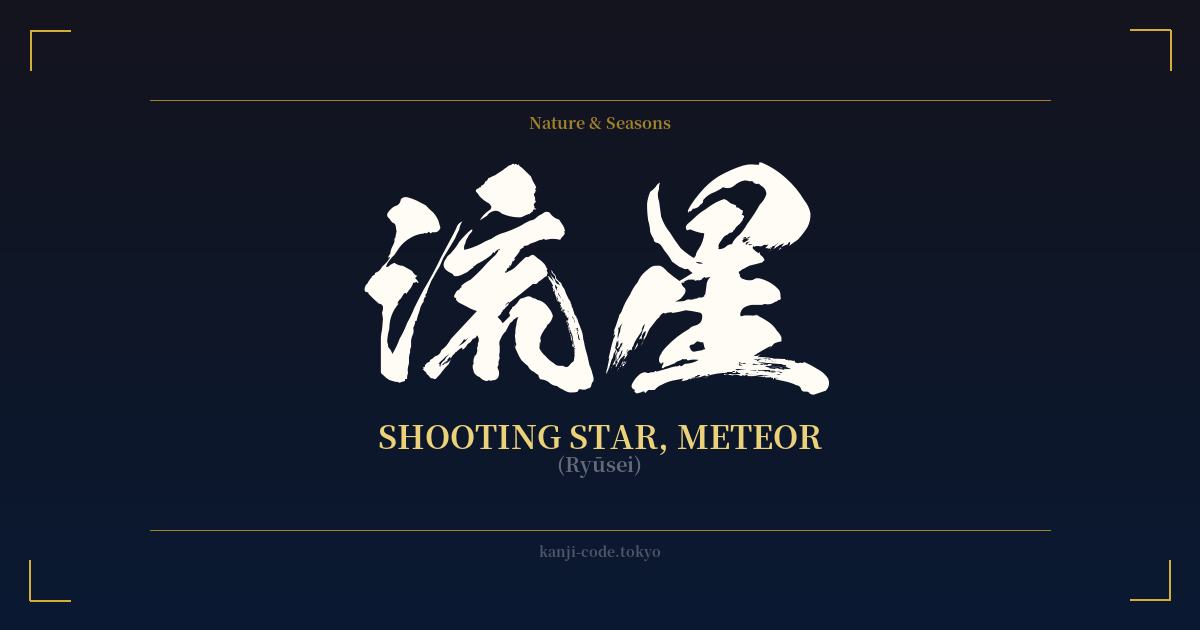
✍️ 流星 (Ryūsei) — Cultural Context
流星 (Ryūsei) is the Japanese word for a shooting star or meteor. The kanji composition itself is beautifully descriptive, combining 流 (ryū), meaning 'flow' or 'current,' with 星 (sei), meaning 'star.' Together, they paint a vivid picture of a 'flowing star,' perfectly capturing the transient, graceful arc of a meteor across the night sky.
In Japan, as in many cultures, shooting stars are a powerful symbol of hope and fleeting moments. The sight of a Ryūsei is often an occasion to make a wish, a tradition deeply embedded in the collective consciousness. This act connects a momentary celestial event to one's deepest personal desires, lending the word a magical, almost spiritual quality.
The concept of the 'flowing star' resonates deeply with a core Japanese aesthetic principle known as 'mono no aware' (物の哀れ). This is the gentle, wistful awareness of the transience of all things. A shooting star is the quintessential example: a brilliant, beautiful spectacle that appears in an instant and vanishes just as quickly. Its beauty is inseparable from its brevity, reminding us to cherish the present moment.
This imagery has made 流星 a recurring motif in Japanese art, literature, and music for centuries. From classic poetry, where it might symbolize a brief but passionate love affair, to modern pop culture, its presence is undeniable. The blockbuster anime film 'Your Name.' (君の名は。 – Kimi no Na wa.) uses a meteor shower as a central plot device, linking it to themes of destiny, connection, and catastrophic change, demonstrating the word's powerful narrative potential.
While scientifically understood as space debris burning up in the atmosphere, the poetic interpretation of 流星 remains dominant in the cultural sphere. It represents a bridge between the heavens and humanity, a random cosmic event imbued with profound personal meaning. It's a symbol not just of a wish, but of the possibility of that wish coming true, a flash of brilliance in the darkness.
🖌️ Font Styles for 流星
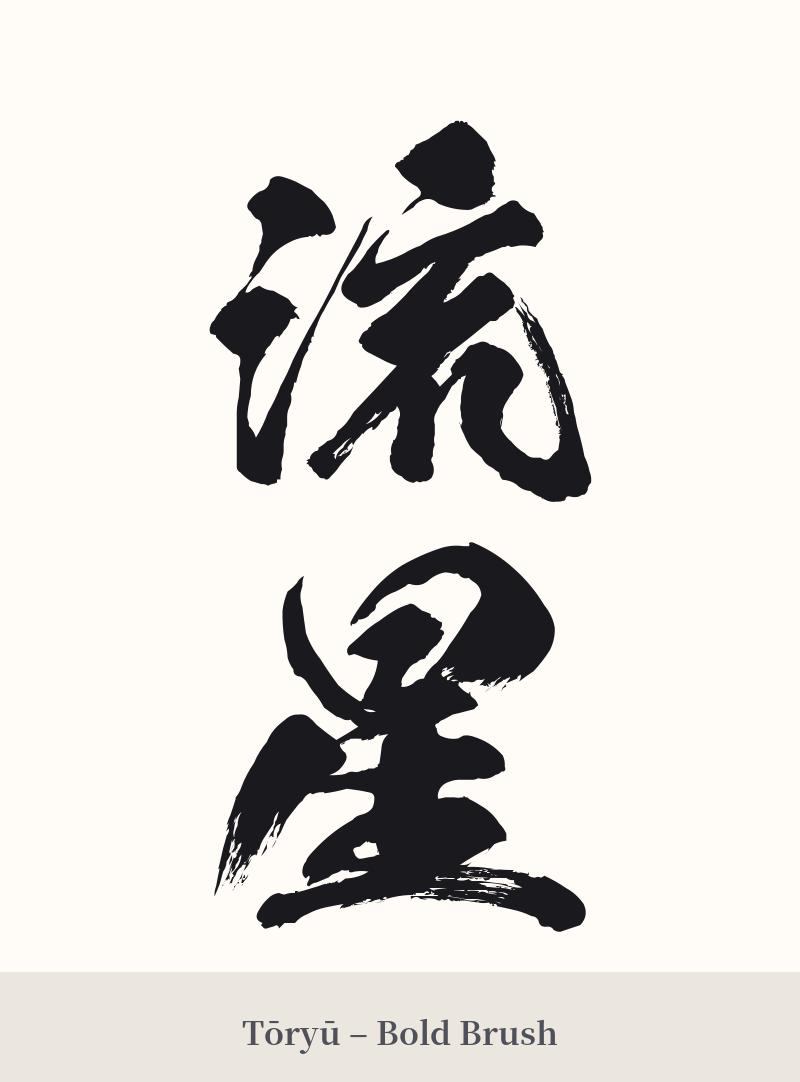
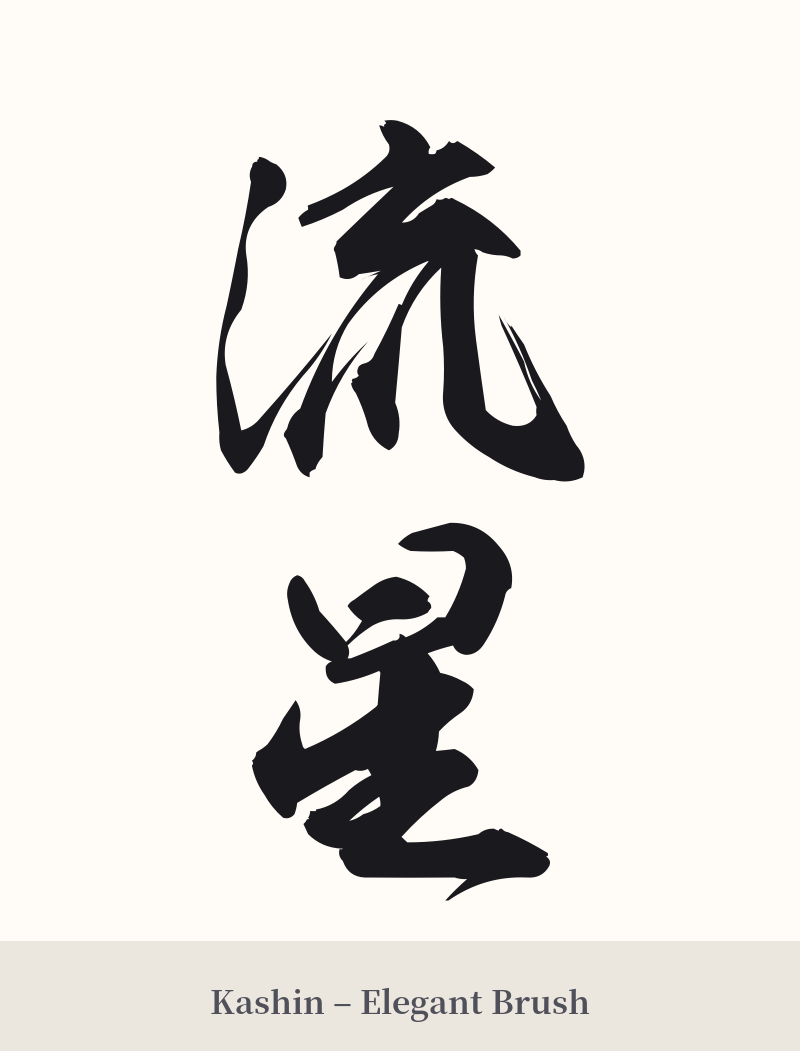
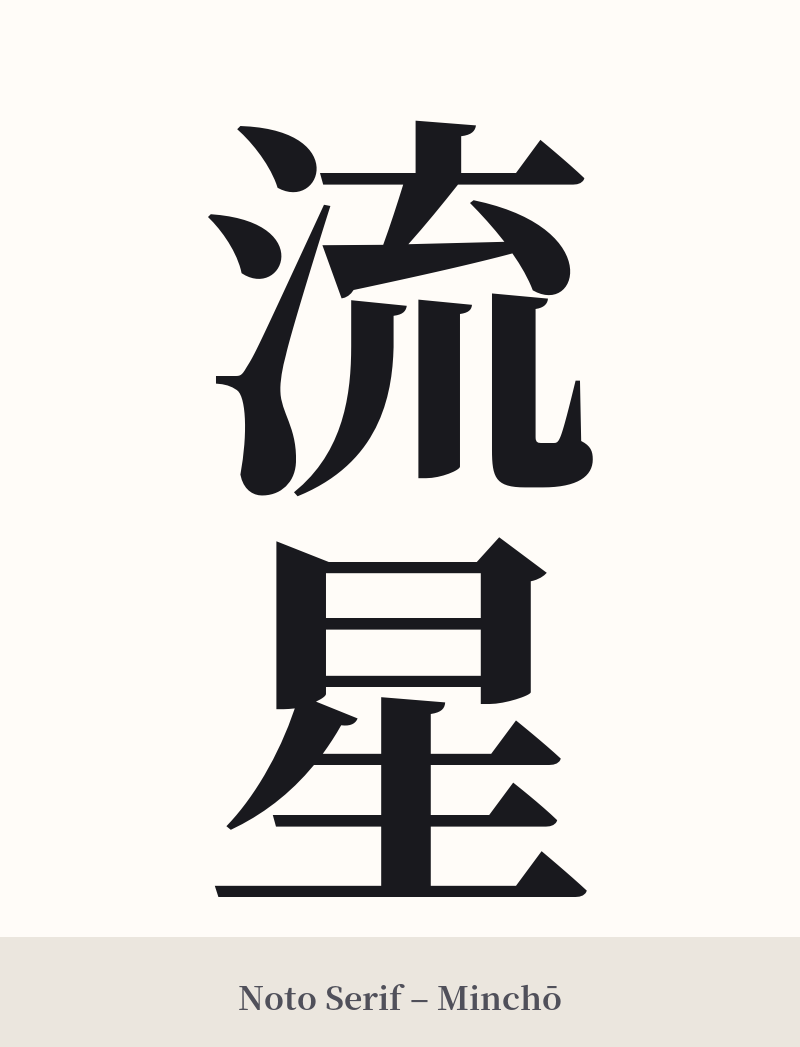
The same kanji can look dramatically different depending on the calligraphy style. Choose a font that matches the mood you want for your tattoo or design.
🎨 Tattoo Suitability
📐 Tattoo Design Guide
A 流星 tattoo offers many creative possibilities that emphasize its meaning of movement and light.
– Placement: Vertical placements are ideal for this two-character compound. Consider the spine, forearm, calf, or along the ribs to mimic the downward streak of a meteor.
– Font Style: A cursive or semi-cursive calligraphy style (gyōsho or sōsho) works exceptionally well, as the fluid strokes can echo the 'flowing' nature of the first kanji, 流. For a clearer, more defined look, a standard block script (kaisho) is a timeless choice.
– Visual Elements: Enhance the design by incorporating abstract elements. A trail of fading ink 'stardust' behind the kanji, a watercolor splash of deep blue or purple to represent the night sky, or even a single, bright dot of color within the 星 character can add a unique touch.
Comments