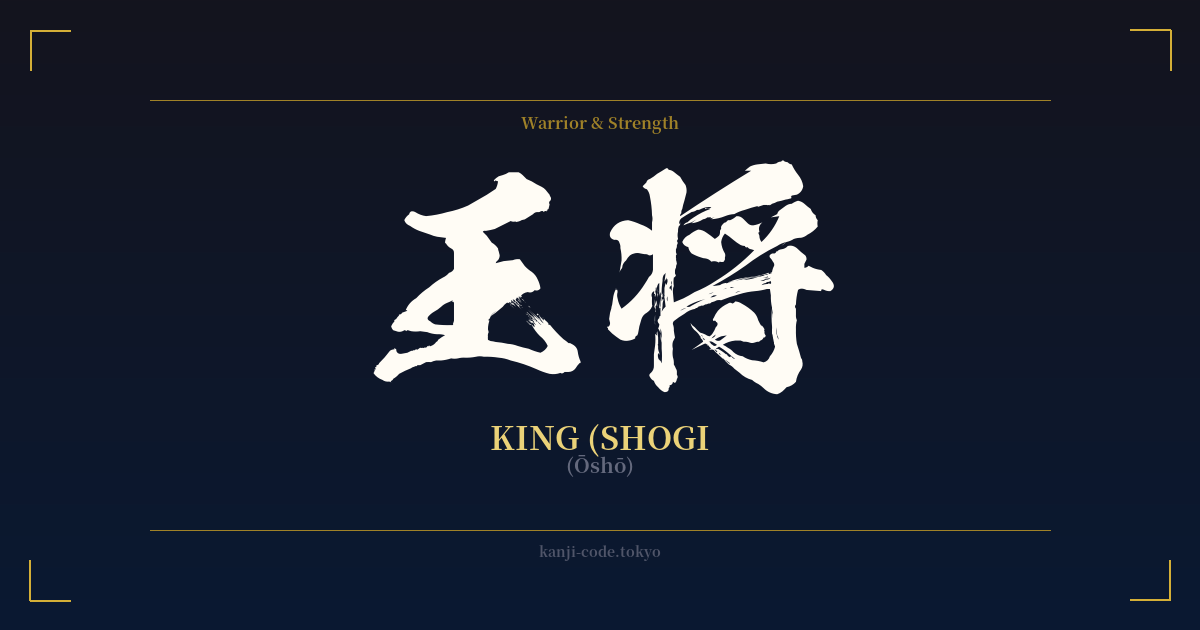
✍️ 王将 (Ōshō) — Cultural Context
王将 (Ōshō) translates to "King General" and represents the most crucial piece in Shogi, often called Japanese chess. Unlike the Western king, the Ōshō is not just a figure to be protected but the very heart of the battle, embodying both supreme authority and ultimate vulnerability. The entire game revolves around cornering and capturing the opponent's Ōshō, a move known as 'tsumi' (checkmate).
This word carries a profound weight beyond the game board. It symbolizes the pinnacle of strategic thinking, foresight, and the immense pressure of leadership. In Shogi, the player who controls the flow of the game and masterfully protects their Ōshō while threatening the enemy's is the one who achieves victory. This mirrors concepts in martial arts and business strategy, where the 'king' represents the core objective or the leader whose downfall means the collapse of the entire enterprise.
A fascinating aspect of Shogi culture is the existence of two king pieces: 王将 (Ōshō) and 玉将 (Gyokushō), or "Jade General." In professional and formal games, the senior or higher-ranking player uses the Ōshō, while the junior player uses the Gyokushō. This is a gesture of humility and respect, acknowledging the master's status. Legend says this tradition arose because a great lord, when playing, declared that there could only be one true king (王), so his opponent's piece was designated as the valuable but distinct 'Jade.'
The term has also been immortalized in the prestigious "Ōshōsen" (王将戦), one of the eight major title tournaments in professional Shogi. Winning this tournament bestows the title of Ōshō upon the champion, making them a modern-day grandmaster. Therefore, the word is synonymous not just with the piece, but with the highest level of mastery and intellectual dominance in one of Japan's most revered strategic pastimes. It represents a champion's spirit, earned through relentless dedication and brilliant execution.
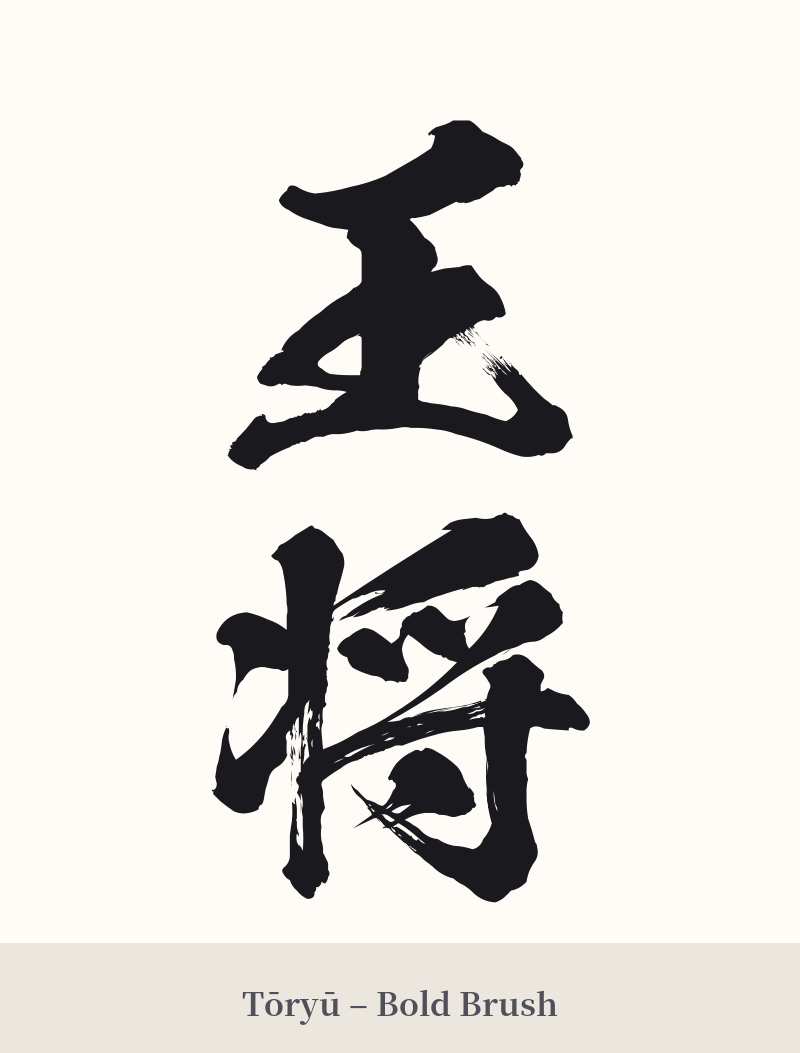
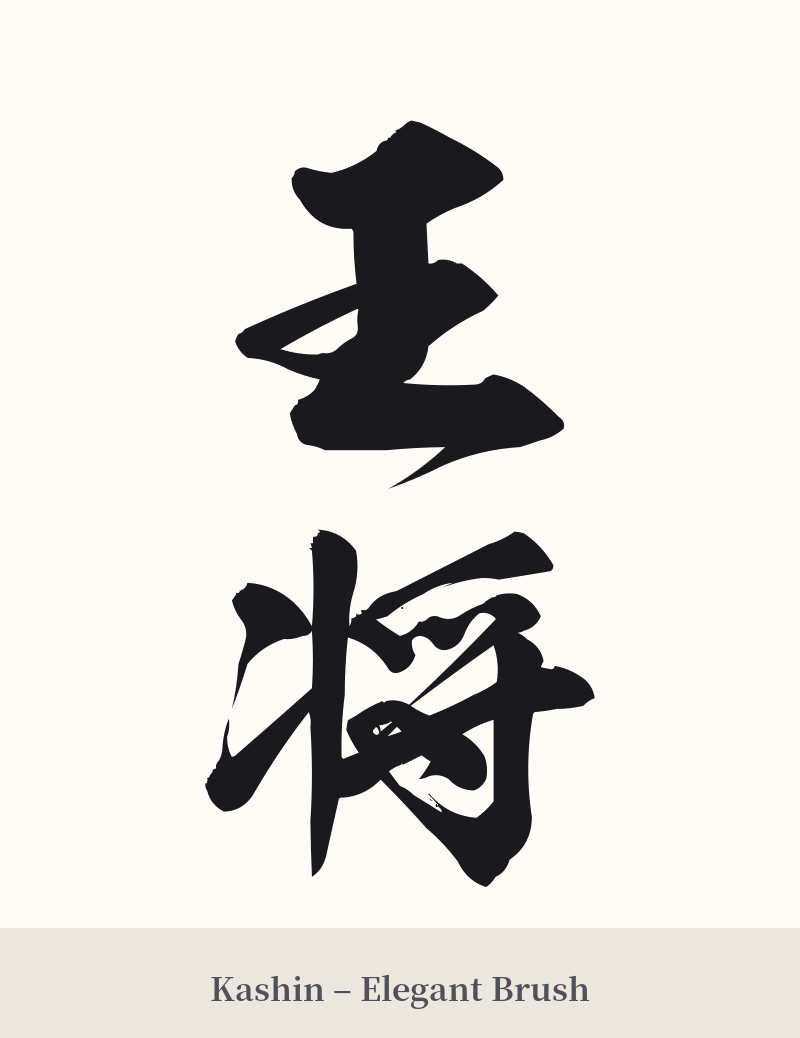
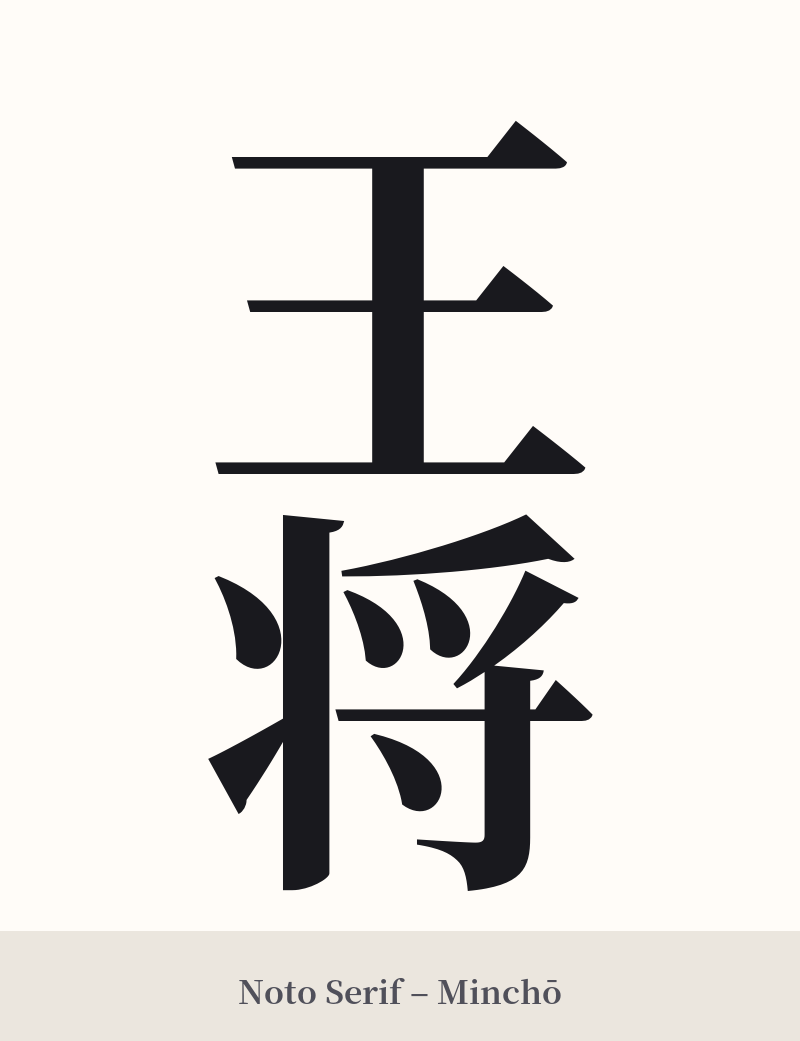
🖌️ Font Styles for 王将
The same kanji can look dramatically different depending on the calligraphy style. Choose a font that matches the mood you want for your tattoo or design.
🎨 Tattoo Suitability
📐 Tattoo Design Guide
For a tattoo of 王将 (Ōshō), the vertical alignment is most traditional and visually striking, mimicking how it's written in Japanese calligraphy and on the game piece itself.
– Placement: Consider areas that suit a vertical design, such as the forearm (inner or outer), the calf, or centered on the back along the spine. These placements provide a clean canvas and emphasize the characters' structure.
– Font Style: The choice of font dramatically affects the feeling. For a classic, authoritative look, a crisp Kaisho (block script) style is perfect, resembling the font on an actual Shogi piece. For a more fluid and artistic feel, consider Gyōsho (semi-cursive script), which can evoke the dynamic nature of strategy. A bold, thick style like Kanteiryū, used for Kabuki posters, can give the design a dramatic, high-impact presence.
– Visual Tips: You could incorporate the pentagonal shape of a Shogi piece around the kanji. Another idea is to have the characters rendered with a subtle wood grain texture or as part of a larger composition involving a Shogi board (ban). Keep the design clean to let the power of the characters speak for themselves.
Comments