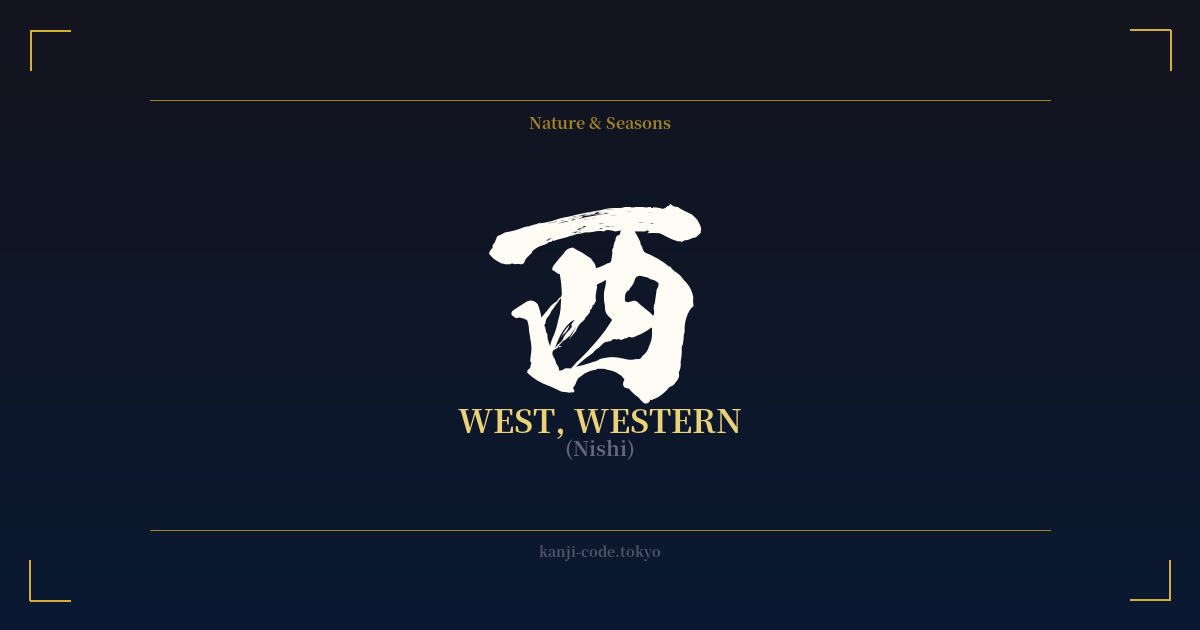
✍️ 西 (Nishi) — Cultural Context
The kanji 西 (nishi) is more than just a cardinal direction; it is a character steeped in the imagery of nature, spirituality, and the cyclical flow of time. Its origins are believed to be pictographic, depicting a bird returning to its nest. This image beautifully captures the essence of the west—the direction where the sun sets, signaling the end of the day and a time for rest and return.
This connection to the setting sun gives 西 a powerful symbolic meaning. It represents endings, completion, and periods of reflection. Just as the sun concludes its journey in the west, the character can symbolize the culmination of an effort, the end of a chapter in life, or a state of peaceful finality. It carries a serene, sometimes melancholic, beauty tied to the quiet moments of twilight.
In Japanese spirituality, particularly Pure Land Buddhism, the west holds profound significance. It is the direction of the Western Paradise, or Saihō Jōdo (西方浄土), the pure land where Amida Buddha resides. For believers, being reborn in this paradise is the ultimate goal, making the west a direction of hope, salvation, and spiritual release. This imbues the character with a sacred and aspirational quality far beyond its simple directional meaning.
Following traditional Five Elements (五行, gogyō) theory, which has influenced much of East Asian thought, the west is associated with the season of autumn and the element of metal. Autumn is the time of harvest, maturity, and the gentle decline before the dormancy of winter. This links 西 to themes of fruition, abundance, and the natural process of aging and transformation.
In modern Japanese, 西 is also used to refer to "The West" in a geopolitical and cultural sense, as seen in the word Seiyō (西洋), meaning Western countries. It is also a fundamental component of geography, famously used in the name for the Kansai (関西) region, which lies to the west of a historical checkpoint. From ancient cosmology to modern geography, 西 is a simple yet deeply resonant character.
🖌️ Font Styles for 西
The same kanji can look dramatically different depending on the calligraphy style. Choose a font that matches the mood you want for your tattoo or design.
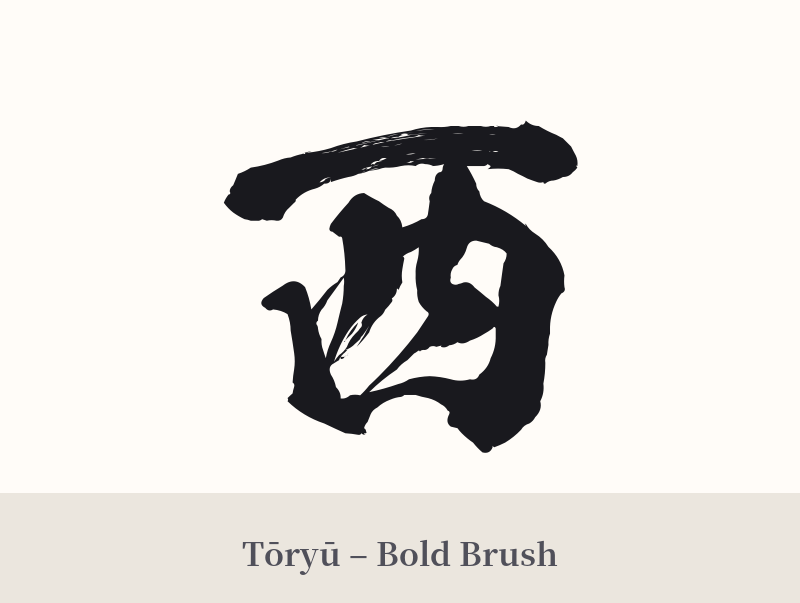
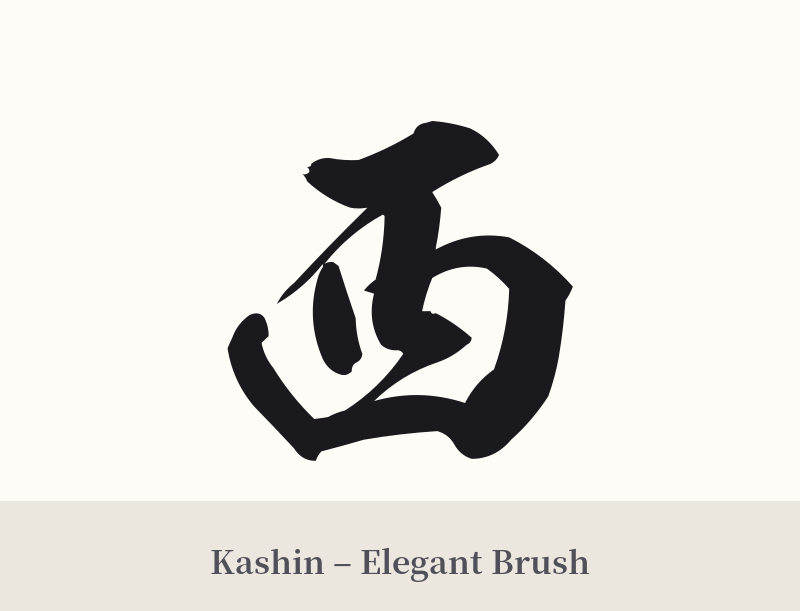
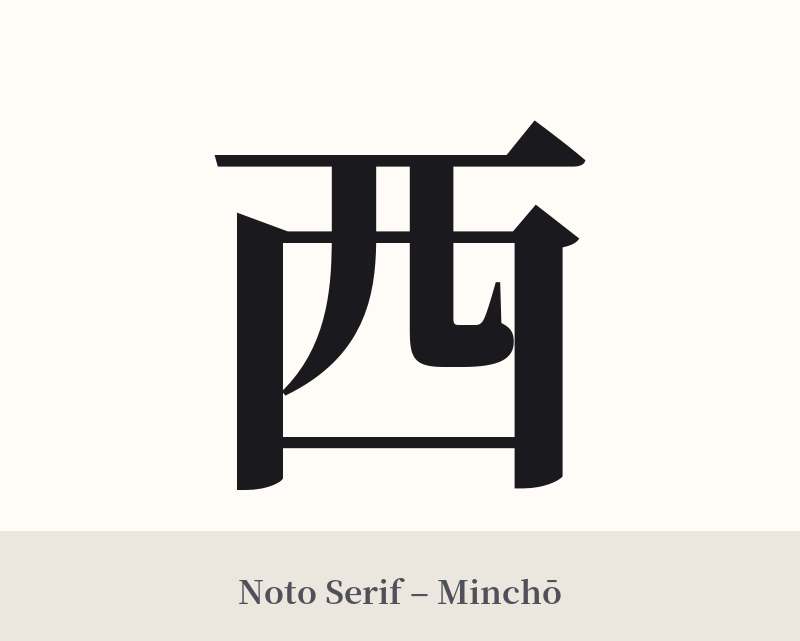
🎨 Tattoo Suitability
📐 Tattoo Design Guide
The simple and balanced structure of 西 makes it a versatile choice for a tattoo. Its clean lines lend themselves well to a variety of styles and placements.
– Placement: For a subtle design, the wrist, ankle, or behind the ear are excellent spots. Its symmetry also looks strong when placed centrally, such as on the back of the neck or the sternum. As part of a larger piece, it can anchor a composition on the forearm or calf.
– Font Styles: A crisp, formal Kaisho (block) or Mincho (serif) font will emphasize its clarity and structure. For a more fluid and artistic feel, a semi-cursive Gyosho style can evoke the feeling of a setting sun or a gentle breeze.
– Visual Combinations: Consider pairing 西 with imagery that enhances its meaning. It could be integrated into a design with a setting sun, an autumn maple leaf (momiji), the silhouette of a bird, or flowing water to create a more complete and personal narrative.
Comments