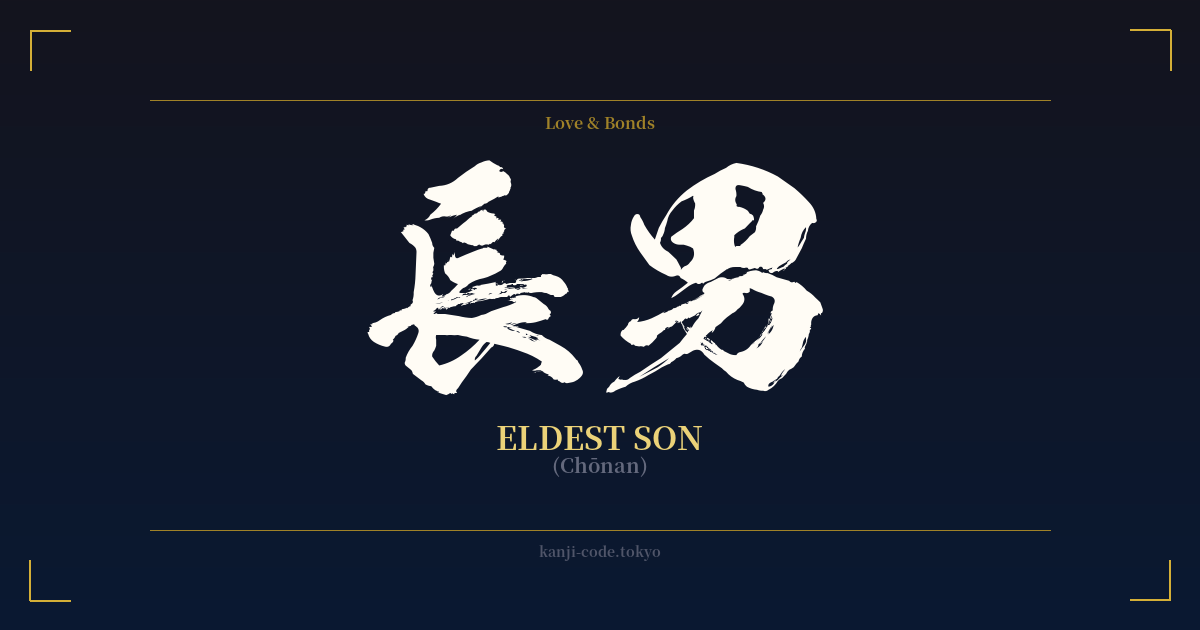
✍️ 長男 (Chōnan) — Cultural Context
The word 長男 (Chōnan) translates simply to “eldest son,” but this simple term carries the weight of centuries of Japanese history, culture, and family structure. It is one of the most socially significant kinship terms in the Japanese language, deeply intertwined with concepts of duty, inheritance, and lineage.
Historically, the Chōnan held a privileged and burdensome position within the traditional family system known as the “ie” (家). Under this patriarchal framework, which was legally codified until the end of World War II, the eldest son was the sole heir. He was destined to inherit the entirety of the family’s property, its name, its business, and the responsibility for its continuity.
This system, known as primogeniture, meant the Chōnan was expected to live with or near his parents, take care of them in their old age, and eventually assume the role of head of the household. It was also his duty to maintain the family’s Buddhist altar (butsudan) and ancestral grave (haka), ensuring that rites for the ancestors were properly performed. His marriage was often a strategic decision for the family, as his wife would be expected to join the household and support these duties.
While the post-war Constitution abolished the legal basis of the “ie” system and established equal inheritance rights for all children, the cultural expectations placed on the Chōnan have not entirely vanished. Even today, particularly in more rural areas or in families that run a traditional business, the eldest son often feels a unique pressure and sense of responsibility that his younger siblings do not.
The term Chōnan, therefore, is more than a birth order; it’s a role. It evokes a sense of tradition, obligation, and the unbroken line of a family stretching from the past into the future. For some, it is a source of pride and identity. For others, it can feel like a heavy burden in a modern world that values individualism and freedom of choice. Understanding Chōnan is to understand a core pillar of traditional Japanese family dynamics.
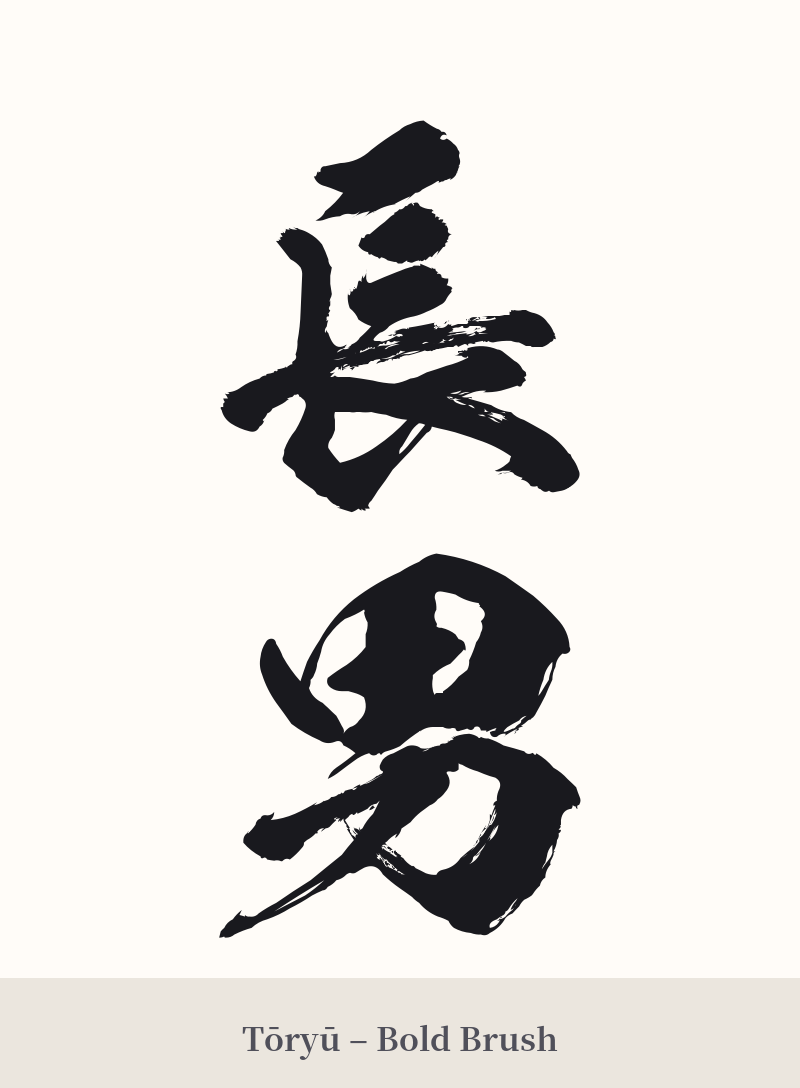
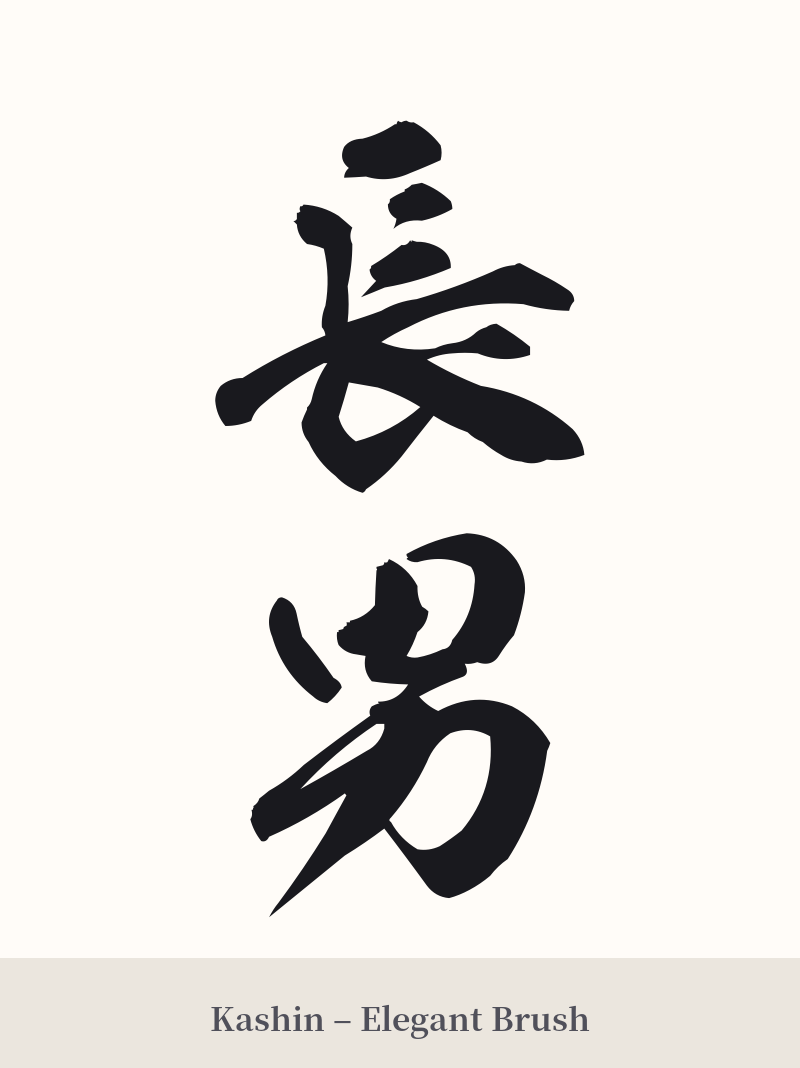
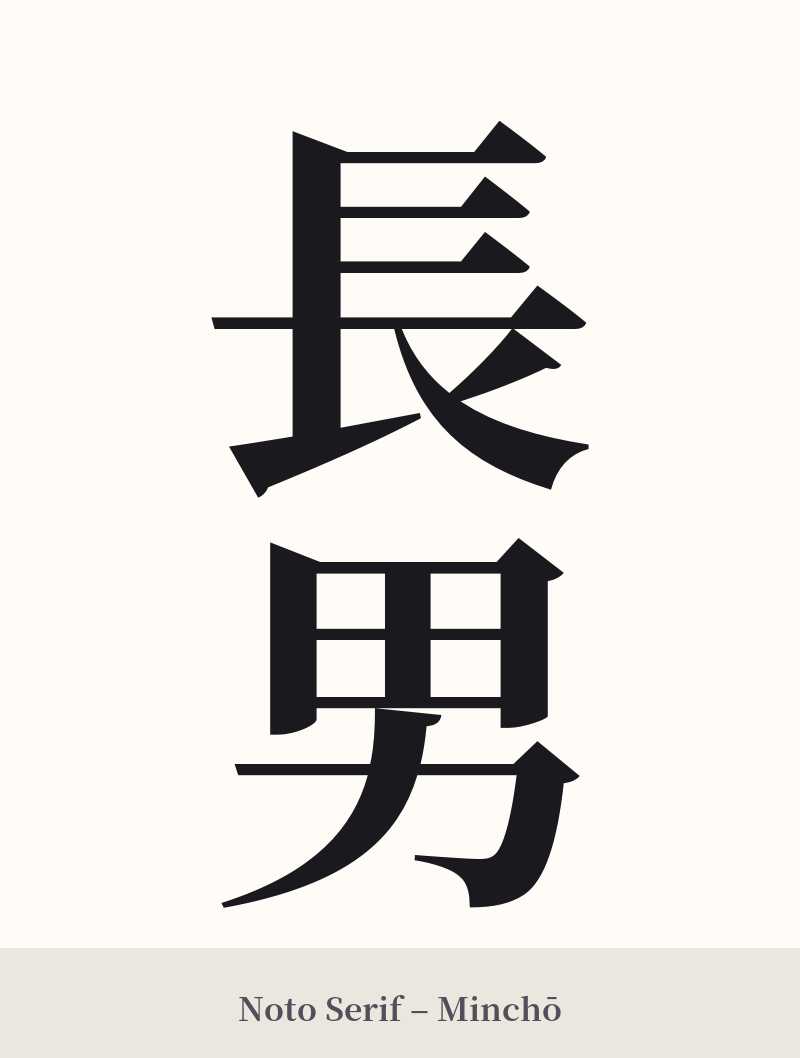
🖌️ Font Styles for 長男
The same kanji can look dramatically different depending on the calligraphy style. Choose a font that matches the mood you want for your tattoo or design.
🎨 Tattoo Suitability
📐 Tattoo Design Guide
Because 長男 (Chōnan) is a term deeply rooted in tradition and lineage, the design should reflect this weight and clarity.
– Placement: A vertical orientation is highly recommended, as it aligns with traditional Japanese writing. The forearm, bicep, or along the calf are excellent placements that provide a clean, linear canvas.
– Font Style: A strong, clear script is best. Kaisho (block script) emphasizes the formal, dutiful nature of the word. For a slightly more personal and less rigid feel, Gyosho (semi-cursive script) can add a touch of fluidity while remaining legible and respectable.
– Complementary Elements: This kanji is very literal, so pairing it with a symbolic image can add depth. Consider incorporating your family crest (kamon) if you have one, as this directly ties into the theme of lineage. A subtle enso circle behind the kanji could represent the cycle of generations, but avoid overly complex additions that might distract from the word itself.
Comments