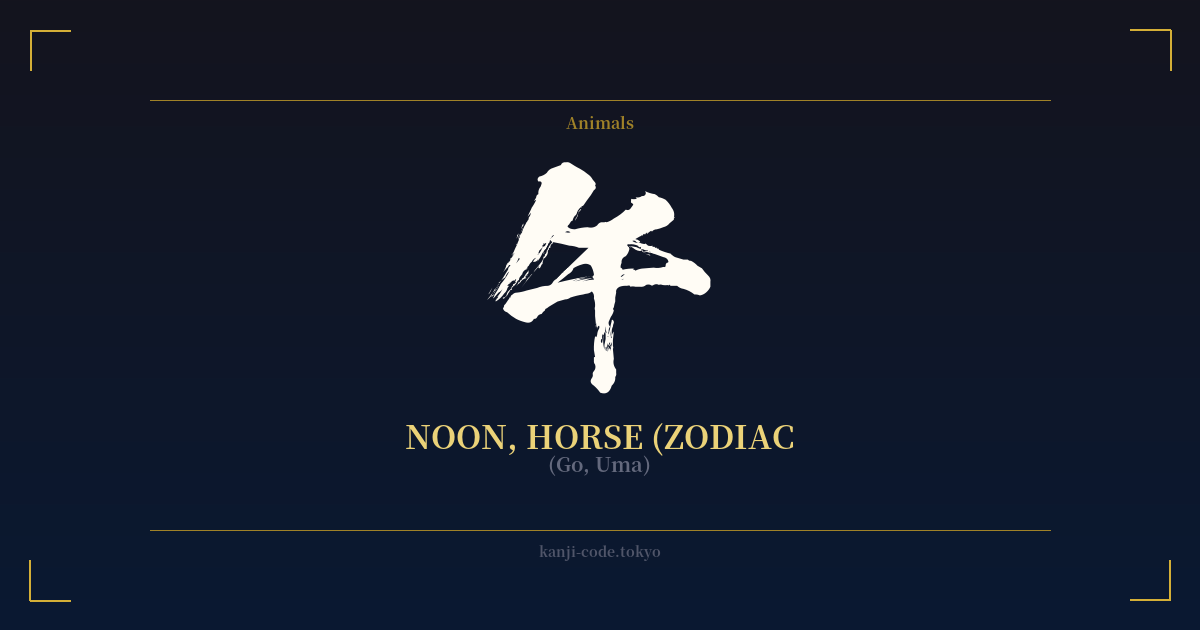
✍️ 午 (Go, Uma) — Cultural Context
The kanji 午 (Go, Uma) is a fascinating character that bridges the concepts of time and the animal kingdom. It holds two primary, intertwined meanings: 'noon' and the 'Horse' of the East Asian zodiac. Understanding this character requires a journey into the ancient system of the Twelve Earthly Branches (十二支, Jūnishi), a cornerstone of traditional timekeeping, astrology, and folklore in Japan.
The Jūnishi is a 12-part cycle used to denote years, months, days, hours, and even directions. Each branch is assigned an animal, and 午 represents the seventh branch, the Horse. This is why people born in specific years (e.g., 1966, 1978, 1990, 2002, 2014) are said to be born in the Year of the Horse (午年, Uma-doshi). Culturally, those born under this sign are often perceived as being energetic, cheerful, sociable, and independent, but also potentially impatient and headstrong—qualities reflecting the spirit of a free-roaming horse.
The connection to 'noon' is not coincidental. The traditional 24-hour day was divided into 12 two-hour periods, each named after a zodiac animal. The 'Hour of the Horse' (午の刻, Uma no koku) corresponded to the period from 11 AM to 1 PM. The exact middle of this period is high noon, which is precisely why the character 午 is central to time-related vocabulary in modern Japanese.
You see this legacy every day in Japan. The term for A.M. is 午前 (gozen), which literally translates to 'before the Horse hour' or 'before noon.' Conversely, P.M. is 午後 (gogo), meaning 'after the Horse hour' or 'after noon.' The word for high noon itself is 正午 (shōgo), meaning 'correct noon.' This linguistic link is a living testament to the zodiac's historical role as a fundamental clock.
It is crucial, however, to distinguish 午 from the more common kanji for horse, 馬 (uma). While both can be read as 'uma,' 馬 is the character you would use to write about a physical horse. 午 is almost exclusively used for the zodiac context and for its 'noon' meaning. This distinction is key to its proper use and interpretation.
🖌️ Font Styles for 午
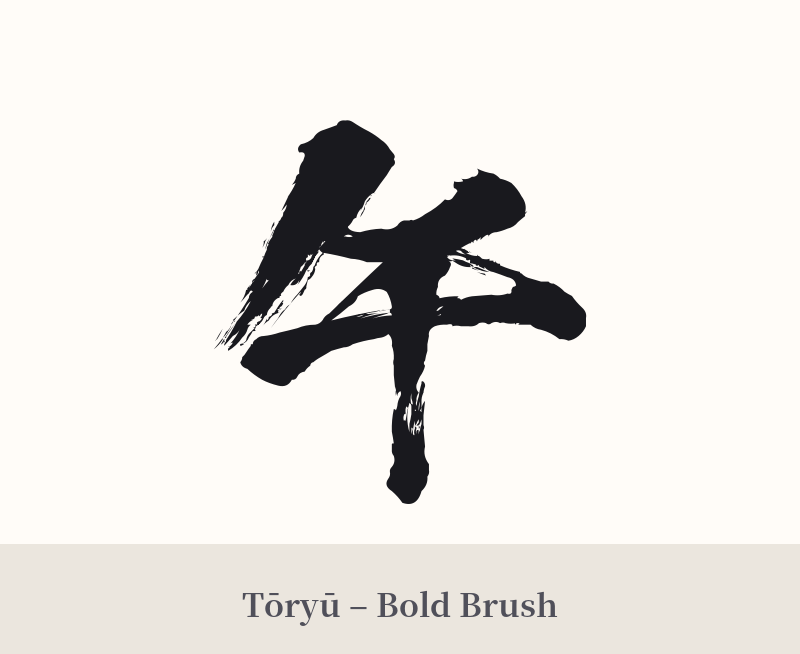
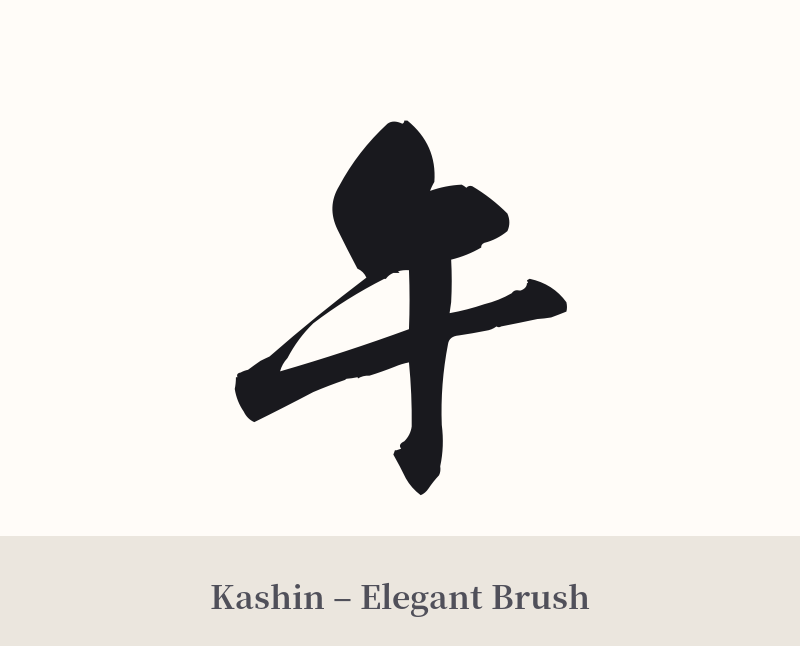
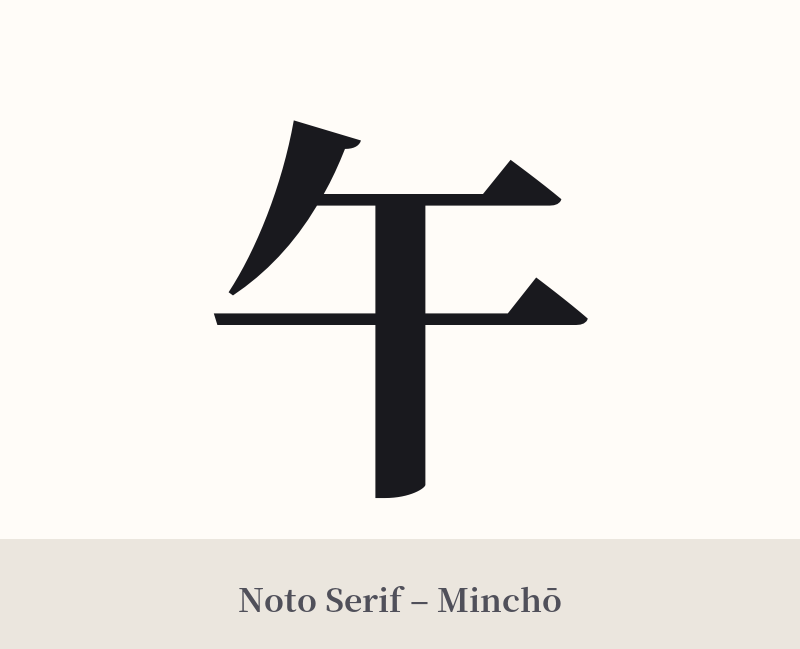
The same kanji can look dramatically different depending on the calligraphy style. Choose a font that matches the mood you want for your tattoo or design.
🎨 Tattoo Suitability
📐 Tattoo Design Guide
Due to its simplicity, the kanji 午 presents both challenges and opportunities for a tattoo design. It can easily look underwhelming if not handled with intention.
– Placement: Its small, simple form makes it suitable for discreet locations like the inner wrist, behind the ear, on the ankle, or between the fingers. For a larger piece, it would need to be part of a bigger composition.
– Font Style: A standard, blocky font (Mincho or Gothic) will look very plain. To give this character life, consider a dynamic calligraphy script like Gyōsho (semi-cursive) or Sōsho (cursive). These styles can inject movement and energy that allude to the spirit of the horse.
– Visual Tips: To avoid ambiguity and enhance its meaning, pairing 午 with other elements is highly recommended. Consider incorporating it into a design with a more detailed image of a horse, or placing it within a stylized sun to emphasize the 'noon' aspect. You could also combine it with the kanji 馬 (uma) to clarify the 'horse' meaning, creating a unique and personal design that tells a more complete story.
Comments