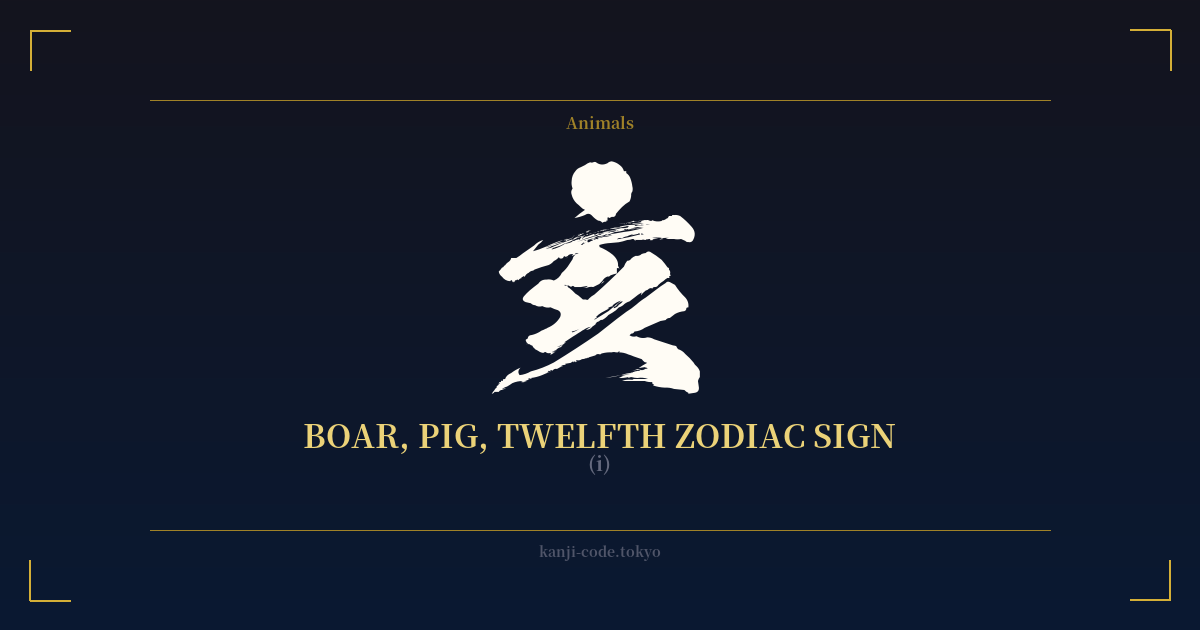
✍️ 亥 (i) — Cultural Context
The kanji 亥 (i) holds a significant place in Japanese culture as the twelfth and final animal of the zodiac, known as the Jūni-shi (十二支). Its meaning is deeply intertwined with concepts of time, personality, and mythology, extending far beyond a simple translation of 'boar' or 'pig'.
According to the popular legend of the zodiac race, the boar arrived last. Unlike the cunning rat or the swift horse, the boar's journey was characterized by a straightforward, headlong rush. It didn't strategize or cut corners; it simply charged ahead with unwavering determination. When it finally reached the goal, tired and hungry, it saw the feast and ate until it fell asleep, only waking up after the other eleven animals had been ranked. This story perfectly encapsulates the essence of 亥: courage, honesty, and a powerful, single-minded drive that can sometimes border on recklessness.
This idea is captured in the four-character idiom 'chototsumōshin' (猪突猛進), which literally means 'reckless advance of a wild boar'. While it can have a negative connotation of being foolhardy, it also carries a positive nuance of pursuing one's goals with fearless passion and without being deterred by obstacles. Samurai warriors historically admired the boar for this very quality, seeing its fearlessness in charging directly at hunters as a model of martial bravery.
It is essential to distinguish 亥 from its more common counterpart, 猪 (inoshishi). While both relate to the boar, they serve different purposes. 亥 is one of the twelve 'Earthly Branches', an ancient system used for timekeeping, directions, and astrology. It is an abstract, symbolic character. In contrast, 猪 is the pictographic kanji used to refer to the physical animal in everyday language. Choosing 亥 for a design is a deliberate nod to this deeper, cyclical, and astrological context.
In Japan, people born in the Year of the Boar (inoshishi-doshi) are believed to embody these traits. They are seen as courageous, sincere, and incredibly determined, though perhaps a bit stubborn. The symbol 亥 appears frequently on New Year's cards (nengajō) during a boar year, and certain shrines, like the Go'o Shrine in Kyoto, are dedicated to the boar as a divine messenger and protector, particularly for leg and lower back health, reflecting the animal's powerful hindquarters.
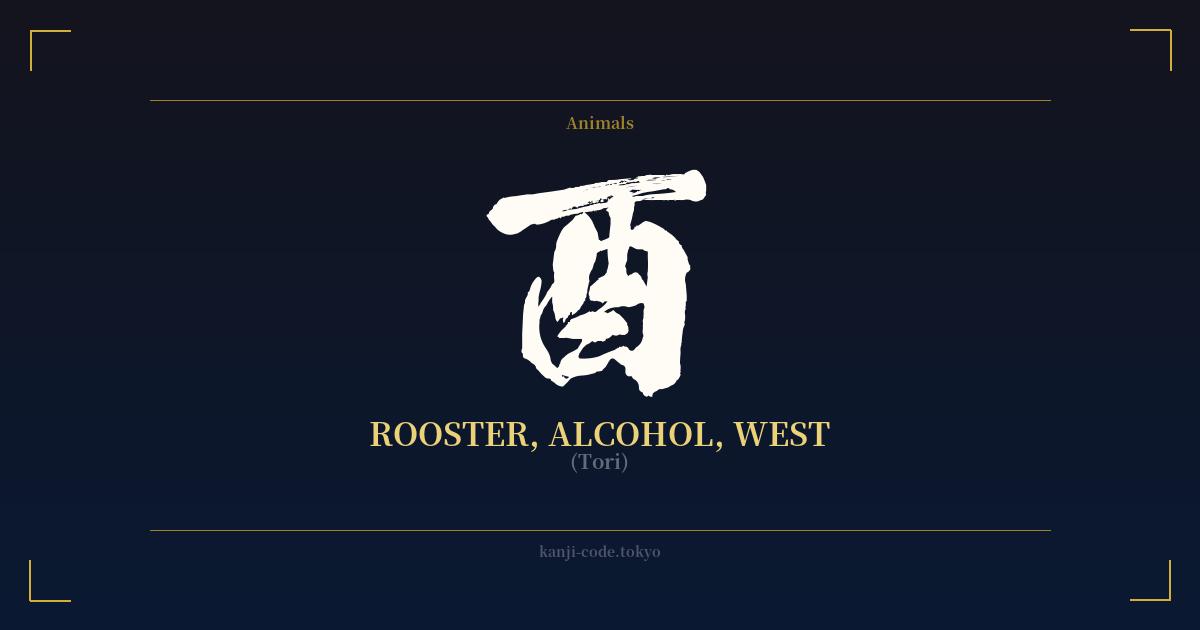
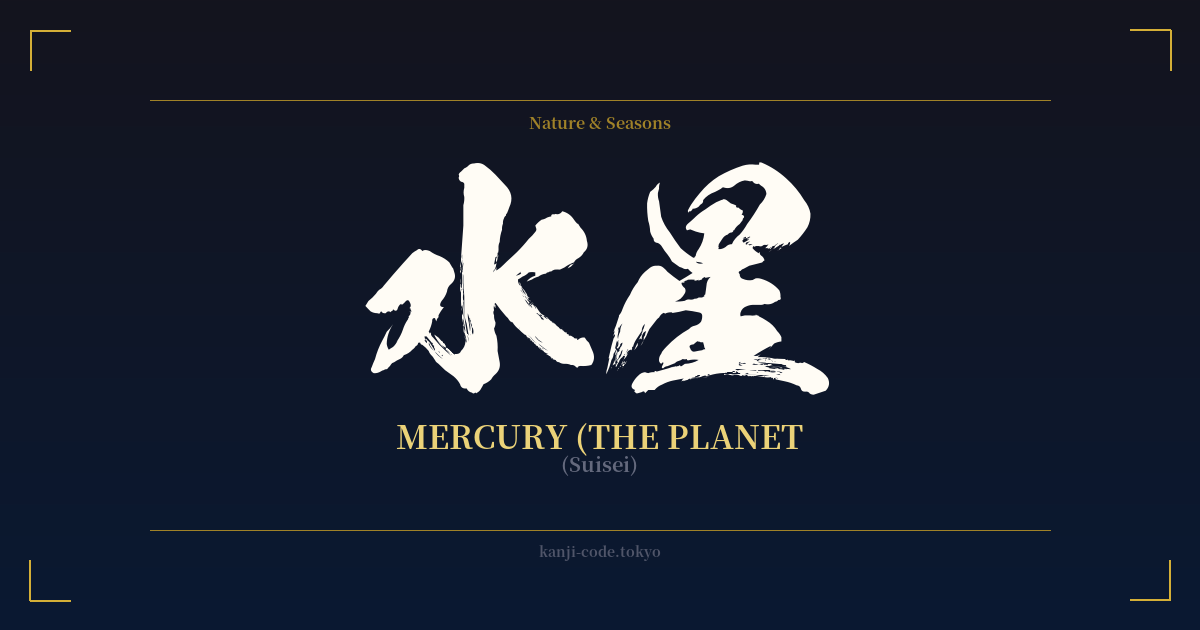
🖌️ Font Styles for 亥
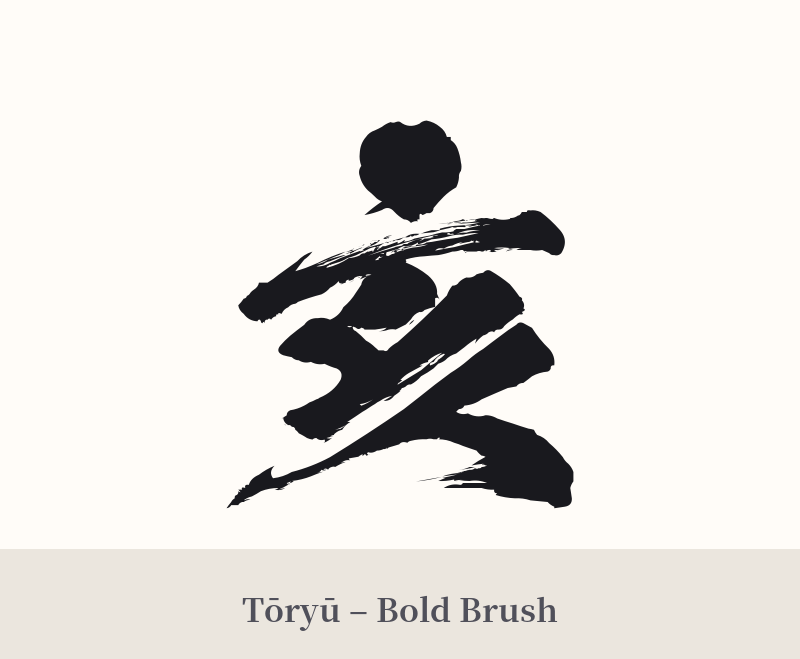
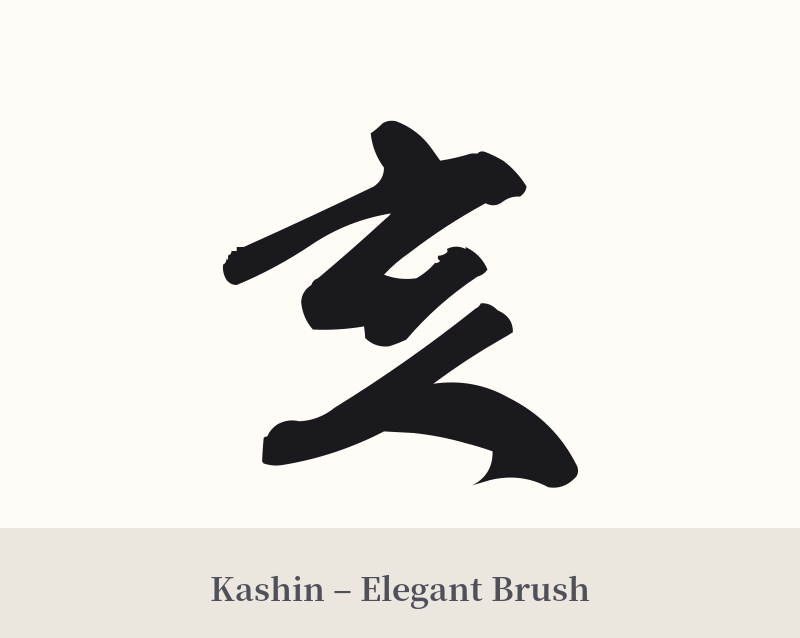
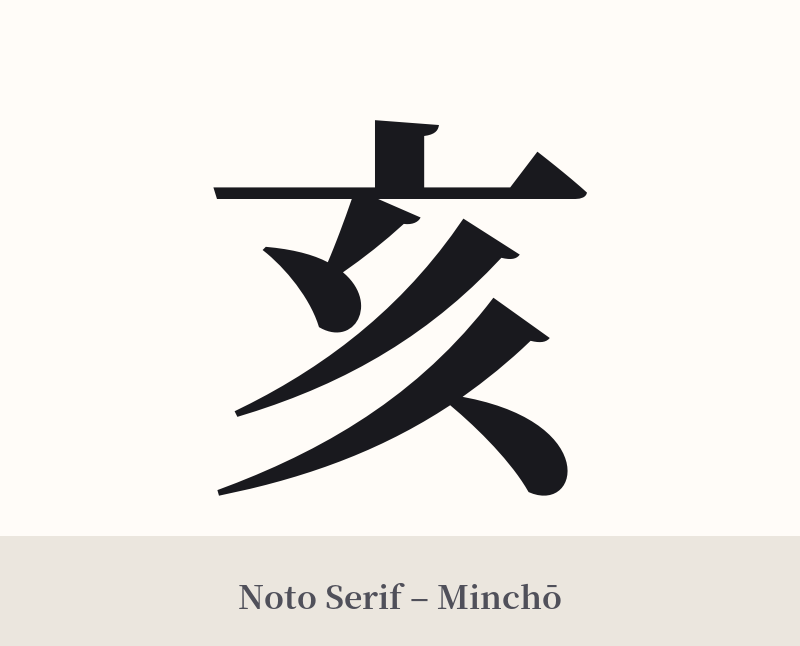
The same kanji can look dramatically different depending on the calligraphy style. Choose a font that matches the mood you want for your tattoo or design.
🎨 Tattoo Suitability
📐 Tattoo Design Guide
The kanji 亥 offers a blend of symbolic weight and minimalist aesthetics, making it a versatile choice for a tattoo. Its simple, balanced structure works well in various styles and placements.
– Placement: Due to its compact nature, 亥 is perfect for smaller, discreet locations like the wrist, behind the ear, or on the ankle. For a more prominent statement, it looks clean and powerful on the back of the neck, the forearm, or integrated into a larger piece on the shoulder blade.
– Font Style: A bold, blocky Kaisho (block script) or Mincho style will emphasize its qualities of stability and determination. Conversely, a more fluid and energetic Gyosho (semi-cursive) or Sosho (cursive) script can capture the 'chototsumōshin' feeling—the dynamic, rushing energy of the boar.
– Visual Tips: Consider pairing 亥 with other elements to add context. You could incorporate it into a design with the year you were born, or alongside a more literal, artistic depiction of a wild boar. Combining it with natural motifs like autumn leaves or mountain scenery (the boar's habitat) can create a beautiful and cohesive theme. Because of its simplicity, it's an excellent candidate for a minimalist red-ink tattoo.
Comments