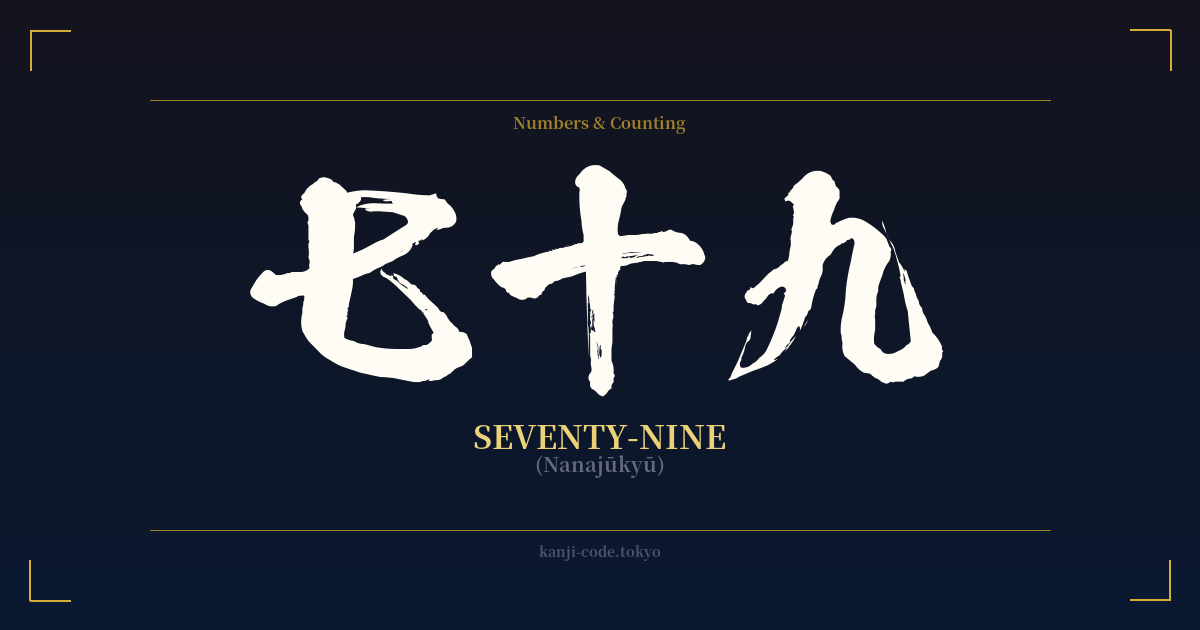
✍️ 七十九 (Nanajūkyū) — Cultural Context
The Japanese word for seventy-nine, 七十九 (Nanajūkyū), is a straightforward and logical construction that reveals the elegance of the kanji numbering system. It is composed of three distinct characters: 七 (nana, seven), 十 (jū, ten), and 九 (kyū, nine). The structure reads as 'seven-ten-nine,' which translates to (7 x 10) + 9, equalling 79. This multiplicative-additive system is a hallmark of East Asian numeration and remains in use for formal and traditional purposes.
In modern Japan, Arabic numerals (79) are used for everyday transactions, digital displays, and most casual writing. However, kanji numerals like 七十九 hold their ground in more traditional or formal contexts. You might see them on official certificates, in legal documents, on traditional shop signs, or in historical texts. This practice, known as 'kanji sūji' (漢字数字), lends an air of formality and classical beauty that Arabic numerals lack.
While the number 79 itself does not hold a specific, universally recognized significance in Japanese folklore or spirituality, the individual numbers within it carry their own cultural weight. The number seven (七) is often considered lucky, famously associated with the 七福神 (Shichifukujin), or Seven Lucky Gods, who are believed to grant good fortune. It also marks the date of the Tanabata festival on July 7th.
Conversely, the number nine (九) has a more complicated reputation. One of its readings, 'ku,' is a homophone for the word 苦, meaning 'suffering' or 'hardship,' leading to its avoidance in some contexts, similar to triskaidekaphobia in the West. However, in the number 79, the reading 'kyū' is used, which does not carry this negative connotation. Furthermore, 'kyū' can be a homophone for words like 久 ('long-lasting'), adding a potential layer of positive interpretation.
The combination of these numbers into 七十九 is therefore culturally neutral. It is simply a number, a marker of quantity or age. It doesn't carry the celebratory weight of milestones like sixty (還暦, kanreki) or seventy-seven (喜寿, kiju), but it represents a point in the journey of life, a specific year, or a quantity counted with the grace and structure of traditional characters.
🖌️ Font Styles for 七十九
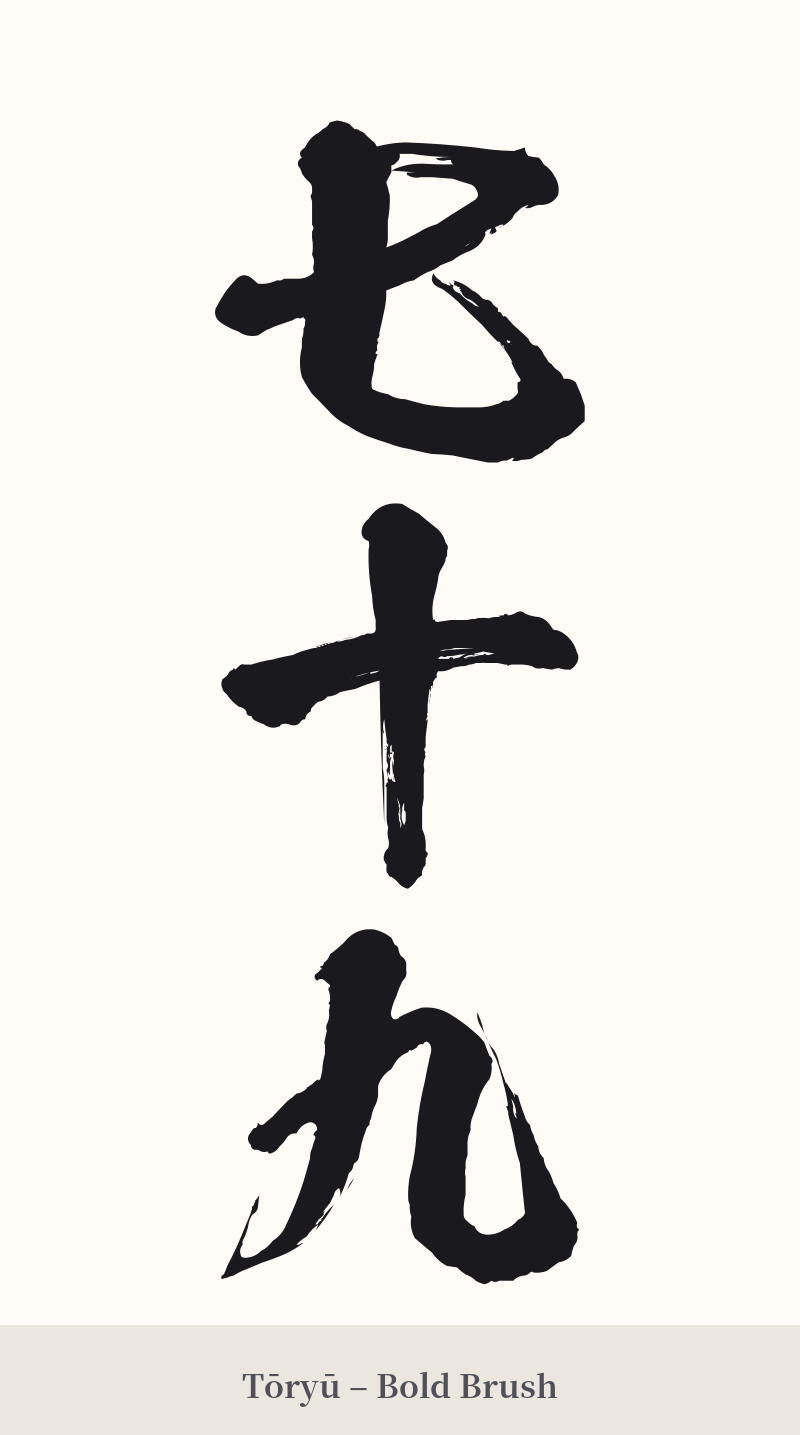
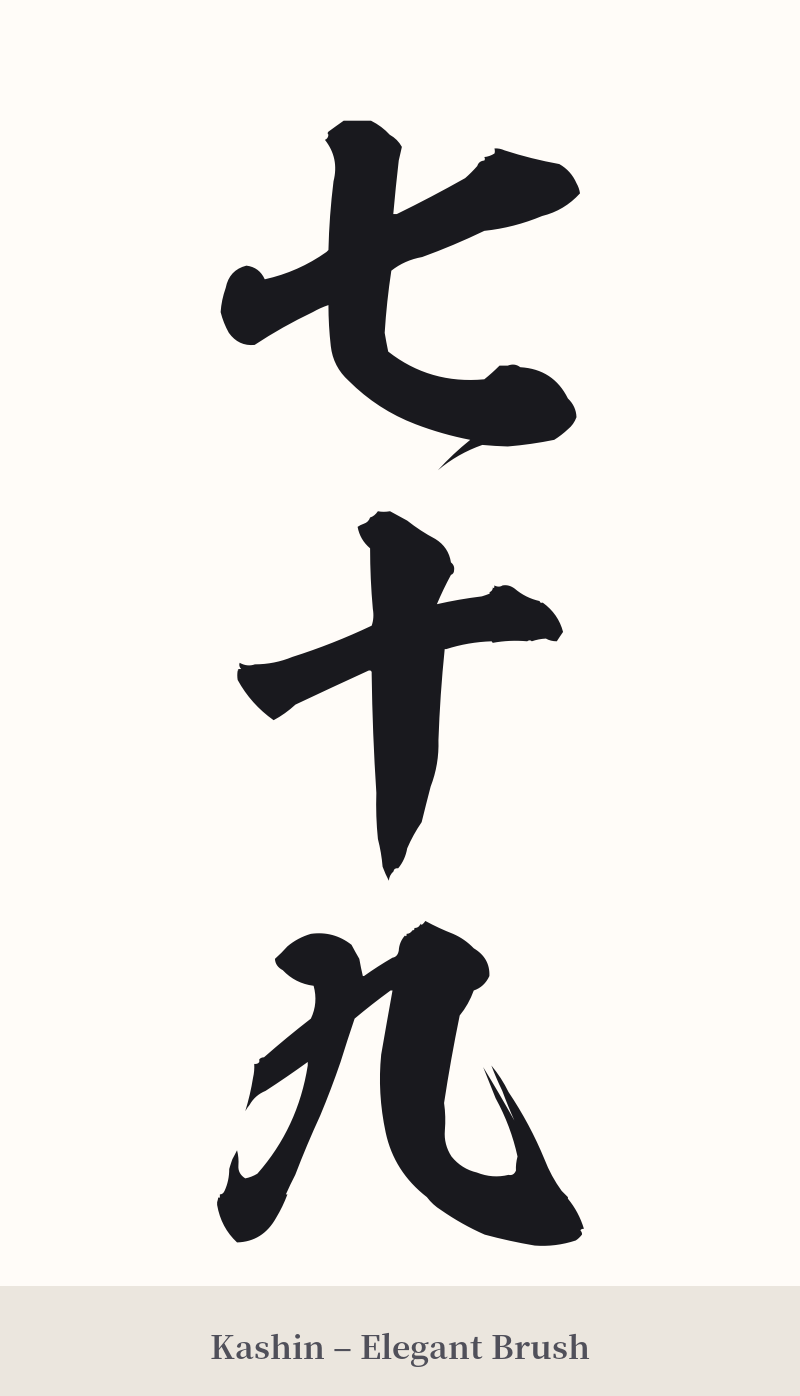
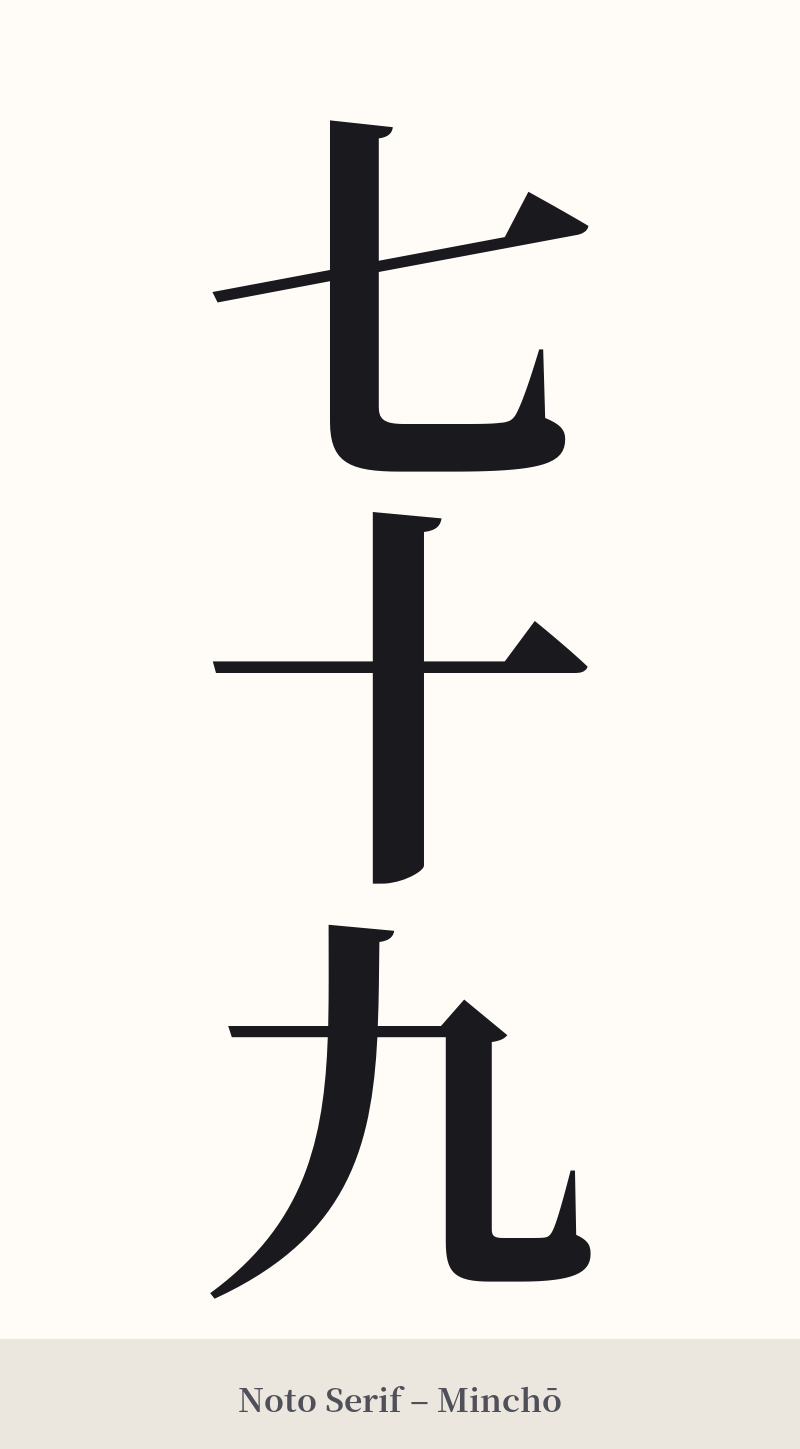
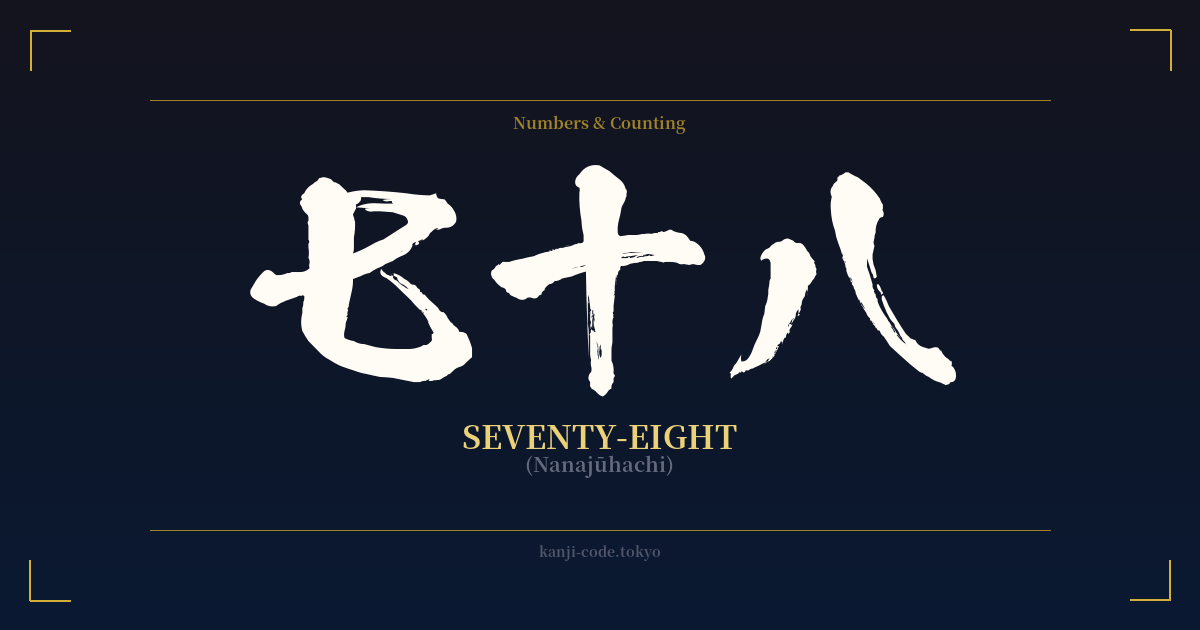
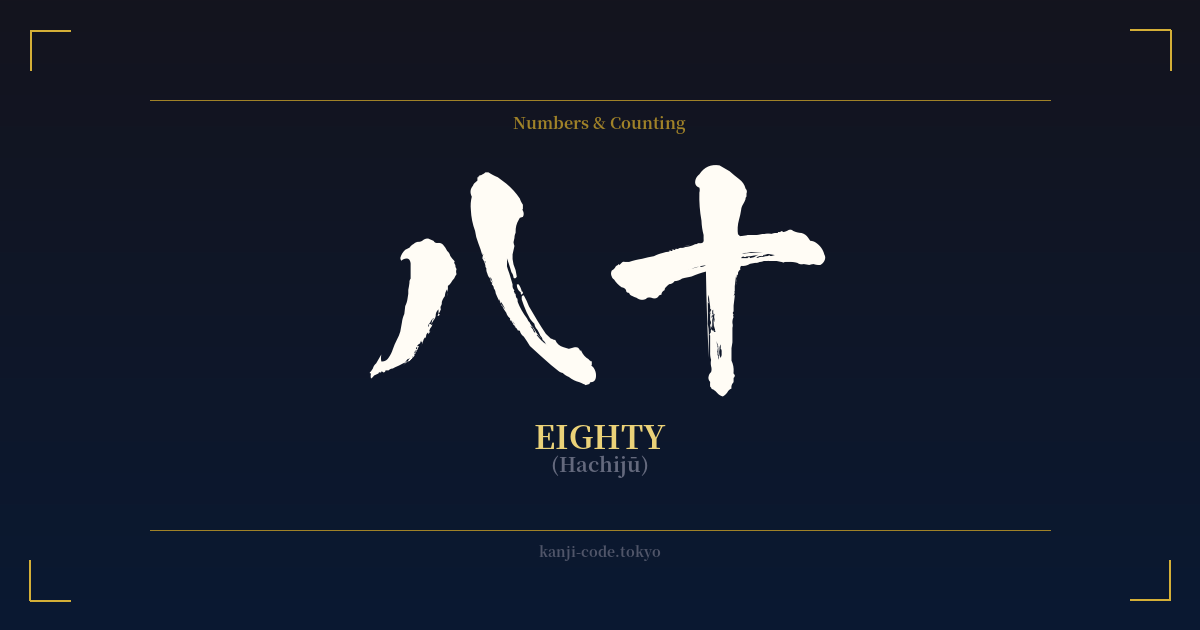
The same kanji can look dramatically different depending on the calligraphy style. Choose a font that matches the mood you want for your tattoo or design.
🎨 Tattoo Suitability
📐 Tattoo Design Guide
A tattoo of 七十九 offers a design that is simple, structured, and clear. Its three-character composition lends itself particularly well to certain styles and placements.
– Placement: A vertical arrangement is the most natural and aesthetically pleasing for 七十九. Consider placing it along the spine, forearm, or calf to emphasize its linear flow. A horizontal design can also work across the chest, upper back, or below the collarbone.
– Font Style: The choice of script can dramatically alter the feel. A bold, blocky 'Kaisho' style will give it a traditional, clear, and strong impression. For a more artistic and fluid look, a semi-cursive 'Gyōsho' can connect the simple characters with graceful, flowing lines.
– Visual Tips: Because the characters themselves are so simple (each has only two strokes), they can serve as a minimalist statement. Avoid overly complex backgrounds that might overwhelm the kanji. If you wish to add an element, consider a simple enso (Zen circle) behind it or incorporating it into a design that represents a specific year, like '1979' (千九百七十九).
Comments