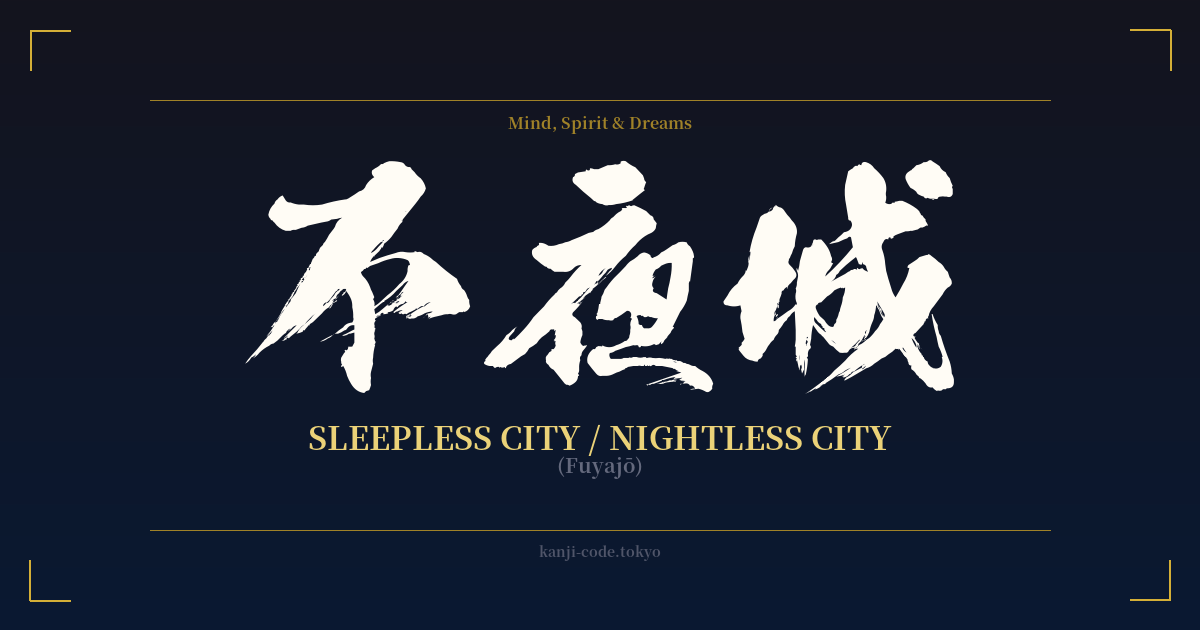
✍️ 不夜城 (Fuyajō) — Cultural Context
不夜城 (Fuyajō) translates literally to "No-Night-Castle." It’s a beautifully poetic term that paints a picture of a place so brilliantly illuminated that darkness never falls. It captures the relentless, 24/7 energy of a modern metropolis, a fortress of light standing defiant against the natural cycle of day and night.
The origin of this phrase lies not in Japan, but in ancient Chinese literature. It referred to mythical or legendary places, often in Taoist lore, that were said to be perpetually lit by magical pearls or other mystical means. These were otherworldly realms where the concept of night simply didn't exist. When the term was adopted into Japanese, it carried this same sense of wonder and fantasy.
Over time, the meaning of Fuyajō evolved. With the rise of electricity and the growth of massive cities, the term found a new, more literal application. It became the perfect descriptor for the sprawling, neon-drenched entertainment districts of cities like Tokyo and Osaka. Places like Shinjuku's Kabukicho or Osaka's Dotonbori are the quintessential examples of a Fuyajō—a dazzling labyrinth of signs, screens, and streetlights that banishes the night and buzzes with activity at all hours.
Today, Fuyajō evokes a specific, powerful mood. It speaks to the thrill and glamour of city life, the endless possibilities that seem to exist in a place that never sleeps. It's a word that feels at home in cyberpunk narratives like Blade Runner or Akira, describing a high-tech, overwhelming urban landscape.
However, the term also carries a subtle duality. A city without night can also be a city without rest. It can imply a sense of artificiality, of losing touch with natural rhythms. There's a potential for loneliness within the crowd, a feeling of being a small part of a massive, impersonal machine. This adds a layer of depth to the word, making it not just a celebration of urban vibrancy but also a poignant reflection on the nature of modern life.
🖌️ Font Styles for 不夜城
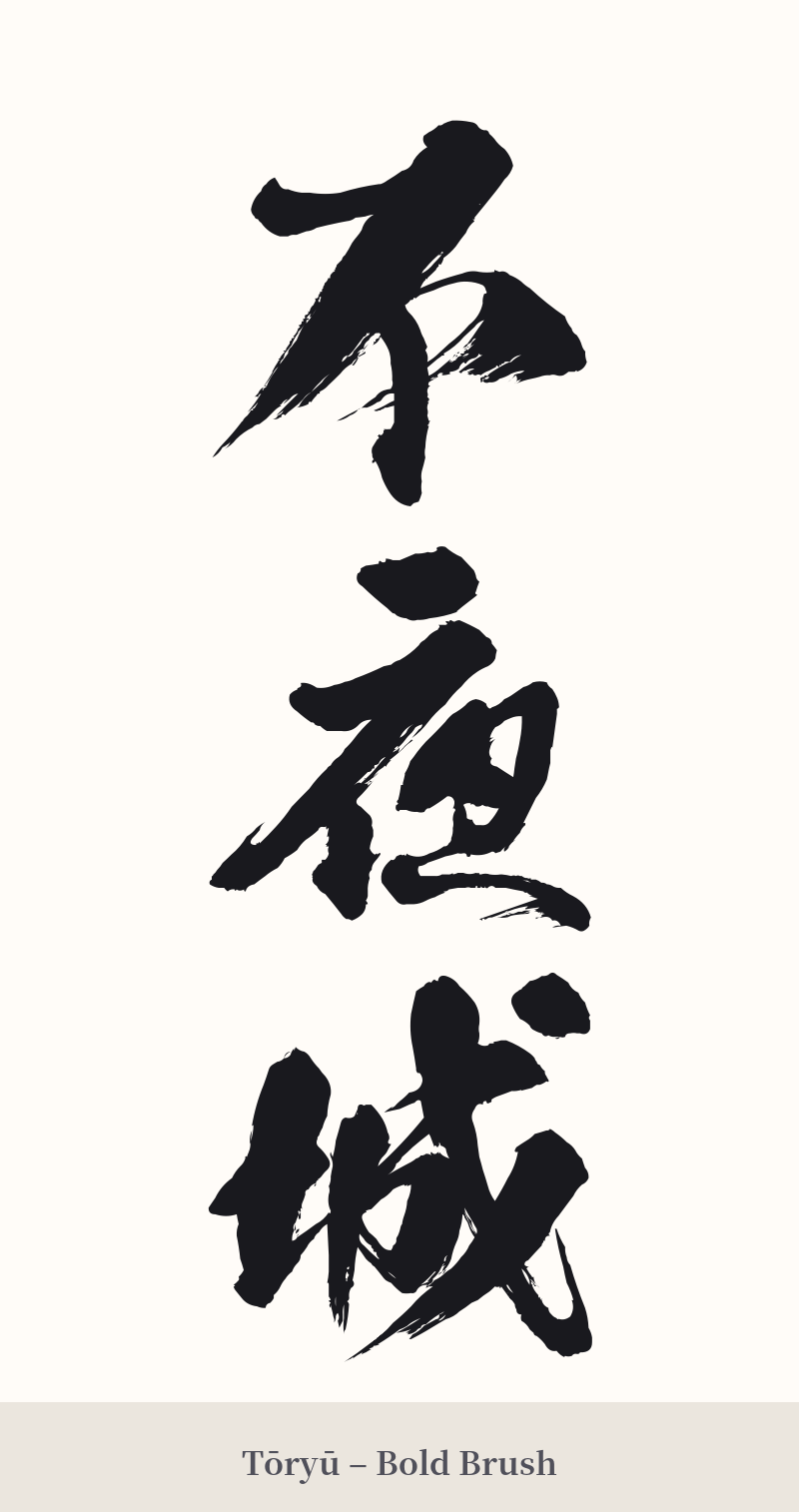
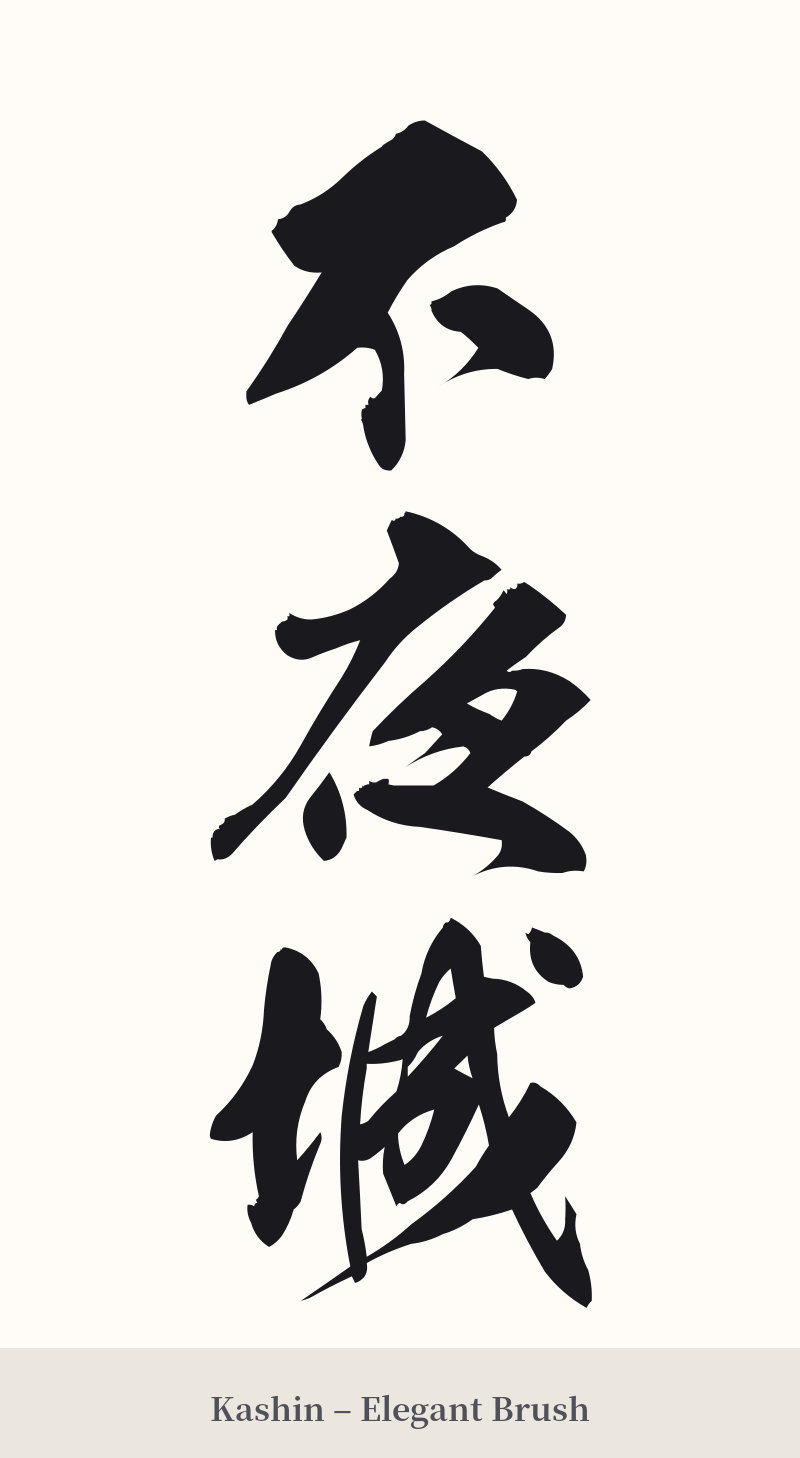
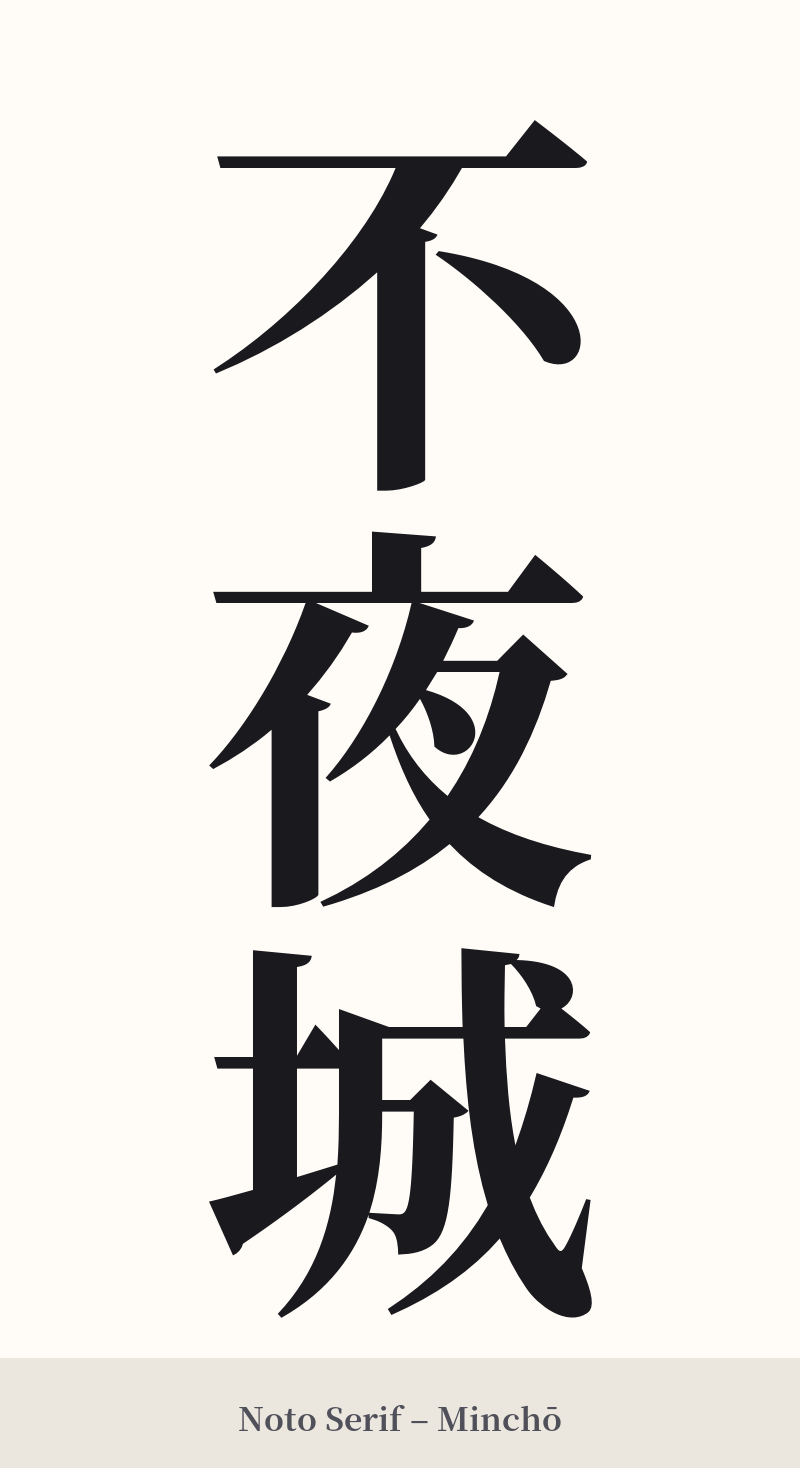
The same kanji can look dramatically different depending on the calligraphy style. Choose a font that matches the mood you want for your tattoo or design.
🎨 Tattoo Suitability
📐 Tattoo Design Guide
The vertical orientation of 不夜城 is classic and highly recommended, as it mimics traditional Japanese script. This makes it ideal for placement along the spine, forearm, or calf.
– Font Style: For a modern, cyberpunk feel, a crisp, angular Mincho or Gothic font works exceptionally well. To emphasize its literary and poetic origins, a flowing semi-cursive (Gyosho) or full cursive (Sosho) style calligraphy adds a touch of organic energy and artistry.
– Visual Elements: Consider pairing the kanji with imagery that reinforces its theme. A backdrop of a rainy, neon-lit street, subtle geometric patterns suggesting a circuit board, or even a silhouette of a castle morphing into a skyscraper can create a powerful and unique design.
– Sizing: Due to the detail in the characters for 夜 (night) and 城 (castle), avoid making the tattoo too small, as the lines could blur over time. A medium to large size is best to preserve clarity and impact.
Comments