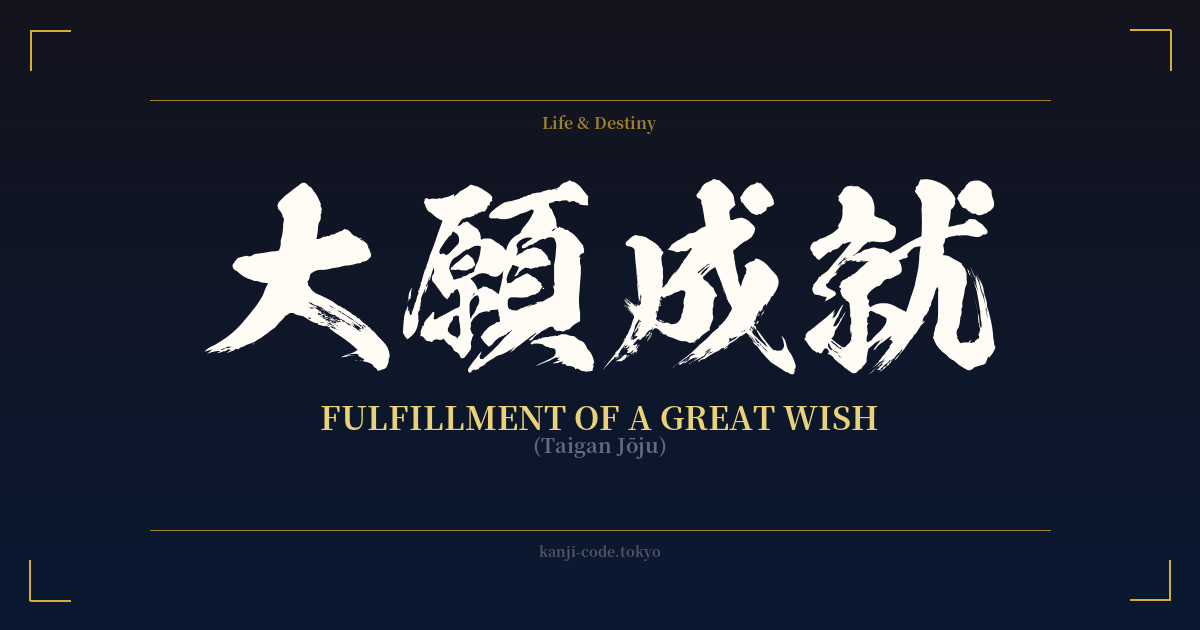
✍️ 大願成就 (Taigan Jōju) — Cultural Context
大願成就 (Taigan Jōju) is a powerful four-character idiom that translates to the “Fulfillment of a Great Wish.” This isn't just about getting what you want; it speaks to the culmination of a life-defining ambition, a profound goal that has required immense effort, perseverance, and dedication to achieve. The term carries a weight of significance that goes far beyond a simple desire.
The phrase has deep roots in Japanese Buddhism. The 'great wish' (大願) originally referred to the ultimate vows made by Buddhas and Bodhisattvas, such as the vow to save all sentient beings from suffering. This spiritual origin lends the phrase a sense of gravity and sacredness. When a person makes a 'taigan,' they are setting an intention that is deeply meaningful and almost spiritual in its intensity.
In modern Japan, 大願成就 has become a popular and cherished concept, woven into the fabric of daily life and cultural practices. It is a common inscription found on good luck charms (omamori) sold at temples and shrines, particularly those intended to help with passing exams, securing a new job, or recovering from illness. People purchase these charms to carry with them as a constant reminder of their goal and a source of motivation.
The most iconic symbol associated with 大願成就 is the Daruma doll. These round, red, papier-mâché figures are modeled after Bodhidharma, the founder of Zen Buddhism. When you set a great goal, you paint in one of the doll's blank eyes. The doll, with its single eye staring back, serves as a constant, unblinking motivator. Only when the wish is fulfilled—when 'taigan jōju' is achieved—do you paint in the other eye, completing the doll and symbolizing your triumph. This powerful ritual solidifies the connection between the phrase and the act of long-term perseverance.
Beyond these specific items, the phrase is a common theme during the New Year. It is often written during 'kakizome,' the first calligraphy of the year, as a way to declare one's ambitions for the months ahead. In business, sports, and personal development, 大願成就 embodies the ultimate success story—the moment when years of hard work finally pay off, transforming a distant dream into a tangible reality.
🖌️ Font Styles for 大願成就
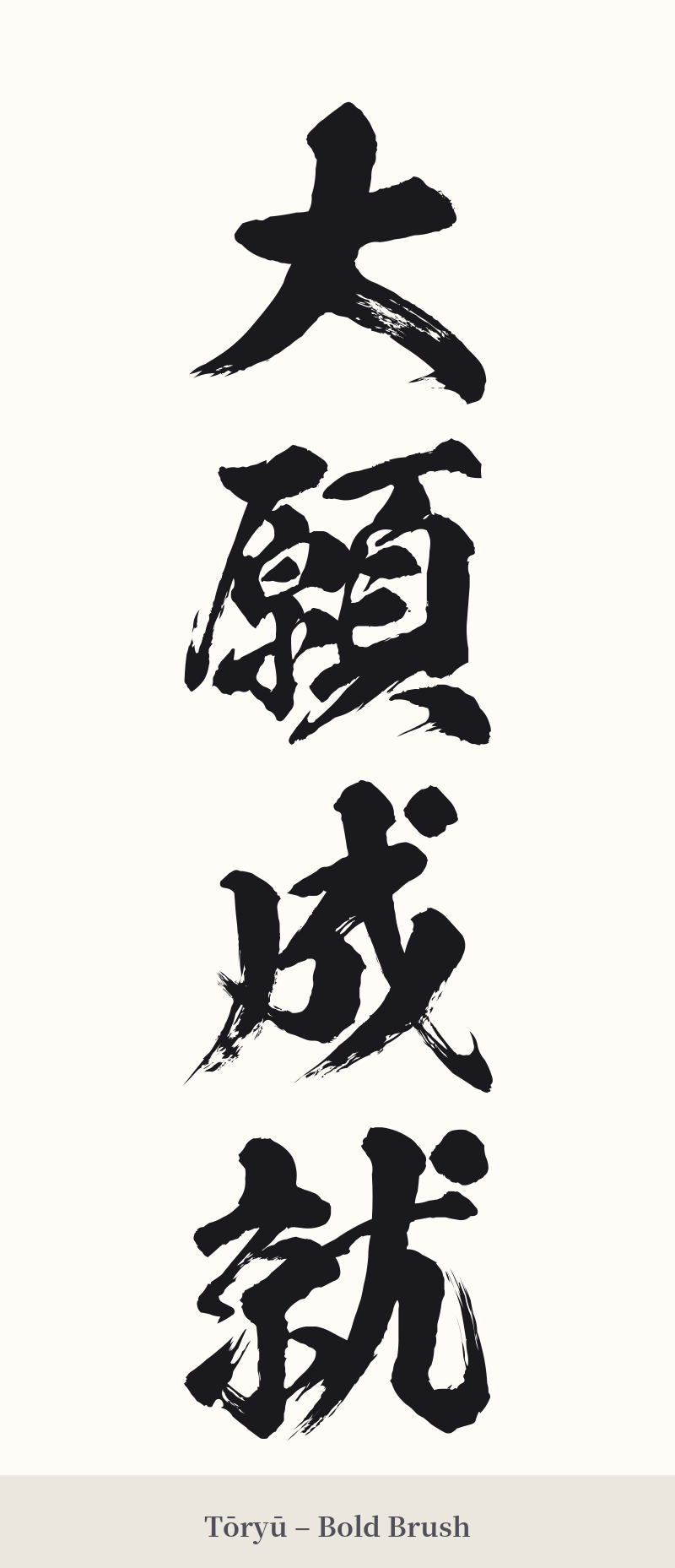
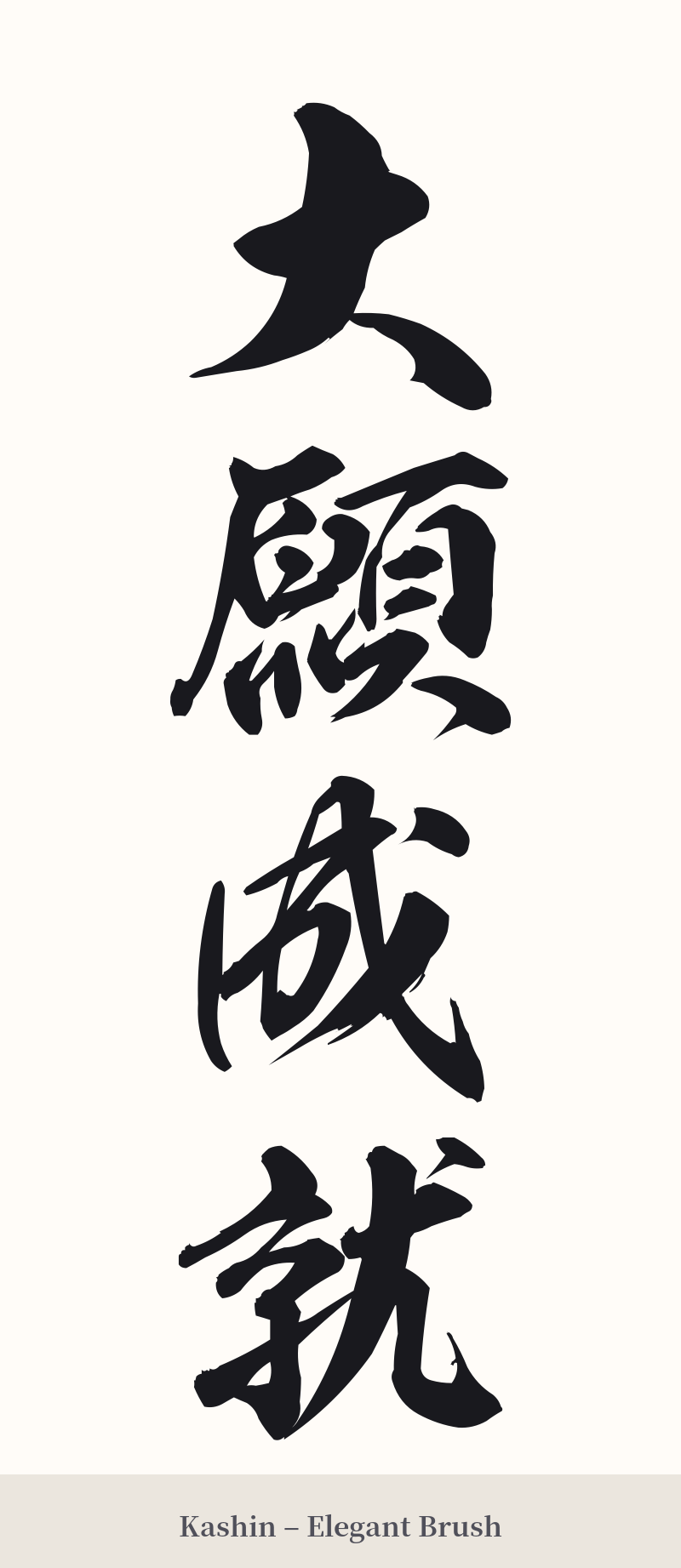
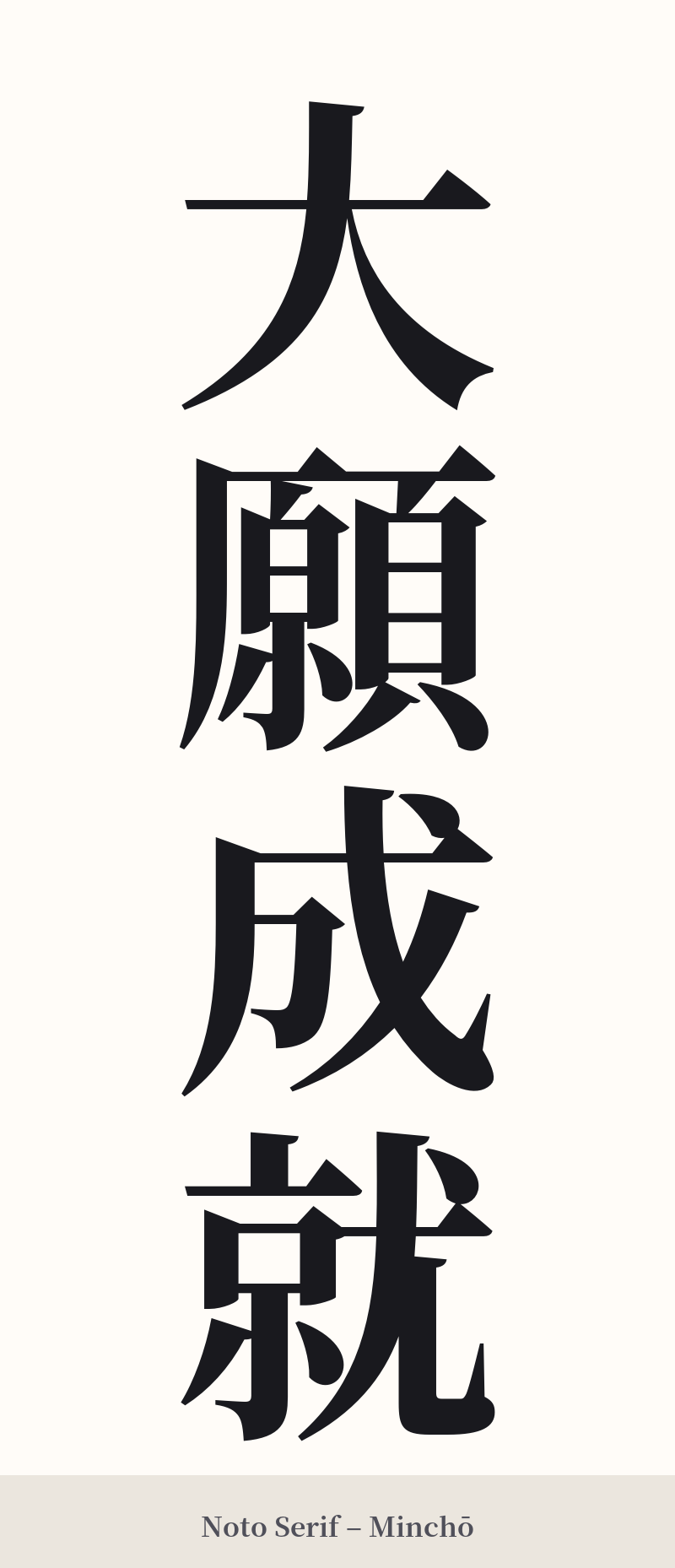
The same kanji can look dramatically different depending on the calligraphy style. Choose a font that matches the mood you want for your tattoo or design.
🎨 Tattoo Suitability
📐 Tattoo Design Guide
The four-character nature of 大願成就 (Taigan Jōju) lends itself beautifully to tattoo design, offering a classic and balanced aesthetic.
– Placement: This phrase is almost always best rendered vertically. Prime locations include the spine, running down the forearm, along the calf, or on the ribs. This vertical orientation honors the traditional way Japanese text is written and creates a strong, elegant line on the body.
– Font Style: The choice of script can dramatically alter the feeling of the tattoo. A bold, blocky 'Kaisho' (楷書) style emphasizes strength, stability, and determination. For a more fluid and artistic feel, consider a semi-cursive 'Gyōsho' (行書) style, which can convey a sense of grace and movement in the journey toward the goal.
– Visual Accompaniments: While the kanji is powerful on its own, it can be paired with symbolic imagery. Consider incorporating a Daruma doll (with one or both eyes filled in), a koi fish swimming upstream to symbolize perseverance, or a lotus flower blooming from mud to represent achieving beauty and purity through hardship. These elements can frame the kanji or be integrated into the background to add another layer of meaning.
Comments