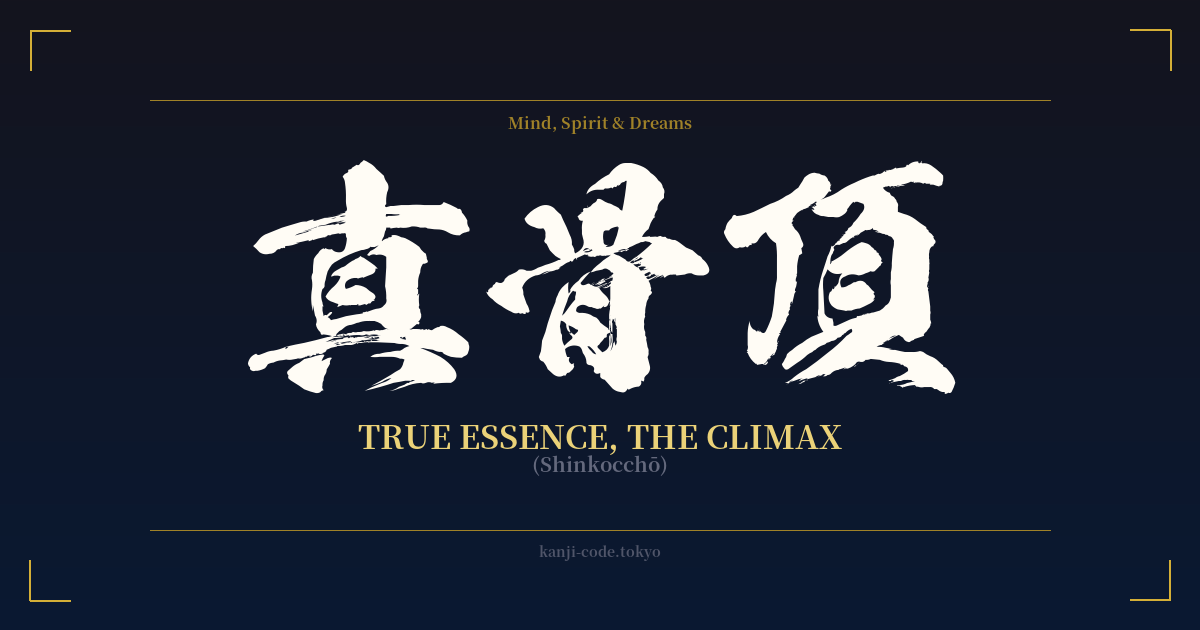
✍️ 真骨頂 (Shinkocchō) — Cultural Context
真骨頂 (Shinkocchō) is a powerful and evocative Japanese word that translates to the “true essence,” “real worth,” or the “climax” of one’s ability. It describes the moment when a person’s deepest, most authentic talents are fully and spectacularly revealed. This is not just about being good at something; it's about showcasing the very core of your unique skill, often under pressure or at a pivotal moment.
The word itself is a beautiful tapestry of meaning, woven from three distinct kanji: 真 (shin – true), 骨 (kotsu – bone), and 頂 (chō – peak/summit). Literally, it could be interpreted as the “peak of the true bone.” This visceral imagery points to something fundamental and structural (bone), that is authentic (true), and expressed at its highest possible level (peak). It’s the opposite of a superficial skill; it’s a quality that emanates from one’s very marrow.
In Japanese culture, the concept of Shinkocchō is deeply respected. It is often used to praise an artist, a craftsman, or a performer who delivers a work of genius that could only have come from them. Imagine a master sushi chef who, after years of silent dedication, prepares a single piece of nigiri that encapsulates their entire philosophy. That dish is the Shinkocchō of their craft. Think of a samurai in a duel who, in a flash, executes a flawless, unique technique to win. That is the moment they reveal their Shinkocchō.
This term is tied to the cultural appreciation for mastery and dedication, particularly the idea of the shokunin (artisan). A shokunin doesn't just work a job; they dedicate their life to perfecting their craft, striving to elevate it. The Shinkocchō is the ultimate manifestation of that lifelong pursuit. It’s the point where technique transcends into art, and learned skill becomes second nature, an extension of the self.
Unlike more common words like “talent” (才能 – sainō) or “skill” (技術 – gijutsu), Shinkocchō carries a nuance of a climactic reveal. It’s the ace up your sleeve, the hidden power you unleash when it matters most. It implies that this true worth might not always be visible, but it is always present, waiting for the right moment to shine. It is the culmination of everything you are, displayed in a single, defining action or creation.
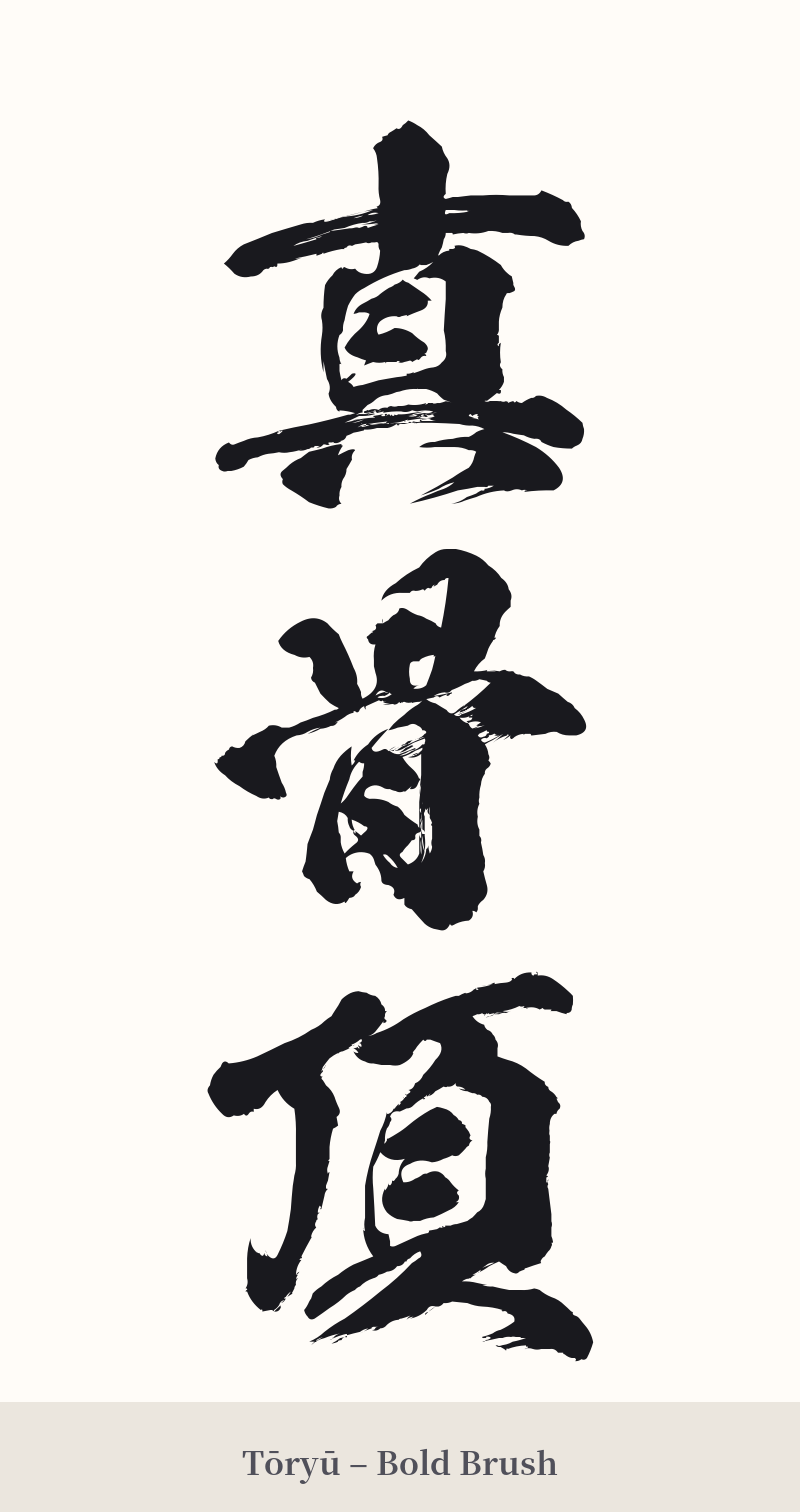
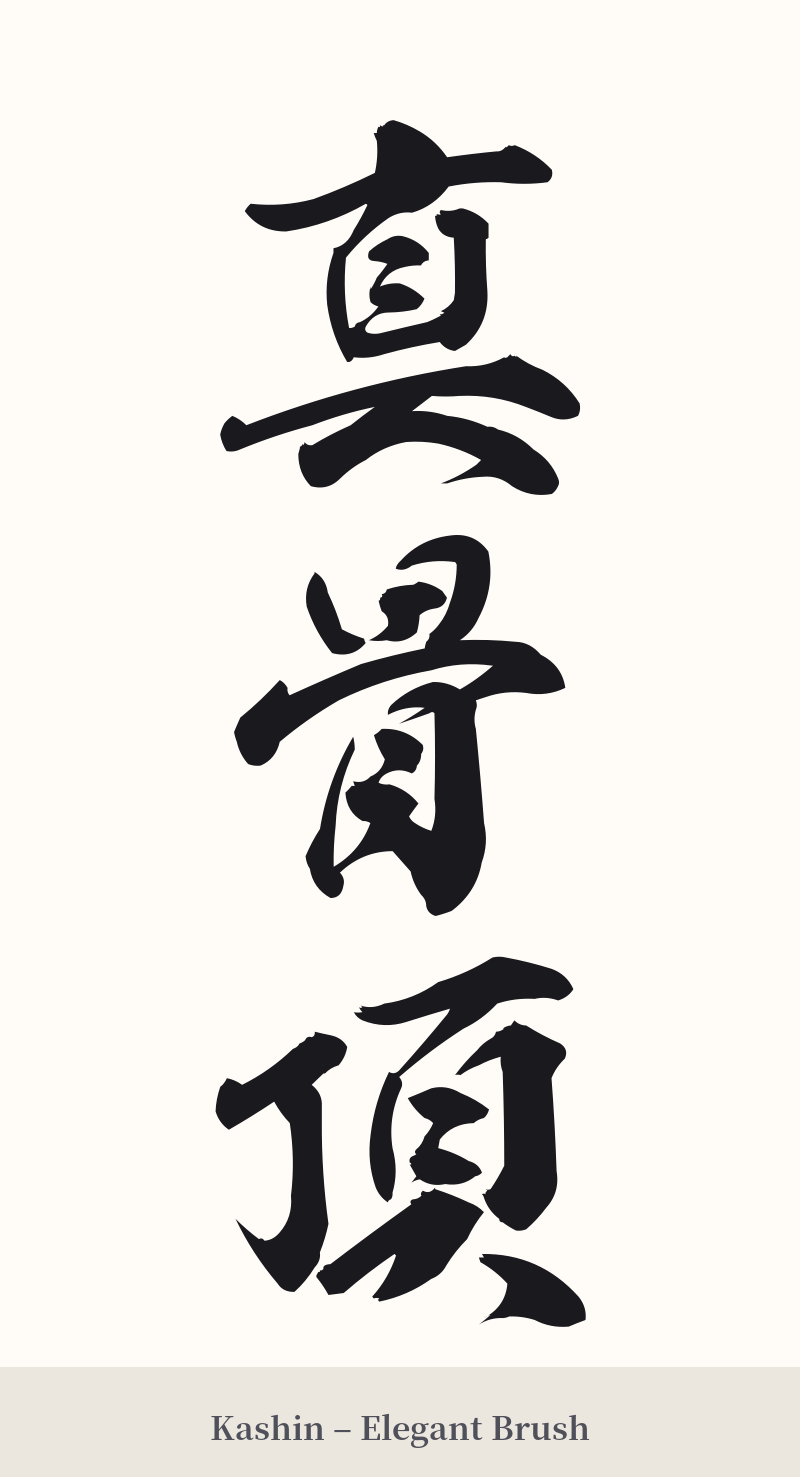
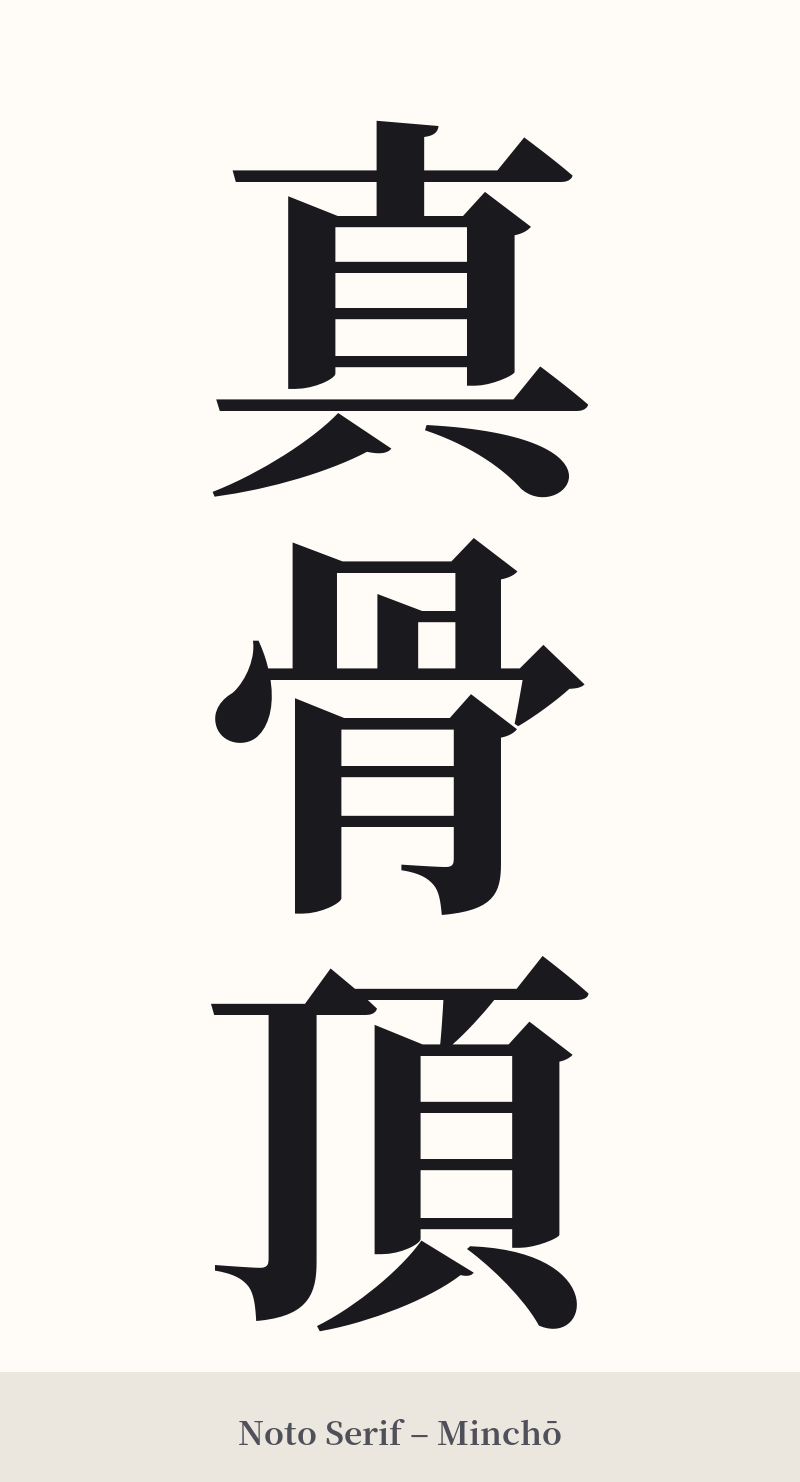
🖌️ Font Styles for 真骨頂
The same kanji can look dramatically different depending on the calligraphy style. Choose a font that matches the mood you want for your tattoo or design.
🎨 Tattoo Suitability
📐 Tattoo Design Guide
For a word as dynamic as 真骨頂, the design should reflect its meaning of peak performance and authenticity. Its three-character structure is a great advantage for a tattoo.
– Placement: Vertical alignment is highly recommended to emphasize the sense of climax and ascension. The spine, the length of the forearm, or the calf are excellent choices that provide the necessary space for the characters to breathe.
– Font Style: A bold, semi-cursive calligraphy script (gyōsho) can capture the fluid, powerful moment of revealing one's true self. For a more grounded, solid feel that emphasizes the "true bone" aspect, a crisp and clear block script (kaisho) works well, but it must be executed perfectly.
– Visual Tips: Do not shrink this tattoo. The moderate complexity of the characters requires a decent size to prevent the lines from blurring together over time. Consider consulting with an artist who specializes in Japanese calligraphy to ensure the stroke order and balance are respected, which is crucial for the design's integrity.
Comments