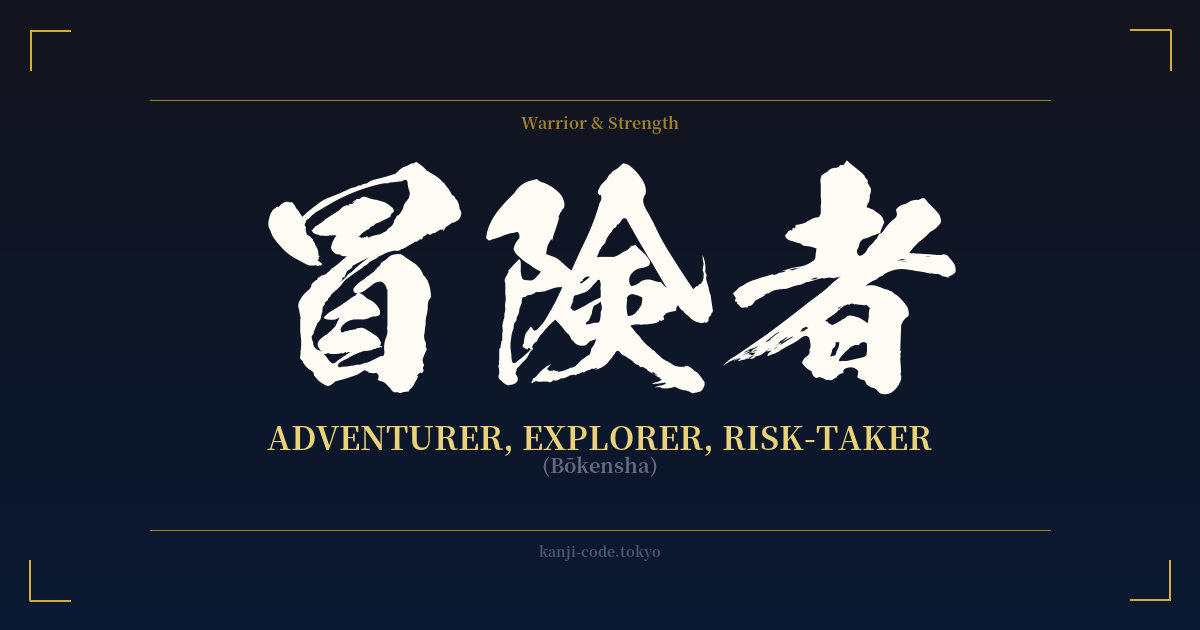
✍️ 冒険者 (Bōkensha) — Cultural Context
The Japanese word 冒険者 (Bōkensha) translates to 'adventurer,' but its essence is far richer than a simple dictionary definition. It’s a term that evokes images of courage, exploration, and a willingness to confront the unknown. To truly understand it, one must look at the characters themselves: 冒 (bō) means 'to risk' or 'to dare,' 険 (ken) signifies 'danger' or a 'precipitous place,' and 者 (sha) denotes a 'person.' Literally, a Bōkensha is 'a person who dares to face danger.'
While this word can certainly apply to real-life explorers—mountaineers scaling Everest, spelunkers plumbing the earth's depths, or astronauts journeying into space—its most prevalent modern context in Japan is rooted in fiction. In the world of manga, anime, and especially video games, 冒険者 is the quintessential term for the hero of the story. It's the job class of the protagonist in a fantasy Role-Playing Game (RPG), the individual who leaves their quiet village to explore dungeons, fight monsters, and save the world.
This association with fantasy epics like Dragon Quest and Final Fantasy has deeply embedded 冒険者 into pop culture. It represents a specific archetype: not a knight bound by fealty or a soldier in an army, but a free agent driven by a personal quest for treasure, knowledge, or self-discovery. This person operates on the fringes of society, embracing risk as a way of life. The Bōkensha is defined by their actions and their courage, not by their social standing.
Because of this, choosing 冒険者 as a personal motto or tattoo is a powerful statement. It signifies an embrace of life's challenges, a desire to break from the mundane, and a commitment to forging one's own path. It’s about seeing life itself as a grand adventure, with all its inherent risks and rewards. It’s a declaration that you are the protagonist of your own story, ready to face whatever dangers lie ahead on your journey.
🖌️ Font Styles for 冒険者
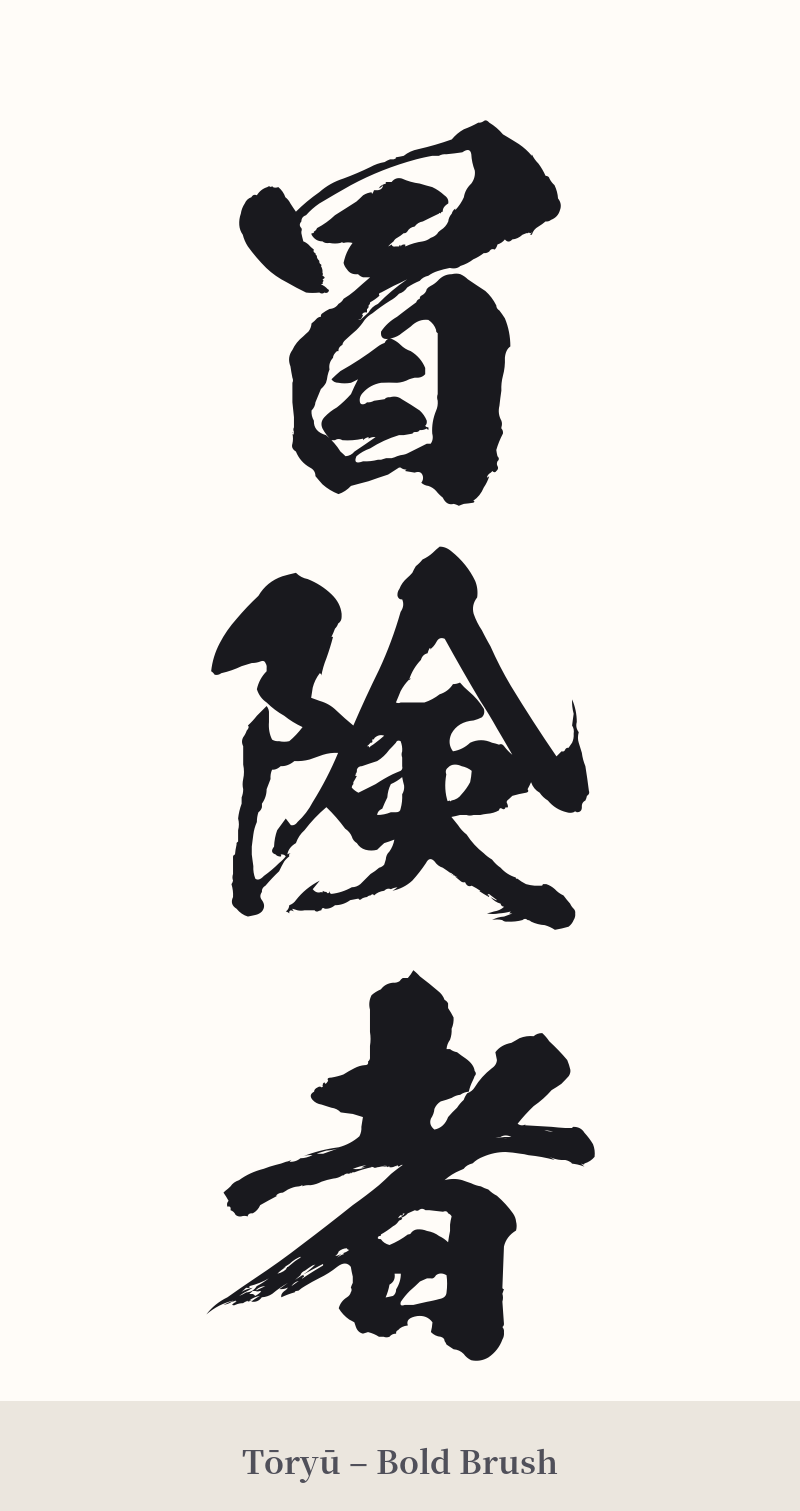
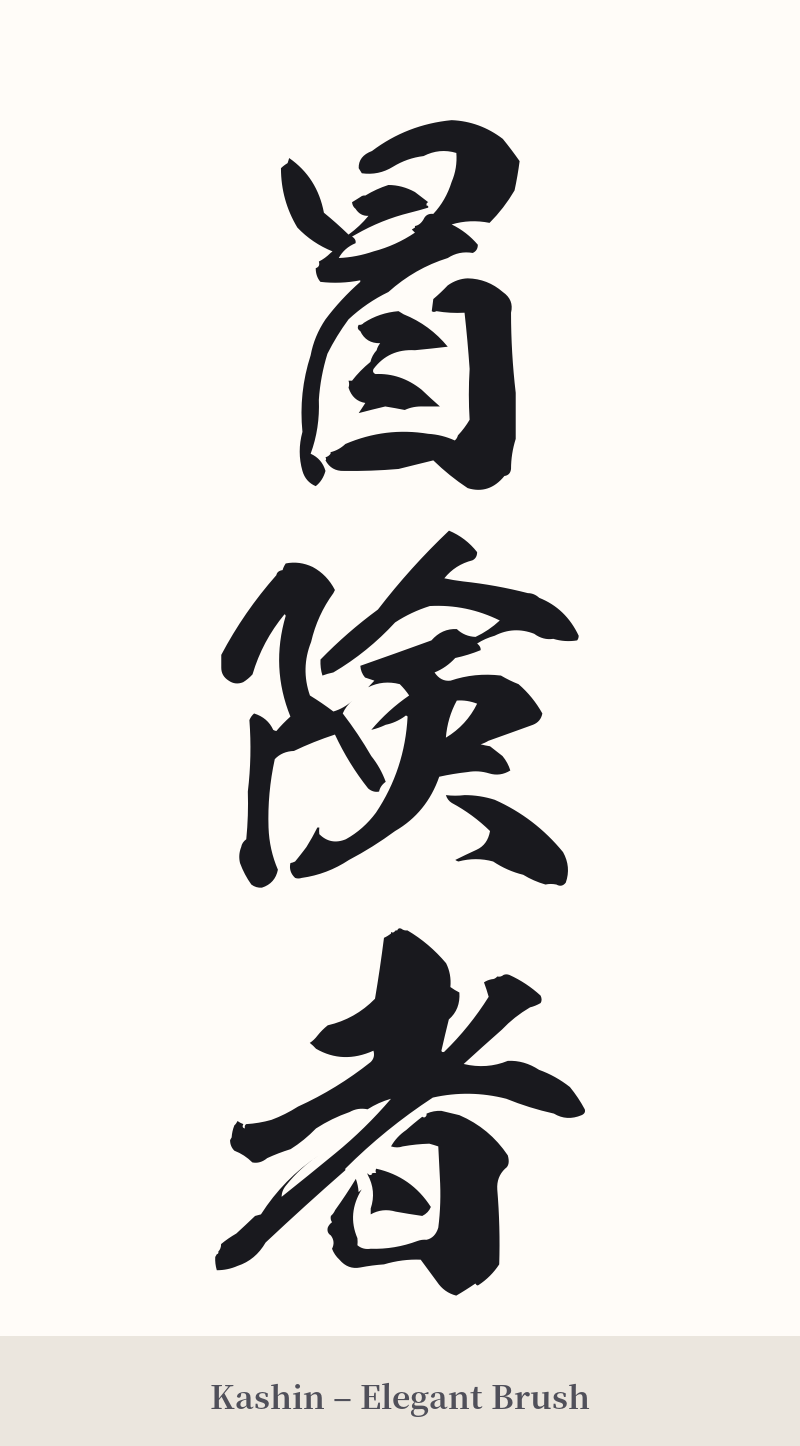
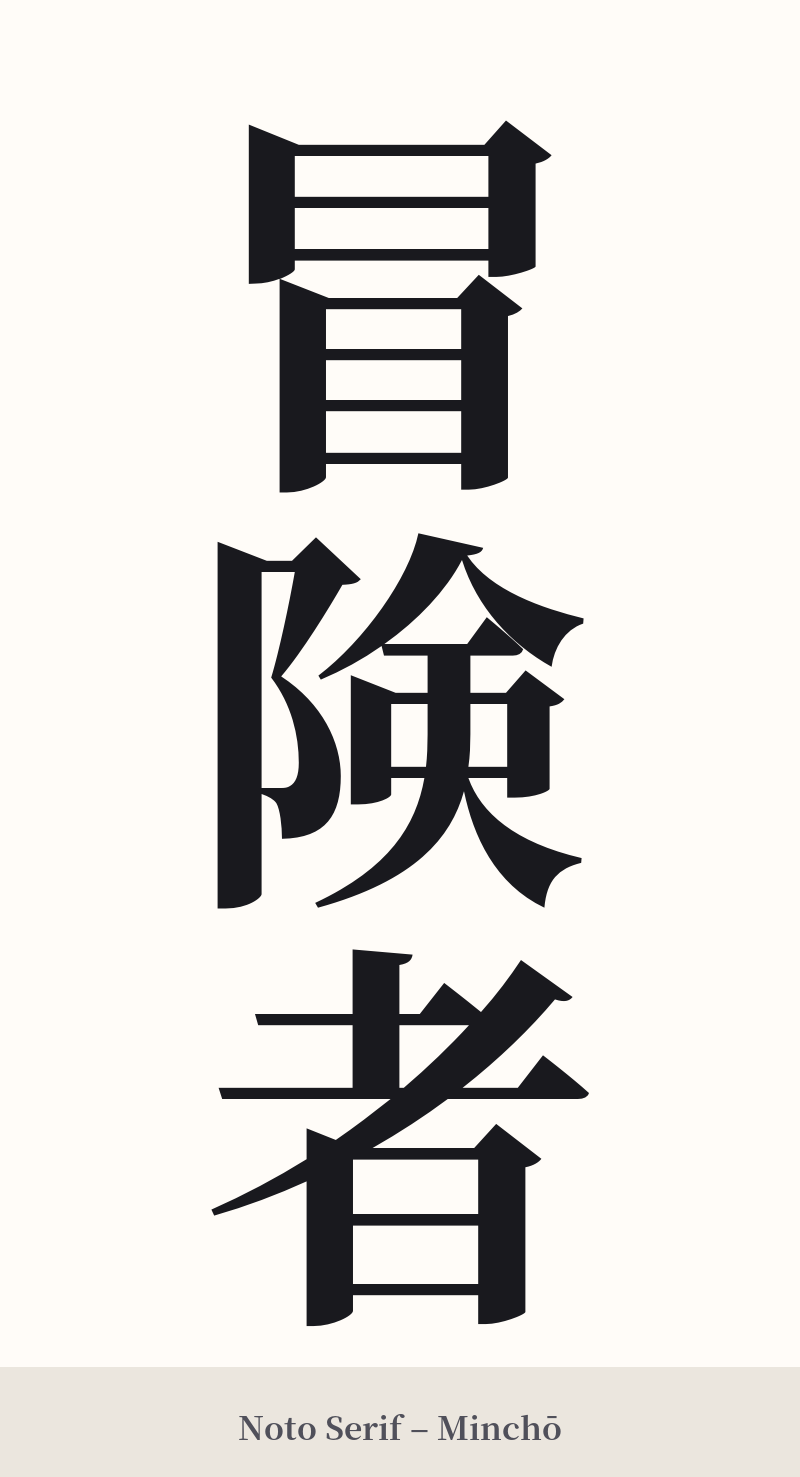
The same kanji can look dramatically different depending on the calligraphy style. Choose a font that matches the mood you want for your tattoo or design.
🎨 Tattoo Suitability
📐 Tattoo Design Guide
For a 冒険者 (Bōkensha) tattoo, the design should reflect the word's dynamic and bold spirit.
– Placement: Vertical alignment is strongly recommended for this three-character word. It creates a powerful and elegant flow. Prime locations include the forearm (either inner or outer), the calf, or running down the spine.
– Font Style: A strong, clear script like Kaisho (block style) will emphasize the determination and strength inherent in the word. For a more fluid and active feel, a Gyosho (semi-cursive) style can evoke a sense of movement and journey.
– Visual Tips: Ensure your artist leaves enough negative space between each of the three kanji to maintain legibility. You could consider integrating a subtle element like a compass rose, a simple mountain range, or a winding path at the beginning or end of the kanji column, but be careful not to overcrowd the characters themselves. The kanji should be the hero of the design.
Comments