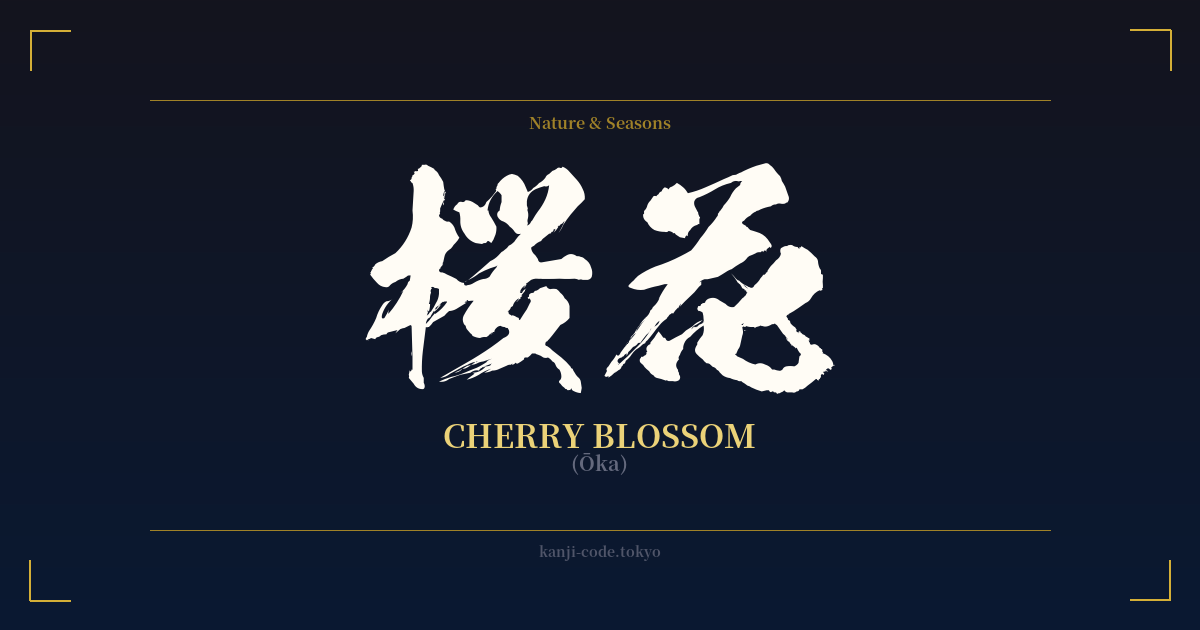
✍️ 桜花 (Ōka) — Cultural Context
桜花 (Ōka) refers to the blossoms of the cherry tree, one of Japan's most powerful and beloved symbols. More than just a flower, it is a cultural icon that encapsulates deep philosophical and aesthetic ideals, representing the very heart of the Japanese sense of beauty and mortality.
The most central theme of 桜花 is transience. The blossoms burst forth in a stunning display of color for a very short period, typically just a week or two, before their petals are scattered by the wind and rain. This fleeting nature is not seen as tragic but as a profound reminder of the impermanence of all things. This concept, known as 'mono no aware' (もののあはれ), is a gentle, wistful appreciation for the ephemeral beauty of life.
This symbolism was deeply intertwined with the samurai ethos. The ideal warrior was expected to live a life of brilliance and purpose, but also to be prepared to die at their peak, without regret—much like a cherry blossom petal falling gracefully in its prime. This connection elevated the cherry blossom from a simple flower to a symbol of honor, duty, and a perfected, albeit brief, existence.
Every spring, the nation turns its attention to the blooming of the cherry trees in a practice called 'hanami' (花見), or flower viewing. Friends, families, and coworkers gather under the blossoming trees to picnic, drink, and celebrate. It is a time of renewal, marking the end of winter and the beginning of the new fiscal and school year in April. It is a moment of collective joy and reflection, a national pause to appreciate the beauty that is here today and gone tomorrow.
While the single character 桜 (sakura) is the common word for the tree and its flower, the two-character compound 桜花 (Ōka) carries a more poetic, literary, and formal weight. It emphasizes the 'flower' (花) aspect of the 'cherry tree' (桜), often used in songs, poems, and artistic contexts to evoke the sublime beauty of the blossoms themselves as a collective phenomenon. Choosing 桜花 is choosing a word that speaks to the art and philosophy of the cherry blossom, not just the botanical reality.
🖌️ Font Styles for 桜花
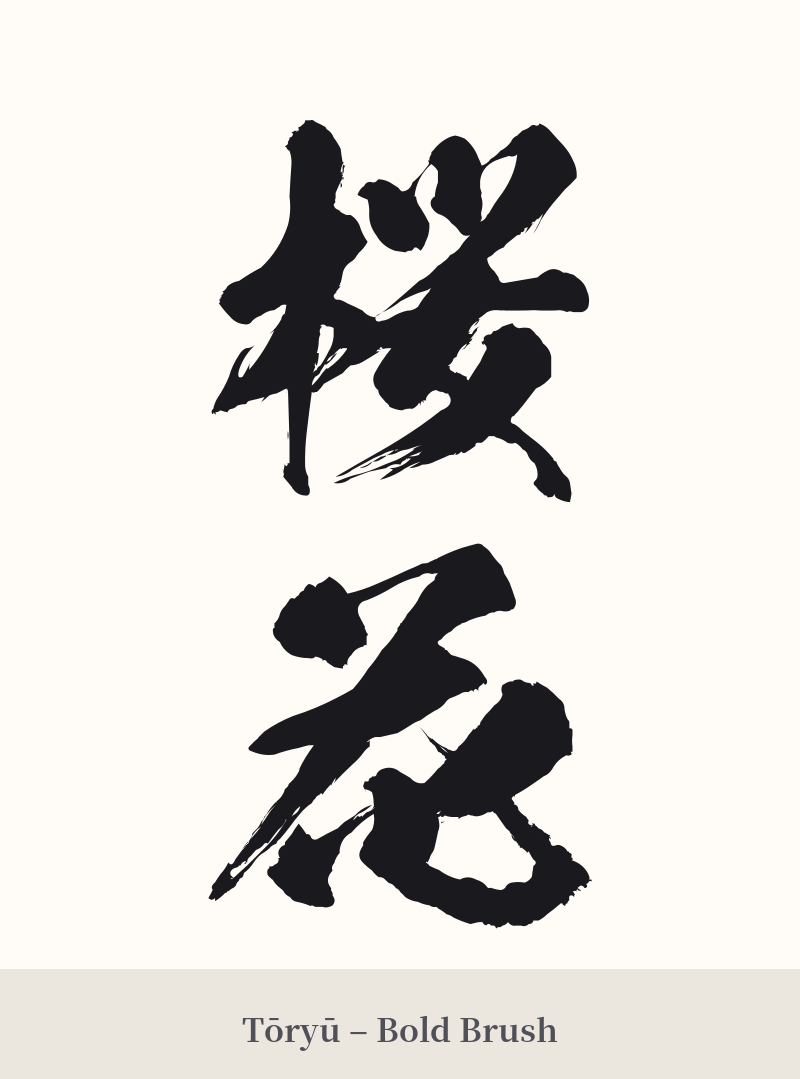
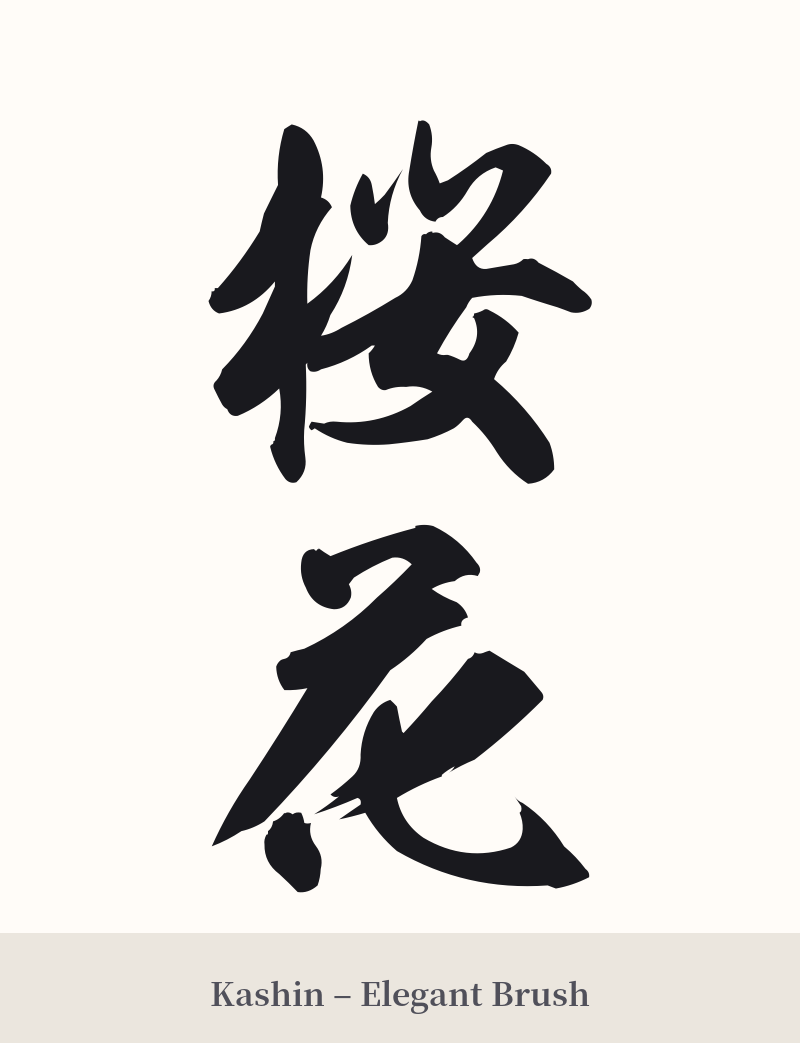
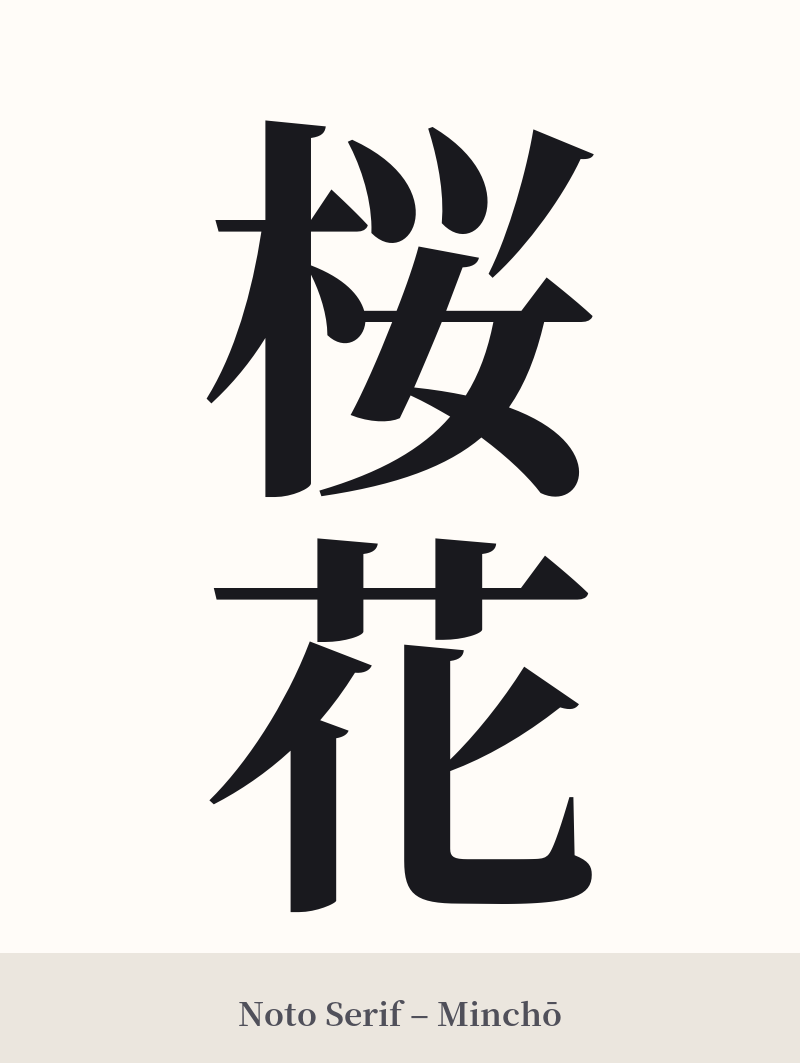
The same kanji can look dramatically different depending on the calligraphy style. Choose a font that matches the mood you want for your tattoo or design.
🎨 Tattoo Suitability
📐 Tattoo Design Guide
When designing a tattoo for 桜花, the goal is to capture its inherent elegance and fleeting beauty.
– Placement: This kanji works beautifully in both vertical and horizontal arrangements. For a vertical design, consider the back of the neck, spine, forearm, or calf. A horizontal layout is well-suited for the clavicle, inner bicep, or across the chest.
– Font Style: An elegant, flowing script like Gyosho (semi-cursive) can mimic the movement of falling petals. For a more traditional and stable look, a clean Kaisho (block script) is timeless. A delicate Mincho (serif) font can also work well, especially for smaller designs, as it maintains clarity.
– Visual Tips: Consider incorporating visual elements like a few scattered petals or a windswept branch alongside the kanji to enhance the theme of transience. Because the character 桜 has 10 strokes, ensure the tattoo is large enough that the lines won't blur together over time. The balance between the more complex 桜 and the simpler 花 is naturally aesthetic, so let the characters breathe.
Comments