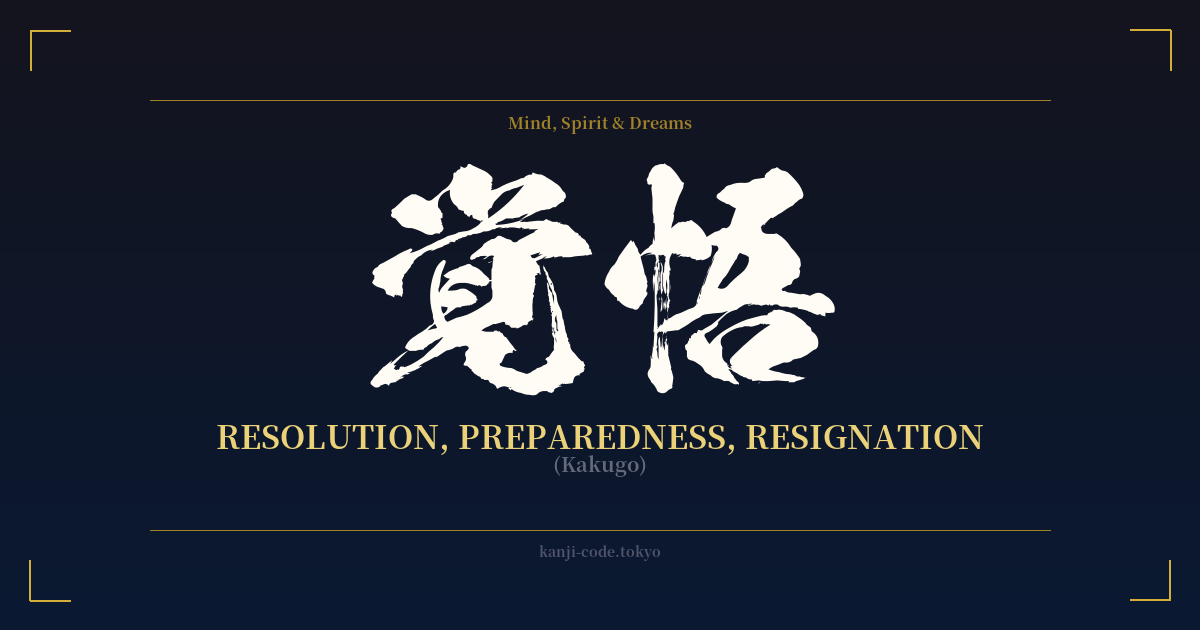
✍️ 覚悟 (Kakugo) — Cultural Context
覚悟 (Kakugo) is a word that resonates deeply within the Japanese psyche, carrying a weight far beyond simple translations like "preparedness" or "resolution." It speaks to a profound state of mental and spiritual readiness, a conscious acceptance of a situation and its potential consequences, no matter how severe. This isn't about hoping for the best; it's about being fully prepared for the worst and moving forward anyway.
The origins of this concept are deeply intertwined with the philosophy of Bushido, the code of the samurai. For a warrior whose life could end at any moment, 覚悟 was a fundamental state of being. It was the "preparedness to die" (死ぬ覚悟 – shinu kakugo), an acceptance of mortality that freed the samurai to act decisively and without fear. This wasn't a morbid obsession with death, but a practical mindset that allowed for clarity and focus in the face of extreme danger. By accepting the ultimate consequence, all lesser fears diminished.
To understand its depth, it's useful to contrast 覚悟 with a more common word for preparation, 準備 (junbi). `Junbi` refers to logistical, external preparations. You do `junbi` when you pack your bags for a trip, study for an exam, or gather materials for a project. Kakugo, on the other hand, is entirely internal. It is the mental fortification you build when you decide to quit your stable job to start a new business, confess your feelings to someone knowing you might be rejected, or face a serious illness with courage. `Junbi` is about arranging the pieces; Kakugo is about steeling your soul for the outcome.
The two kanji that form the word reveal this inner journey. 覚 (kaku) means to "awaken" or "perceive," while 悟 (go) means to "realize" or "attain enlightenment." Together, they suggest a process of awakening to a truth and achieving a deep understanding of it. This isn't a passive realization; it's an active, conscious process that leads to a state of unshakeable resolve.
Even in modern Japan, 覚悟 retains its gravity. You might hear it in the context of a politician taking on a difficult reform, an athlete heading into a championship match, or an entrepreneur risking everything on a new venture. In each case, it implies that the person has looked the potential for failure, loss, or hardship directly in the eye and has made a conscious decision to proceed with unwavering commitment. It is the quiet, powerful resolve to face one's fate head-on.
This is why the translation "resignation" can be misleading. In English, resignation often implies giving up. 覚悟 is the opposite. It is an active acceptance of reality that enables action, not one that leads to passivity. It is the understanding that you cannot control the outcome, but you can control your response—and you choose to respond with courage and determination.
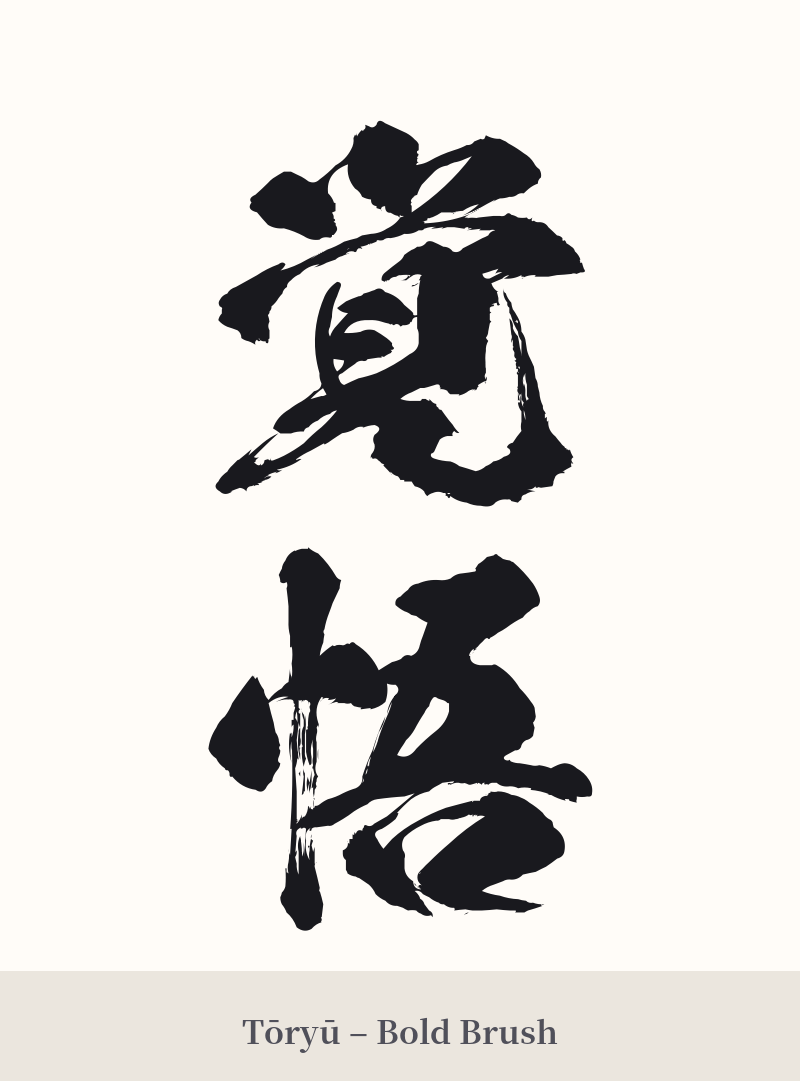
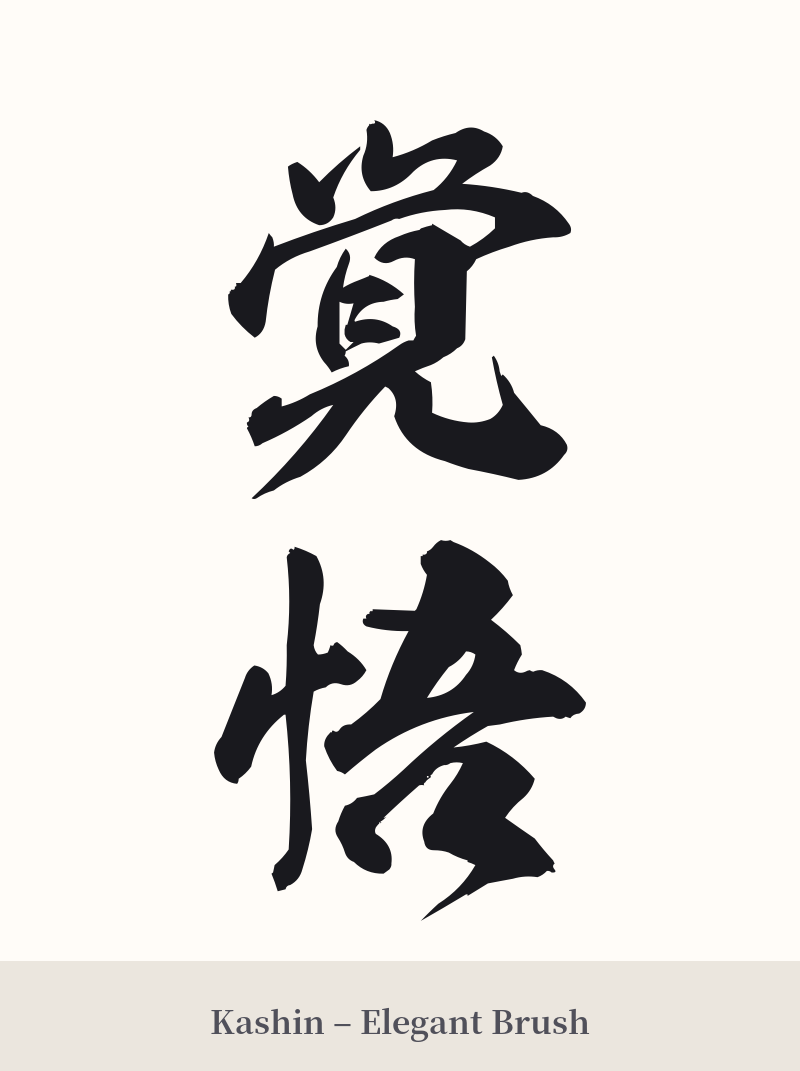
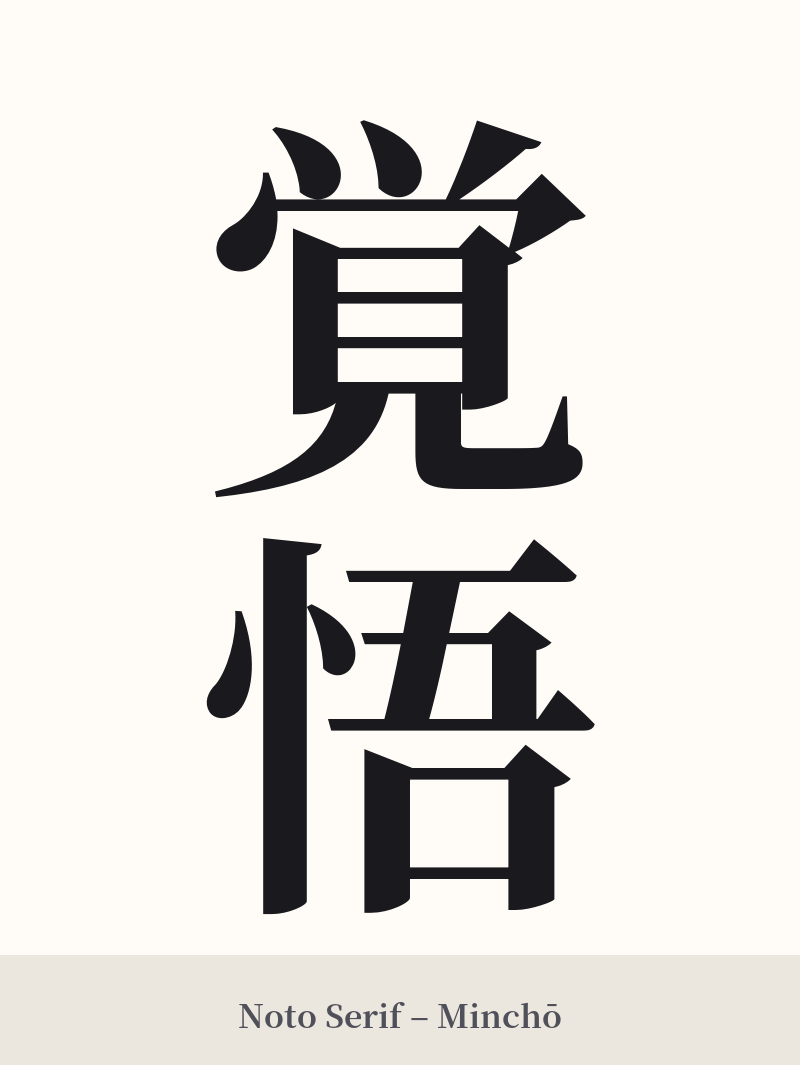
🖌️ Font Styles for 覚悟
The same kanji can look dramatically different depending on the calligraphy style. Choose a font that matches the mood you want for your tattoo or design.
🎨 Tattoo Suitability
📐 Tattoo Design Guide
The strong, resolute meaning of Kakugo lends itself well to bold and clear tattoo designs.
– Placement: A vertical orientation is classic and powerful, working well on the forearm, calf, or along the spine to emphasize its upright strength. For a horizontal design, the chest, upper back, or below the collarbone are excellent choices.
– Font Styles: A standard Kaisho (block script) style emphasizes clarity and structure. For a more dynamic feel, a Gyosho (semi-cursive) or a custom Shodo (calligraphy) brushstroke style can capture the decisiveness and spirit of the word.
– Visual Elements: Consider pairing Kakugo with imagery that reinforces its meaning. A single cherry blossom petal can represent the samurai's acceptance of life's transient nature. An Enso circle can symbolize the enlightenment and acceptance inherent in the word. For a more martial theme, a minimalist kabuto (samurai helmet) could be a fitting companion.
Comments