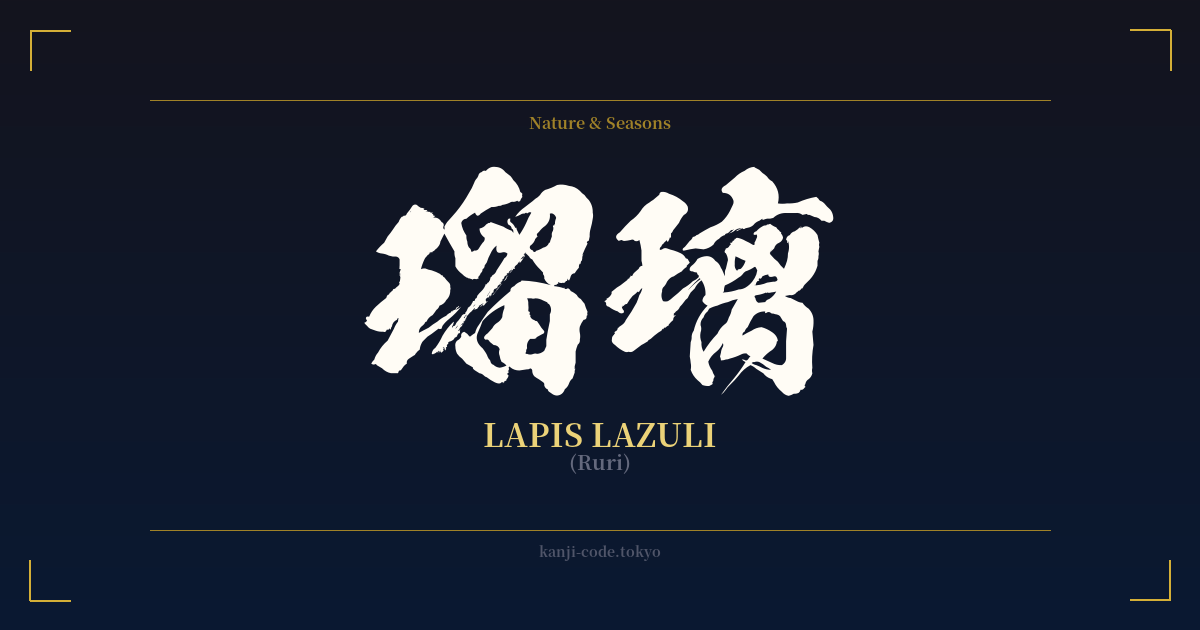
✍️ 瑠璃 (Ruri) — Cultural Context
The word 瑠璃 (Ruri) refers to Lapis Lazuli, a deep-blue metamorphic rock that has been prized since antiquity as a semi-precious stone. In Japan, the gem itself and the concept of 'ruri' hold significant cultural and spiritual weight, despite the stone not being native to the islands. Its journey to Japan is a story of the Silk Road, a testament to ancient trade and cultural exchange.
The most profound association of Ruri is with Buddhism. It is listed as one of the Shippō (七宝), or the Seven Treasures. These treasures, mentioned in various Buddhist sutras, are said to adorn the Pure Land, or paradise. Each treasure represents a different spiritual quality, and Lapis Lazuli symbolizes purity of mind, tranquility, and protection from evil. Its deep, celestial blue was thought to reflect the infinite nature of the Buddha's wisdom and the serenity of the enlightened mind.
This sacred status meant that Lapis Lazuli was used in the creation of precious religious artifacts. The Shōsō-in Repository in Nara, which houses treasures from the 8th century, contains items decorated with this vibrant blue stone, showcasing its value to the imperial court and the Buddhist establishment of the time. The color itself, a vivid ultramarine, became known as ruri-iro (瑠璃色), a specific and highly regarded shade in the traditional Japanese color palette. This color appears in literature and art as a symbol of the divine, the profound, and the unblemished.
Beyond its historical and religious context, 瑠璃 has found a place in modern Japanese culture as a popular female given name. As a name, Ruri evokes qualities of elegance, preciousness, and a serene, deep beauty, much like the gemstone it represents. It carries a sense of timeless grace and a connection to something rare and cherished.
Therefore, the kanji 瑠璃 is more than just the name of a stone; it is a symbol laden with history, spirituality, and aesthetic appreciation. It speaks of a beauty that transcends the material, connecting the earthly to the divine and embodying concepts of purity, wisdom, and good fortune.
🖌️ Font Styles for 瑠璃
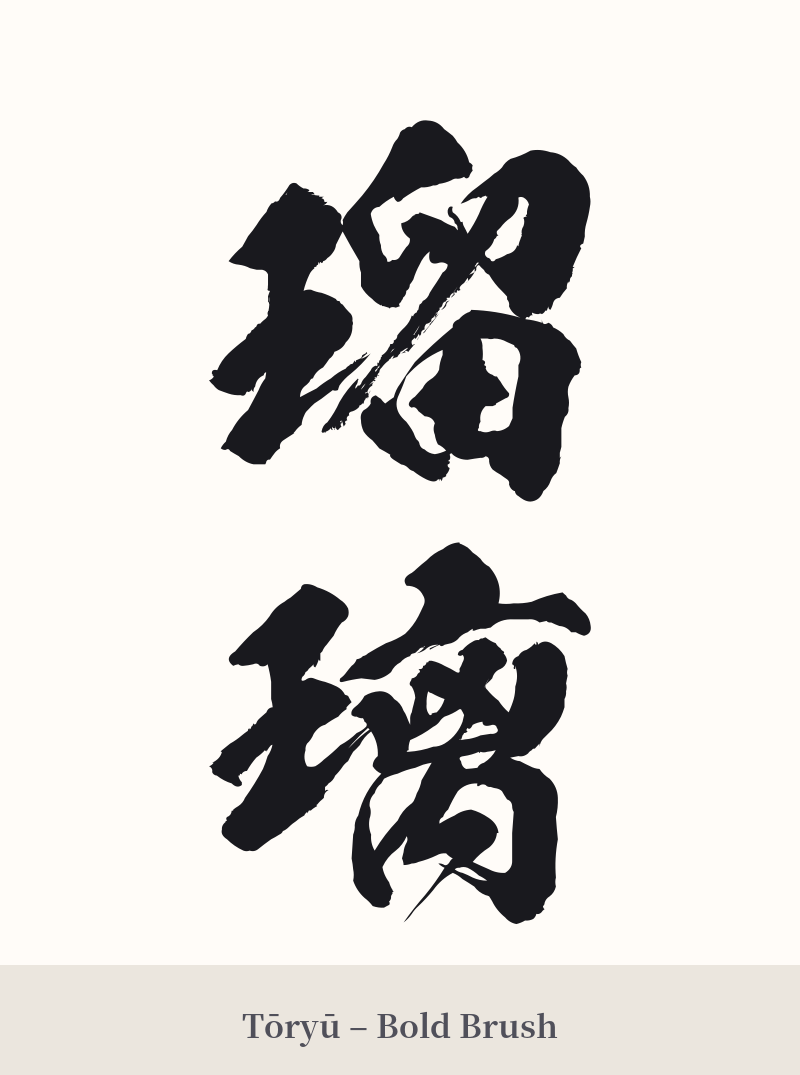
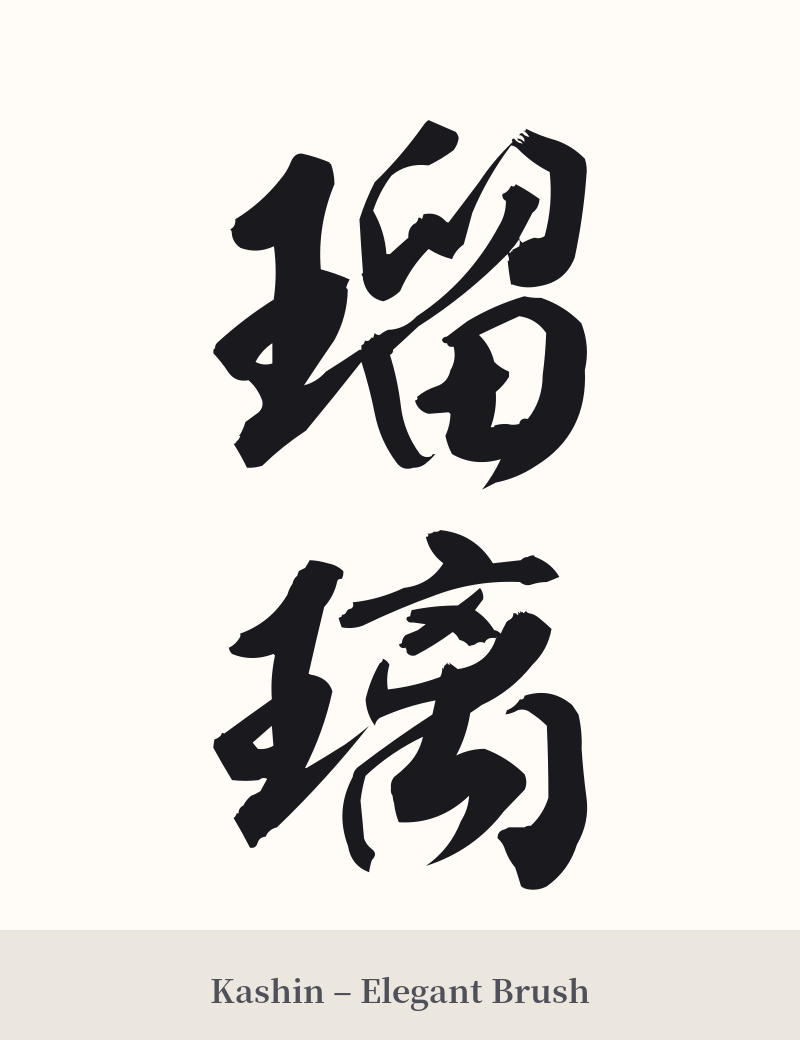
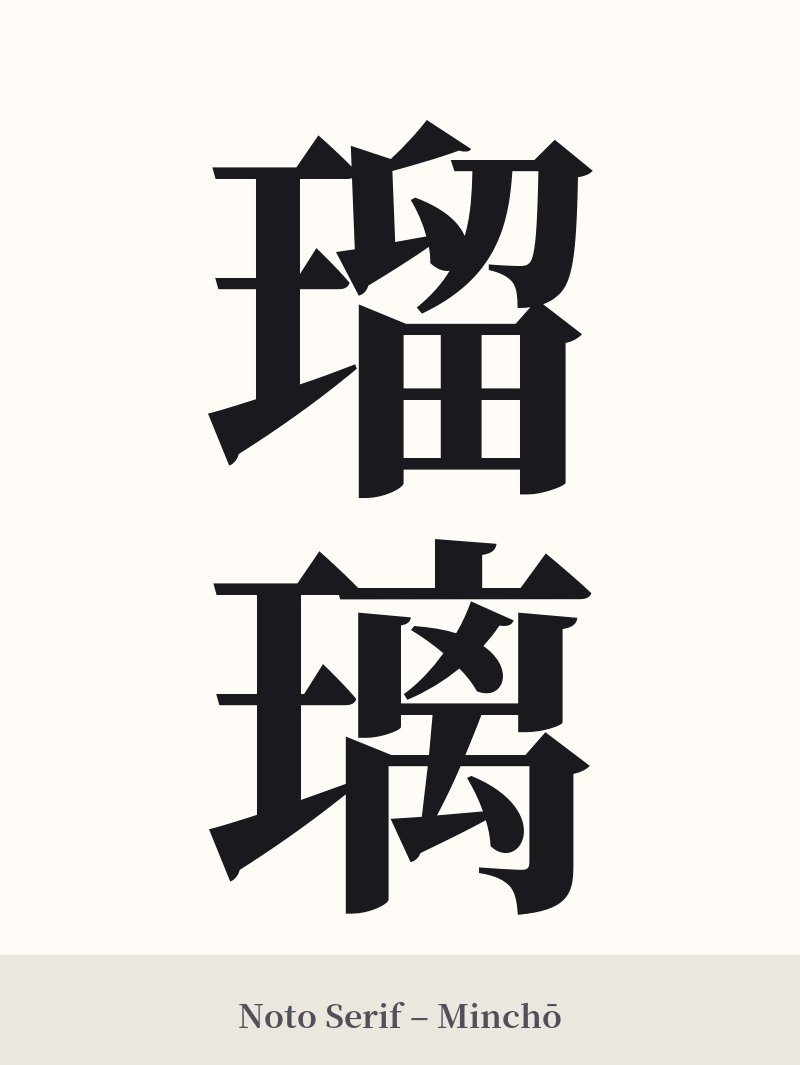
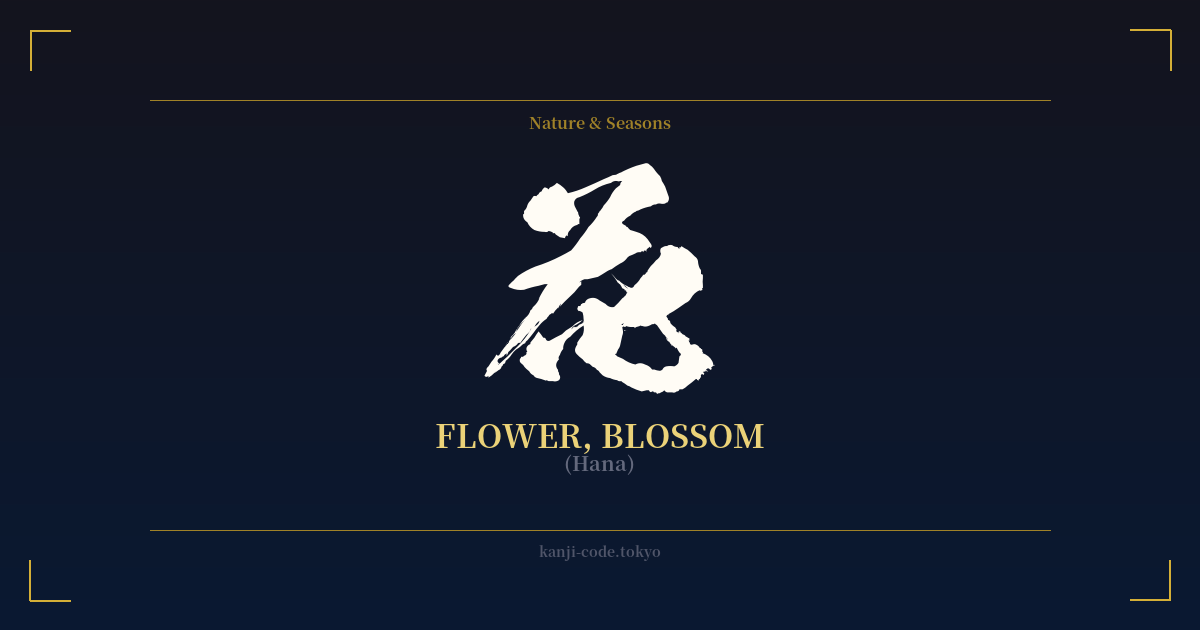
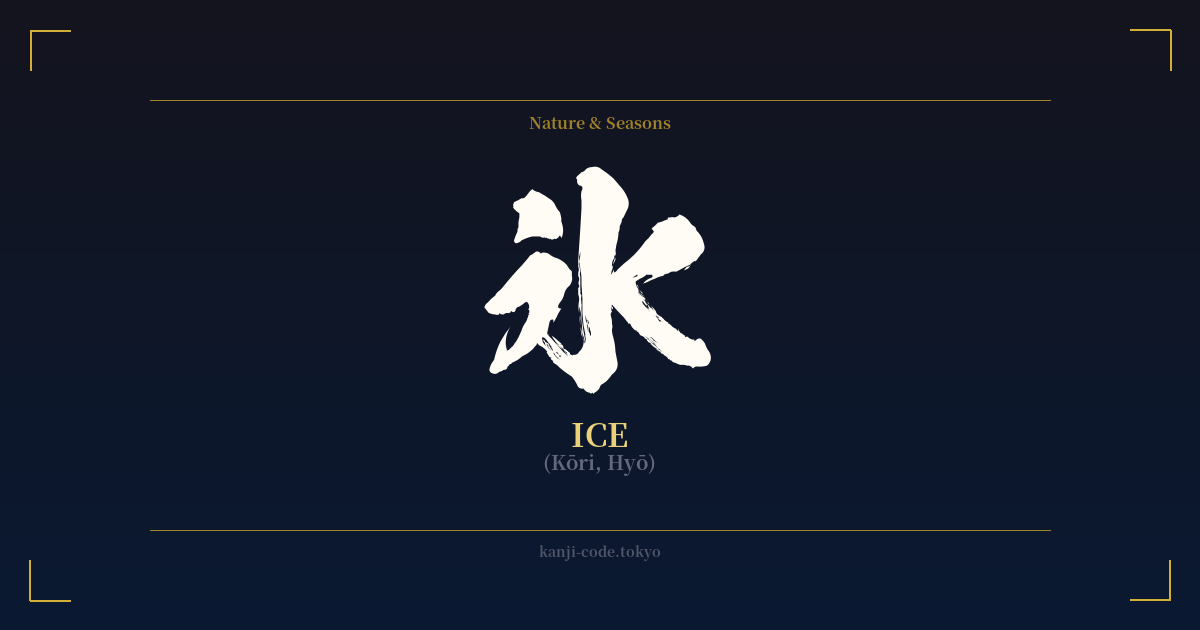
The same kanji can look dramatically different depending on the calligraphy style. Choose a font that matches the mood you want for your tattoo or design.
🎨 Tattoo Suitability
📐 Tattoo Design Guide
When designing a tattoo for 瑠璃, the complexity of the characters is the main consideration. The high stroke count demands clarity and precision.
– Placement: Choose a flat, sufficiently large area of the body. A vertical design looks excellent on the forearm, calf, or along the spine. For a horizontal layout, the back of the shoulder or the chest are good options. Avoid small or highly curved areas like the wrist or ankle.
– Font Style: An elegant, flowing script like Gyōsho (semi-cursive) can beautifully complement the graceful meaning. For a more ancient and dignified feel, Reisho (clerical script) is a strong choice. If you prefer a modern look, a crisp and clear Mincho font can work, but only if the tattoo is large enough to render each stroke distinctly.
– Visual Tips: Consider incorporating the color blue (ruri-iro) into the design, either within the strokes or as a background wash. Pairing the kanji with a lotus flower can emphasize its Buddhist symbolism of purity. A small, subtle design of the lapis lazuli stone itself could also be integrated to make the meaning explicit.
Comments