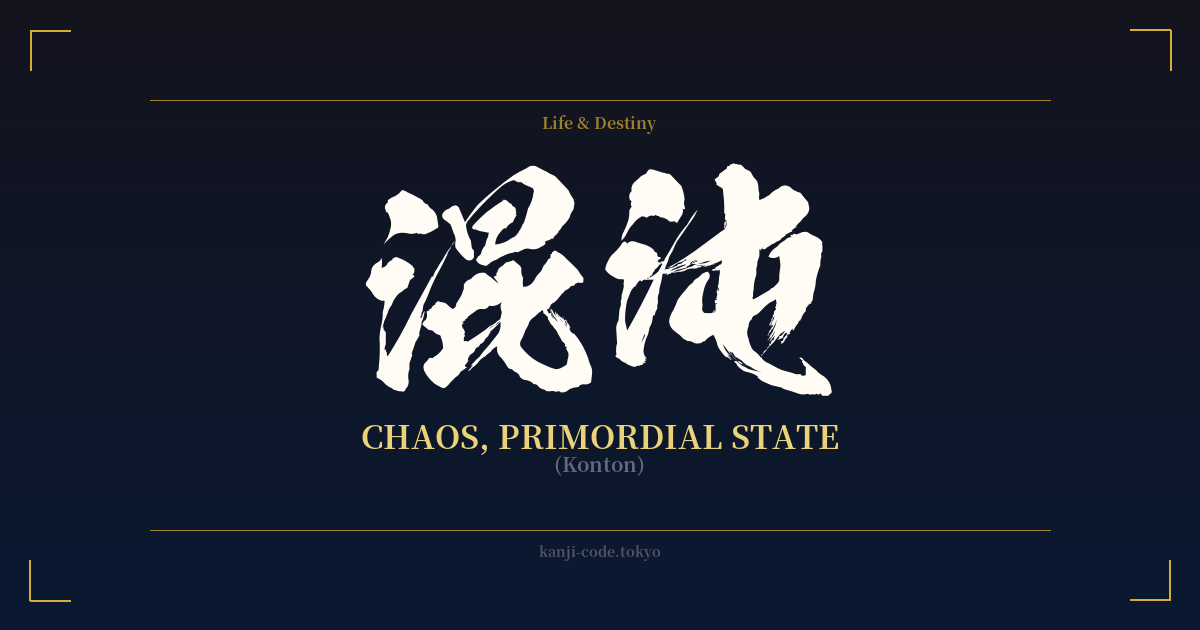
✍️ 混沌 (Konton) — Cultural Context
混沌 (Konton) is a term that resonates with a power far greater than its simple English translation of 'chaos'. In the West, chaos is often seen as a purely negative state of disorder and confusion. In Japan and much of Eastern thought, however, Konton carries a profound, dualistic meaning that encompasses both disorder and the infinite potential of the primordial void.
The concept is deeply rooted in ancient Chinese Taoist philosophy, particularly from texts like the Zhuangzi. Here, 混沌 (Hùndùn in Chinese) is not a state to be feared, but the original, undifferentiated state of the universe before the separation of heaven and earth, yin and yang. It is the formless soup of pure potential from which all things emerge. A famous parable tells of the Emperor of Chaos, who had no orifices. His well-meaning friends tried to give him eyes, ears, and a mouth, but in drilling these holes, they imposed order and inadvertently killed him, destroying the perfect, complete state of chaos.
This philosophical underpinning colors the word's use in Japan. While it can certainly be used to describe a state of utter confusion or a messy situation—'the room is in chaos' (部屋が混沌としている) or 'a chaotic meeting' (混沌とした会議)—it retains its grander, more cosmic significance. It speaks to a state before definition, a powerful emptiness brimming with the possibility of creation.
In modern Japanese culture, Konton is a popular motif in fiction, anime, and video games. It's often used to describe ancient, powerful beings, cosmic-level events, or the internal state of a character grappling with a complete loss of identity and order. It evokes a sense of awe, unpredictability, and immense power that is neither strictly good nor evil. It is the raw energy of the universe before it was shaped and defined.
To embrace the word Konton is to appreciate this duality. It is to understand that from the most jumbled, confusing states, new order and new creation can arise. It represents the breaking down of old forms to make way for the new, a cycle of destruction and creation that is fundamental to the universe itself.
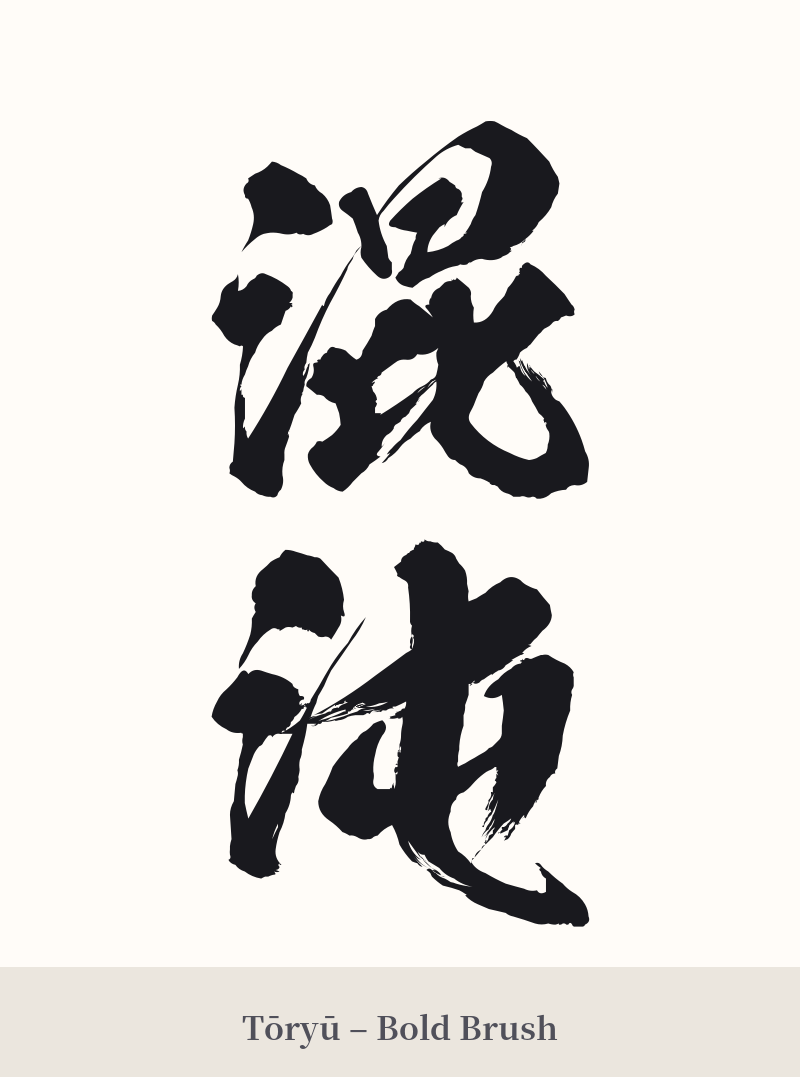
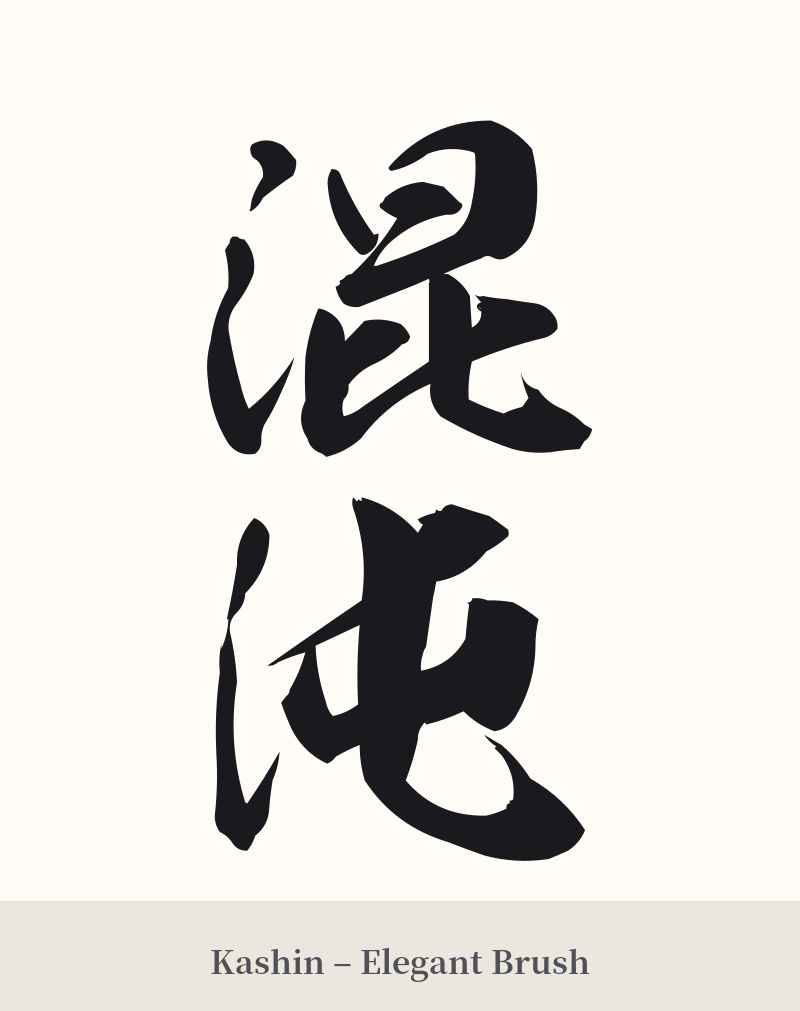
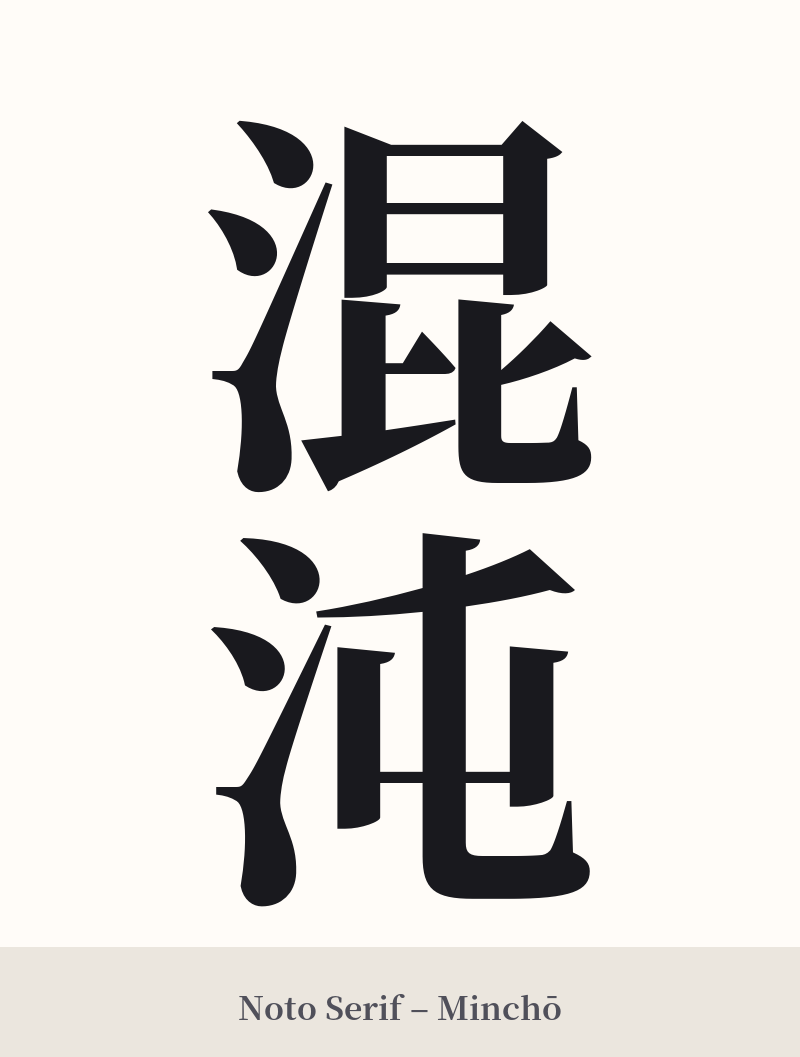
🖌️ Font Styles for 混沌
The same kanji can look dramatically different depending on the calligraphy style. Choose a font that matches the mood you want for your tattoo or design.
🎨 Tattoo Suitability
📐 Tattoo Design Guide
The two-character nature of 混沌 offers great flexibility in design. It works exceptionally well in a traditional vertical alignment, making it ideal for the forearm, calf, or along the spine.
For font styles, you have two compelling options: – Go with the theme: A dynamic, semi-cursive (gyōsho) or fully cursive (sōsho) script can visually represent the idea of chaos. The flowing, energetic brushstrokes will mirror the word's meaning. – Create contrast: Using a strong, clean, and precise block script (kaisho) can create a powerful juxtaposition. The perfect order of the font clashes with the meaning of chaos, creating a thought-provoking design.
To enhance the tattoo, consider incorporating background elements. A background of swirling sumi-e ink washes or splatters can emphasize the 'primordial soup' aspect. Placing the kanji within an Enso (Zen circle) can tie it to the concepts of the void, enlightenment, and the universe, further deepening its philosophical weight.
Comments