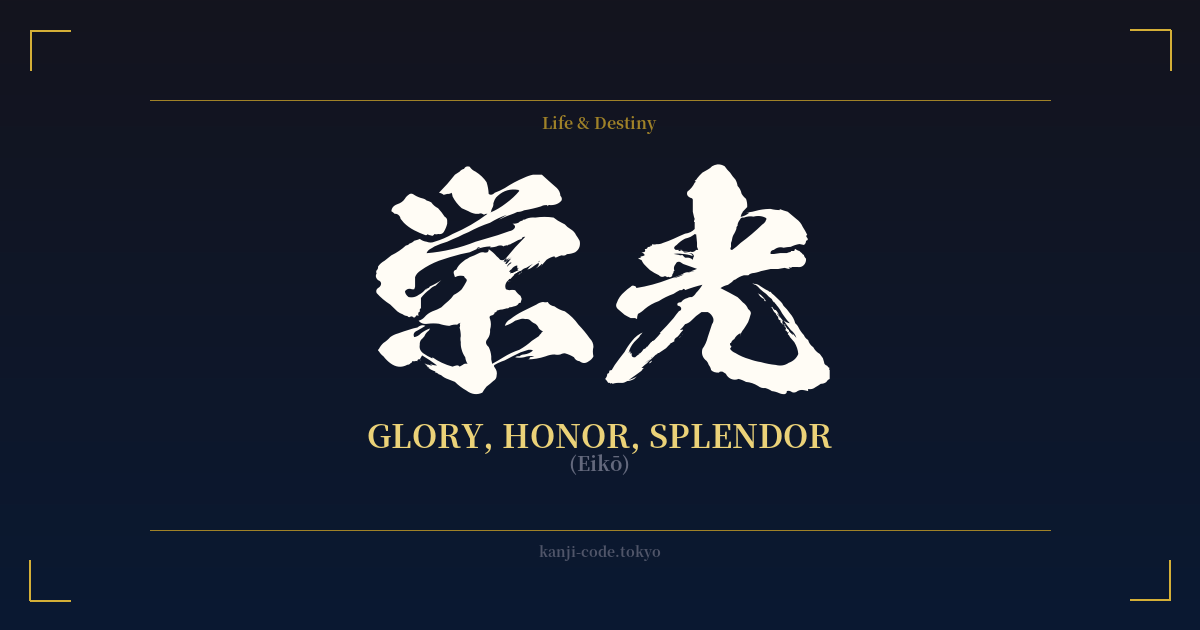
✍️ 栄光 (Eikō) — Cultural Context
栄光 (Eikō) is the Japanese word for 'glory,' 'honor,' or 'splendor.' It captures the brilliant, shining moment of ultimate achievement. It’s not just success; it's the radiant, visible manifestation of that success, a pinnacle of accomplishment that shines for all to see.
The word is a beautiful combination of two characters. 栄 (ei) means 'prosperity,' 'flourishing,' and 'honor.' It evokes images of growth and vitality, like a healthy tree reaching its full potential. 光 (kō) simply means 'light' or 'ray.' When combined, 栄光 literally translates to 'the light of prosperity' or 'shining honor,' painting a vivid picture of glory as a luminous force.
In Japanese culture, 栄光 is most frequently associated with competition and hard-won victory. The phrase 勝利の栄光 (shōri no eikō), 'the glory of victory,' is a cornerstone of sports commentary and stories of athletic achievement. It’s the feeling of an Olympic gold medalist standing on the podium, the triumphant roar of a team that has just won a championship. It represents the culmination of immense effort, sacrifice, and dedication.
Beyond the sports arena, 栄光 speaks to any form of distinguished achievement. It can be the glory of an artist whose work is finally recognized, a scientist making a groundbreaking discovery, or an individual overcoming immense personal odds. It is the external recognition and splendor that follows a long, arduous journey toward a goal.
Historically, while a term like 名誉 (meiyo) might be more closely tied to the samurai's personal code of honor, 栄光 captures the idea of bringing glory to one's family, clan, or lord. It was the ambition to perform deeds so great that their brilliance would reflect upon and elevate the status of one's entire group, ensuring a shining legacy.
The word also carries a spiritual dimension. In Japanese Christian contexts, 栄光 is used to translate the 'glory of God' (神の栄光 – Kami no Eikō), imbuing it with a sense of divine, transcendent splendor. This usage highlights its capacity to describe a light that is both powerful and sublime.
Today, 栄光 remains a deeply aspirational and powerful word in Japan, appearing in song lyrics, movie titles, and motivational speeches. It encapsulates the universal human desire to achieve something great and to have that achievement shine brightly as a testament to one's efforts.
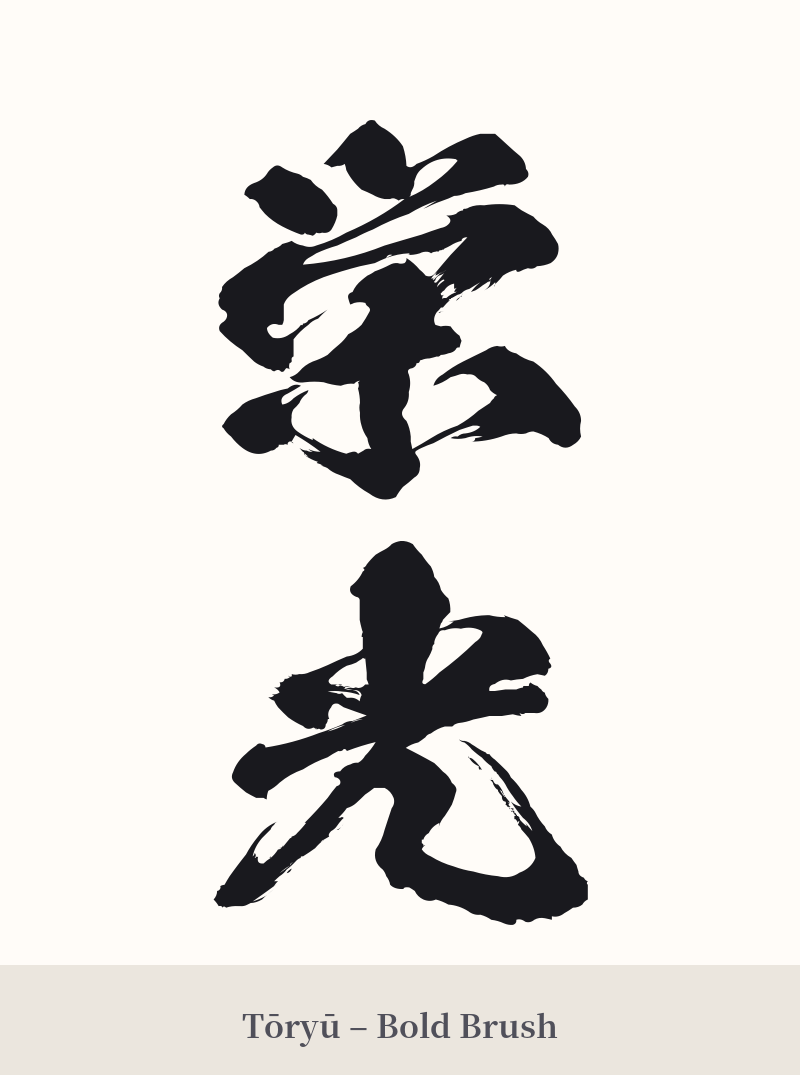
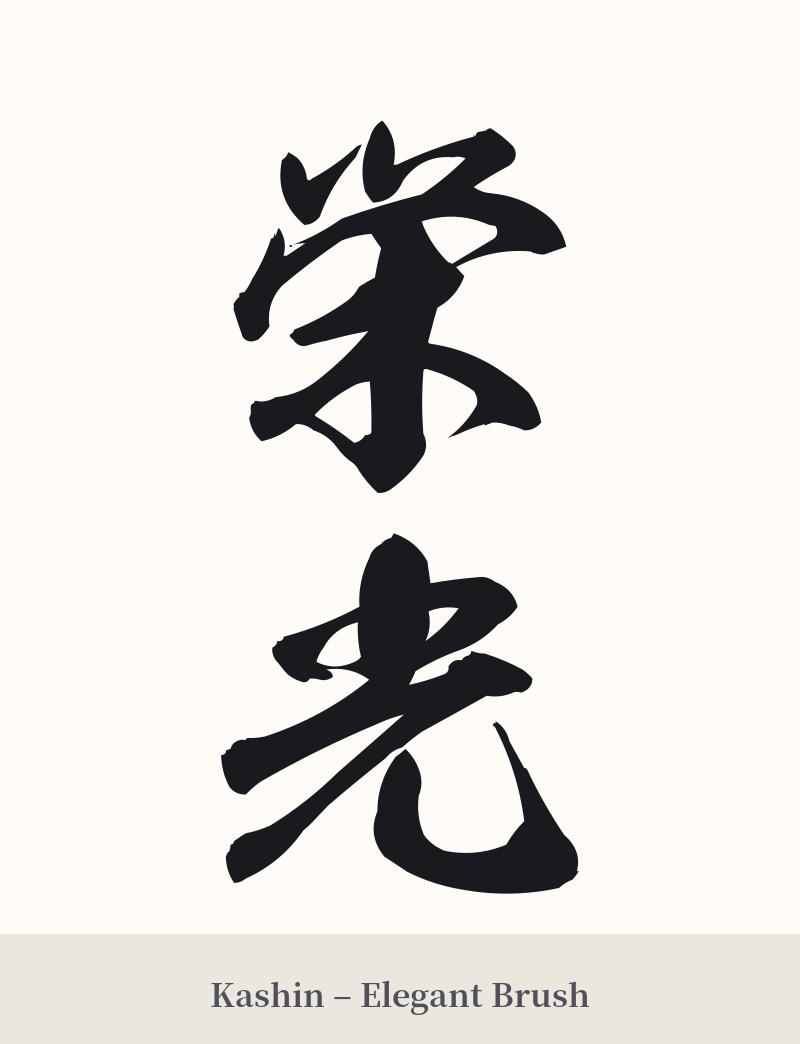
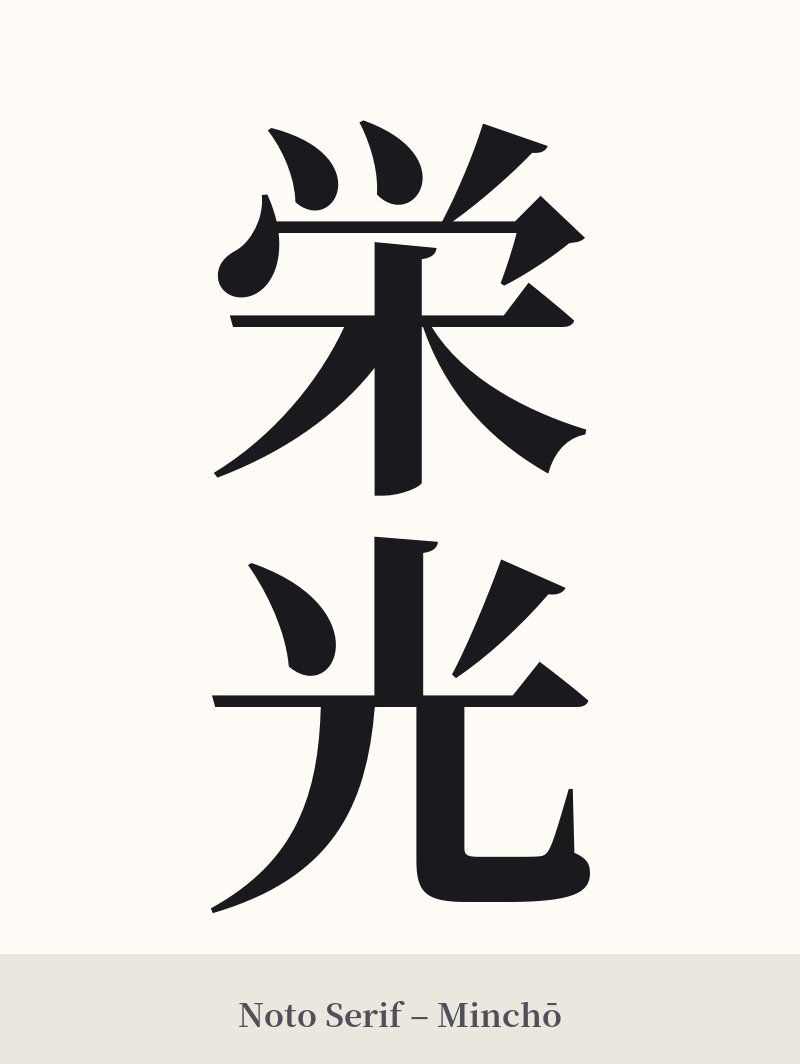
🖌️ Font Styles for 栄光
The same kanji can look dramatically different depending on the calligraphy style. Choose a font that matches the mood you want for your tattoo or design.
🎨 Tattoo Suitability
📐 Tattoo Design Guide
栄光 is a powerful and visually appealing kanji compound that works well for a tattoo. Its balance of a more complex character with a simpler one offers aesthetic interest.
– Placement: A vertical orientation is classic and highly recommended. It looks excellent running down the forearm, the bicep, the calf, or along the spine. For a bolder statement, a horizontal placement across the chest or upper back is also effective.
– Font Style: To emphasize the 'triumphant' nature of the word, a strong and clear script is ideal. Kaisho (block script) provides a sense of stability and dignity. For a more dynamic and fluid feel, a semi-cursive style like Gyosho can add a touch of elegance and motion. Avoid overly thin or complex scripts that could blur over time.
– Visual Tips: Consider having the second character, 光 (light), subtly brighter or with stylized rays emanating from it to visually enhance its meaning. The design can stand alone powerfully, but it could also be integrated into a larger piece that tells the story of the struggle that led to the 'glory,' such as waves, mountains, or a dragon.
Comments