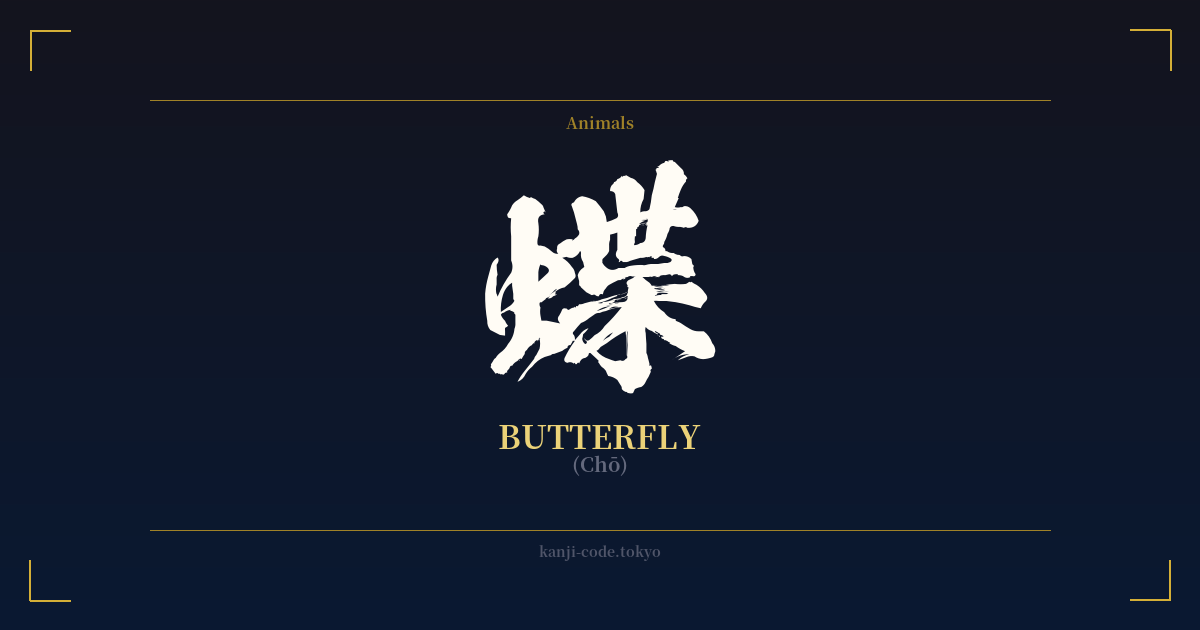
✍️ 蝶 (Chō) — Cultural Context
The kanji 蝶 (Chō), meaning butterfly, is one of the most visually elegant and symbolically rich characters in the Japanese language. Its form itself, a combination of the radical for 'insect' (虫) and a phonetic component, seems to flutter on the page. But beyond its literal meaning, the butterfly holds a profound place in Japanese culture, weaving through art, literature, and spiritual beliefs.
Perhaps the most powerful symbolism associated with the butterfly is transformation. Its life cycle—from a humble caterpillar to a chrysalis and finally to a winged marvel—is a potent metaphor for personal growth, rebirth, and profound change. This makes 蝶 a symbol for anyone who has undergone a significant life transition or embraced a new version of themselves.
Spiritually, butterflies in Japan are often seen as psychopomps, or messengers of the soul. They are believed to be the personifications of the souls of the living, the dying, and the dead. A single butterfly entering your home might be interpreted as a visit from a loved one who has passed away. This connection lends the symbol a deep, sometimes melancholic, sense of spiritual significance and continuity between worlds.
Historically, the butterfly was adopted as the family crest (kamon) of the powerful Taira clan during the Heian period. Their specific crest, the Agehachō (揚羽蝶), or swallowtail butterfly, became a symbol of their aristocratic elegance and influence. This samurai connection adds a layer of historical weight, linking the delicate insect to one of Japan's most famous warrior clans.
In aesthetics, the butterfly is a recurring motif in Japanese art, especially on kimono, ceramics, and woodblock prints. It represents feminine grace, joy, and the fleeting nature of beauty and youth. Two butterflies dancing together are a common symbol of marital bliss.
However, there is also a more modern, nuanced meaning. The term 夜の蝶 (Yoru no Chō), or 'butterfly of the night,' is a poetic euphemism for women who work in bars, clubs, and the entertainment districts. While not an inherently negative term, it adds a layer of worldly sensuality to the otherwise ethereal symbol.
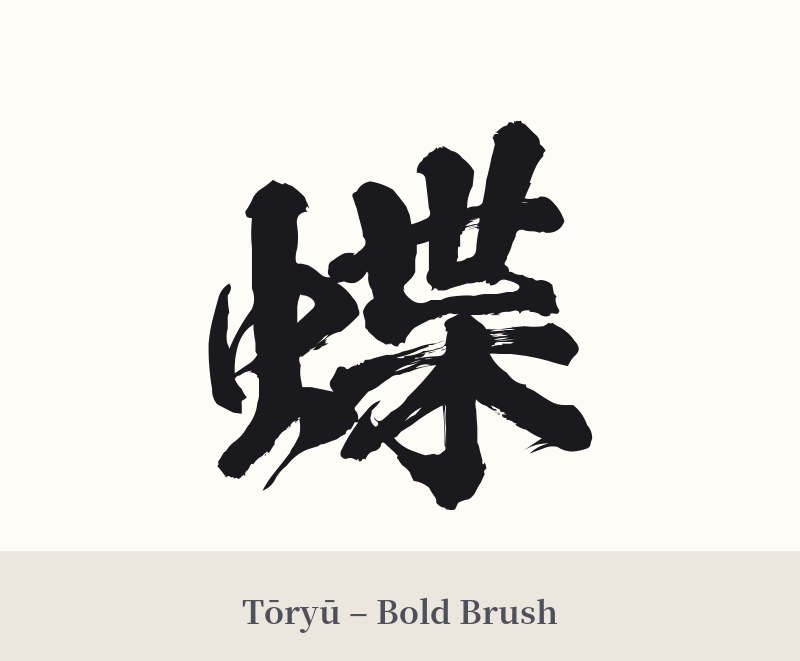
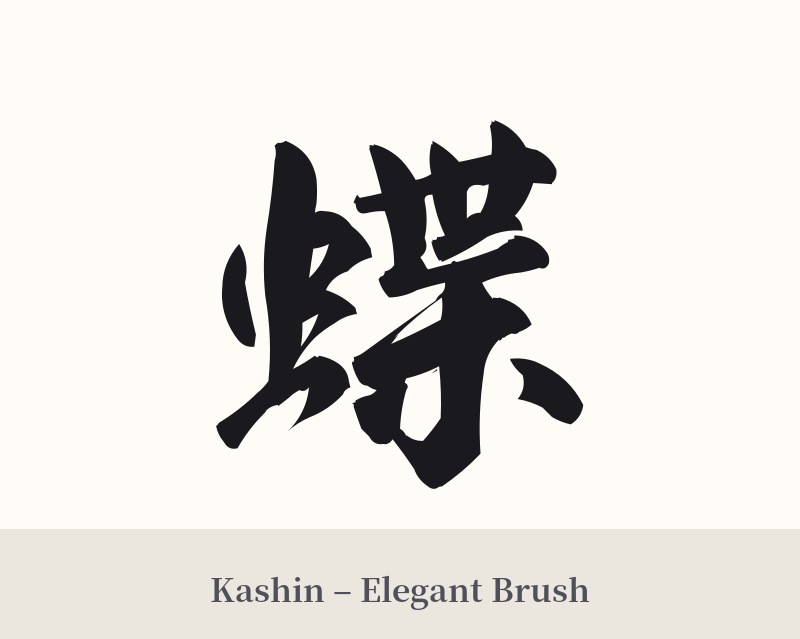
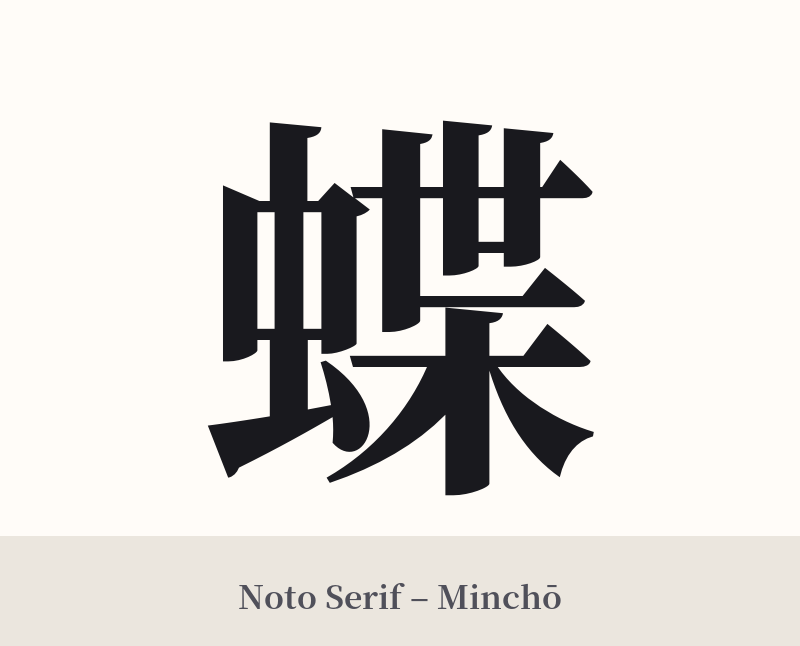
🖌️ Font Styles for 蝶
The same kanji can look dramatically different depending on the calligraphy style. Choose a font that matches the mood you want for your tattoo or design.
🎨 Tattoo Suitability
📐 Tattoo Design Guide
The kanji 蝶 is visually complex and offers many design possibilities. Its elegance demands careful consideration of style and placement.
– Placement: This kanji works best in areas that allow for detail and flow. Consider the back of the neck, the shoulder blade, the inner forearm, or the calf. These locations provide enough space to appreciate its intricate strokes.
– Font Style: A dynamic, semi-cursive or cursive calligraphy style (gyōsho or sōsho) can emphasize the butterfly's sense of movement and organic grace. For a more refined and classic look, a crisp Mincho font highlights its structural elegance.
– Visual Tips: Avoid making this kanji too small, as its 15 strokes will blur together. Consider integrating it with an image of a butterfly, perhaps using the kanji as the body of the insect. Pairing it with other symbolic elements like cherry blossoms (fleeting beauty), peonies (bravery and elegance), or maple leaves (change) can create a richer narrative.
Comments