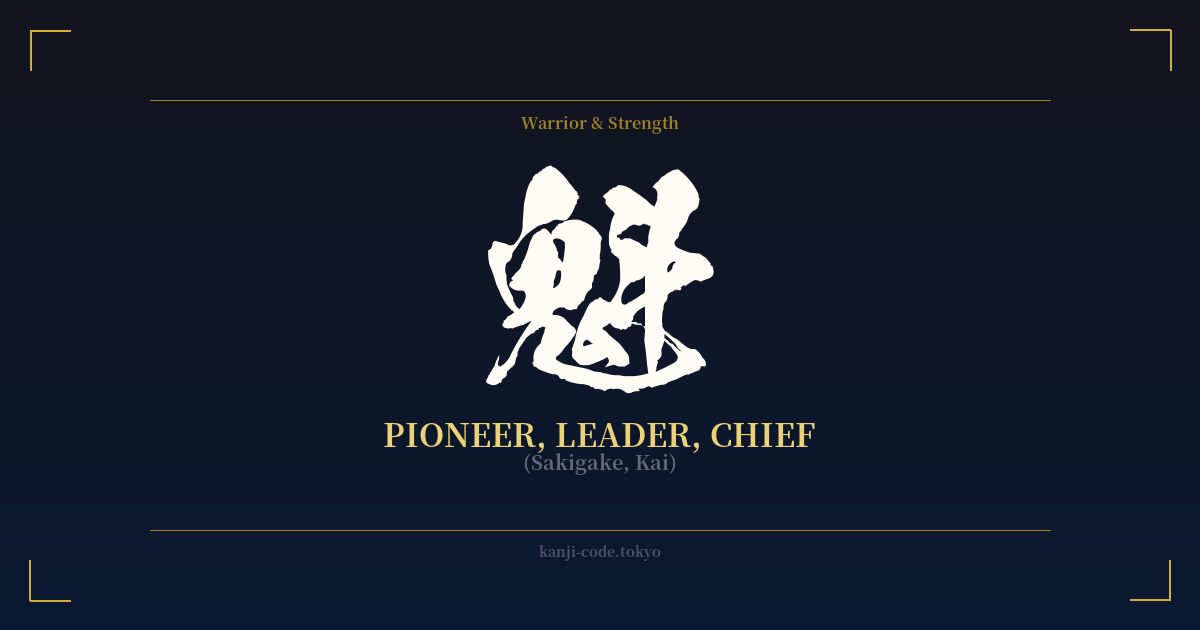
✍️ 魁 (Sakigake, Kai) — Cultural Context
The kanji 魁, read as `sakigake` or `kai`, embodies the spirit of being first. It translates to 'pioneer,' 'leader,' or 'forerunner,' but its historical roots are far more dynamic, evoking the image of the first warrior to charge into enemy lines.
This character is deeply connected to the samurai ethos, where being the `sakigake` in a battle was an act of immense bravery and a path to great honor. This wasn't just about recklessness; it was a calculated demonstration of courage meant to inspire one's allies and demoralize the enemy. It represents the one who takes the greatest risk for the greatest reward, a true trailblazer.
The character's construction tells a fascinating story. It is a compound of two radicals: 鬼 (oni) on the left and 斗 (tou) on the right. While 鬼 is now commonly known as 'demon' or 'ogre,' its ancient meaning was broader, referring to a powerful spirit, the head of a clan, or a chieftain. It signified formidable presence and power. The 斗 represents the Big Dipper constellation, a tool used for navigation and finding direction. Together, they form a powerful metaphor: a chief or leader who, like the North Star, guides their people.
In Japanese culture, the use of 魁 extends beyond the battlefield. It is often used in a poetic sense to describe the first sign of a changing season. The term `梅魁` (baikai) or `ume no sakigake` refers to the first plum blossom that bravely opens in the cold of late winter, heralding the arrival of spring. This imbues the kanji with a sense of hope, resilience, and the beauty of being the first to usher in a new era.
Today, 魁 is a popular character in male names, such as Kai, bestowed with the hope that the child will grow up to be a leader, an innovator, and someone unafraid to forge their own path. The spirit of `sakigake` is applied to any field, from science and arts to business and social change. It represents anyone who challenges the status quo, ventures into uncharted territory, and leads the way for others to follow. It is a symbol not just of leadership, but of courageous, pioneering leadership.
🖌️ Font Styles for 魁
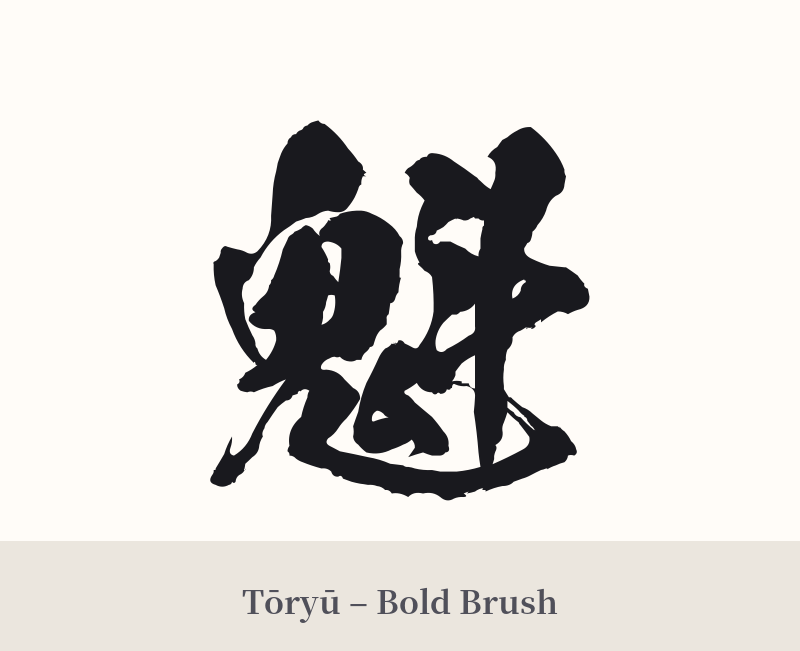
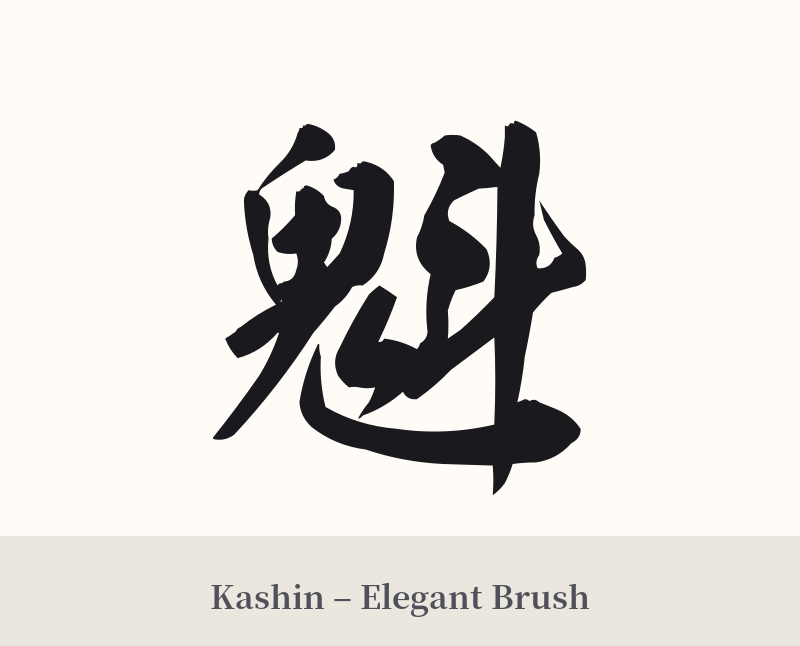
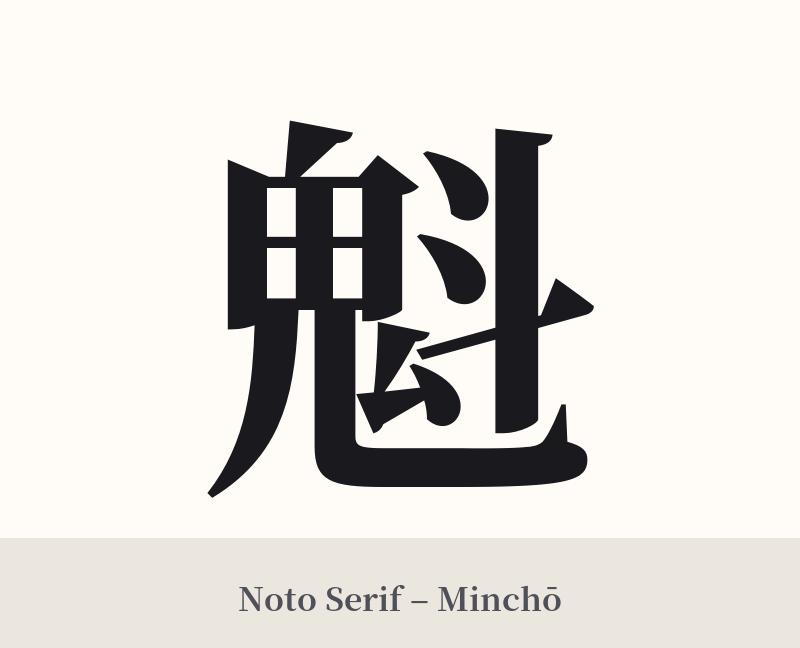
The same kanji can look dramatically different depending on the calligraphy style. Choose a font that matches the mood you want for your tattoo or design.
🎨 Tattoo Suitability
📐 Tattoo Design Guide
The kanji 魁 is visually complex and powerful, making it an excellent choice for a standalone tattoo. Its strong presence works well in prominent locations.
– Placement: Consider areas that allow for a clear, vertical orientation, such as the forearm, the calf, or the back of the shoulder. It can also work as a strong centerpiece for a back tattoo.
– Font Style: The choice of script can dramatically alter the feeling. A bold, angular Kaisho (block script) emphasizes its strength and authority. A semi-cursive Gyosho script can add a sense of movement and action, fitting for the 'first to charge' meaning. An aggressive, flowing Sosho (cursive) script can capture its raw, pioneering energy.
– Visual Tips: Due to its 13 strokes, this kanji should not be tattooed too small, as the details might blur together over time. It stands powerfully on its own, but can be paired with imagery like a single plum blossom to represent its 'first of the season' meaning, or with abstract brush strokes to enhance the sense of motion and impact.
Comments