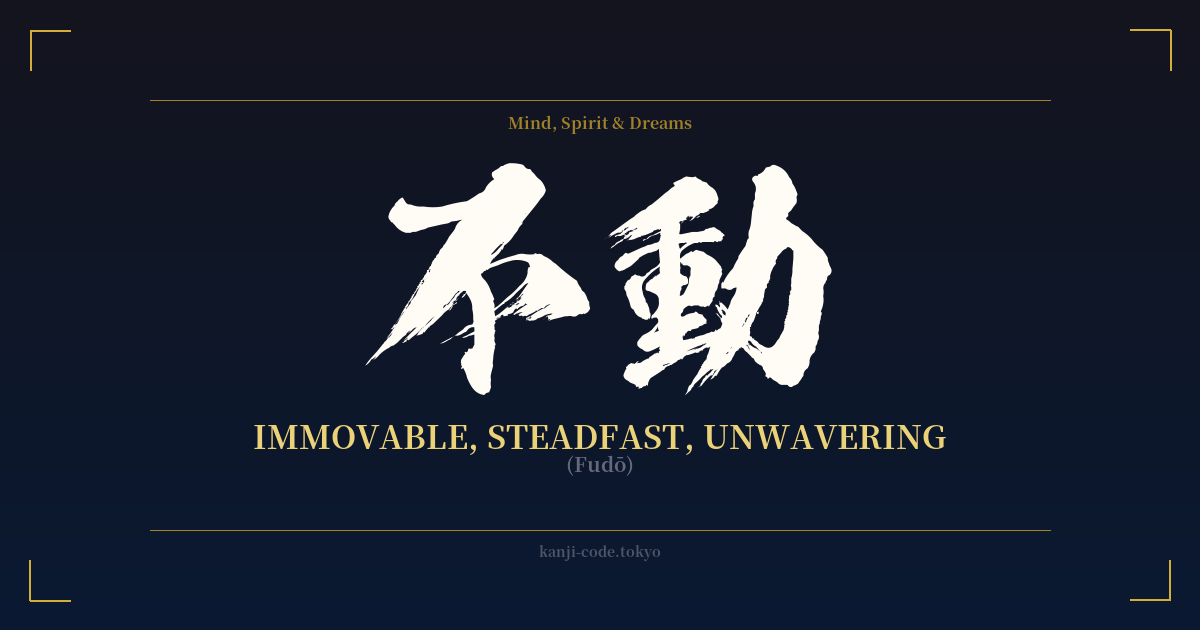
✍️ 不動 (Fudō) — Cultural Context
The Japanese word 不動 (Fudō) translates literally as 'not moving.' It is composed of the character for 'not' (不) and 'move' (動). However, its meaning transcends this simple definition, delving into deep philosophical and spiritual realms of Japanese culture. It embodies the concepts of steadfastness, immovability, and an unshakeable will.
At its core, Fudō represents a state of absolute stability, not just physically, but mentally and spiritually. It is the mountain that stands firm against the storm, the ancient tree with roots deep in the earth. This is not a passive or stubborn immovability, but a dynamic, centered strength that comes from inner resolve and clarity.
The most significant cultural association of Fudō is with 不動明王 (Fudō Myōō), the Immovable Wisdom King. Fudō Myōō is a central figure in Japanese Esoteric Buddhism, particularly the Shingon and Tendai sects. He is a wrathful deity, but his fierce appearance is a manifestation of his compassion. Surrounded by flames of purification, he wields a sword to cut through ignorance and delusion, and a rope to bind negative forces and guide the faithful.
Fudō Myōō represents the unwavering power that converts anger into salvation and destroys obstacles on the path to enlightenment. Therefore, the word Fudō itself is imbued with this protective, purifying, and powerful spiritual energy. It’s a symbol of conquering one's inner demons and remaining steadfast in one’s convictions and practice.
This concept extends into the world of martial arts through the term 不動心 (Fudōshin), or 'immovable mind.' For a samurai or a modern martial artist, Fudōshin is the ideal state of mind in combat—calm, centered, and completely unfazed by an opponent's feints or attacks. It is a mind that is not fixed or frozen, but fluid and adaptable, yet anchored by an unshakable core. This mental fortitude allows for clear perception and instantaneous, appropriate action.
Interestingly, the word also appears in a very mundane context: 不動産 (fudōsan), which means 'real estate' or 'immovable property.' This literal use provides a grounding contrast to its profound spiritual meaning, showcasing the versatility of the Japanese language. But for those seeking its deeper essence, Fudō remains a powerful symbol of inner strength, resilience, and unshakable spirit.
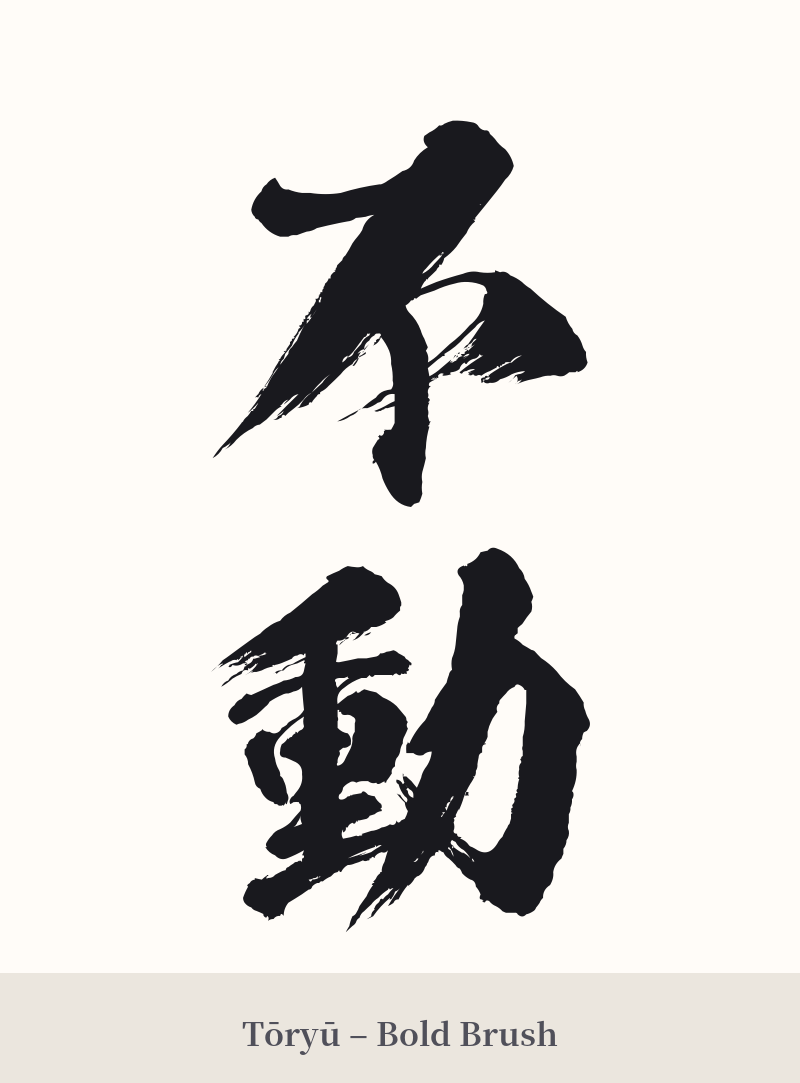
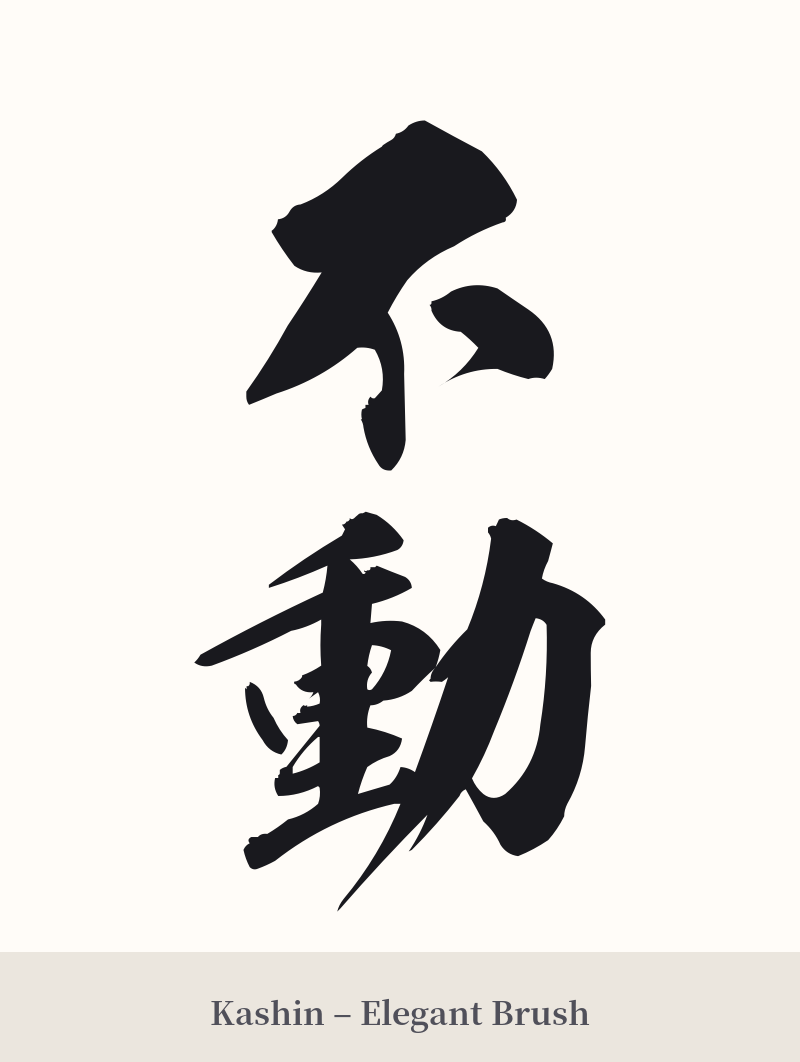
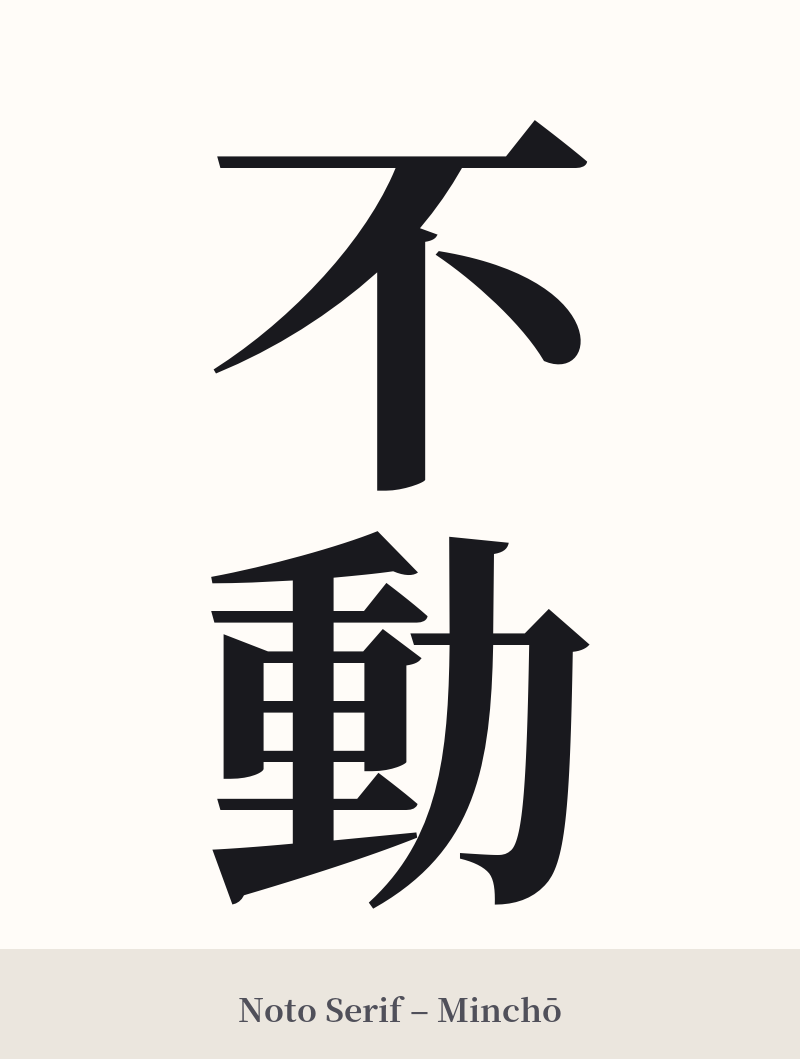
🖌️ Font Styles for 不動
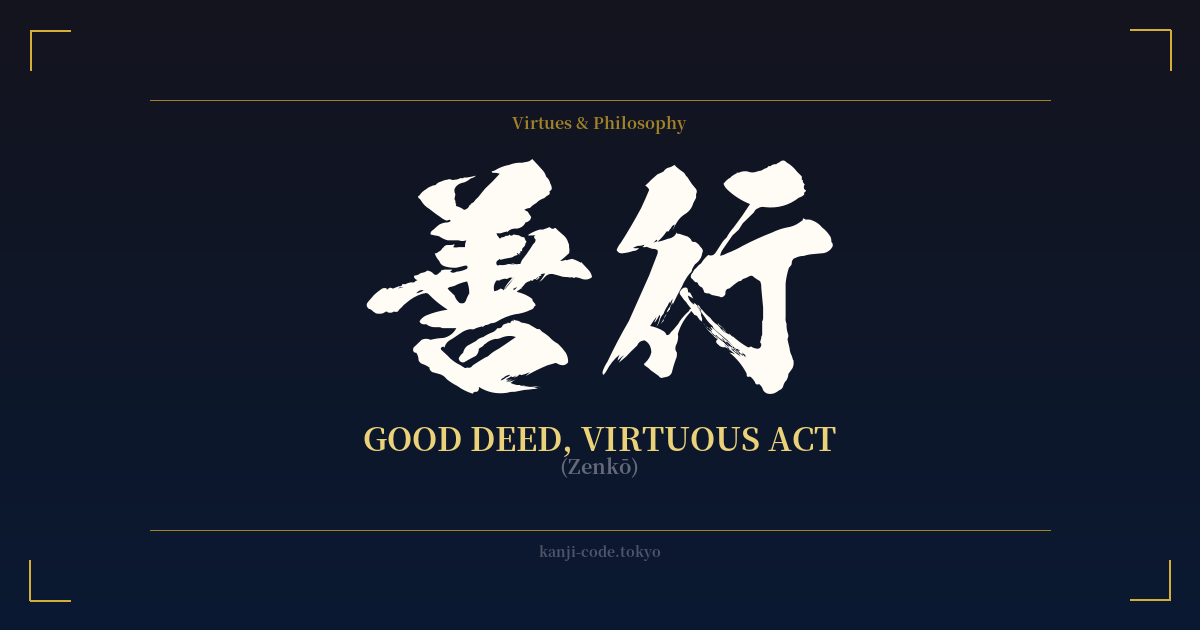
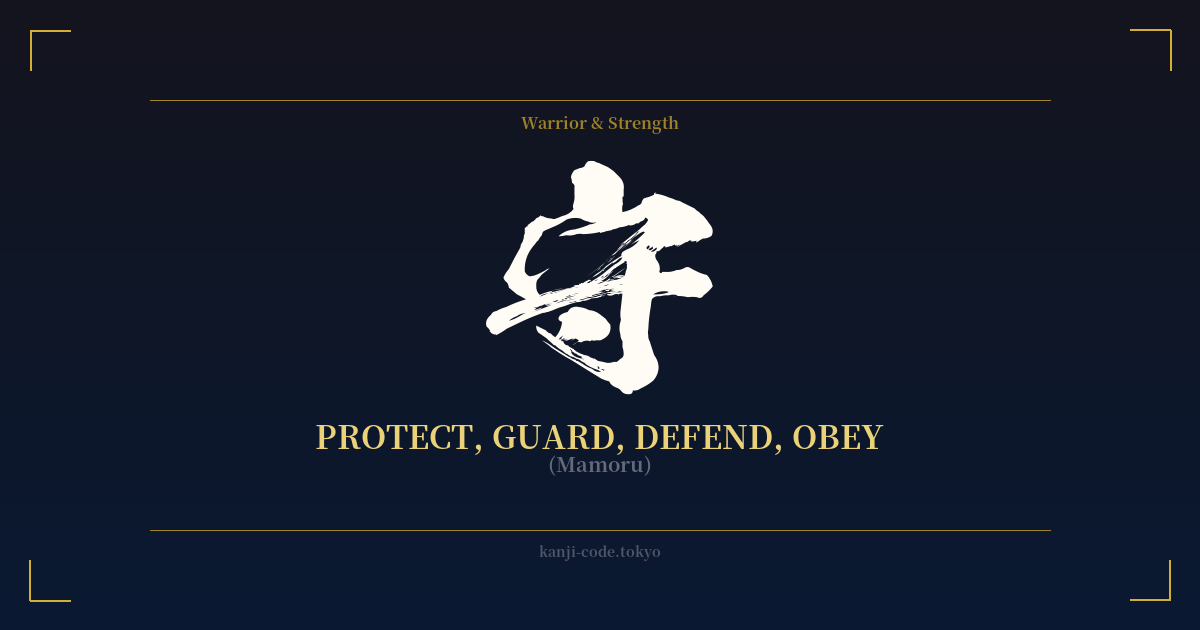
The same kanji can look dramatically different depending on the calligraphy style. Choose a font that matches the mood you want for your tattoo or design.
🎨 Tattoo Suitability
📐 Tattoo Design Guide
The powerful and stable meaning of 不動 lends itself to strong, deliberate tattoo designs.
– Placement: Vertical alignment is classic and highly recommended. It works exceptionally well along the spine, forearm, or calf, creating a pillar of strength. A horizontal placement on the chest or upper back can also convey a sense of stability.
– Font Style: A bold, clear script like Kaisho (block style) emphasizes the 'immovable' quality. For a more dynamic feel that hints at the flames of Fudō Myōō, a powerful Gyosho (semi-cursive) or a custom brushstroke style with strong, energetic strokes is an excellent choice.
– Visual Elements: Consider integrating elements associated with Fudō Myōō to deepen the tattoo's meaning. A background of stylized flames, the hilt of a vajra sword (kurikara ken), or a coiled rope can be woven into the design to evoke the deity's protective power without depicting the full figure.
Comments