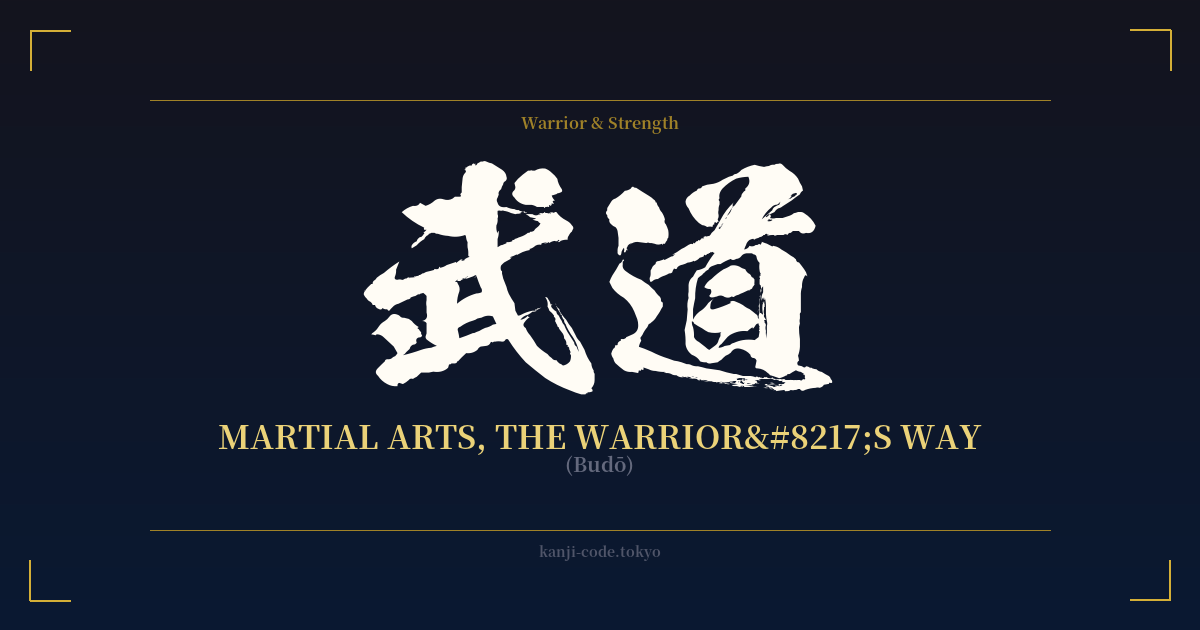
✍️ 武道 (Budō) — Cultural Context
武道 (Budō) is a term that goes far beyond its simple translation of 'martial arts.' It literally means 'the Way of the Warrior' or 'the Martial Way,' and it encapsulates a deep philosophical and ethical code rooted in the traditions of the Japanese samurai.
To truly grasp Budō, one must first understand its predecessor, 武術 (bujutsu). Bujutsu refers to the practical martial techniques used by samurai on the battlefield. Its primary purpose was purely functional: to defeat an enemy and survive. The focus was on combat effectiveness above all else.
However, as Japan entered the relatively peaceful Edo period (1603-1868), the role of the samurai class began to shift. With fewer large-scale wars, the direct application of bujutsu became less frequent. In this new context, martial training evolved. It transformed from a simple study of combat (jutsu, or 'technique') into a path of self-development (dō, or 'way'). This is the birth of Budō.
Budō incorporates the physical techniques of bujutsu but places them within a larger framework of spiritual, moral, and ethical development. The goal is not merely to defeat an opponent, but to conquer oneself—to overcome ego, fear, and anger. Through rigorous and repetitive training, the practitioner aims to cultivate discipline, humility, respect (reigi), and a state of calm awareness known as zanshin.
Modern Japanese martial arts such as Judo ('the Gentle Way'), Kendo ('the Way of the Sword'), Aikido ('the Way of Harmonizing Energy'), and Karate-dō ('the Way of the Empty Hand') are all expressions of Budō. While they each have unique techniques and principles, they share this common philosophical foundation. The dojo (training hall) is not just a gym; it is a place for forging character.
Therefore, Budō represents a lifelong journey. It is the pursuit of perfection in both technique and character, where the ultimate opponent is one's own limitations. It's a path of continuous self-improvement, where the discipline of the body is used to polish the spirit.
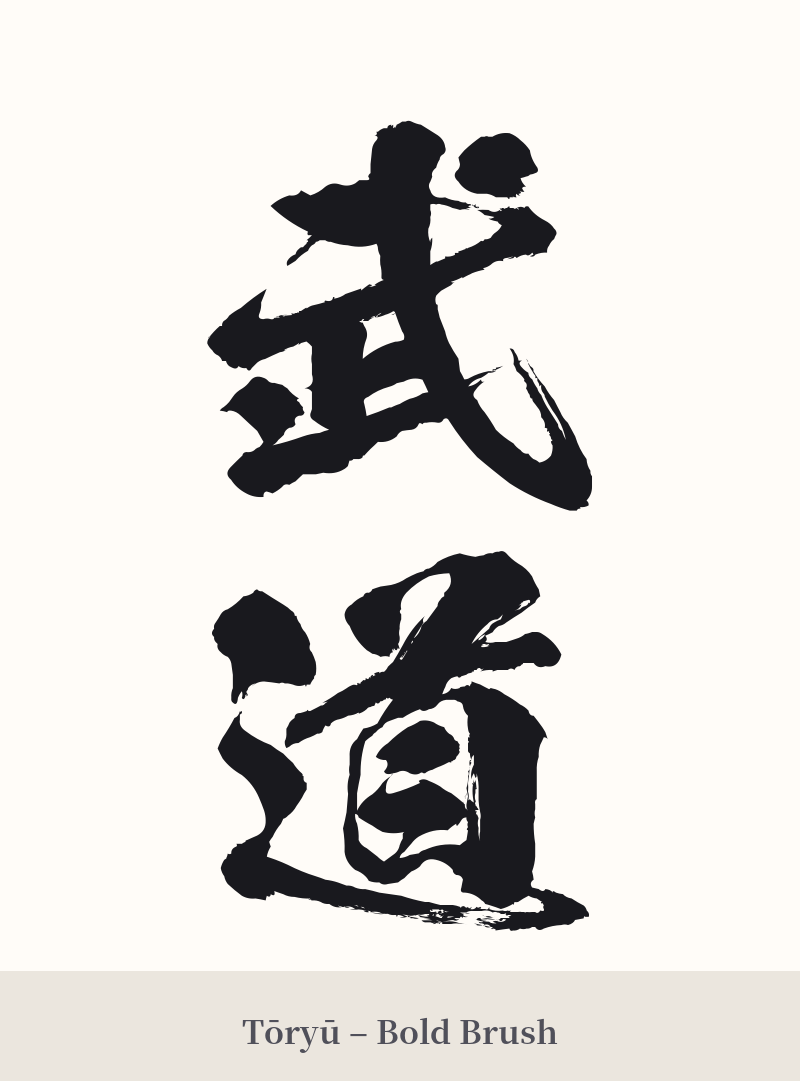
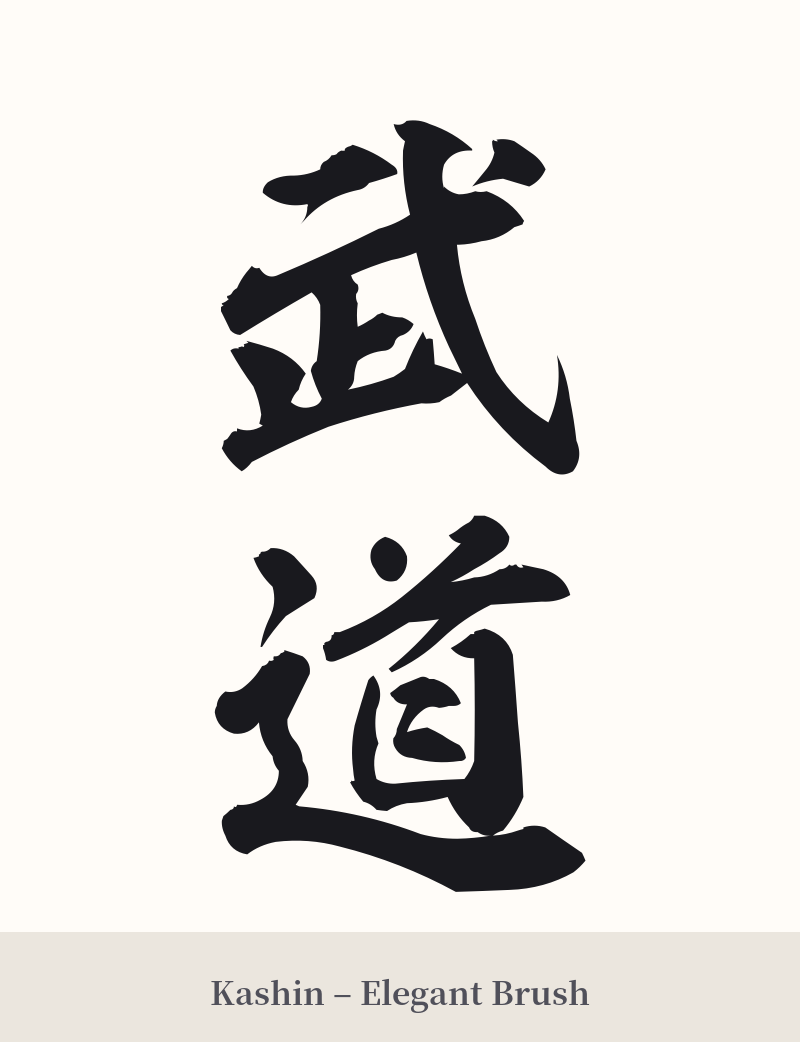
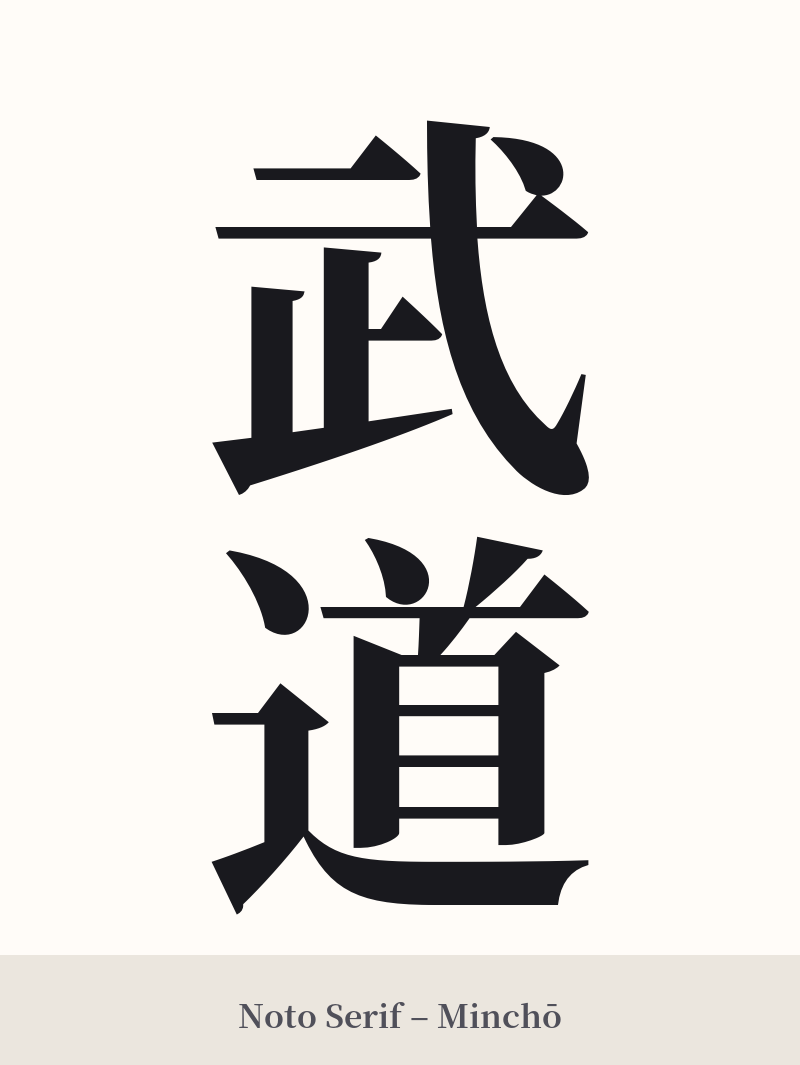
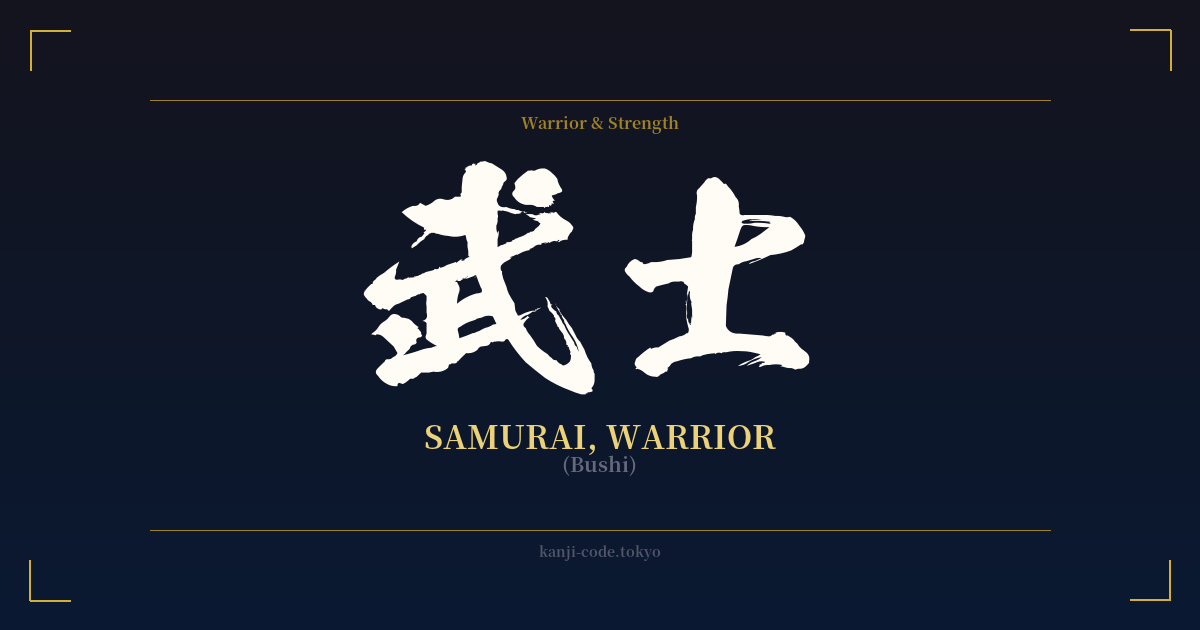
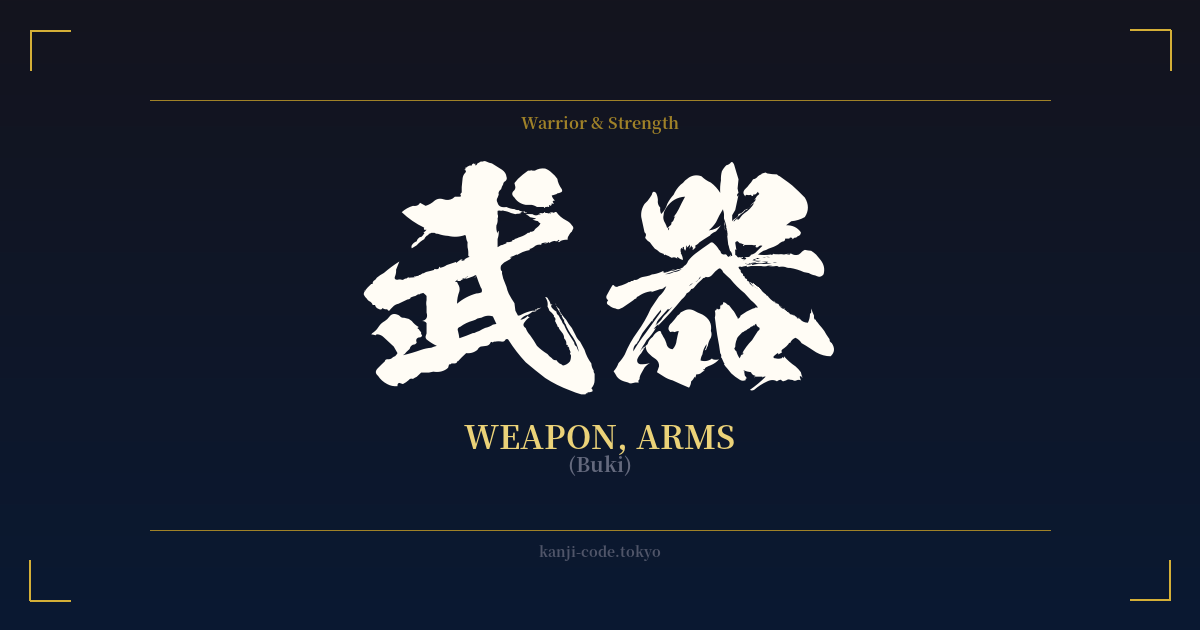
🖌️ Font Styles for 武道
The same kanji can look dramatically different depending on the calligraphy style. Choose a font that matches the mood you want for your tattoo or design.
🎨 Tattoo Suitability
📐 Tattoo Design Guide
The two characters of 武道 offer a balanced and powerful visual, making it a versatile choice for a tattoo.
– Placement: A vertical orientation is the most traditional and visually striking. It works exceptionally well along the spine, the forearm (inner or outer), or the calf, creating a sense of a path or pillar of strength. A horizontal placement can also work across the chest or upper back.
– Font Style: The choice of font dramatically affects the feeling of the tattoo. A bold, semi-cursive calligraphy style (Gyosho) can capture the dynamic energy and fluid motion inherent in martial arts. For a design that emphasizes discipline and tradition, a more formal, block-like script (Kaisho) is an excellent choice.
– Visual Tips: Consider integrating an Ensō circle (a hand-drawn circle symbolizing enlightenment and the void) behind or around the kanji. This reinforces the Zen Buddhist principles often associated with Budō. You could also subtly incorporate imagery related to your specific martial art, such as the pattern of a judogi or the silhouette of a weapon, to personalize the design.
Comments