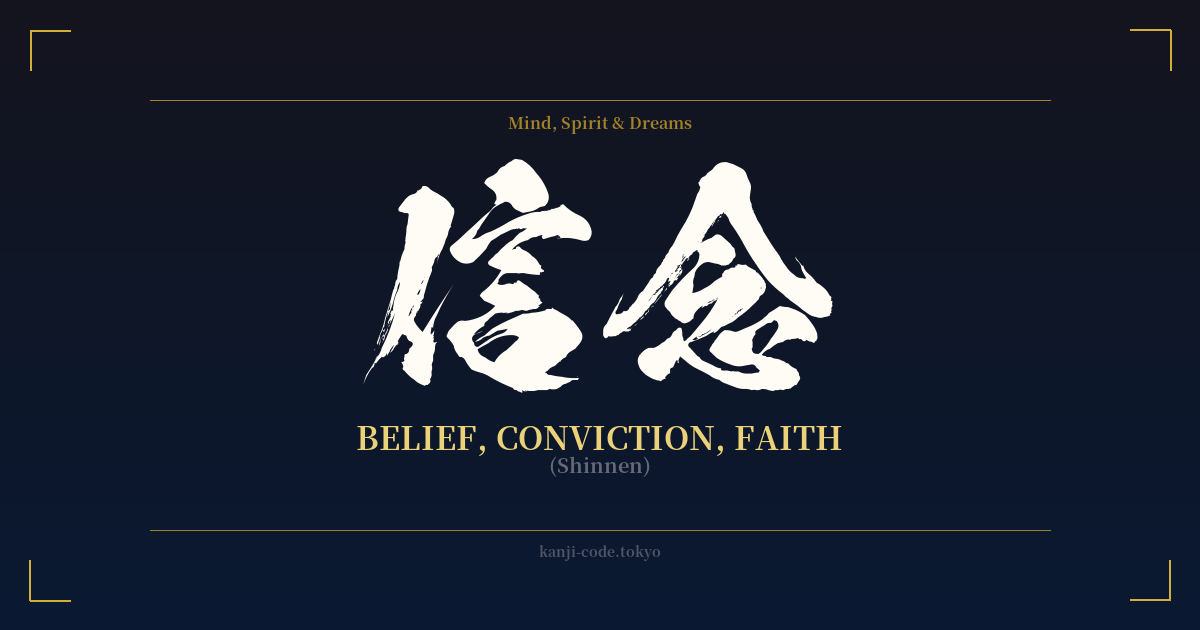
✍️ 信念 (Shinnen) — Cultural Context
信念 (Shinnen) is a Japanese word that translates to belief, conviction, or faith. However, its meaning runs deeper than a simple translation can capture. It signifies a core principle that is held so firmly it becomes a guiding force in one's life, shaping actions, decisions, and one's very character. It is a belief that has been internalized and tested, emerging as an unwavering part of who you are.
Unlike 信仰 (shinkō), which specifically refers to religious faith or creed, 信念 is broader. It can be secular, philosophical, or personal. It is the internal compass that directs a person, whether it's a belief in justice, a commitment to an artistic path, or a personal code of ethics. This distinction is crucial; shinnen is about the certitude within your own heart and mind, independent of any external doctrine.
The word is composed of two kanji: 信 (shin), meaning trust and truth, and 念 (nen), meaning thought or sense. Together, they form the concept of a 'true thought' or a 'trusted sense'—a belief that you hold to be fundamentally true. This combination highlights the internal and personal nature of the conviction. It's not just an idea you entertain; it's a thought you trust with your entire being.
In Japanese culture, having a strong shinnen is highly respected. It is often associated with figures of great integrity and perseverance. The samurai's code of Bushido, for example, was a system of shinnen—convictions about honor, loyalty, and duty that governed their lives. In modern Japan, a person with a clear shinnen is seen as reliable, strong-willed, and authentic. They are someone who doesn't sway with popular opinion but stands firm on their principles.
This concept is a powerful theme in Japanese storytelling, from classic literature to modern anime and manga. A protagonist's journey is often defined by the discovery or defense of their shinnen. It is the inner fire that allows them to overcome impossible odds and stay true to themselves. This makes 信念 a word that resonates with ideals of personal strength, integrity, and the enduring power of a principled life.
🖌️ Font Styles for 信念
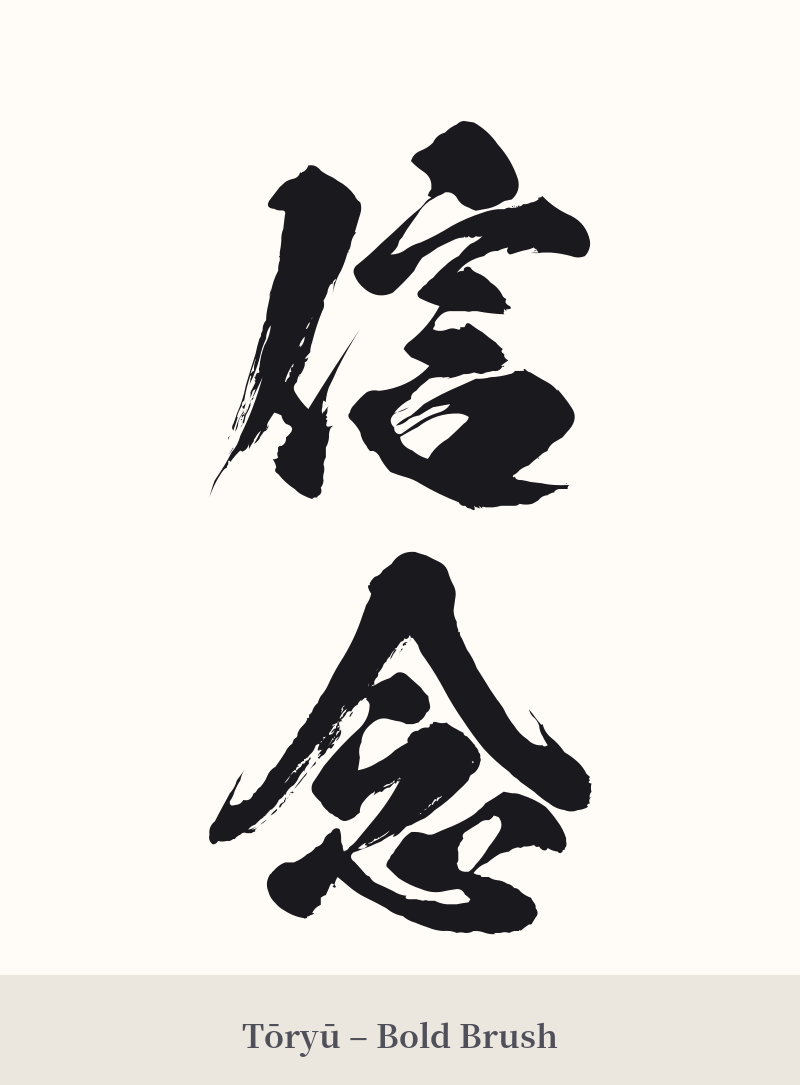
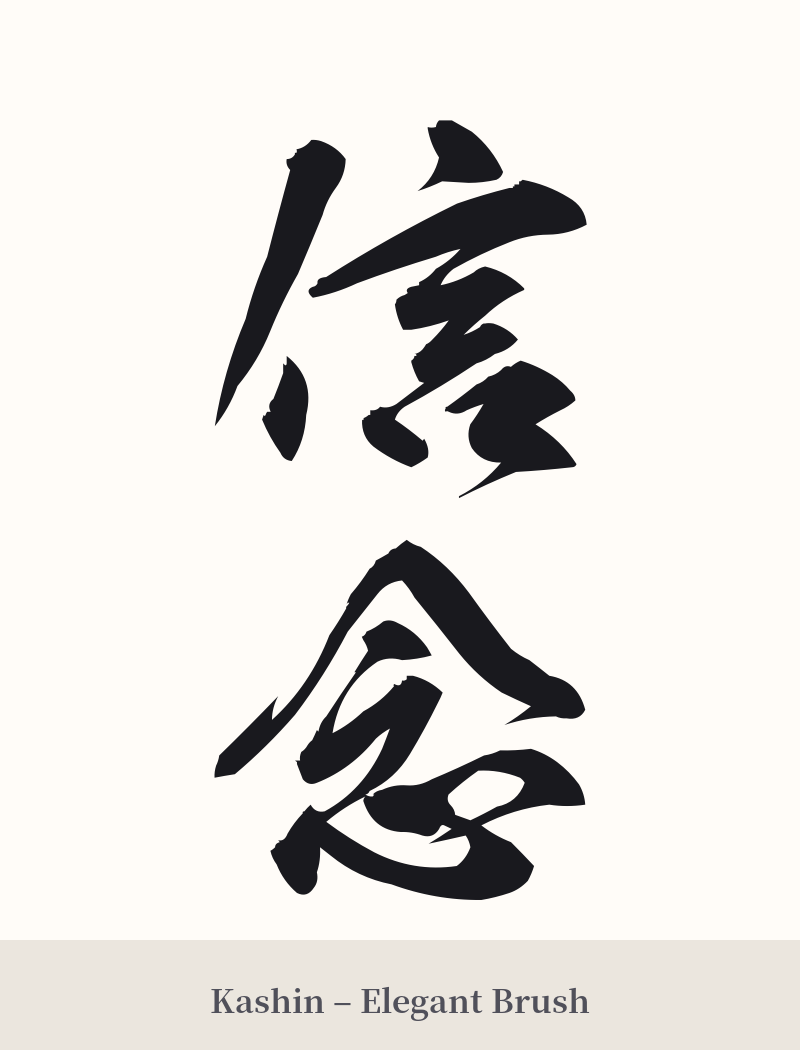
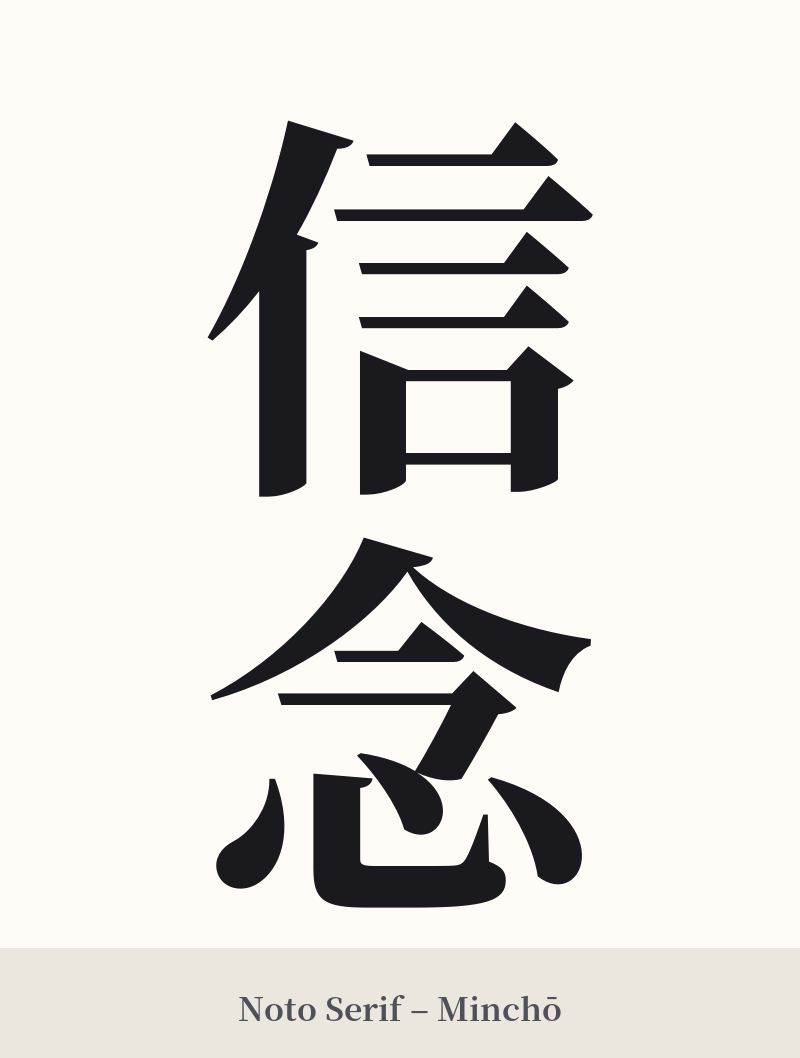
The same kanji can look dramatically different depending on the calligraphy style. Choose a font that matches the mood you want for your tattoo or design.
🎨 Tattoo Suitability
📐 Tattoo Design Guide
A design for 信念 should reflect its inherent strength and personal nature. The balance between the two characters is key to a successful and aesthetically pleasing tattoo.
– Placement: Vertical arrangements work exceptionally well on the forearm, spine, or along the calf, emphasizing the idea of a guiding pillar. For a horizontal layout, the chest, upper back, or across the ribs can create a sense of a foundational principle.
– Style: For a personal and expressive feel, a dynamic brushstroke style like Gyōsho (semi-cursive) or Sōsho (cursive) is an excellent choice. To convey unshakable strength and resolve, a bold and angular Kaisho (block script) is highly effective. A classic Mincho font offers a more refined and timeless look.
– Visuals: While 信念 stands powerfully on its own, it can be paired with imagery that symbolizes the specific conviction. For example, a compass to represent a guiding belief, an Enso circle for a spiritual conviction, or a lotus flower to signify rising above adversity through faith in oneself.
Comments