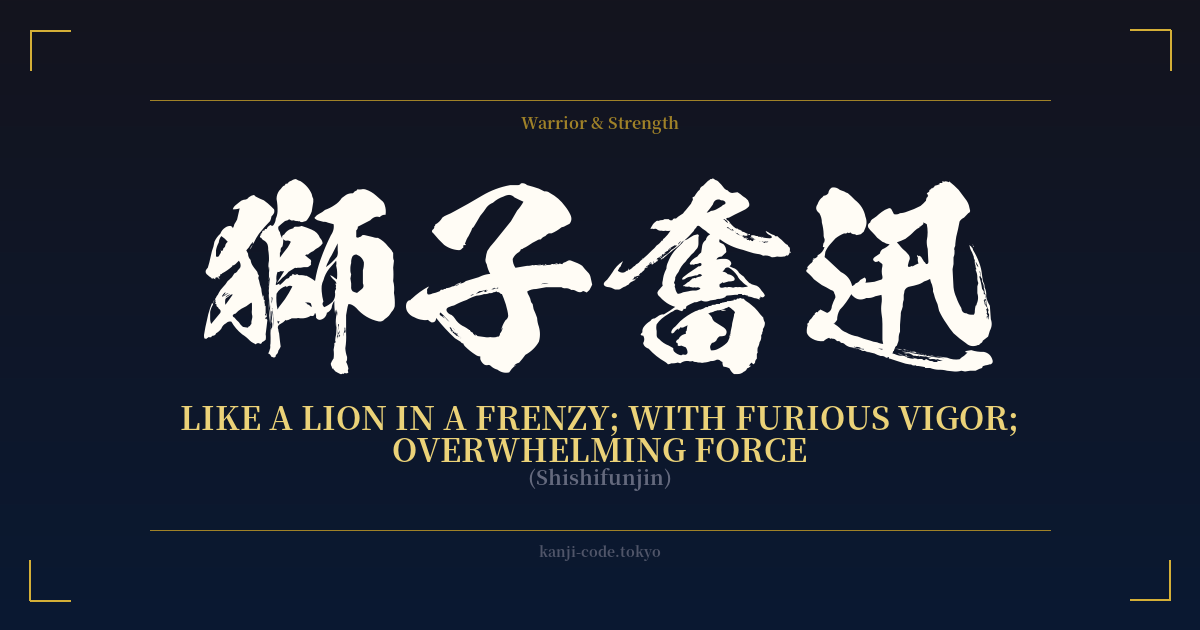
✍️ 獅子奮迅 (Shishifunjin) — Cultural Context
獅子奮迅 (Shishifunjin) is a yojijukugo, a four-character Japanese idiom that paints a vivid picture with its composition. It translates to acting with the furious, unstoppable energy of a lion. This phrase isn't just about raw power; it's about channeling an explosive burst of spirit and vigor into an action, accomplishing a task with overwhelming and breathtaking force.
The imagery is drawn directly from nature. The first two characters, 獅子 (shishi), mean 'lion.' In East Asian culture, the lion is a symbol of royalty, protection, and formidable strength. Though not native to Japan, the image of the lion entered the culture via China and Buddhism, where it is often seen as a guardian of the Dharma (Buddhist teachings). You can see this influence in the 'komainu' or 'shishi' lion-dog statues that guard the entrances of countless Japanese shrines and temples, warding off evil spirits.
The latter two characters, 奮迅 (funjin), provide the action. 奮 (fun) means to be 'stirred up,' 'roused,' or 'invigorated.' It's a sense of energy welling up from within. 迅 (jin) means 'swift' or 'fast.' Together, they describe a state of being energized to the point of frenzy, moving with incredible speed and purpose. The combination creates a powerful metaphor for a person or team exerting themselves to their absolute limit with spectacular results.
In modern Japan, 獅子奮迅 is used to describe a heroic effort. You might hear it used for an athlete making a miraculous comeback, a company launching an aggressive and successful marketing campaign, or a rescue team working tirelessly against the clock. It evokes a sense of admiration for the sheer intensity and effectiveness of the effort. It’s the spirit of giving everything you have in a concentrated, explosive moment to overcome an obstacle or achieve a great goal.
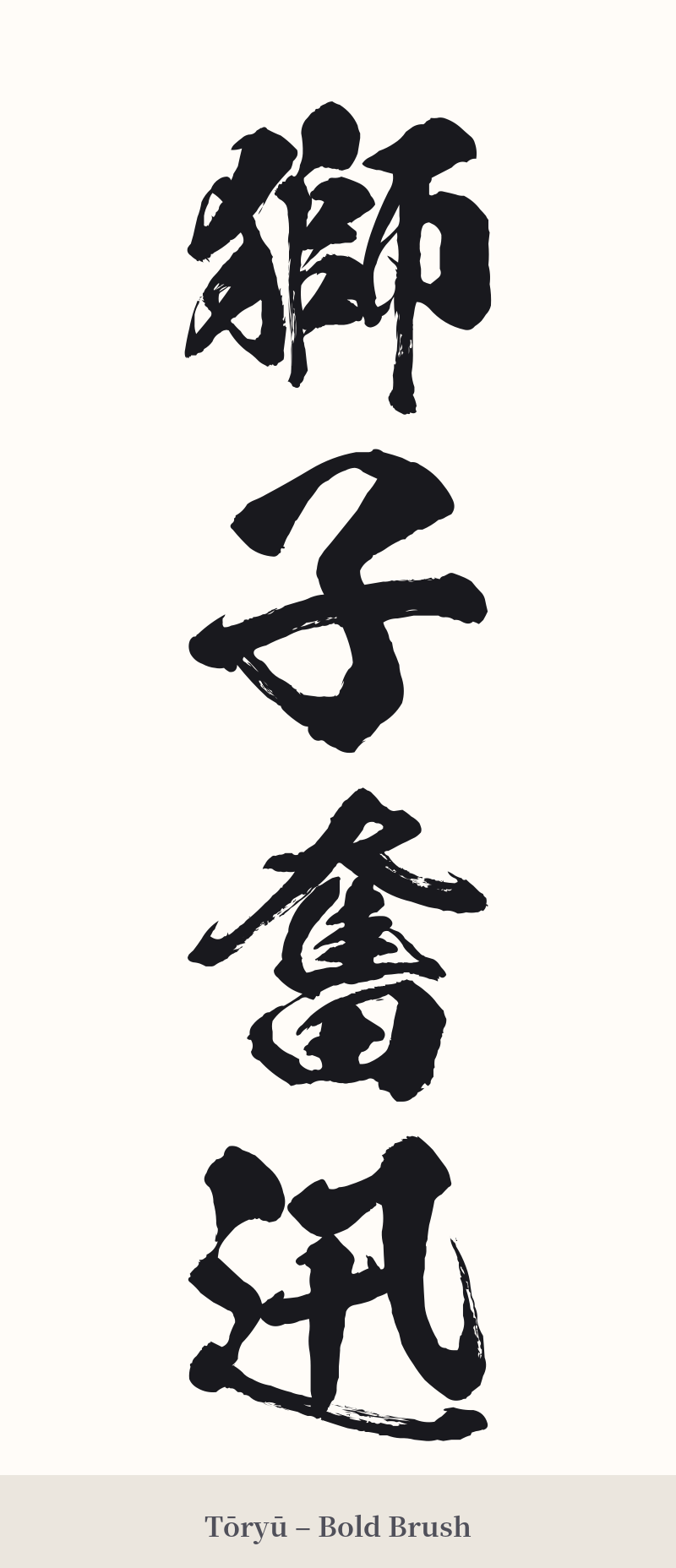
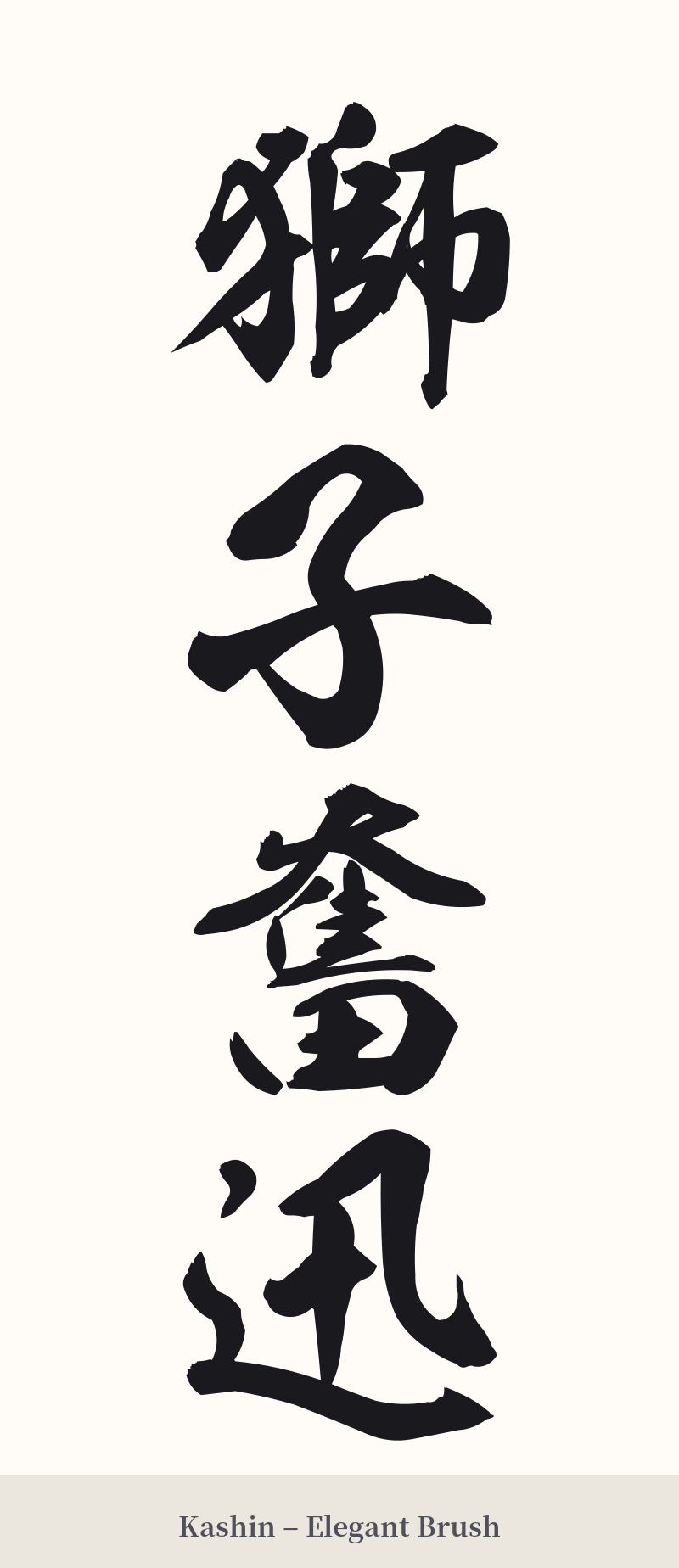
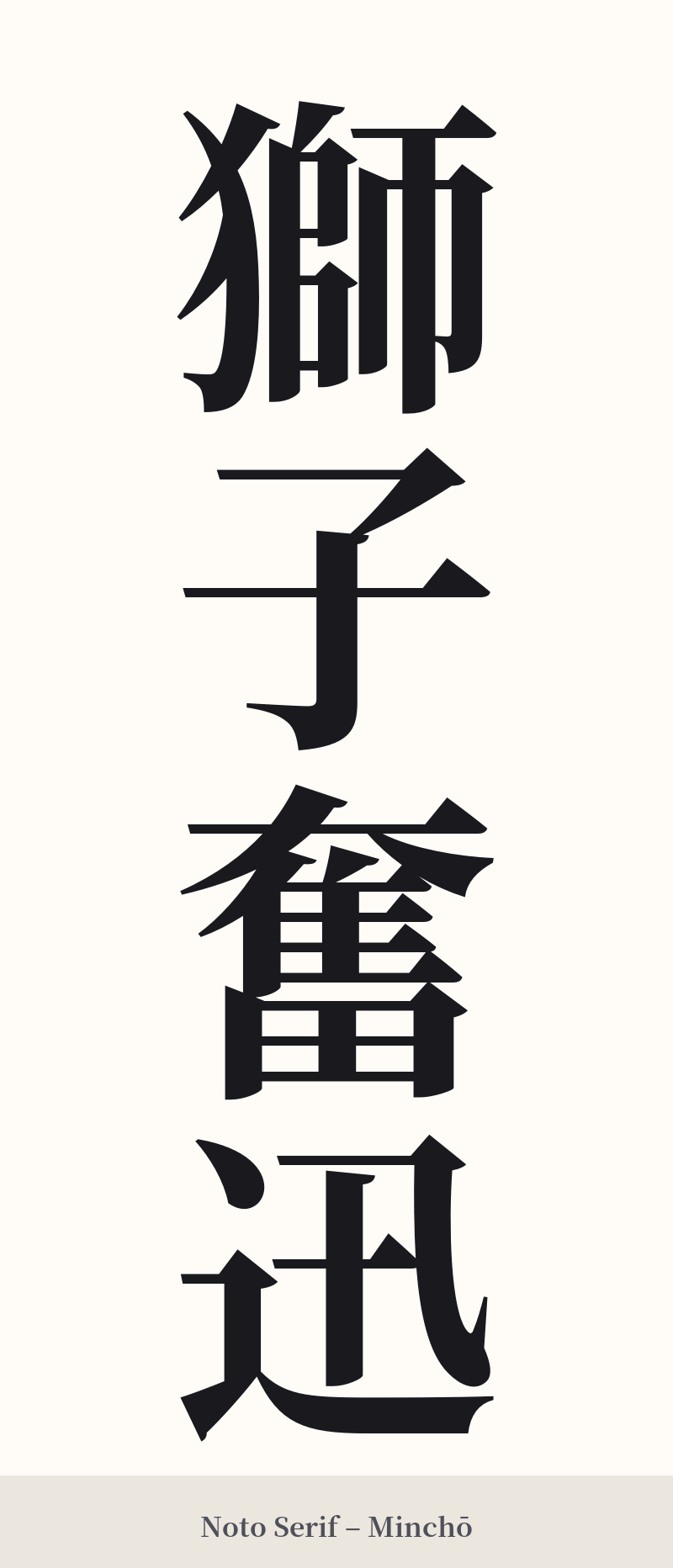
🖌️ Font Styles for 獅子奮迅
The same kanji can look dramatically different depending on the calligraphy style. Choose a font that matches the mood you want for your tattoo or design.
🎨 Tattoo Suitability
📐 Tattoo Design Guide
For a 獅子奮迅 tattoo, the design should match the intensity of its meaning. Due to its four-character structure and complexity, placement and style are key.
– Placement: This idiom works exceptionally well in a vertical orientation. Prime locations include the spine, the forearm (from elbow to wrist), the calf, or alongside the ribs. These spots provide the necessary length to let the characters breathe and display their full detail. A horizontal placement across the chest or upper back is also a strong option.
– Font Style: Bold, dynamic calligraphy is highly recommended. A thick 'Kaisho' (block script) style emphasizes strength and stability, while a more fluid 'Gyosho' (semi-cursive script) can capture the 'frenzy' and 'swiftness' of the meaning. Avoid thin or overly ornate fonts, as they will detract from the raw power and may age poorly.
– Visual Tips: Consider a design that uses negative space effectively. The complexity of the characters is a feature, not a bug. A skilled artist can use the interplay of strokes to create a sense of movement. You could also incorporate subtle background elements like ink splatters or a minimalist brushstroke circle (ensō) to frame the kanji and add to the energetic feel.
Comments