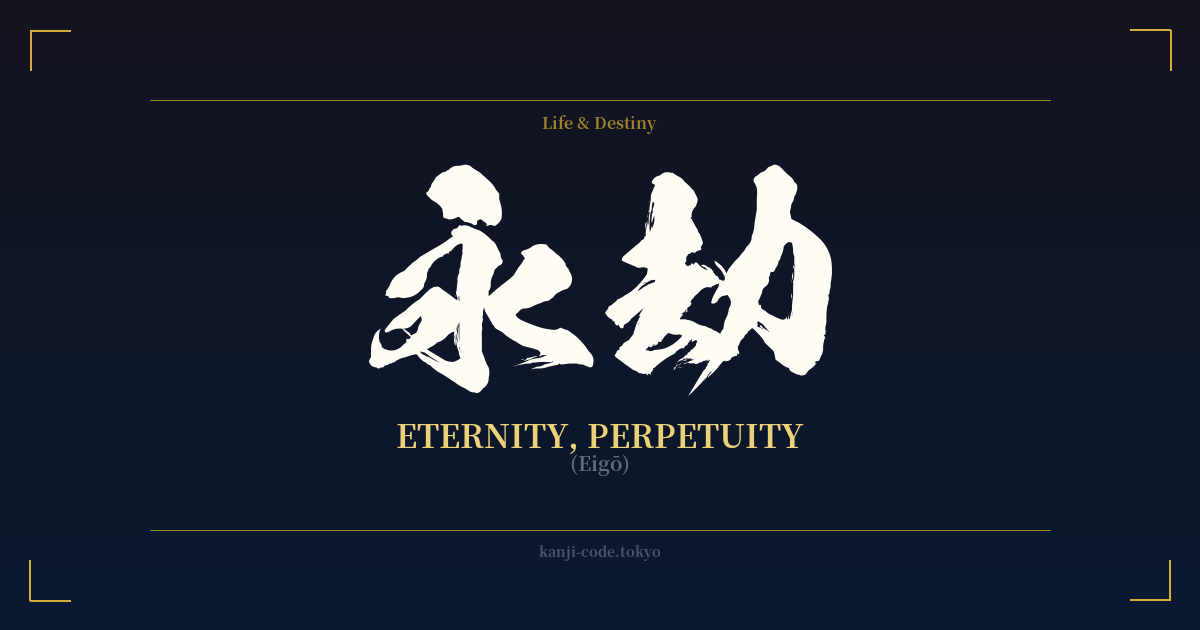
✍️ 永劫 (Eigō) — Cultural Context
永劫 (Eigō) is a Japanese word that evokes a sense of time so vast it defies human comprehension. While often translated as 'eternity' or 'perpetuity,' its true weight is far more profound than the more common term, 永遠 (eien). Eigō speaks not just of endlessness, but of cosmic, almost geological, spans of time.
The power of the word comes from its two characters. The first, 永 (ei), means 'long' or 'lengthy.' Its pictograph origin is said to be a long, meandering river, a perfect visual metaphor for the ceaseless flow of time. It suggests a continuity that stretches on and on, without a clear end in sight.
It is the second character, 劫 (gō), that gives the word its staggering scale. This character is a direct loan from Buddhist and Hindu cosmology, representing the concept of a 'kalpa' (劫波, koppa). A kalpa is an aeon, an immeasurably long period of time that marks the cycle of a universe's creation and destruction. Ancient texts describe a kalpa with powerful imagery: imagine a celestial being wiping a massive, miles-high mountain with a silk cloth once every hundred years. The time it takes for the mountain to be worn down to nothing is a single kalpa.
By combining 永 (endless flow) with 劫 (a cosmic age), 永劫 creates a meaning of an eternity of eternities. It is the time scale of gods, stars, and universes. While rooted in religious philosophy, its modern usage has expanded into literature, poetry, and art to express a feeling of absolute, unbreakable permanence or a love that transcends not just one lifetime, but countless cycles of existence.
Choosing 永劫 over 永遠 is a deliberate act. Where 永遠 might describe the 'forever' in a wedding vow, 永劫 describes the 'forever' of the cosmos itself. It is a heavier, more solemn, and philosophically charged term, imbued with a sense of awe and the sublime. It acknowledges the cycles of existence and declares something to be so enduring that it persists through them all.
🖌️ Font Styles for 永劫
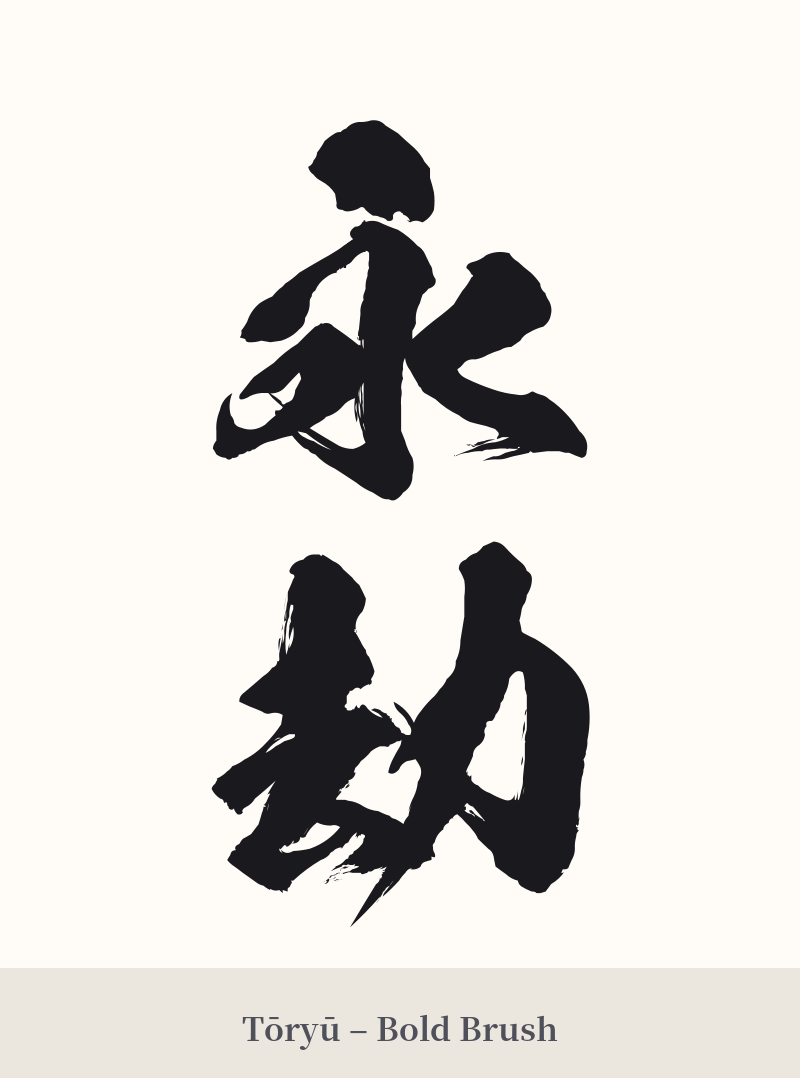
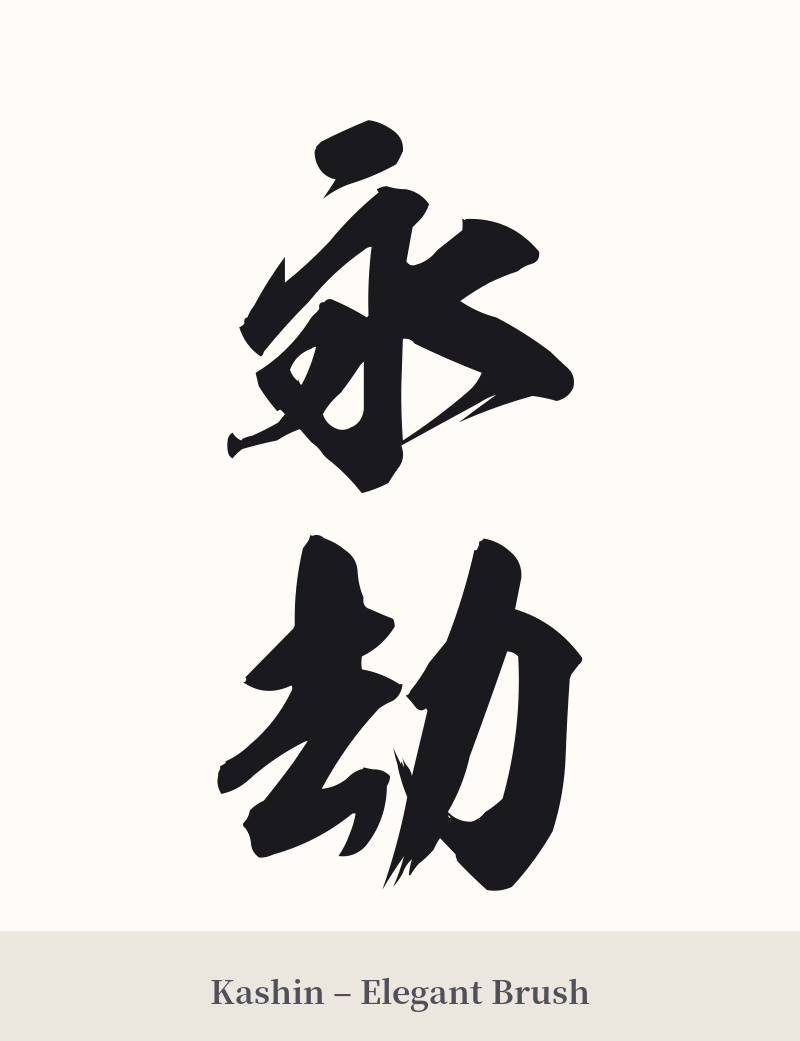
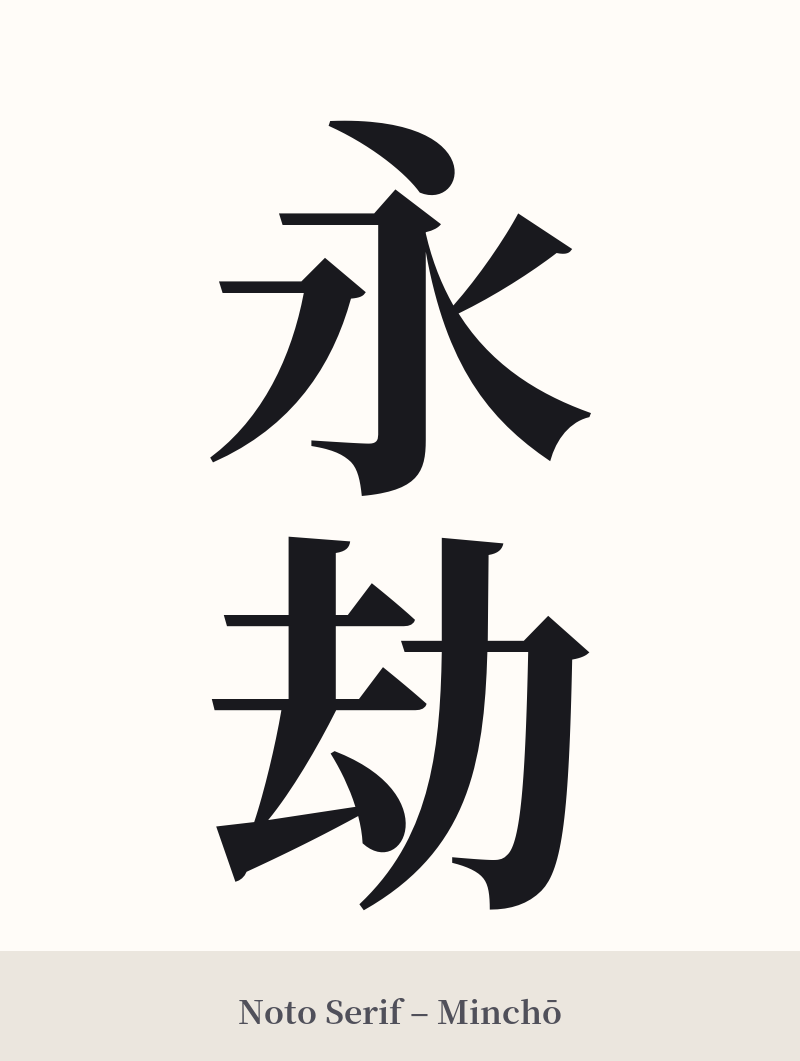
The same kanji can look dramatically different depending on the calligraphy style. Choose a font that matches the mood you want for your tattoo or design.
🎨 Tattoo Suitability
📐 Tattoo Design Guide
The profound nature of 永劫 (Eigō) lends itself to designs that are both elegant and impactful. Its meaning is powerful enough to stand alone, but it can also be integrated into larger pieces.
– Placement: A vertical orientation is classic and visually striking, fitting perfectly along the forearm, calf, or down the spine. A horizontal placement works well across the chest, upper back, or below the collarbone.
– Font Style: A clean, crisp script like Kaisho (block style) emphasizes the strength and permanence of the word. For a more fluid and personal feel, a Gyosho (semi-cursive) style can evoke the 'flow of time' inherent in the character 永.
– Visual Elements: While it stands strong on its own, 永劫 can be paired with imagery that reinforces its meaning. Consider incorporating it with an Enso circle (symbolizing infinity and the void), a lotus flower (representing purity and rebirth through cycles), or subtle cosmic elements like a nebula or star chart.
Comments