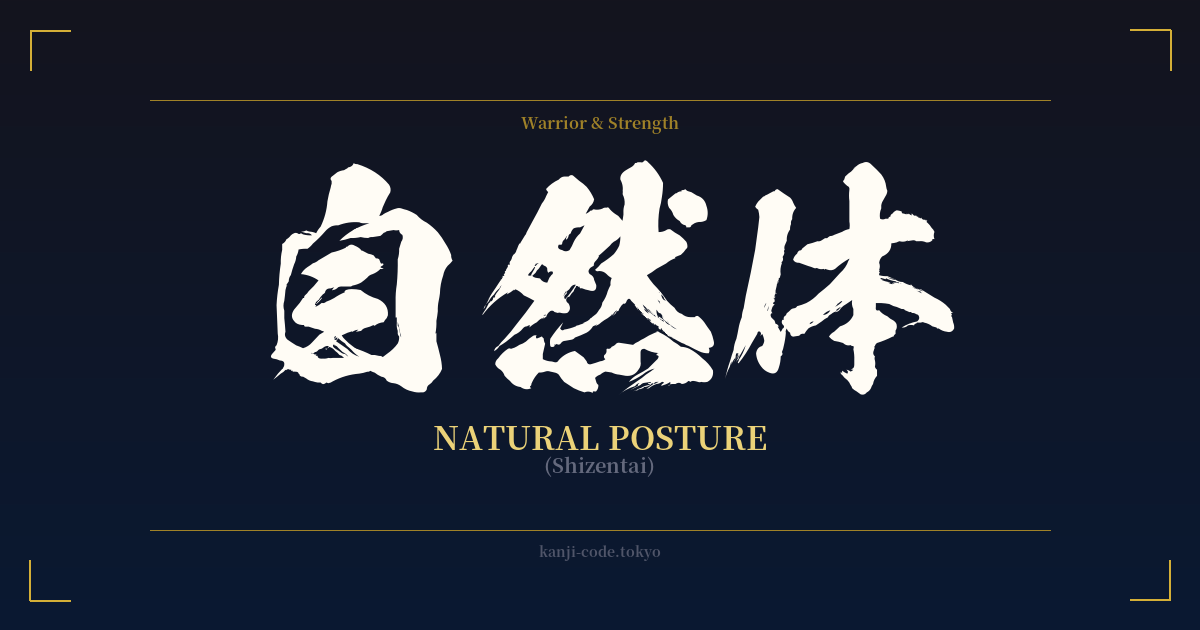
✍️ 自然体 (Shizentai) — Cultural Context
Shizentai (自然体) is a concept that extends far beyond its literal translation of "natural body" or "natural posture." It embodies a profound state of being, deeply rooted in Japanese martial arts (budō) and Zen philosophy. It is the ideal state of relaxed readiness, where the mind is calm and the body is free from unnecessary tension, yet poised for immediate and effective action.
In martial arts like Judo, Kendo, and Aikido, shizentai is the fundamental stance from which all techniques flow. It's not a limp, passive posture. Instead, it's a state of perfect equilibrium—feet firmly planted, center of gravity low, and muscles relaxed but ready. This physical state allows a warrior to react instinctively and powerfully to an opponent's movements, without the hesitation or stiffness caused by fear or conscious thought. It is the opposite of "rikimi" (力み), the state of being strained, tense, and inefficient.
This principle, however, is not confined to the dojo. It is a life philosophy. Zen Buddhism embraces shizentai as a manifestation of "mushin" (無心), or "no-mind." This is a state where the ego and conscious, analytical thought fall away, allowing for actions that are pure, intuitive, and perfectly aligned with the present moment. A calligrapher whose brush flows effortlessly across the paper, a musician lost in their performance, or a speaker who captivates an audience with their authenticity—all are demonstrating a form of shizentai.
To cultivate shizentai in daily life is to strive for a way of being that is unpretentious, authentic, and centered. It means facing challenges not with brute force or anxious overthinking, but with a calm, adaptable grace. It is about doing, not trying. It’s the quiet confidence that comes from years of practice, whether in art, sport, or life itself, where complex actions become so ingrained they appear simple and natural. Shizentai teaches that true strength lies not in tension, but in the ability to remain balanced and fluid in the face of any circumstance.
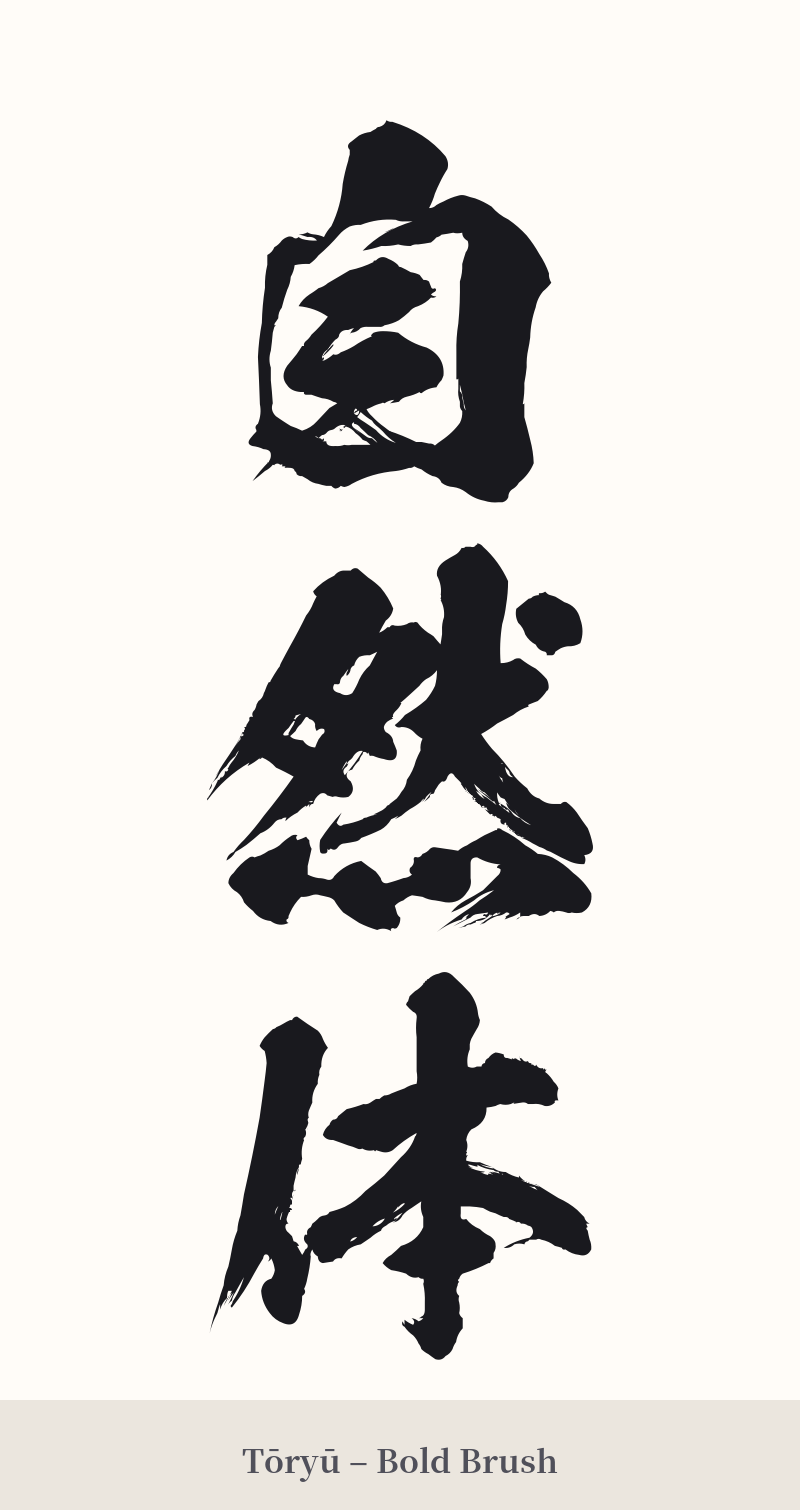
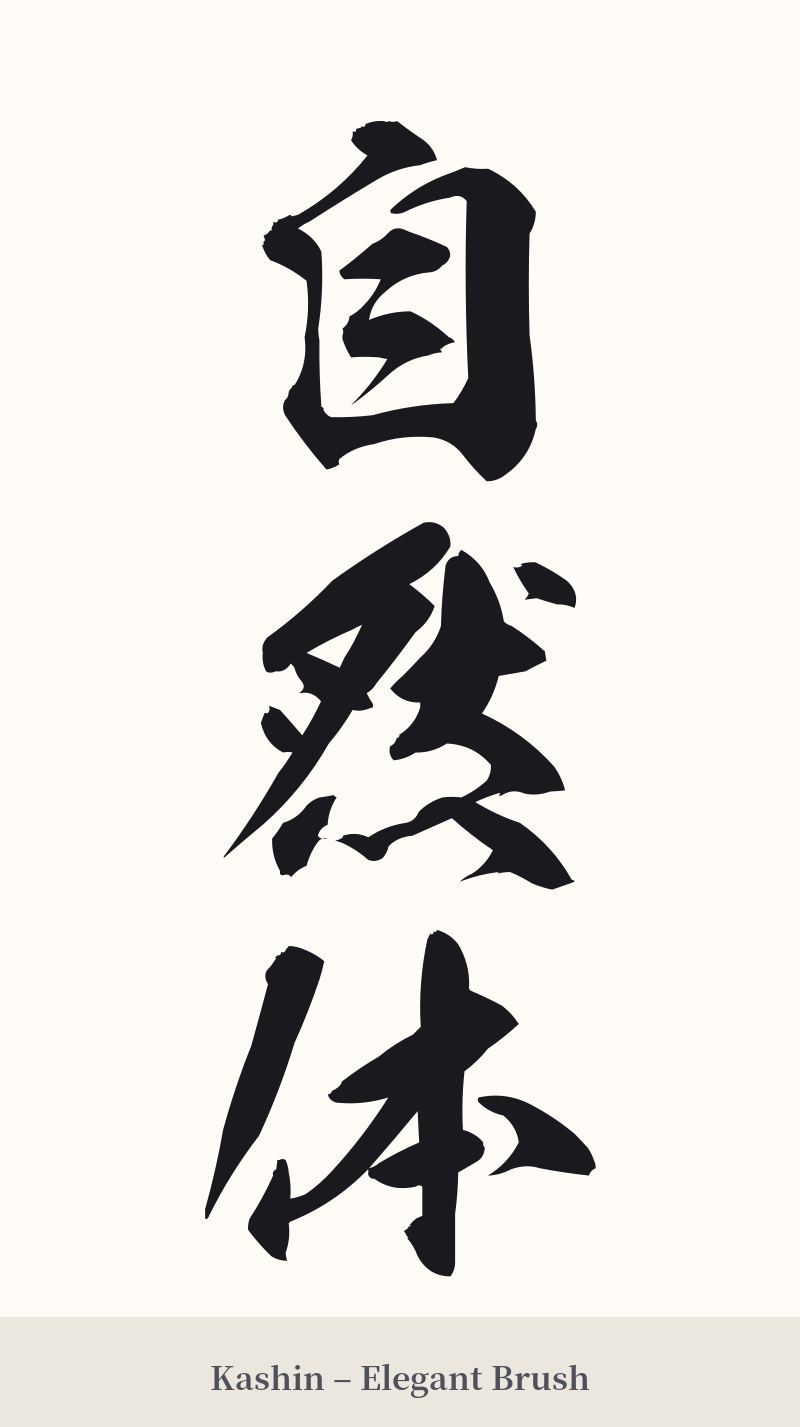
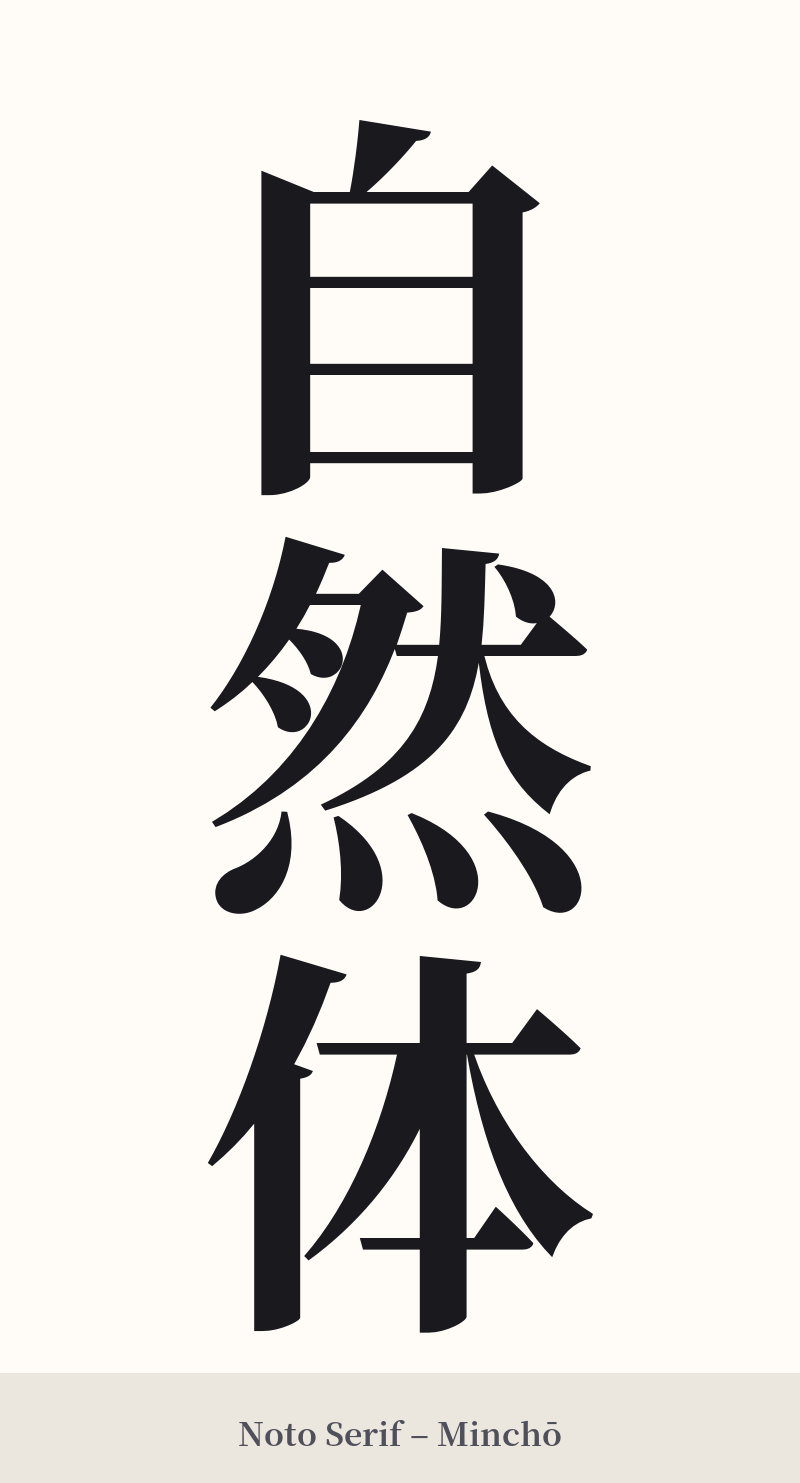
🖌️ Font Styles for 自然体
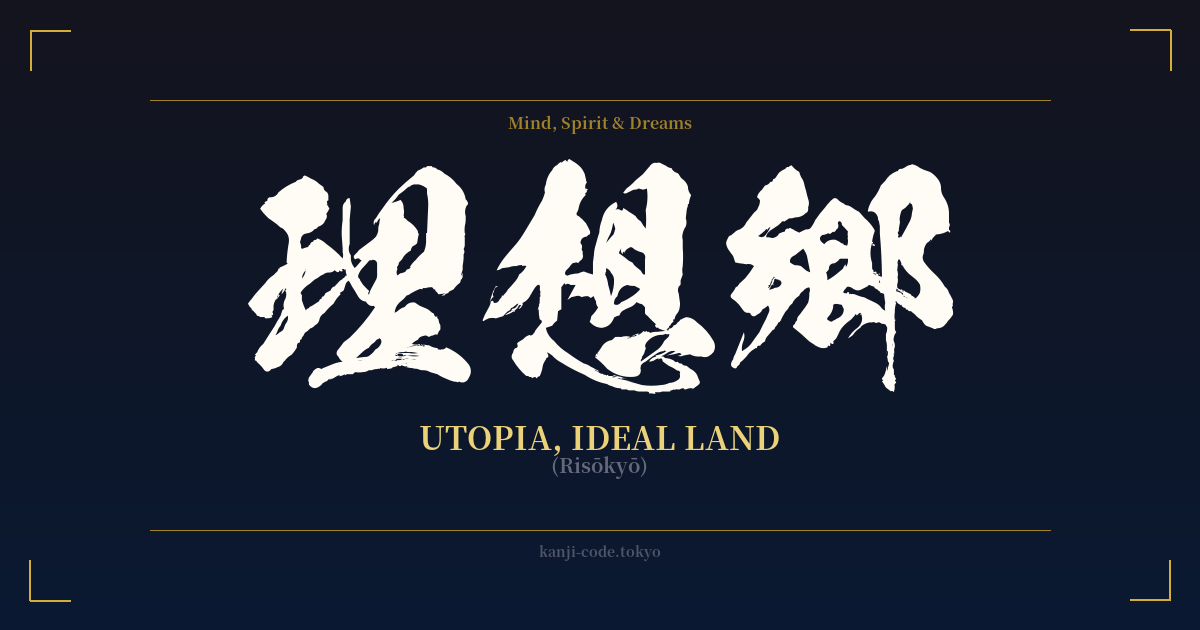
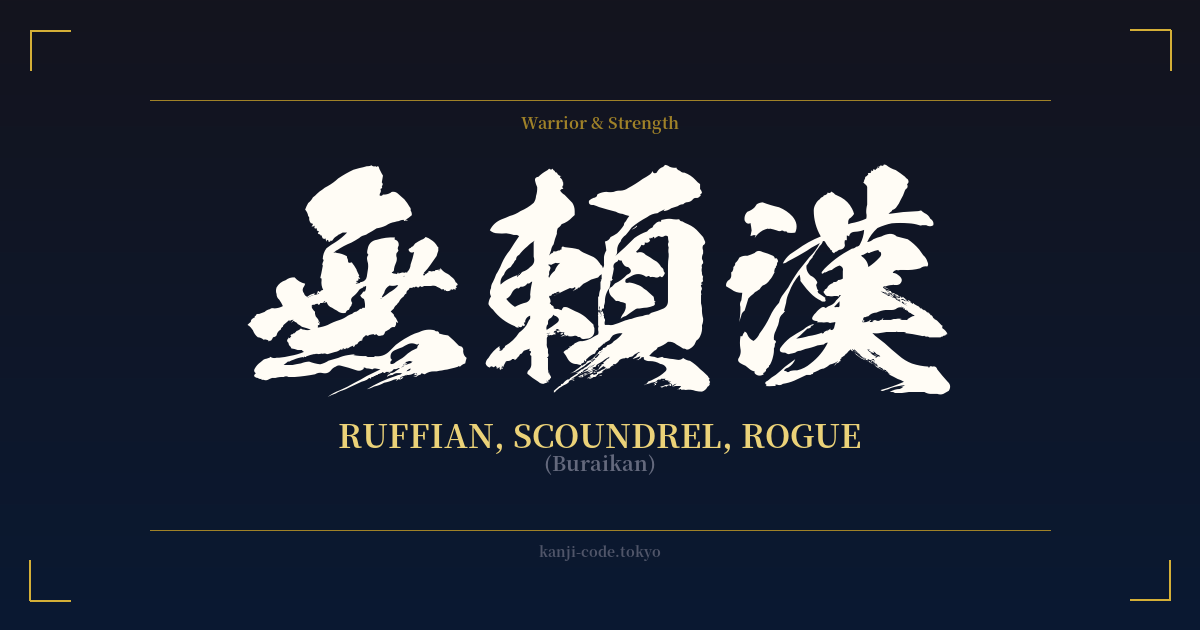
The same kanji can look dramatically different depending on the calligraphy style. Choose a font that matches the mood you want for your tattoo or design.
🎨 Tattoo Suitability
📐 Tattoo Design Guide
For a Shizentai tattoo, the arrangement and style should reflect its meaning of balance and natural flow.
– Placement: A vertical orientation is classic and visually striking. Consider placing it along the forearm, the calf, or down the spine to emphasize the idea of posture and centeredness. A horizontal placement can also work well across the chest or upper back.
– Font Style: The font choice can dramatically alter the feel. A Gyosho (semi-cursive) or Sosho (cursive) style can capture the fluid, effortless aspect of the concept. Conversely, a strong, crisp Kaisho (block script) can emphasize the stability and foundational readiness inherent in the posture.
– Visual Elements: Consider pairing the kanji with imagery that reinforces its themes. An Enso (Zen circle) is a perfect companion, symbolizing enlightenment and totality. Other ideas include a single bamboo stalk (representing flexibility and strength) or subtle water ripples to evoke a sense of calm and fluid motion.
Comments