✍️ 大和魂 (Yamato-damashii) — Cultural Context
大和魂 (Yamato-damashii), often translated as the 'Japanese Spirit' or 'Soul of Japan,' is one of the most culturally loaded and historically complex terms in the Japanese language. Its meaning has evolved dramatically over centuries, reflecting the nation's shifting values and self-perception. Understanding this term requires a journey through Japanese literature, philosophy, and politics.
The concept first emerged during the Heian period (794-1185), a time of flourishing court culture. It was originally defined in contrast to the 'Chinese mind' (唐心, karagokoro), which represented the logical, intellectual, and often foreign knowledge imported from China. In contrast, Yamato-damashii represented the inherent, intuitive, and emotional character of the Japanese people. It was about empathy, a sensitivity to the beauty and transience of life (mono no aware), and a refined aesthetic sense, as famously depicted in literary works like 'The Tale of Genji.'
This early interpretation was gentle and artistic, focused on inner character rather than outward action. However, as Japan entered the feudal era dominated by the samurai class, the meaning of Yamato-damashii began to shift. It started to absorb virtues from the warrior code of Bushido, such as courage, loyalty, integrity, and a willingness to face death with honor.
The most dramatic and problematic transformation occurred in the late 19th and early 20th centuries. During the Meiji Restoration and the subsequent rise of Japanese nationalism, the government and military co-opted Yamato-damashii as a powerful propaganda tool. The term was stripped of its gentle, aesthetic origins and re-forged into an ideology of absolute loyalty to the Emperor, extreme self-sacrifice for the state, and an unshakeable fighting spirit. It became the spiritual justification for imperial expansion and the horrific acts committed during World War II.
After the war, the term fell into disrepute due to its toxic associations. Today, its use is highly cautious. In some contexts, like sports, it might be used to mean 'fighting spirit' or 'never-give-up attitude.' In others, it might refer to traditional craftsmanship or artistic dedication. However, the shadow of its 20th-century usage looms large, making it a term that is forever complex, controversial, and deeply tied to the best and worst of Japanese history.
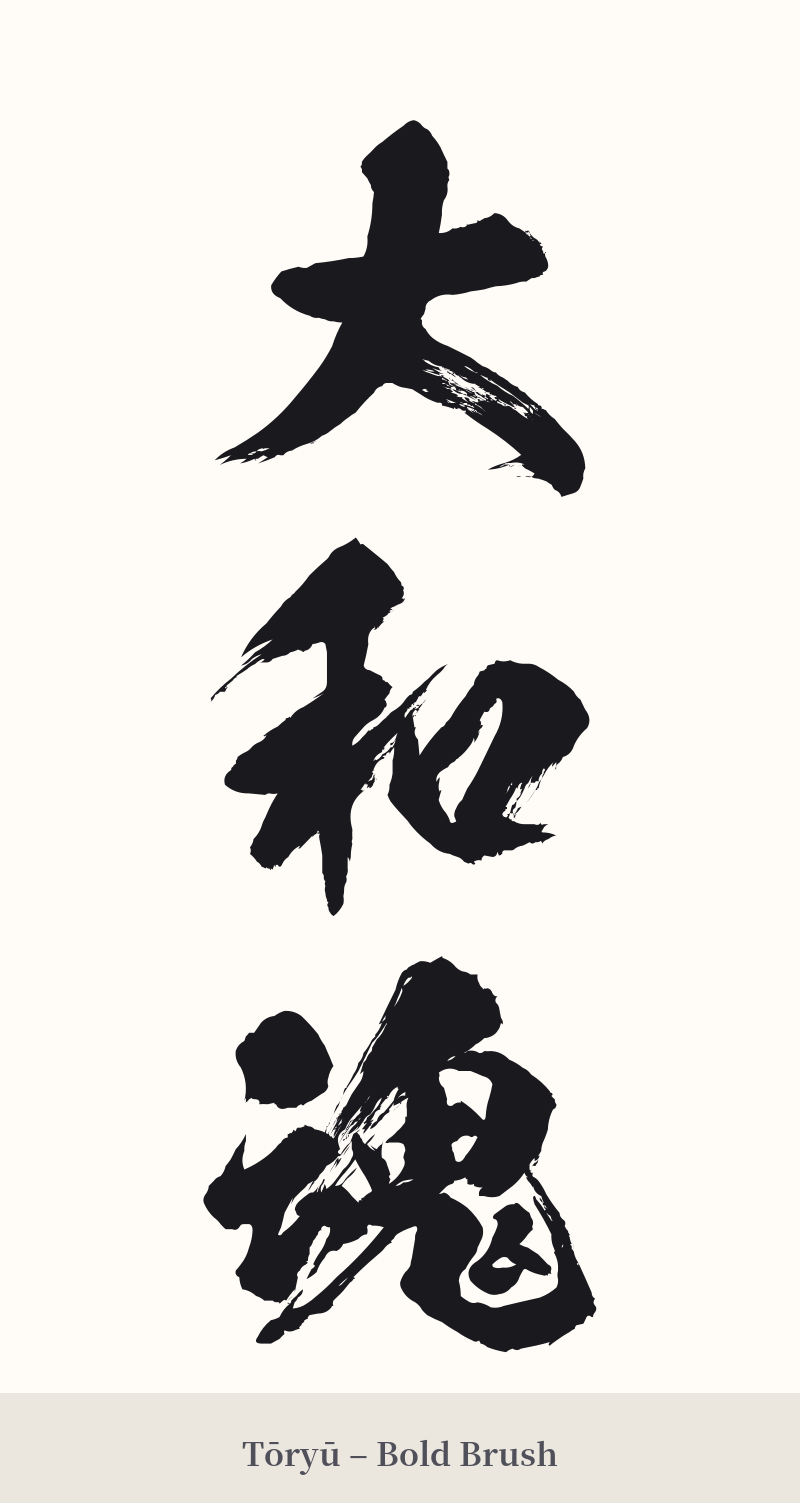
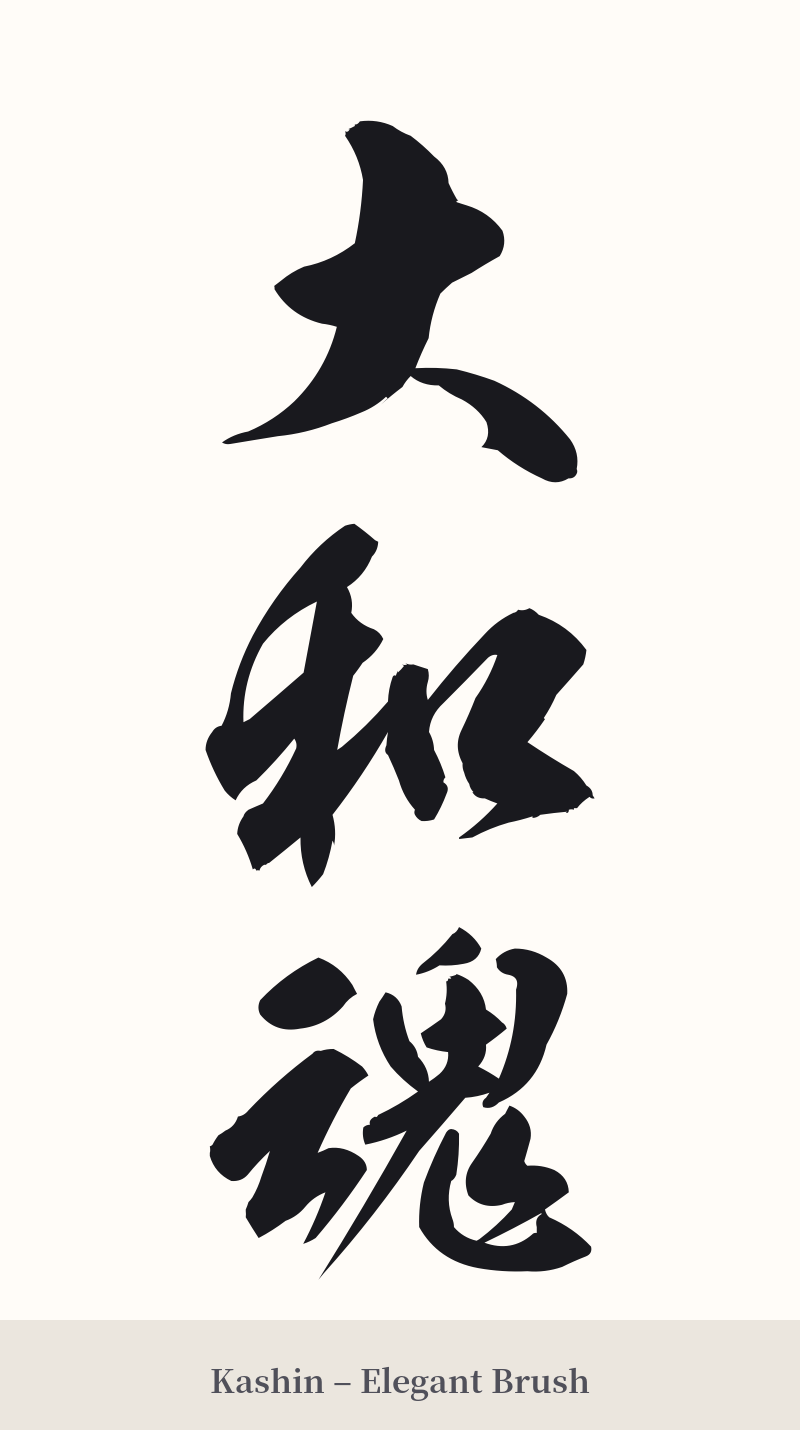
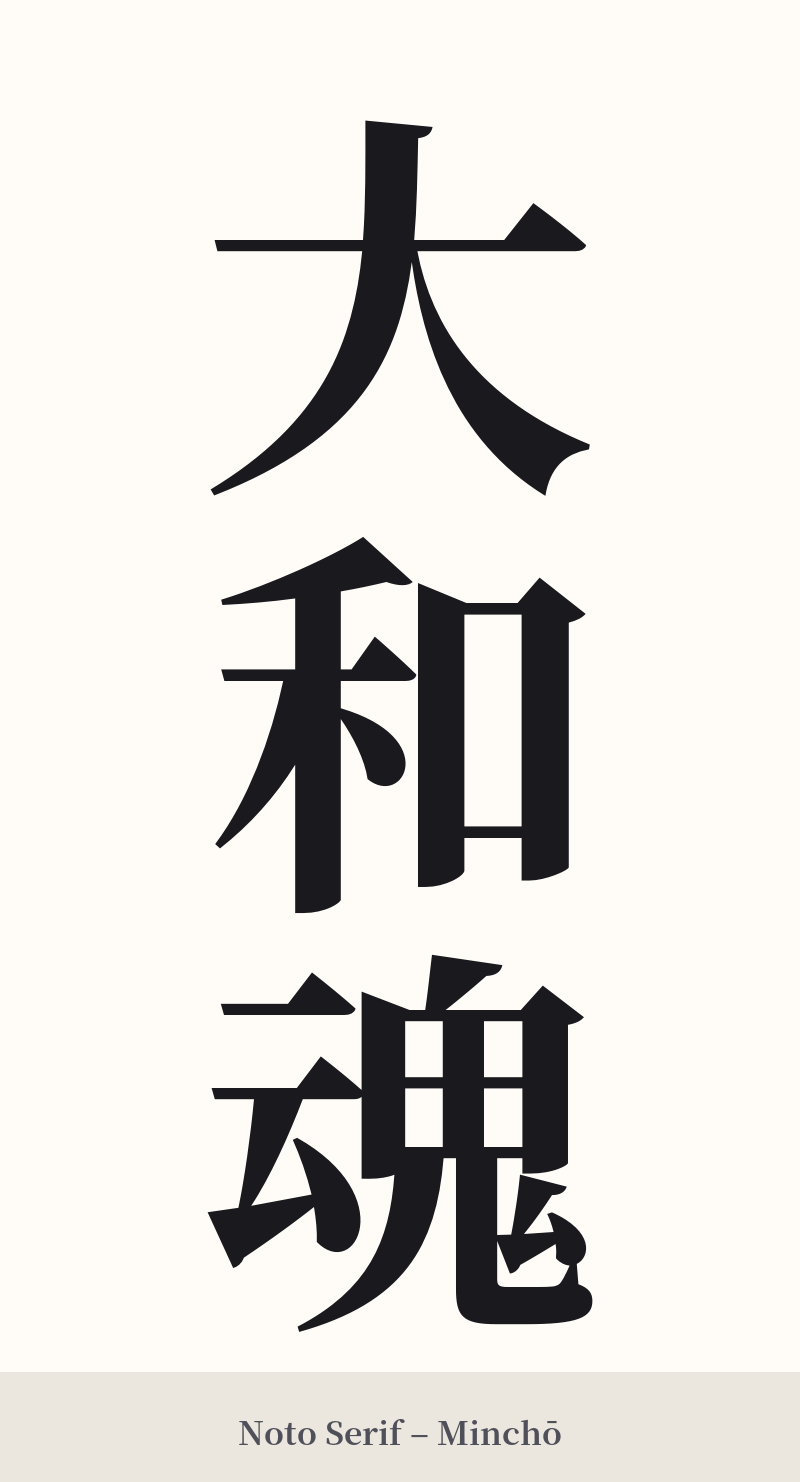
🖌️ Font Styles for 大和魂
The same kanji can look dramatically different depending on the calligraphy style. Choose a font that matches the mood you want for your tattoo or design.
🎨 Tattoo Suitability
📐 Tattoo Design Guide
Given the controversial nature of this term, design choices should be made with extreme care. If you proceed, a traditional approach is recommended to honor its historical depth rather than its modern political connotations.
– Placement: Vertical alignment is the most classic and aesthetically pleasing for a three-character compound. It works well along the forearm, the back of the calf, or down the spine. A larger surface area is necessary to capture the detail in the character 魂 (tamashii).
– Font Style: A flowing, semi-cursive calligraphy style (Gyōsho) can capture the term's ancient, literary origins. A formal block script (Kaisho) can give it a sense of dignity and strength, but be aware this can also feel more militaristic.
– Visual Additions: It is strongly advised to let the kanji stand alone. Adding other Japanese imagery like cherry blossoms, koi fish, or—most critically—a rising sun flag can heavily amplify the nationalistic interpretation and should be avoided.
Comments