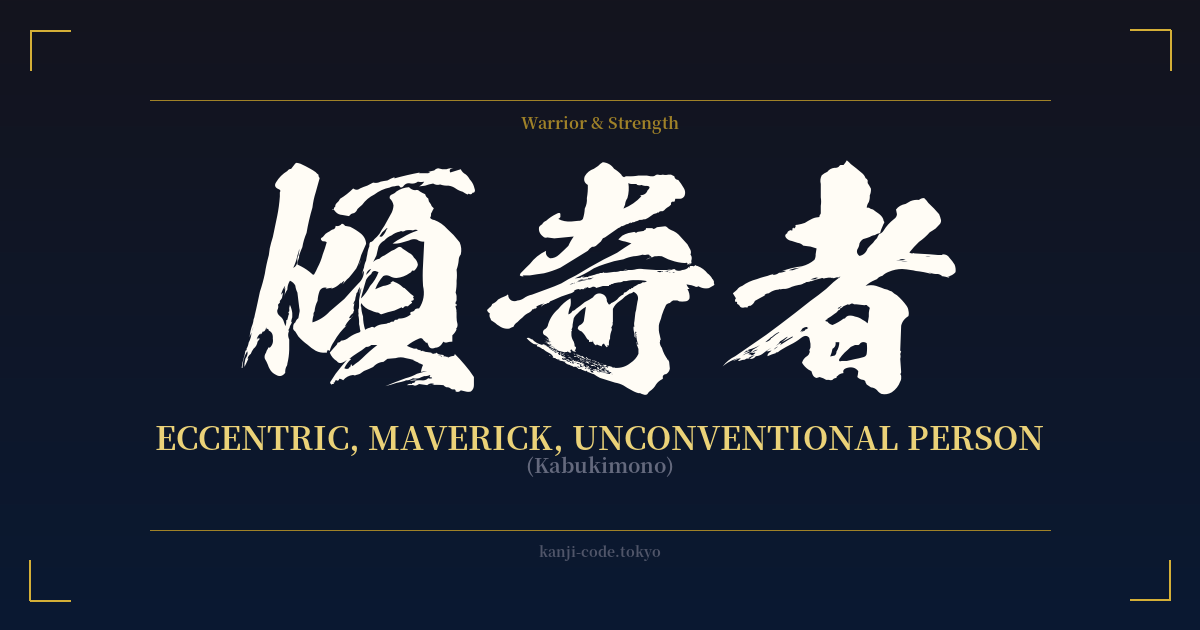
✍️ 傾奇者 (Kabukimono) — Cultural Context
The term 傾奇者 (Kabukimono) is a powerful and evocative word from Japanese history, referring to the flamboyant mavericks and eccentrics who emerged during the late Sengoku (Warring States) and early Edo periods. These figures, often rōnin (masterless samurai) or young men from prominent families, deliberately defied the rigid social norms and aesthetics of the time.
The word itself originates from the verb 'kabuku', which means 'to lean' or 'to deviate'. By adding the characters for 'strange' (奇) and 'person' (者), the term literally translates to a 'strange person who deviates'. This wasn't merely about being different; it was a conscious and provocative performance of non-conformity.
Kabukimono were instantly recognizable by their outrageous appearance. They wore brightly colored, often mismatched clothing, sometimes incorporating women's garments, Portuguese fabrics, or animal skins. Their hairstyles were unconventional, and they famously carried oversized swords (katana) or other unusual weapons, flaunting them in public. Their behavior was equally disruptive; they were known for picking fights, swaggering through the streets, and generally causing social friction. They were the punks or rebels of feudal Japan, a direct challenge to the stoic, conformist ideals of the samurai class that the Tokugawa shogunate was trying to enforce.
One of the most famous figures associated with this spirit is Maeda Keiji, a legendary warrior known for his immense strength and unconventional behavior, who has become a celebrated icon in modern pop culture. The spirit of the Kabukimono also directly inspired one of Japan's most famous art forms: Kabuki theater. The theater's name shares the same root, and its early performances borrowed heavily from the bizarre aesthetics and dramatic flair of the Kabukimono.
Today, the term has shed most of its negative, violent connotations. It is now used more romantically to describe innovators, artists, and mavericks who dare to live by their own rules. To be called a Kabukimono is to be recognized as a bold individualist, a trendsetter who is unafraid to challenge the status quo and walk their own unique path.
🖌️ Font Styles for 傾奇者
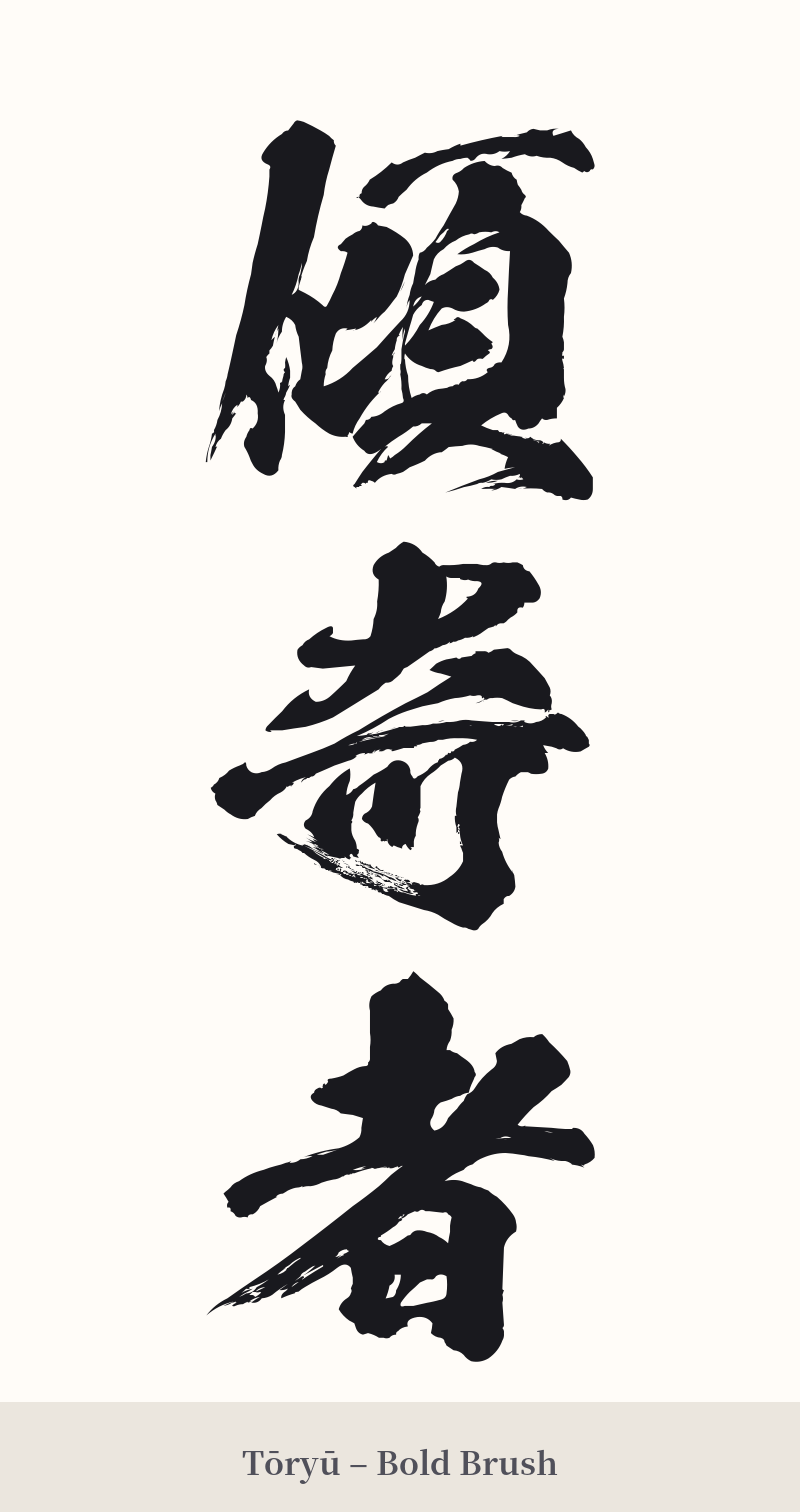
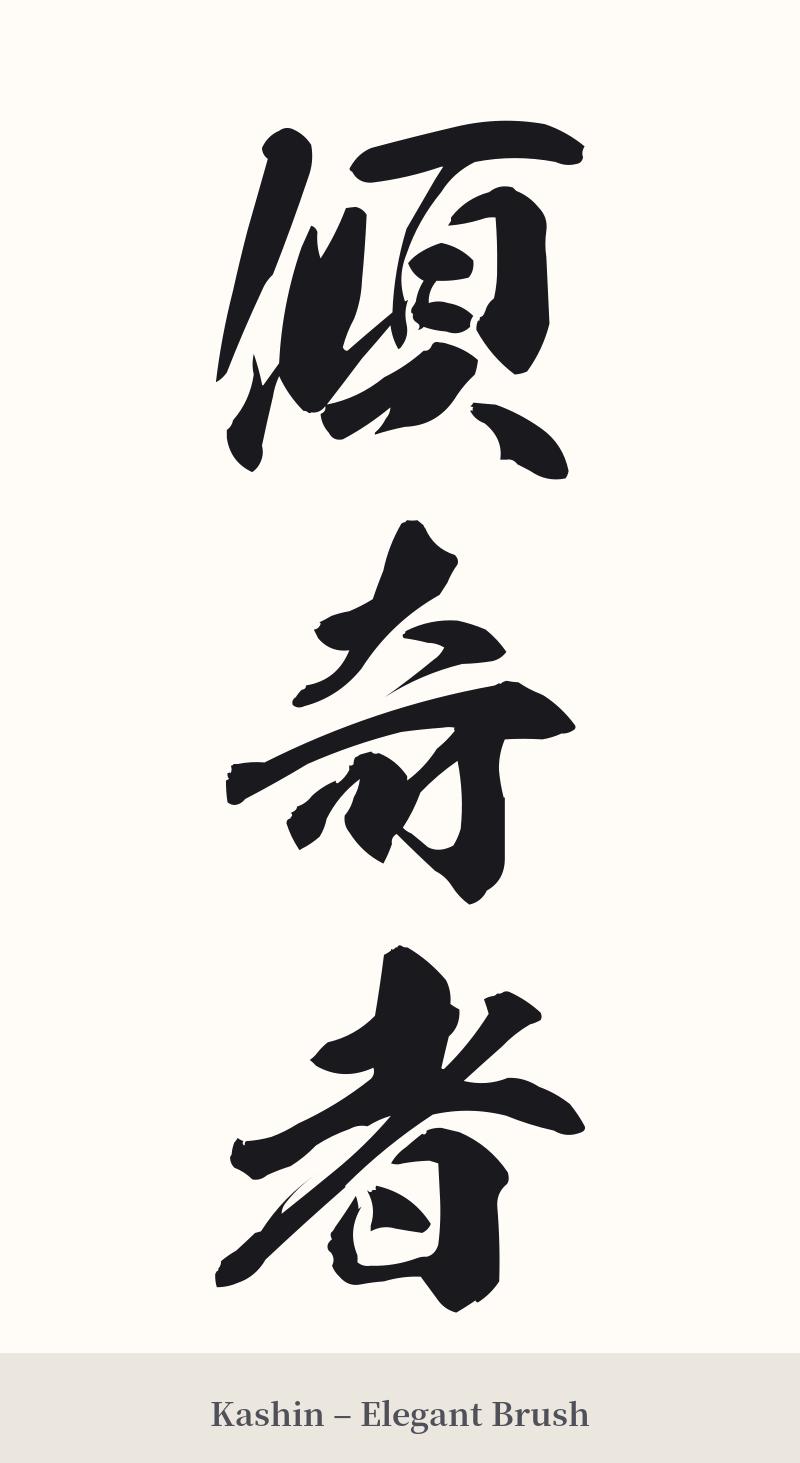
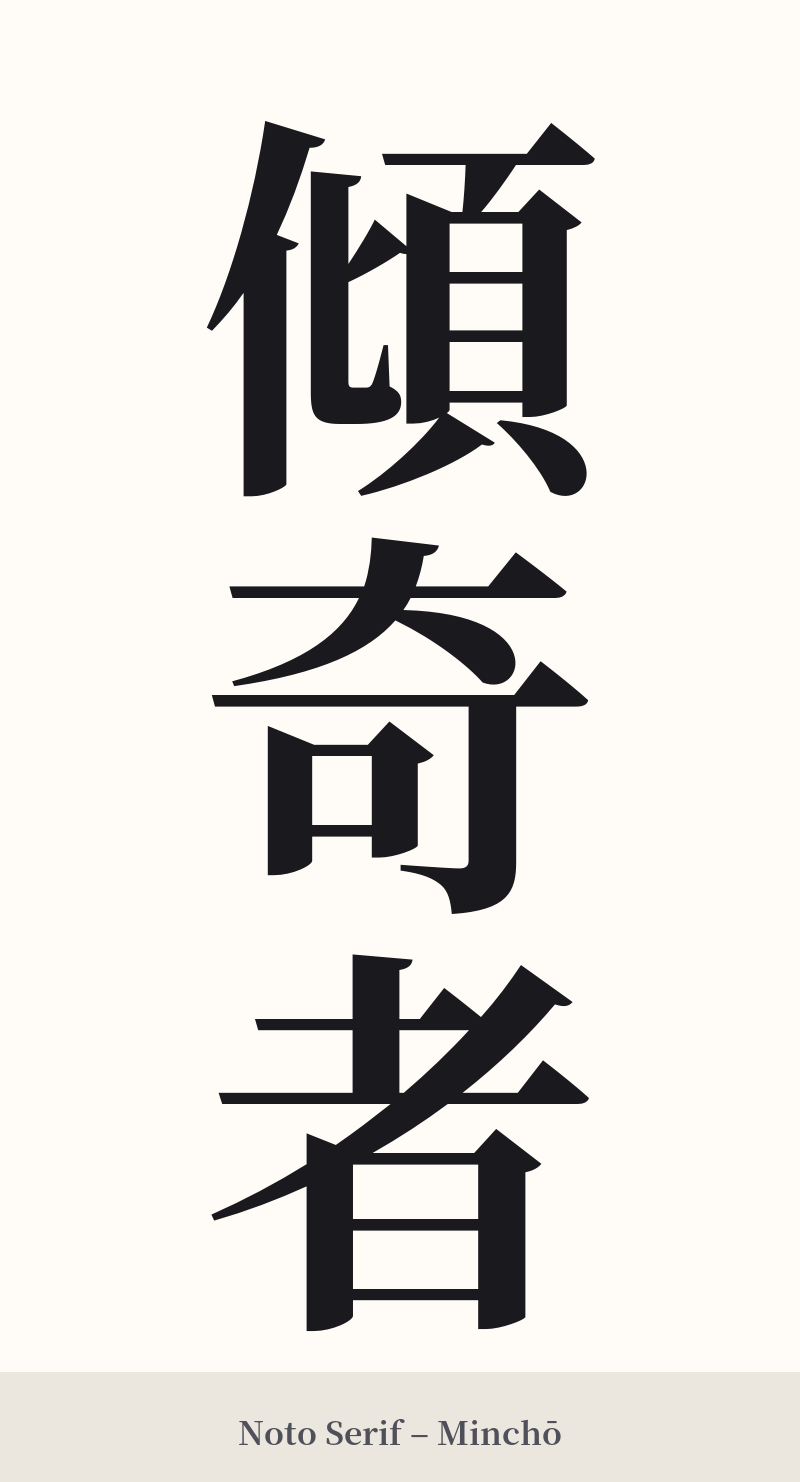
The same kanji can look dramatically different depending on the calligraphy style. Choose a font that matches the mood you want for your tattoo or design.
🎨 Tattoo Suitability
📐 Tattoo Design Guide
For a 傾奇者 tattoo, the design should reflect its bold and unconventional spirit. A vertical alignment is traditional and visually striking for a three-character word like this, making it ideal for the forearm, calf, or along the spine.
When choosing a font style, consider the following: – Aggressive Calligraphy: A dynamic, semi-cursive (gyōsho) or cursive (sōsho) script with strong, energetic brush strokes can capture the wild and rebellious nature of the Kabukimono. – Bold Block Script: A thick, angular block script (kaisho) can convey a sense of unyielding strength and defiance, emphasizing the power behind the non-conformity. – Avoid overly delicate or neat fonts, as they would contradict the core meaning of the word.
The complexity of the characters, especially 傾, requires a certain size to remain legible. Ensure the artist gives each character enough space to breathe, preventing it from becoming an indistinct blur over time. You might also consider incorporating symbolic imagery, such as a lavishly decorated samurai helmet (kabuto) or a tiger, an animal often associated with Maeda Keiji, the archetypal Kabukimono.
Comments