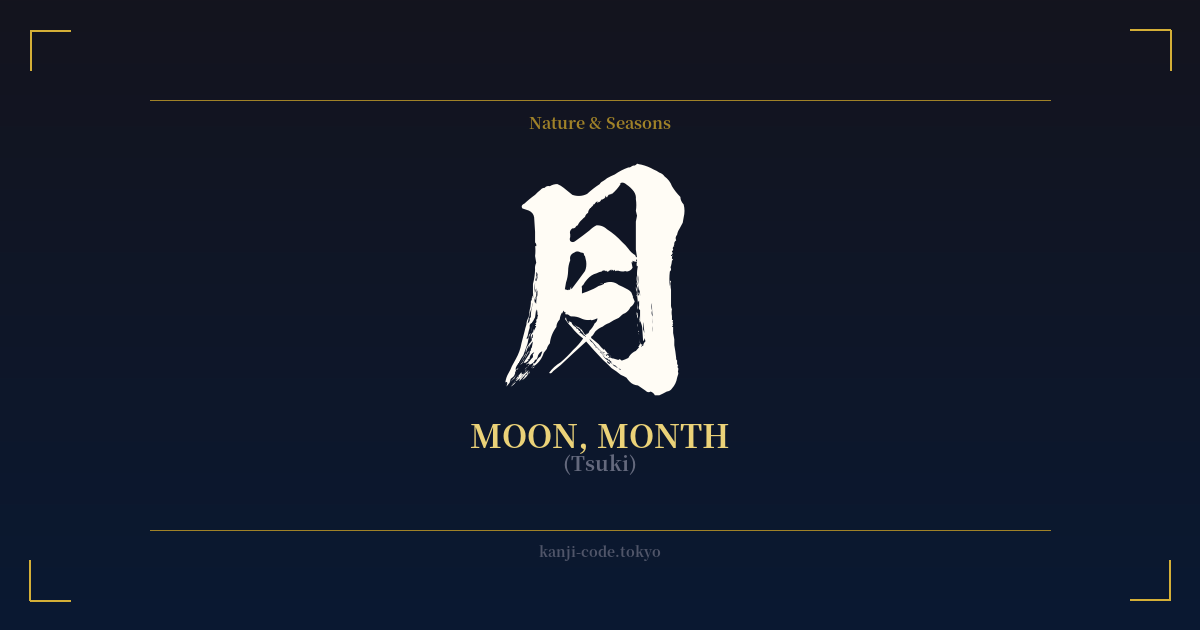
✍️ 月 (Tsuki) — Cultural Context
The kanji 月 (tsuki) is one of the most fundamental and evocative characters in the Japanese language. Its origins are purely pictographic, a stylized drawing of a crescent moon, often depicted with a wisp of a cloud or atmospheric haze passing in front of it. This simple, four-stroke character carries a universe of meaning, bridging the celestial and the terrestrial, the poetic and the practical.
Primarily, 月 represents the moon in the night sky. In Japanese culture, the moon is not just a satellite but a powerful symbol of beauty, contemplation, and the transient nature of life. This is deeply tied to the Buddhist concept of mono no aware, the gentle sadness of passing things. The full moon of autumn is particularly celebrated during the tsukimi (月見) or moon-viewing festivals, a tradition dating back over a thousand years to the Heian period. During these events, people gather to admire the harvest moon, offer thanks, and compose poetry.
This connection to poetry and literature is profound. The moon is a constant muse in haiku and classic literature like The Tale of Genji. A famous, though likely apocryphal, story tells of the novelist Natsume Sōseki teaching his student that the most elegant Japanese translation for "I love you" is not a direct phrase but the poetic observation, "Tsuki ga kirei desu ne?" (The moon is beautiful, isn't it?). The implication is that sharing such a beautiful, fleeting moment with someone is the highest expression of affection.
Beyond its role as a celestial body, 月 also signifies 'month'. This dual meaning stems from the lunar calendar, where the cycles of the moon were used to measure the passage of time. This is why the days of the week in Japanese end with characters for celestial bodies, with Monday being 月曜日 (Getsuyōbi), literally "moon day."
Japanese folklore also populates the moon with a famous resident: the rabbit pounding mochi (rice cakes). Unlike the Western "man in the moon," the Japanese see the lunar maria as forming the shape of a rabbit with a mortar and pestle. This image is a beloved part of childhood stories and cultural iconography, reinforcing the moon's gentle and almost whimsical presence in the nation's heart.
🖌️ Font Styles for 月
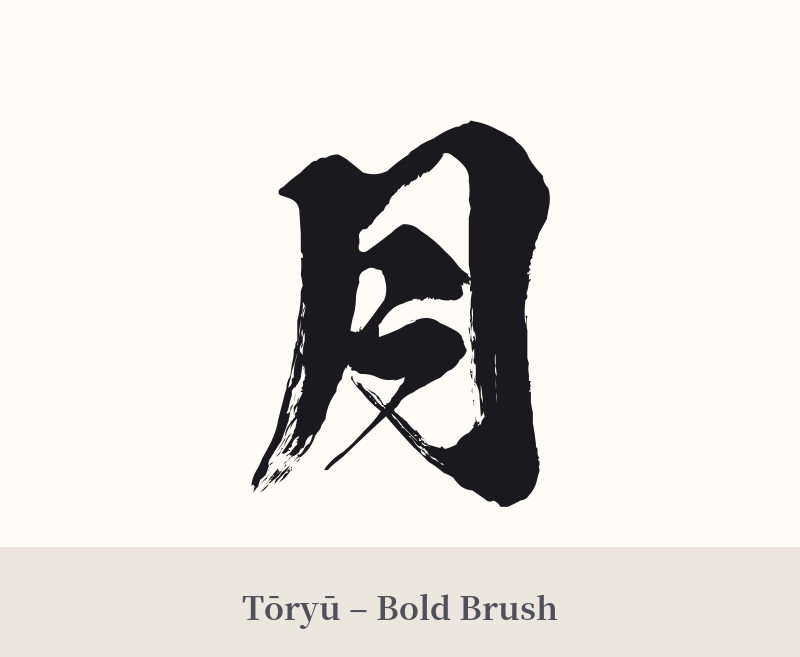
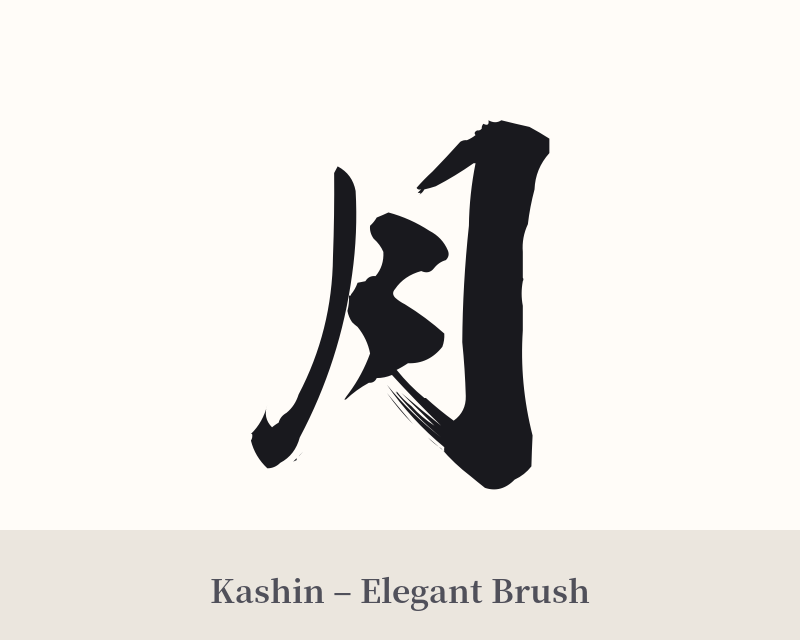
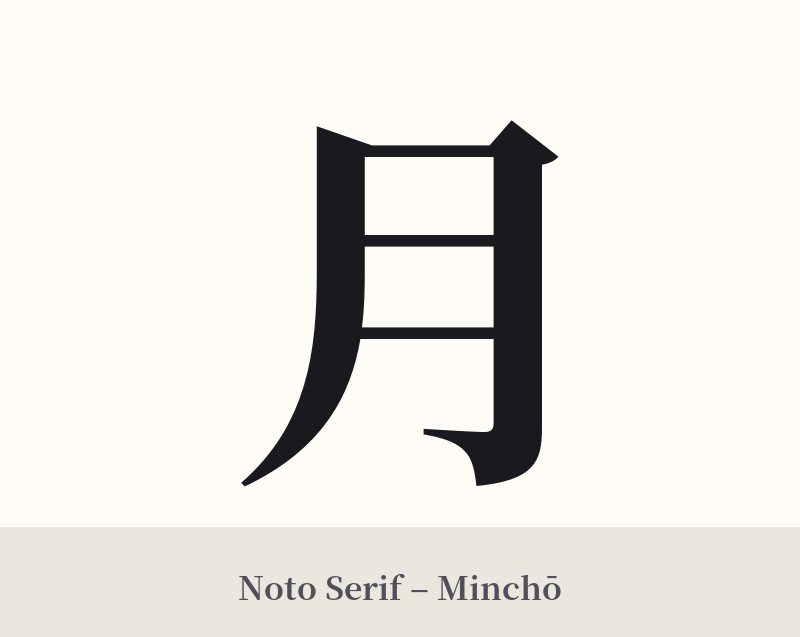
The same kanji can look dramatically different depending on the calligraphy style. Choose a font that matches the mood you want for your tattoo or design.
🎨 Tattoo Suitability
📐 Tattoo Design Guide
The kanji 月 is exceptionally versatile for tattoo design due to its simplicity and balanced form.
– Placement: Its clean lines make it perfect for both small, subtle placements and large, impactful ones. It works beautifully on the wrist, ankle, behind the ear, or on the nape of the neck. For a larger piece, the forearm, calf, or shoulder blade provides a great canvas.
– Style: A simple, crisp black ink in a standard Mincho or Gothic font emphasizes its modern, graphic quality. For a more traditional or artistic feel, a shodō (calligraphy) style with expressive, flowing brushstrokes can be stunning. A watercolor effect, with soft blues, purples, and yellows bleeding from the character's lines, can beautifully evoke a night sky.
– Visual Tips: Consider integrating the kanji into a larger image. The character itself can serve as the moon in a landscape scene, or it can be placed alongside other complementary symbols like a cherry blossom branch (sakura), a wolf, a koi fish, or a cluster of stars. The negative space within the character can also be used creatively, perhaps filled with a subtle color gradient.
Comments