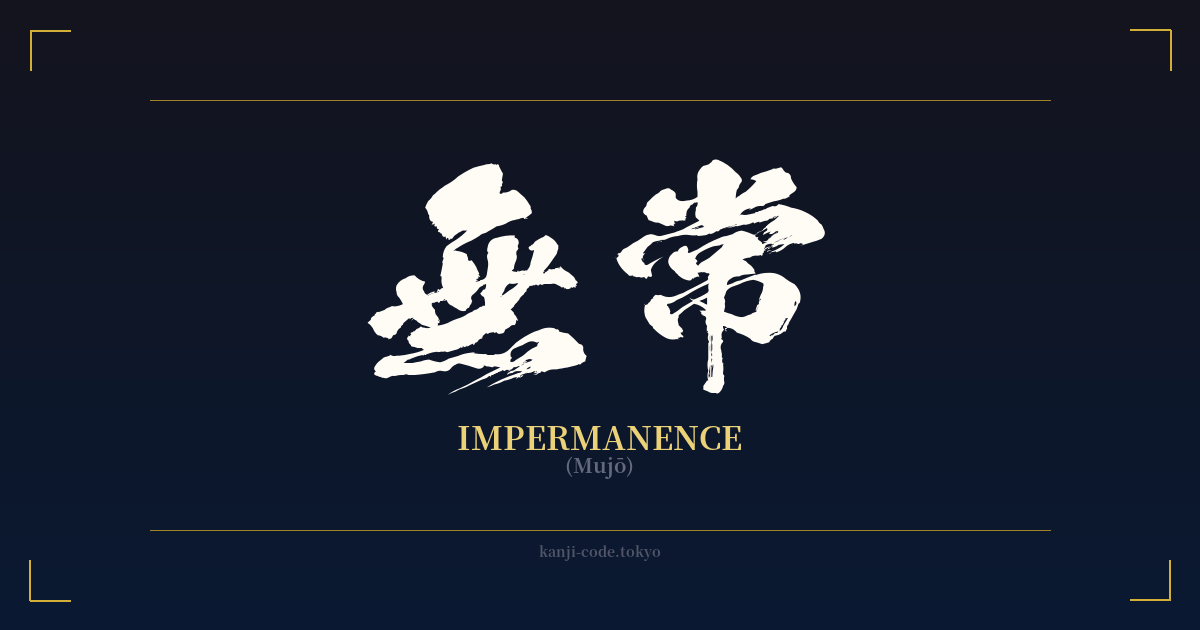
✍️ 無常 (Mujō) — Cultural Context
無常 (Mujō) is one of the most essential concepts in the Japanese worldview, translating to "impermanence" or "transience." Its roots are deeply embedded in Buddhism, where it stands as one of the Three Marks of Existence (三法印, sanbōin), alongside suffering (苦, ku) and non-self (無我, muga). The doctrine, often expressed as 諸行無常 (shogyō mujō), posits that all things, without exception, are in a constant state of flux. Nothing is permanent; everything that arises will eventually pass away.
While this might sound pessimistic to a Western ear, the concept of Mujō in Japan is not purely negative. Instead, it serves as a powerful reminder to cherish the present moment. Because life, beauty, and happiness are fleeting, they become all the more precious. This idea is a cornerstone of Japanese aesthetics and has profoundly shaped the nation's art, literature, and culture for centuries.
The most iconic symbol of Mujō is the cherry blossom (桜, sakura). Their breathtakingly beautiful but tragically short bloom captures the essence of this philosophy. For a brief period, they transform the landscape, only to be scattered by the wind, reminding onlookers of the ephemeral nature of beauty and life itself. This is not a cause for despair, but for a heightened appreciation of the moment—a feeling known as mono no aware (物の哀れ), the gentle sadness of things.
This philosophy is famously articulated in the opening lines of the classic epic, The Tale of the Heike (平家物語, Heike Monogatari): "The sound of the Gion Shōja bells echoes the impermanence of all things." This passage reflects the belief that even the most powerful clans and glorious achievements are subject to the unyielding law of transience. The samurai themselves, living with the constant presence of death, embraced this concept, which informed their code of honor and their focus on living fully in the now.
Mujō also underpins the aesthetic of wabi-sabi (侘寂), which finds beauty in imperfection, impermanence, and incompleteness. A weathered stone, a cracked teacup, or a fading leaf are all celebrated for embodying the inevitable passage of time. By accepting and finding beauty in this transient reality, one can cultivate a sense of peace and groundedness. Thus, Mujō is not a morbid obsession with decay but a mature, reflective understanding of reality that encourages mindfulness, acceptance, and a deep appreciation for every fleeting moment.
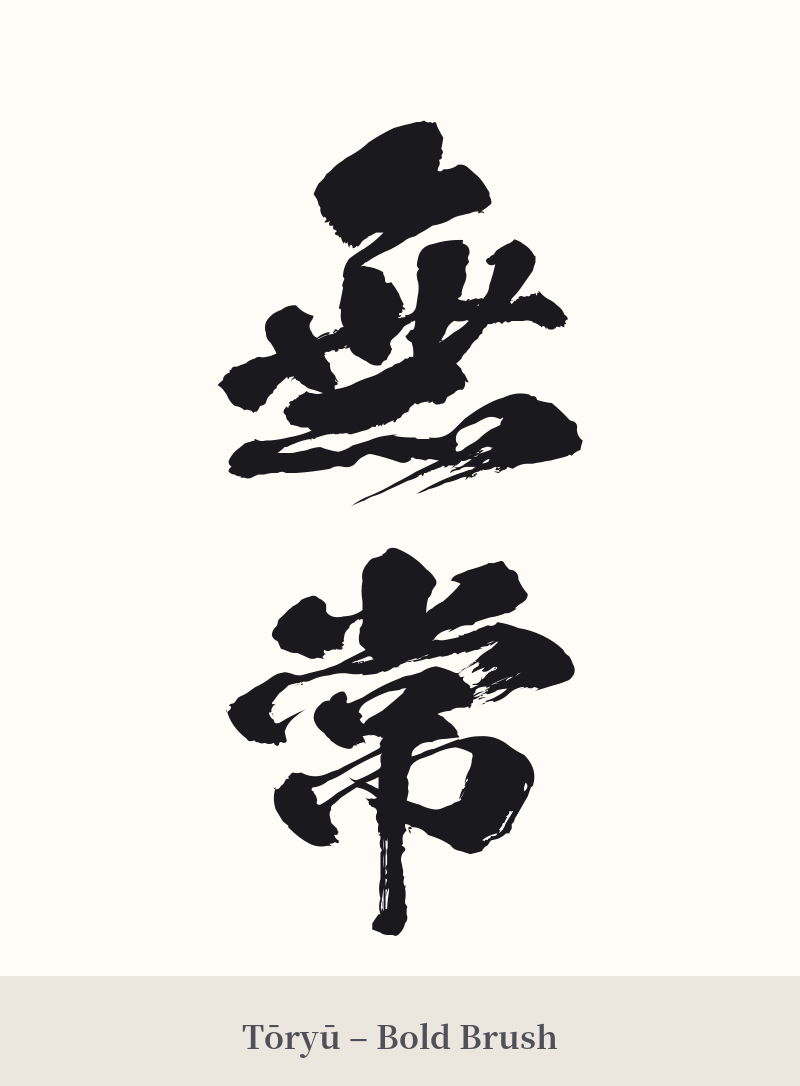
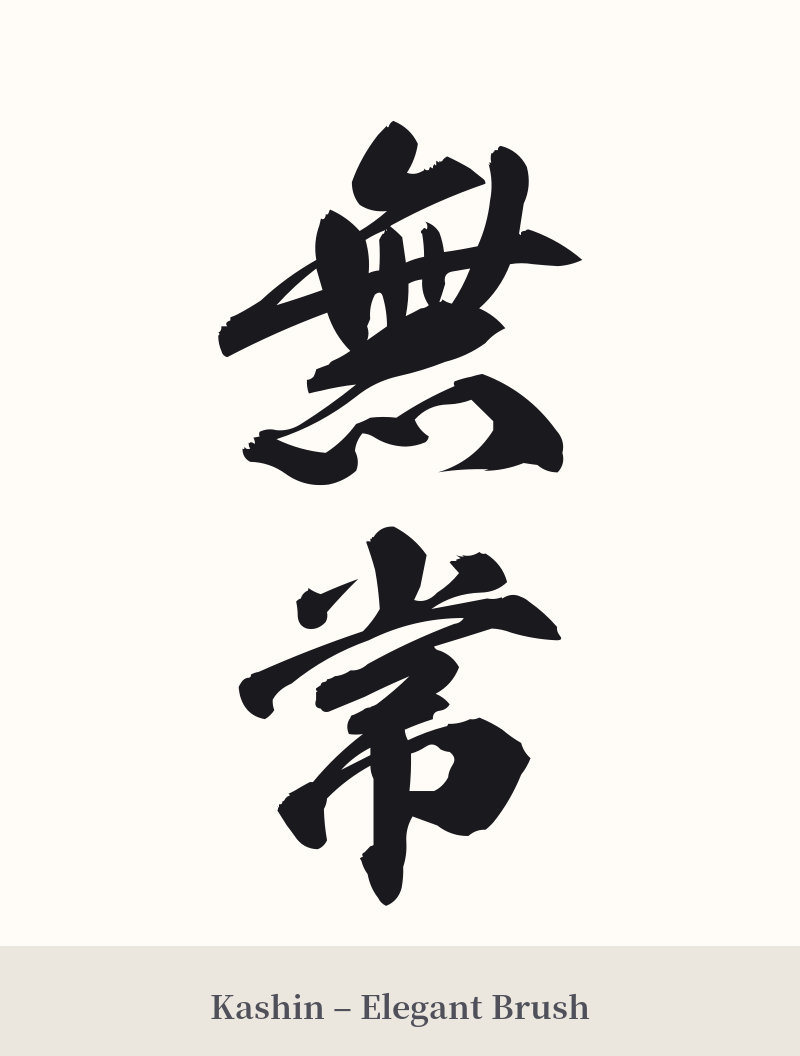
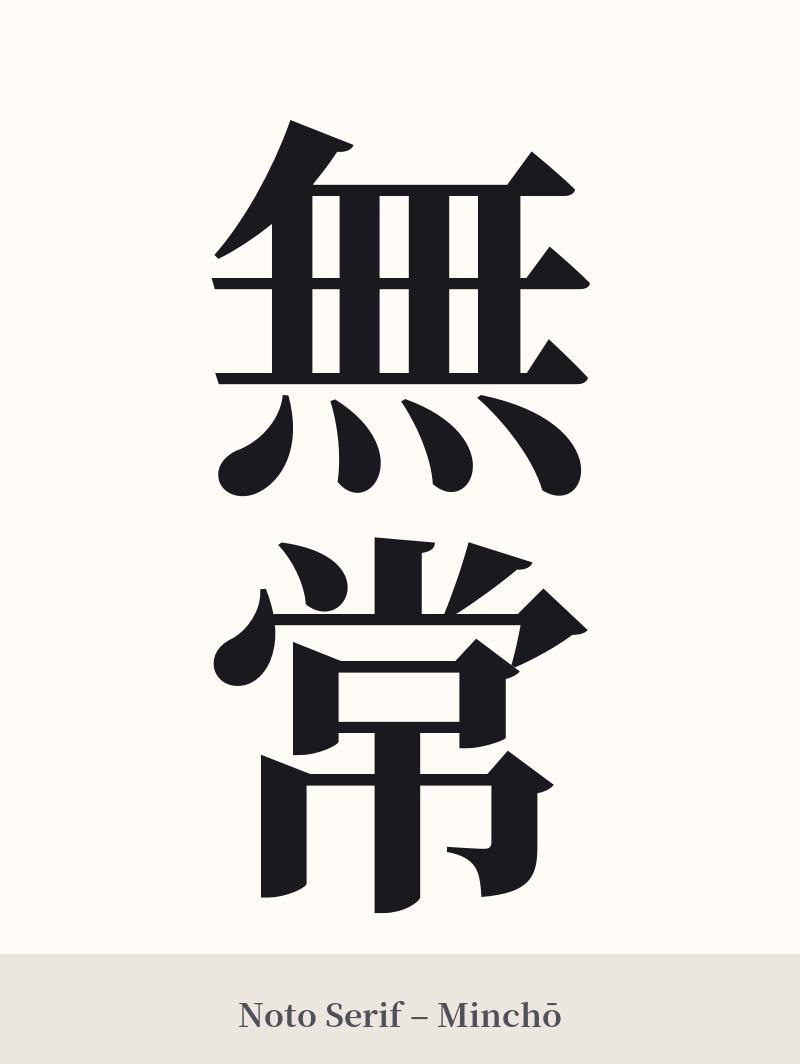
🖌️ Font Styles for 無常
The same kanji can look dramatically different depending on the calligraphy style. Choose a font that matches the mood you want for your tattoo or design.
🎨 Tattoo Suitability
📐 Tattoo Design Guide
無常 is a powerful and aesthetically pleasing word for a tattoo, lending itself well to classic Japanese design principles.
– Placement: A vertical orientation is highly recommended to honor traditional Japanese script. Excellent placements include the forearm, the calf, along the spine, or on the ribs. This arrangement allows the characters to flow naturally.
– Font Style: The choice of font can dramatically alter the feeling of the tattoo. A crisp, clean Kaisho (block script) style emphasizes the philosophical clarity and weight of the word. For a more fluid and organic feel that mirrors the concept of transience itself, a Gyosho (semi-cursive) or Sosho (cursive) brushstroke style is an excellent option.
– Visual Elements: To enhance the meaning, consider pairing 無常 with classic symbols of impermanence. A few falling cherry blossom petals, an ensō (Zen circle), or a wisp of smoke can beautifully complement the kanji. Placing the characters within a larger design featuring a moon partially hidden by clouds also evokes a sense of the ephemeral.
Comments