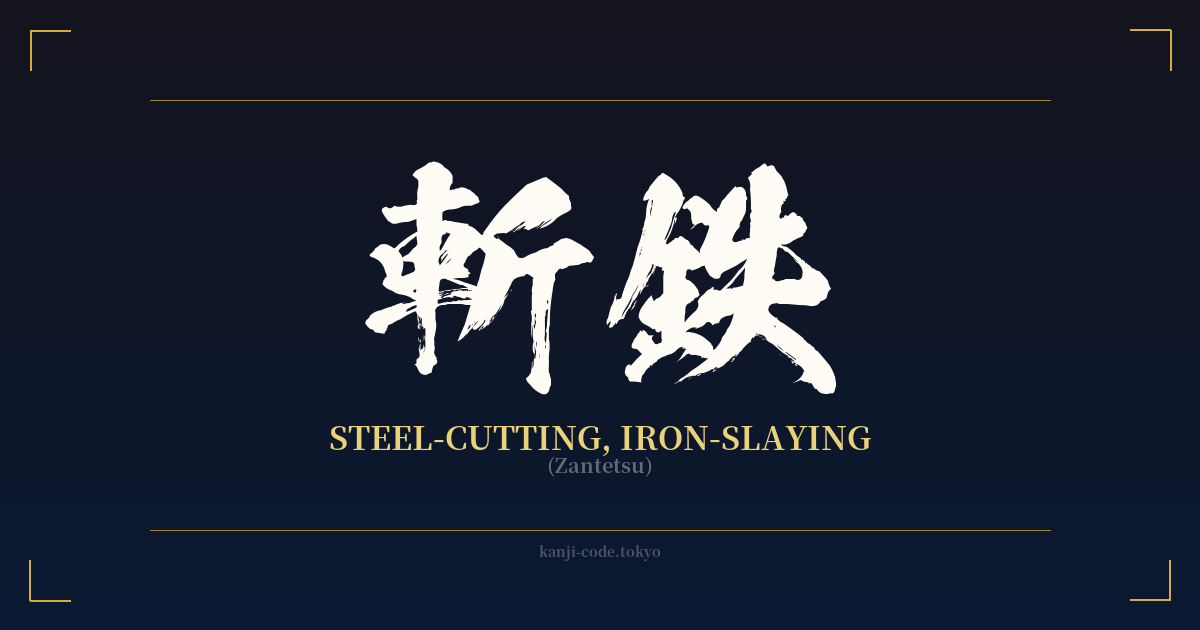
✍️ 斬鉄 (Zantetsu) — Cultural Context
斬鉄 (Zantetsu) literally translates to “steel-cutting” or “iron-slaying.” It is not a word you would encounter in everyday Japanese conversation. Instead, it exists in the realm of folklore, fiction, and martial arts fantasy, representing a pinnacle of skill so profound that it borders on the supernatural.
The word is a powerful combination of two kanji: 斬 (zan), meaning “to slay” or “cut down,” and 鉄 (tetsu), meaning “iron.” Together, they form a concept that immediately brings to mind the image of a master swordsman performing an impossible feat—cleaving through solid metal as if it were paper. This concept speaks to a deep-seated ideal within Japanese warrior culture: the pursuit of ultimate perfection in one's craft.
For most modern Japanese people and anime fans worldwide, the word Zantetsu is inextricably linked to one iconic figure: Goemon Ishikawa XIII from the legendary manga and anime series Lupin III. Goemon wields a katana named Ryusei (流星), which he affectionately calls Zantetsuken (斬鉄剣), or “the steel-cutting sword.” His signature ability is to cut absolutely anything, from cars and tanks to buildings and missiles. When Goemon prepares to make his impossible cut, he often utters the phrase, 「また、つまらぬものを斬ってしまった」 (“Once again, I have cut a worthless object”). This has made Zantetsu a household concept for fans, cementing its status as a symbol of cool, effortless mastery.
While the literal act of cutting a steel block with a katana is largely the stuff of fiction, the spirit of Zantetsu is rooted in the historical ambitions of Japanese swordsmiths and warriors. Smiths like Masamune and Muramasa were legendary figures whose lives were dedicated to forging the perfect blade—one that was unbreakable, impossibly sharp, and an extension of the wielder’s soul. The performance of a sword was tested through tameshigiri (test cutting), where blades were used on various materials, including bamboo, tatami mats, and sometimes even metal armor. The idea of a sword that could cut through a rival’s helmet or blade was the ultimate goal, and Zantetsu is the fantastical fulfillment of that dream.
Today, Zantetsu has transcended Lupin III and appears as a concept, weapon name, or special attack in countless other video games, anime, and manga. It consistently represents the ultimate offensive technique, a power that ignores conventional defense and demonstrates an absolute level of skill. It symbolizes the moment when dedication and technique become so refined that they allow one to break the rules of the physical world.
🖌️ Font Styles for 斬鉄
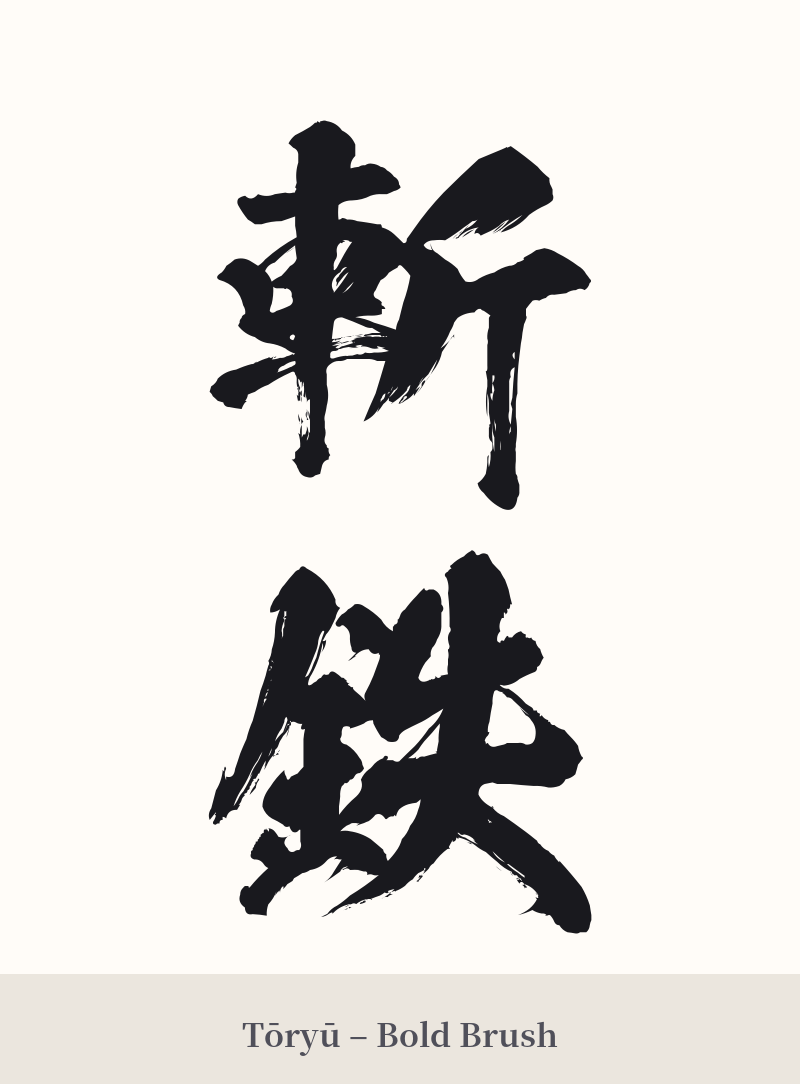
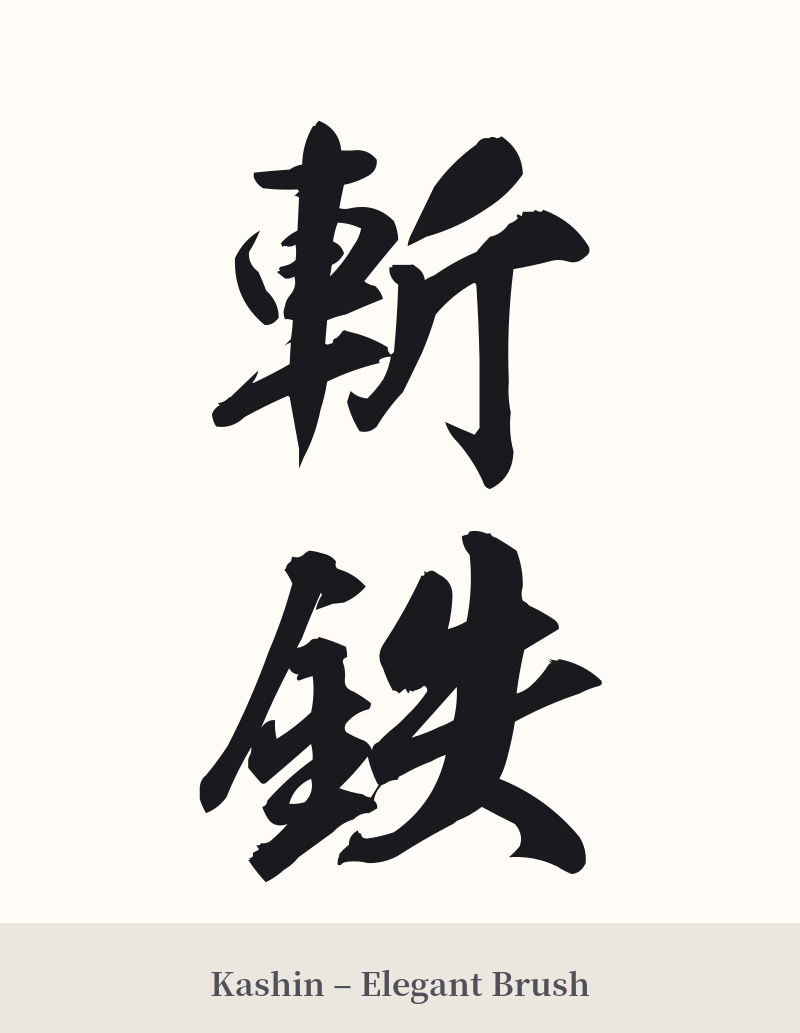
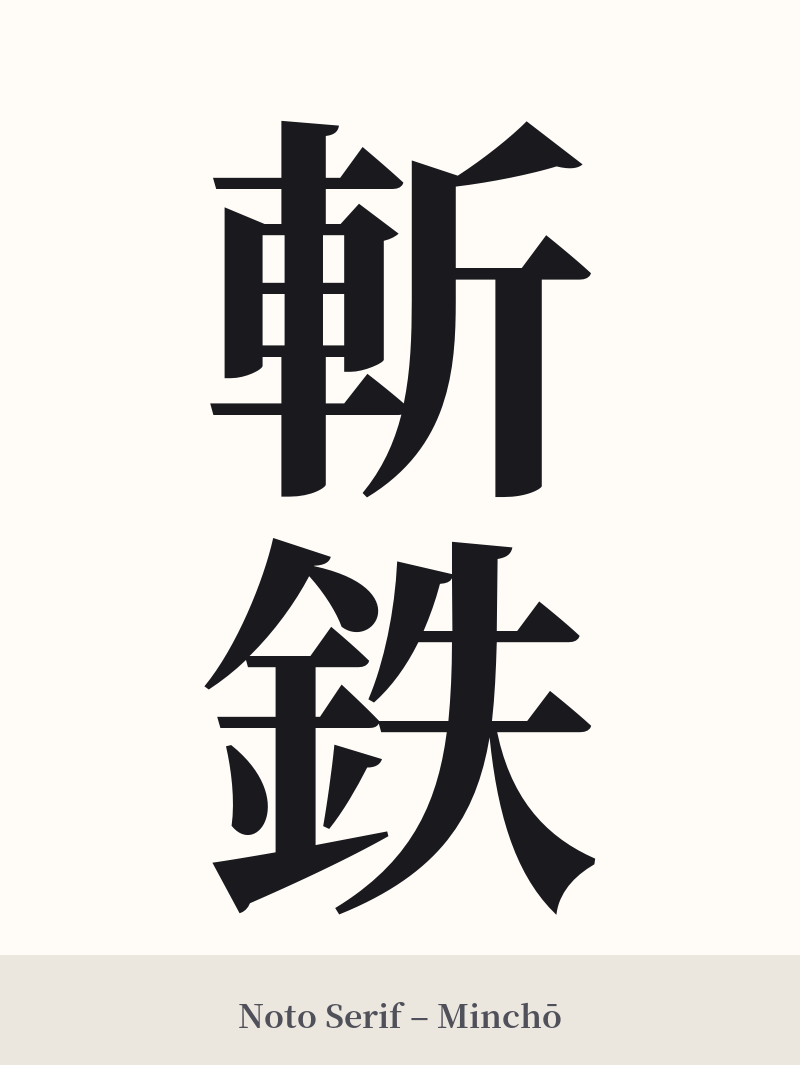
The same kanji can look dramatically different depending on the calligraphy style. Choose a font that matches the mood you want for your tattoo or design.
🎨 Tattoo Suitability
📐 Tattoo Design Guide
A Zantetsu tattoo is about conveying precision and unstoppable force. The design should reflect this sharp, clean concept.
– Placement: This two-character compound works beautifully both vertically and horizontally. A vertical placement along the forearm, bicep, or calf accentuates the 'cutting' motion. A horizontal placement across the chest or back can give it a stable, powerful look.
– Font Style: A sharp and angular script like Kaisho (block script) would emphasize the 'iron' and 'cutting' nature of the word. Alternatively, a semi-cursive Gyosho or a dynamic brushstroke (shodo) style can add a sense of movement and artistry, as if the word itself was drawn by a blade.
– Visual Elements: Consider incorporating a clean, thin line that 'cuts' through the kanji itself or the space around it. You could also pair the kanji with imagery of a katana, a shattered object, or a subtle glint of light reflecting off a blade. Avoid overly complex backgrounds that could detract from the stark power of the kanji.
Comments