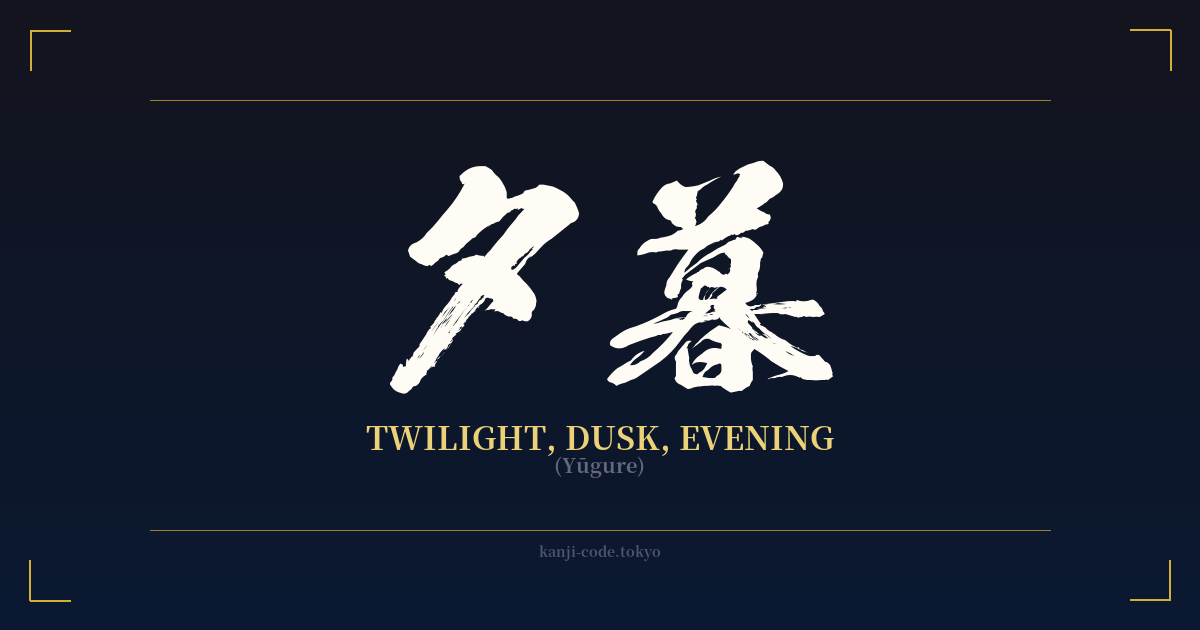
✍️ 夕暮 (Yūgure) — Cultural Context
夕暮 (Yūgure) is the Japanese word for twilight or dusk, the magical, fleeting period between sunset and complete darkness. While its literal meaning is simple, its cultural and emotional resonance in Japan is incredibly deep. It’s more than just a time of day; it’s a mood, an aesthetic, and a profound symbol of transition and impermanence.
In Japanese literature and poetry, particularly in haiku, yūgure is a classic kigo, or season word, strongly associated with autumn. It evokes a sense of gentle melancholy, nostalgia, and quiet contemplation. The image of crows returning to their nests against a darkening sky, the lonely cry of a deer, or the cool evening breeze are all classic scenes tied to this time. This feeling is central to the Japanese aesthetic of mono no aware (物の哀れ), the poignant awareness of the transient nature of beauty. Yūgure is the perfect embodiment of this concept—a breathtakingly beautiful moment that, by its very nature, cannot last.
The term appears throughout Japan's rich literary history, from the courtly romances of the Heian period like 'The Tale of Genji' to the verses of wandering Zen poets. It is the 'magic hour' when the world is bathed in a soft, ethereal light, blurring the hard edges of reality. This is a time when the spiritual world is felt to be closer to the physical one, a liminal space where transformations can occur.
Beyond its high-art connotations, yūgure also holds a powerful place in the everyday life and collective memory of Japanese people. It is the time of coming home from school or work, the air filled with the sounds of evening cicadas in summer or the smell of dinner being prepared. It carries a deep-seated feeling of nostalgia and release, the winding down of the day’s responsibilities and the settling into the peace of the evening.
While other words for twilight exist, such as 黄昏 (tasogare), yūgure remains the most common and direct term. Tasogare carries a slightly more mysterious, literary nuance, literally meaning 'who is that?'—referring to the difficulty of recognizing faces in the dim light. Yūgure, by contrast, is more universal, capturing the simple, shared experience of watching the day come to a beautiful, serene close.
🖌️ Font Styles for 夕暮
The same kanji can look dramatically different depending on the calligraphy style. Choose a font that matches the mood you want for your tattoo or design.
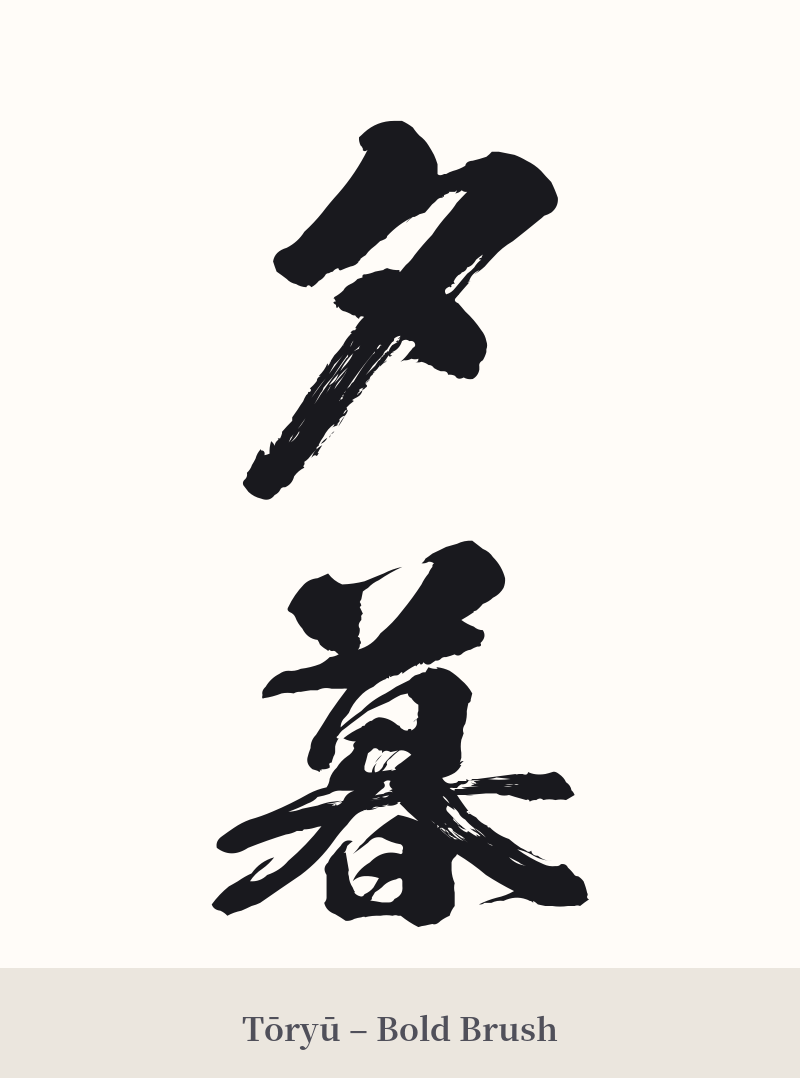
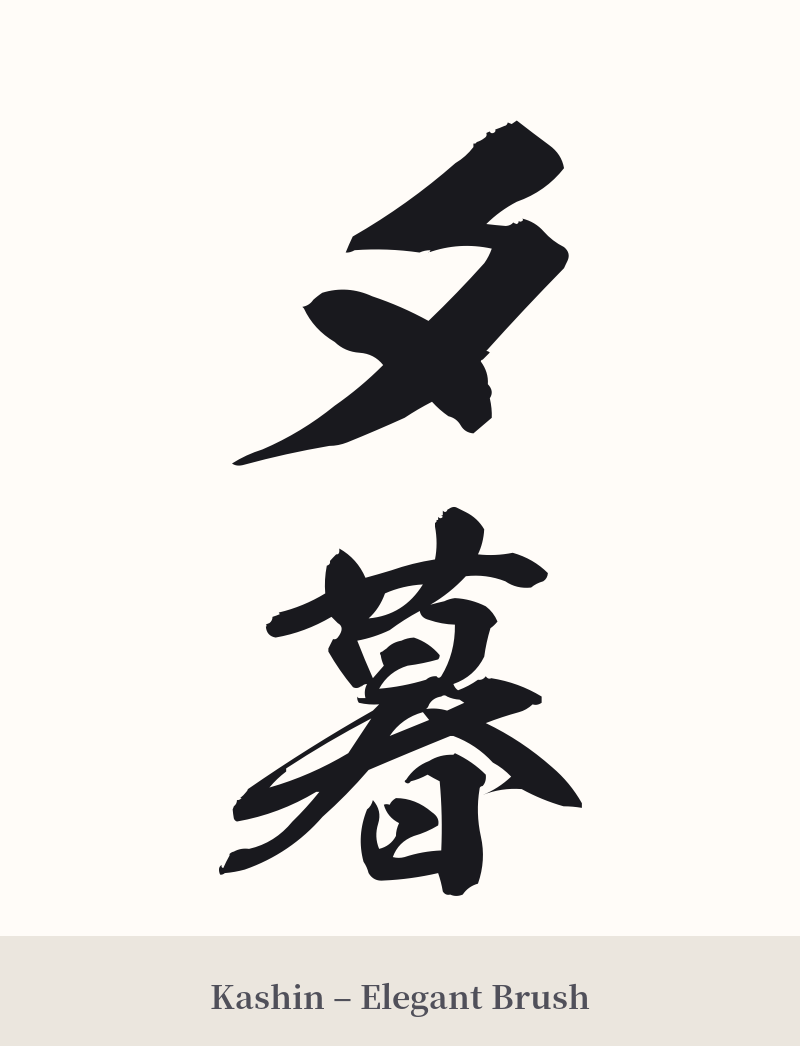
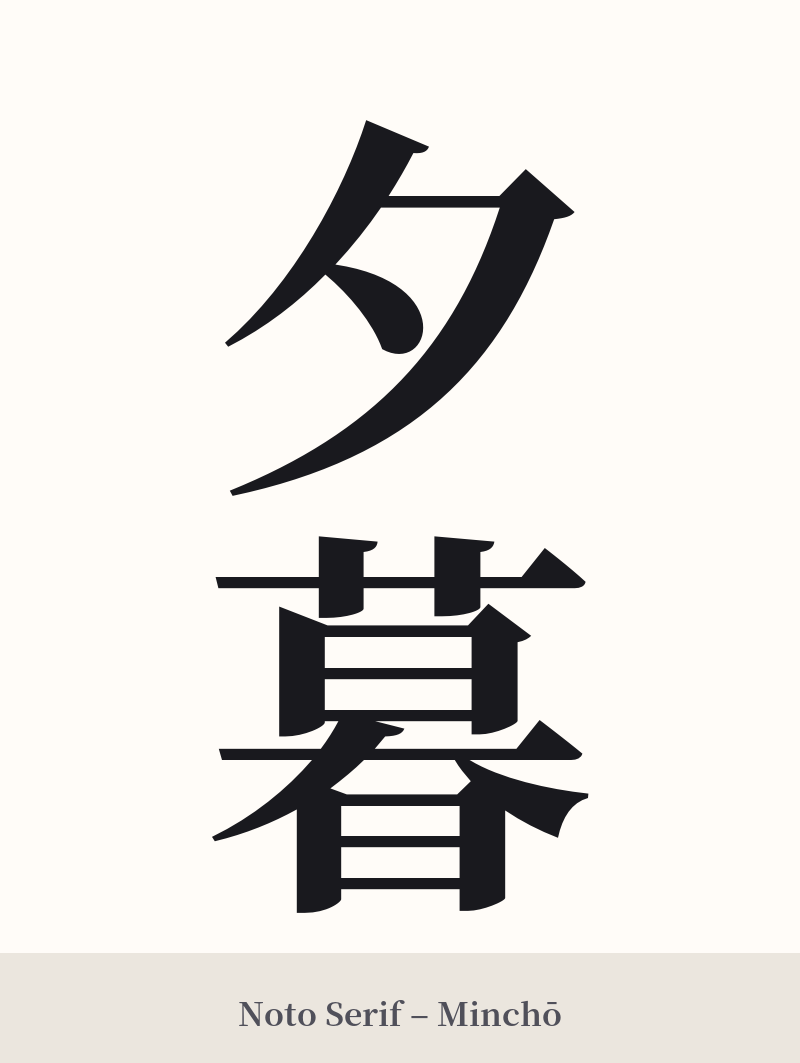
🎨 Tattoo Suitability
📐 Tattoo Design Guide
Yūgure offers a wonderful opportunity for a poetic and visually balanced tattoo. The contrast between the simple, open 夕 and the denser, more complex 暮 is a key design element.
– Placement: This word suits placements that are reflective and personal. Consider the inner forearm, the calf, the back of the shoulder, or vertically along the spine or ribs.
– Font Style: A semi-cursive (gyōsho) or full cursive (sōsho) script would beautifully capture the fluid, transient feeling of twilight. For a more modern and clean aesthetic, a crisp, well-balanced block script (kaisho) can emphasize the distinct shapes of each character.
– Visual Tips: Consider integrating the kanji with imagery associated with dusk. This could be a subtle watercolor wash of orange and purple, the silhouette of a lone pine tree, a flock of crows, or the crescent moon that the first character, 夕, represents. The key is to maintain a sense of calm and minimalism, letting the kanji's meaning shine.
Comments