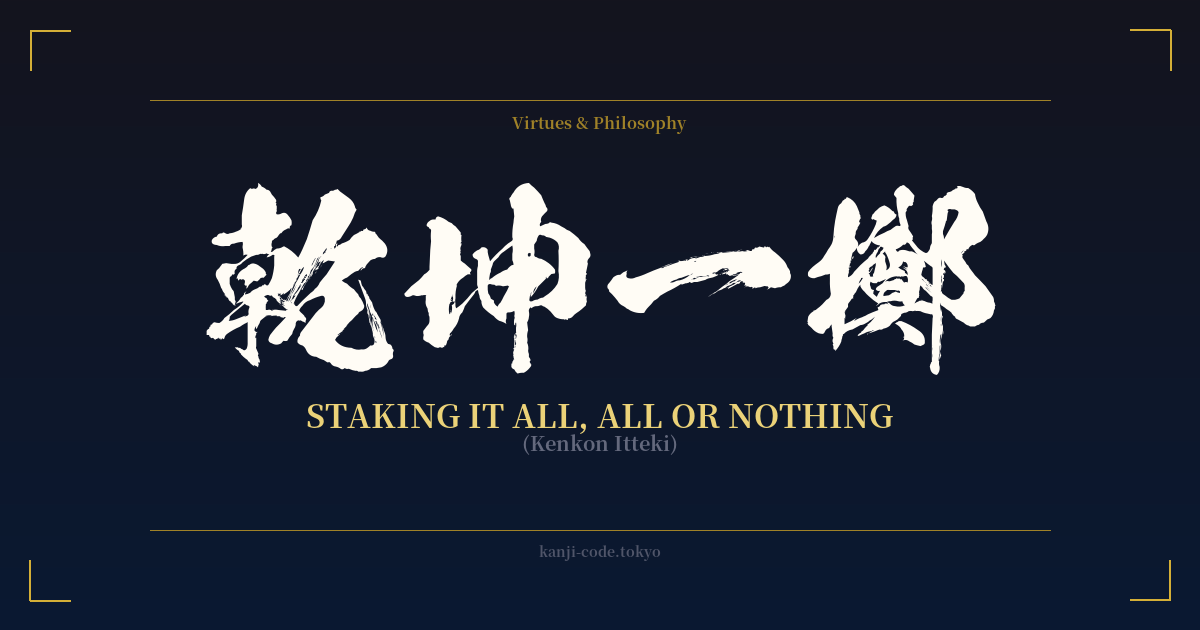
✍️ 乾坤一擲 (Kenkon Itteki) — Cultural Context
乾坤一擲 (Kenkon Itteki) is a four-character idiom that encapsulates a moment of ultimate risk and profound decision. Translated literally, it means "Heaven and Earth, One Throw." This powerful phrase originates from classical Chinese literature and has been deeply absorbed into Japanese culture as a symbol of betting everything on a single, decisive action.
The term is said to have been inspired by a poem from the Tang Dynasty scholar Han Yu. In his writing, he metaphorically described a high-stakes situation as a great gamble, a single throw of the dice that would determine fortune or ruin. The phrase captures this exact sentiment: a point of no return where you commit all your resources, hopes, and efforts to one chance, fully prepared to accept the outcome, whatever it may be.
The first two characters, 乾坤 (Kenkon), are a universe in themselves. 乾 (Ken) represents heaven, the sky, and the celestial. 坤 (Kon) represents the earth. Together, they signify the entire world, the whole of existence. To stake 'Kenkon' is to stake your entire world on something.
The last two characters, 一擲 (Itteki), define the action. 一 (Ichi/It) means "one" or "a single," and 擲 (Teki) means "to throw" or "to cast." This isn't a hesitant or repeated attempt; it is a single, committed, all-in action. It’s the final roll of the dice, the last arrow in the quiver, the one shot you have to change your destiny.
In modern Japan, Kenkon Itteki is not a phrase used in casual conversation. It is reserved for moments of great consequence. You might hear it in the context of a startup founder risking all their capital on a new venture, an athlete in the final seconds of a championship game making a high-risk play, or an individual making a life-altering decision like moving across the world for a unique opportunity. It carries the weight of samurai resolve, a commitment to a path with the full understanding that it will lead to either ultimate success or total failure.
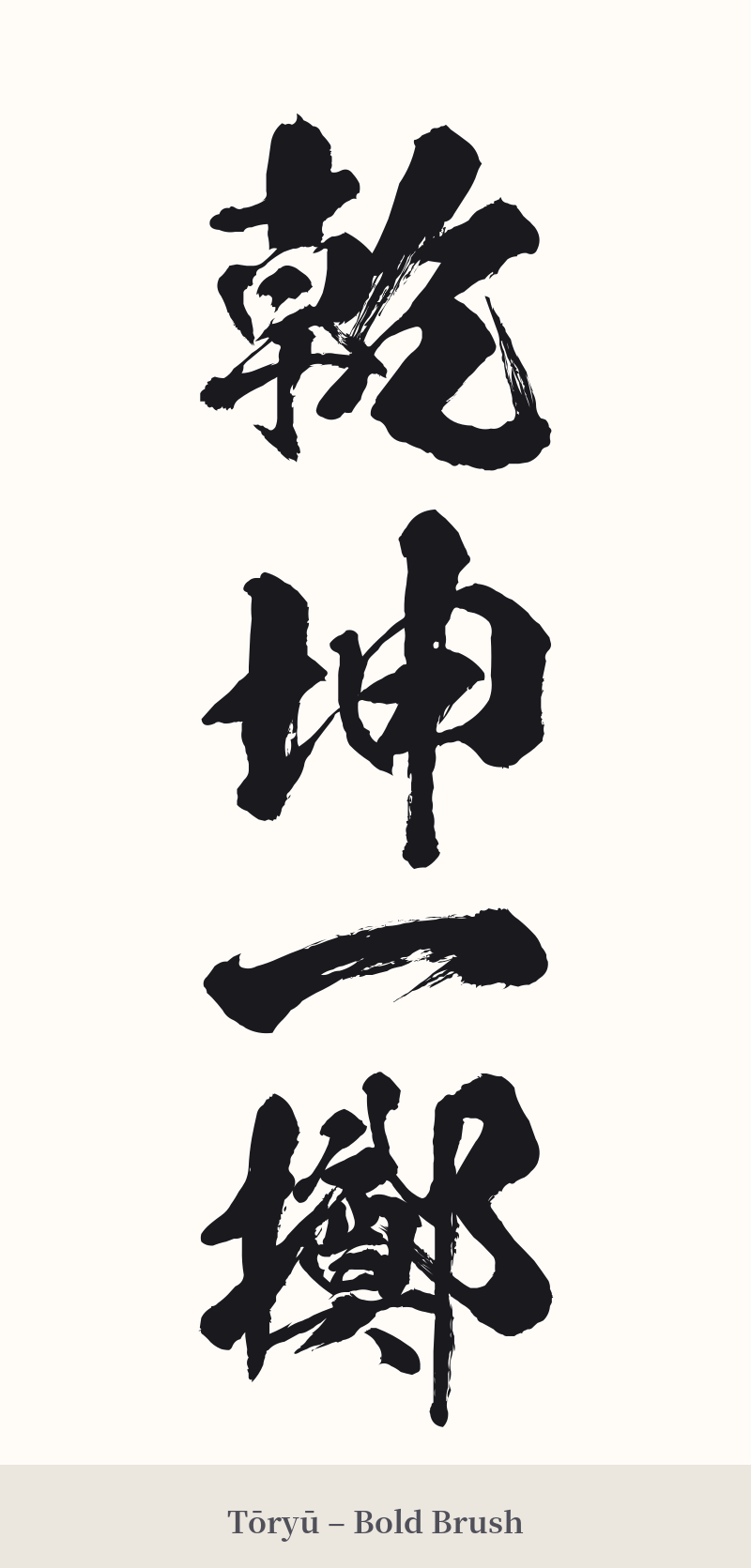
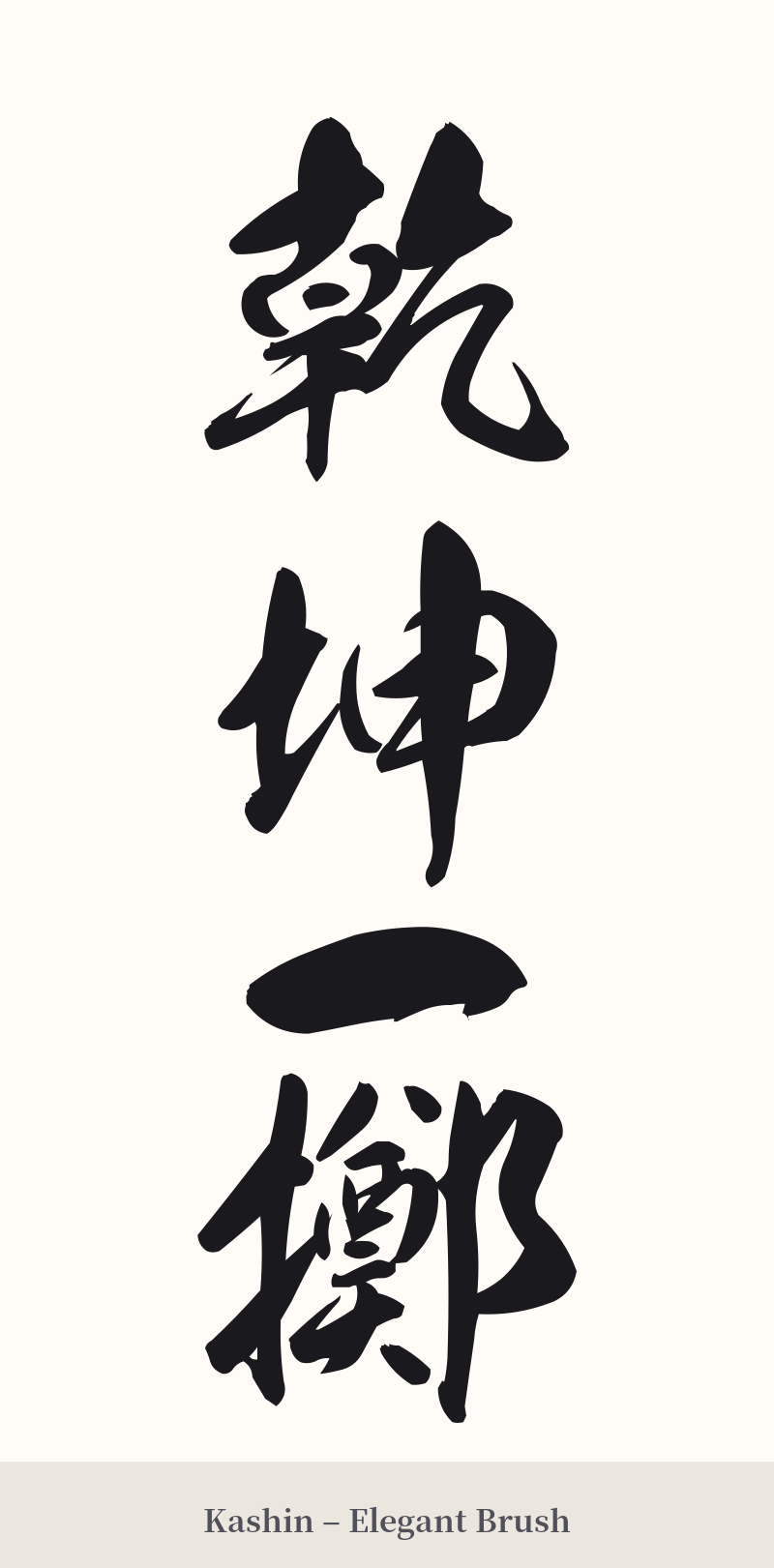
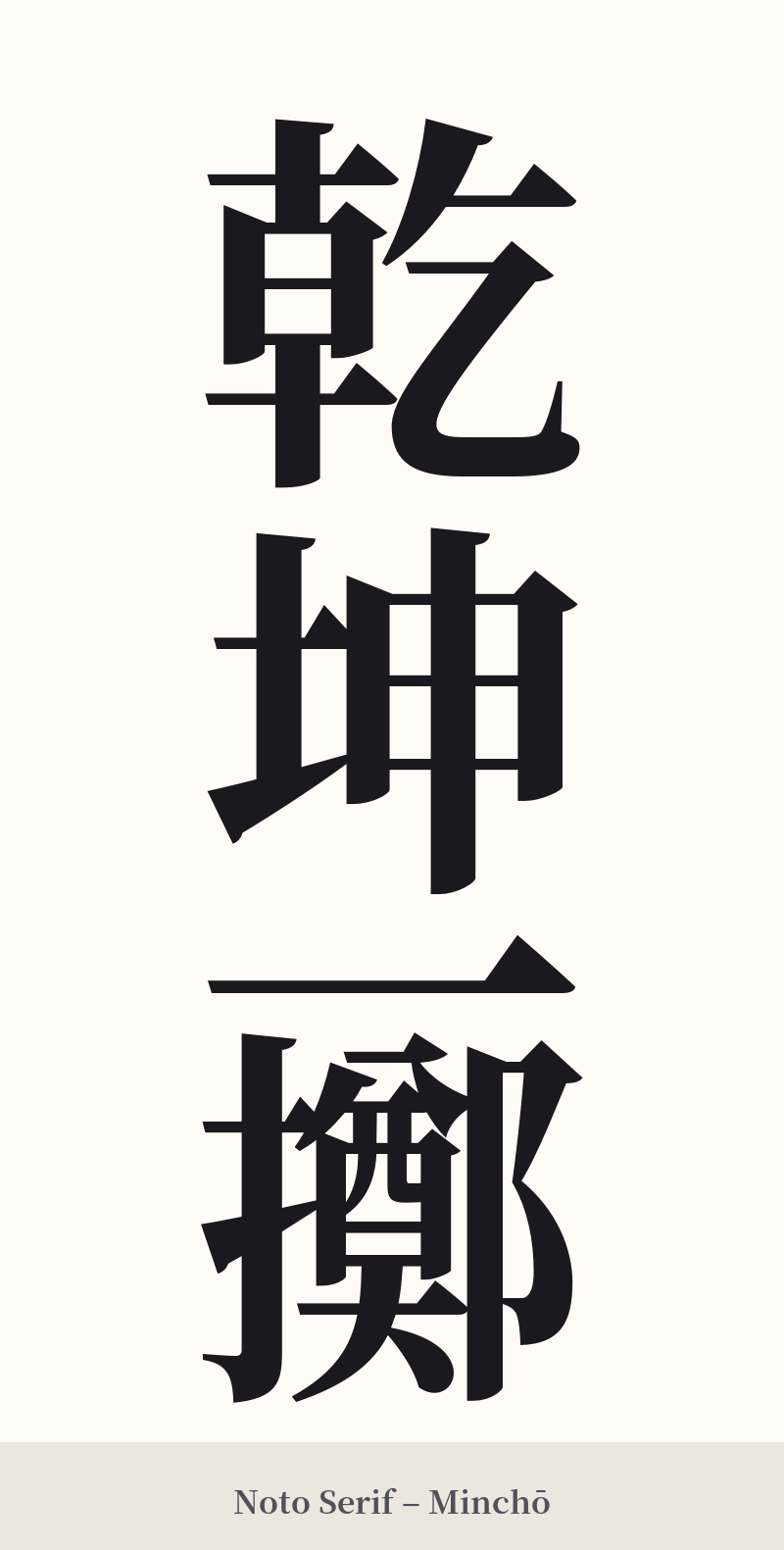
🖌️ Font Styles for 乾坤一擲
The same kanji can look dramatically different depending on the calligraphy style. Choose a font that matches the mood you want for your tattoo or design.
🎨 Tattoo Suitability
📐 Tattoo Design Guide
The four-character structure of Kenkon Itteki lends itself beautifully to tattoo design, particularly in a traditional vertical arrangement.
– Placement: A vertical column along the spine, forearm, or calf is a classic and visually appealing choice. For a horizontal design, the chest or upper back provides a wide enough canvas to give the characters room to breathe.
– Style: A dynamic, semi-cursive brush script (gyōsho) can capture the energy and motion of the 'throw' (擲). For a more stoic and impactful look, a bold and angular block script (kaisho) emphasizes the gravity of the decision.
– Visuals: While the phrase is powerful enough to stand alone, you could incorporate subtle thematic elements. A background of a swirling cosmos could hint at 'heaven and earth,' or a pair of dice could be placed near the bottom to symbolize the 'single throw.' However, letting the calligraphy be the sole focus is often the most powerful approach.
Comments