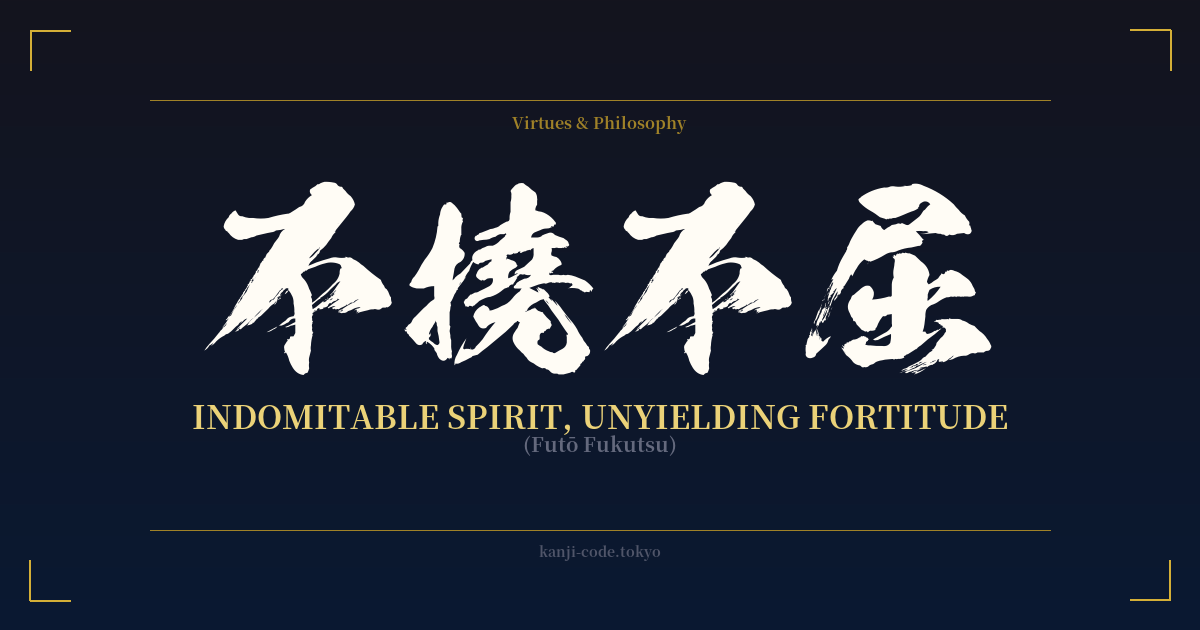
✍️ 不撓不屈 (Futō Fukutsu) — Cultural Context
不撓不屈 (Futō Fukutsu) is a powerful Japanese four-character idiom that encapsulates the spirit of unbreakable resilience and unwavering fortitude. It is a declaration of inner strength, a vow to never surrender, no matter the adversity. The phrase translates literally as “not bending, not yielding,” painting a vivid picture of something that refuses to be broken or subdued.
This concept is deeply woven into the fabric of Japanese culture, often associated with the idealized spirit of the samurai and the principles of Bushidō, the way of the warrior. A true warrior was expected to face hardship, pain, and even death with a calm and unyielding heart. Futō Fukutsu is the embodiment of that ideal—the refusal to buckle under pressure, whether on the battlefield or in the face of personal trials.
While its roots may be in martial philosophy, the application of Futō Fukutsu today is broad and deeply personal. It is the spirit of the athlete who pushes through pain to achieve victory, the entrepreneur who rebuilds after failure, or the individual who battles a serious illness with courage and hope. It’s a common term used in sports, business, and stories of personal triumph to describe an almost superhuman level of determination.
It’s important to distinguish Futō Fukutsu from similar concepts like 我慢 (gaman) or 忍耐 (nintai). Gaman refers to stoic endurance, the quiet bearing of hardship. Nintai means patience or perseverance. Futō Fukutsu, however, is more active and defiant. It is not just about enduring; it is about actively resisting being broken. It’s a conscious and powerful choice to remain standing, to maintain one’s spirit intact against all odds.
In popular culture, from historical dramas to manga and anime, this phrase is often used to describe protagonists who possess an inextinguishable will. They are the heroes who, despite being beaten down, always find the strength to get back up, their resolve stronger than ever. This makes Futō Fukutsu a timeless and inspiring expression of the human capacity to overcome.
🖌️ Font Styles for 不撓不屈
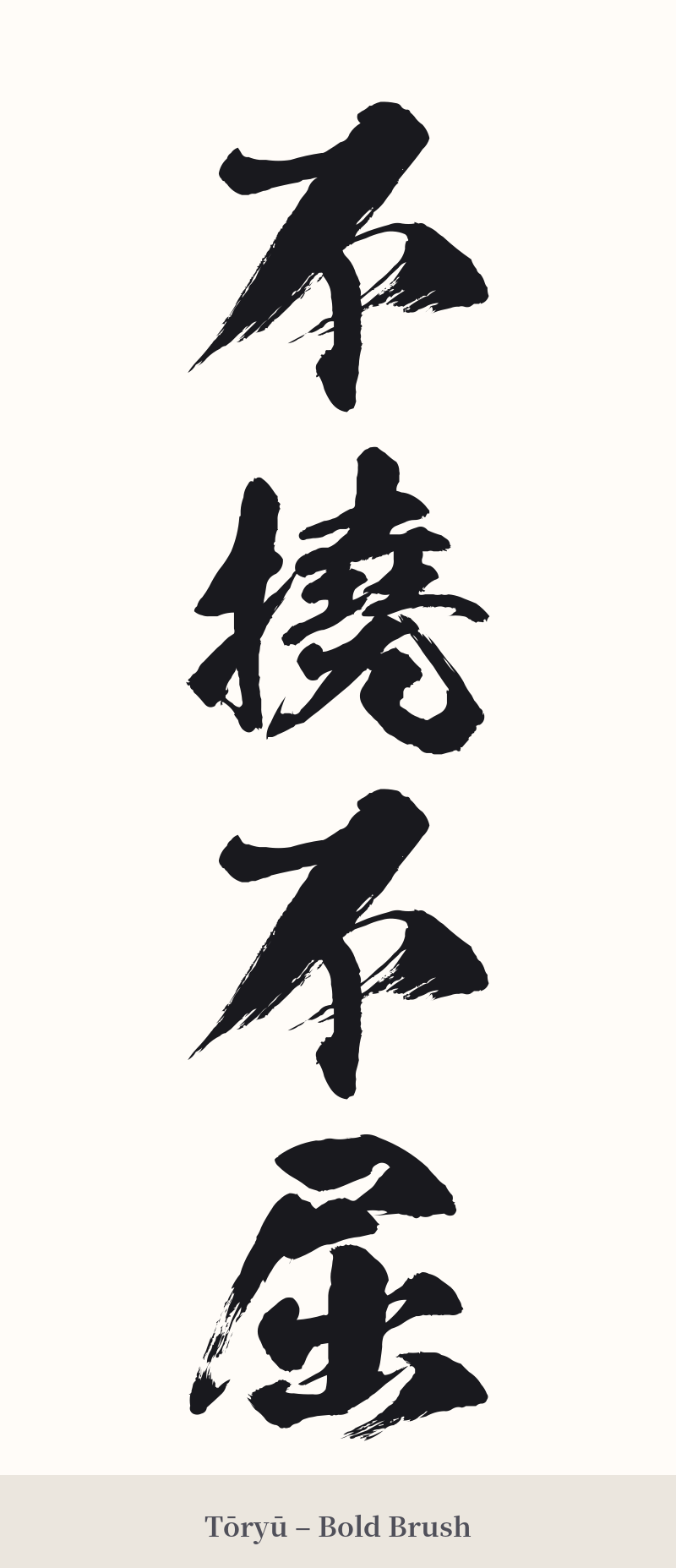
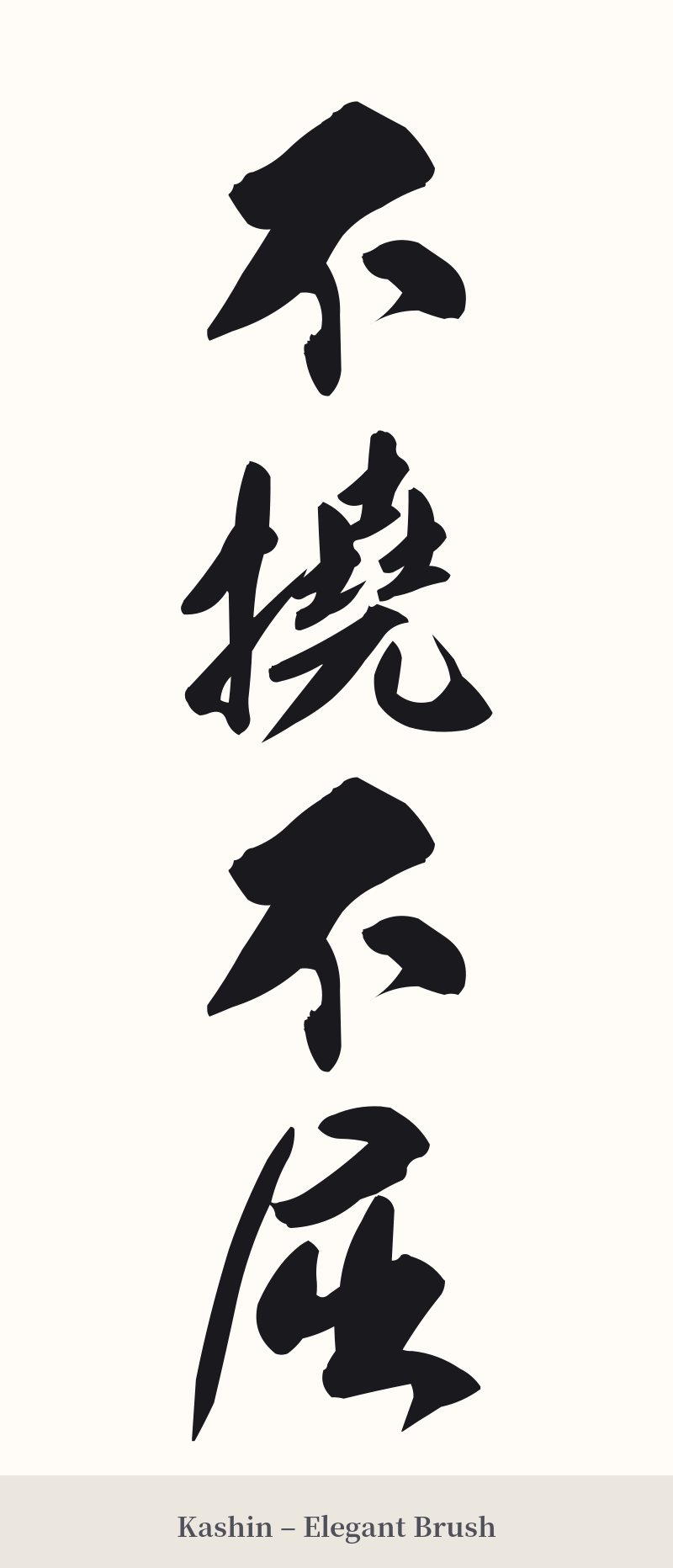
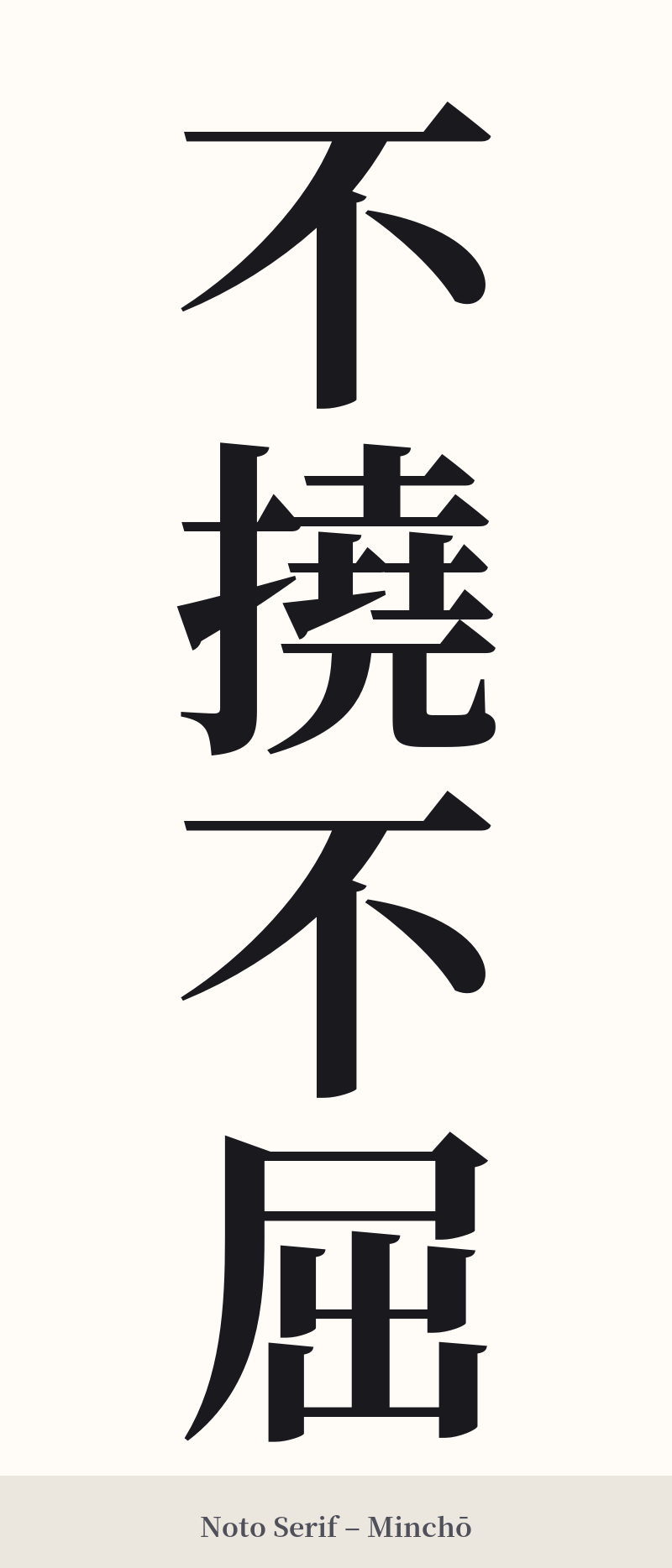
The same kanji can look dramatically different depending on the calligraphy style. Choose a font that matches the mood you want for your tattoo or design.
🎨 Tattoo Suitability
📐 Tattoo Design Guide
For a powerful and traditional aesthetic, a vertical alignment is highly recommended for 不撓不屈. This arrangement is classic for four-character idioms and flows well on the spine, forearm, or calf.
A horizontal layout can also be effective, particularly across the chest, upper back, or along the clavicle. Ensure the characters have enough space to breathe and are not cramped.
– Font Style: A traditional calligraphy script is ideal. Kaisho (block script) will give the tattoo a feeling of strength, stability, and clarity. For a more fluid and artistic look, Gyōsho (semi-cursive script) can capture the dynamic spirit of resilience.
– Sizing: This is critical. Due to the 15-stroke complexity of the second character, 撓, the tattoo must be large enough for the lines to remain crisp and distinct for years. Discuss this with your artist to find the minimum viable size for their technique.
– Placement Suggestions: Spine (vertical), inner or outer forearm (vertical), calf (vertical), chest (horizontal), or upper back (horizontal).
Comments