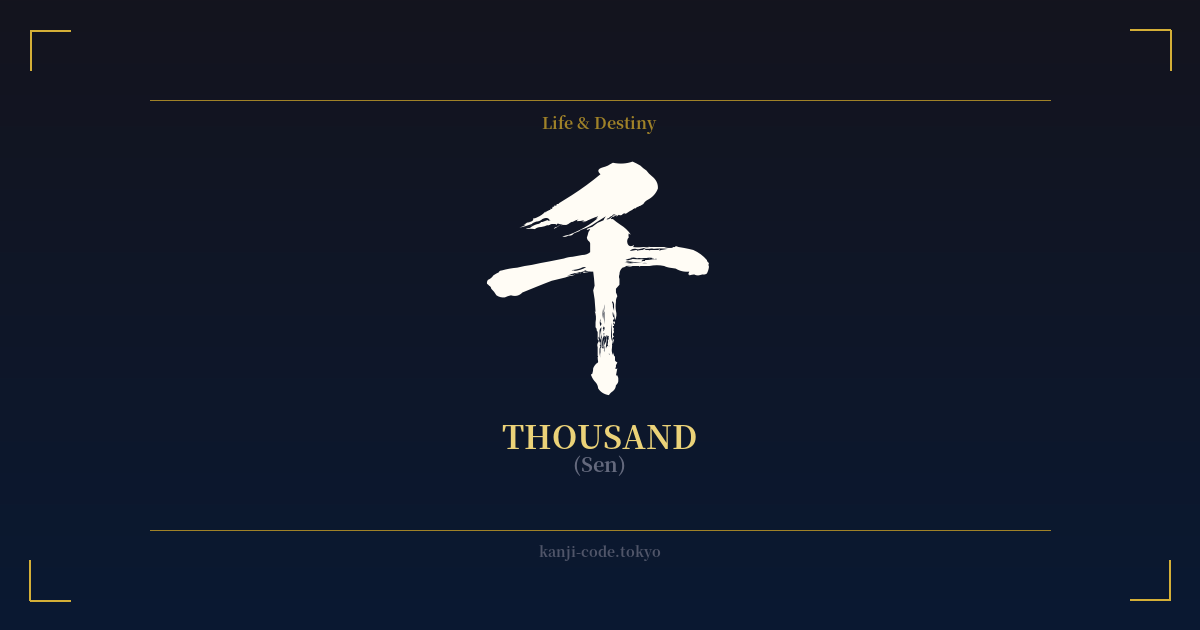
✍️ 千 (Sen) — Cultural Context
The kanji 千 (sen) is far more than just the number 1,000 in Japanese. It embodies a profound concept of immensity, abundance, and the passage of vast stretches of time. While its literal meaning is straightforward, its cultural weight is carried in countless expressions, traditions, and names, making it a symbol of depth and significance.
The character's origin is beautifully simple. It's a combination of the radical for 'person' (人) and the number 'one' (一). One interpretation suggests it represents a person taking a single stride, with the idea extended over time to represent a great quantity or distance. This humble beginning blossoms into a character that signifies everything from a long journey to an eternal blessing.
One of the most famous Japanese proverbs, 「千里の道も一歩から」 (Senri no michi mo ippo kara), uses this kanji. It translates to "A journey of a thousand miles begins with a single step." This saying encapsulates the Japanese virtues of perseverance, patience, and the understanding that great achievements are built from small, consistent efforts.
Another powerful cultural touchstone is the tradition of 千羽鶴 (Senbazuru), or folding one thousand origami cranes. According to legend, anyone who folds one thousand cranes will be granted a wish, most often associated with recovery from illness, long life, or world peace. This practice became internationally recognized through the story of Sadako Sasaki, a young girl who survived the atomic bombing of Hiroshima and folded cranes in the hope of healing. Today, strings of colorful cranes are a universal symbol of hope, peace, and collective effort.
The concept of a 'thousand years' or 'a thousand generations' (千代, chiyo) is a recurring theme in Japanese art and literature, signifying eternity and enduring legacy. It even appears in the Japanese national anthem, "Kimigayo," which wishes for the emperor's reign to last for a thousand, even eight thousand, generations.
In names, the reading "Chi" is common, lending a sense of depth and history. The name Chihiro (千尋), famously the protagonist of Studio Ghibli's "Spirited Away," means "a thousand fathoms," evoking a sense of great depth. Chiyo (千代) means "a thousand generations," a beautiful name wishing for a long and prosperous life.
Ultimately, 千 represents the power of multiplicity. It's not just a number but a concept: a thousand blessings, a thousand years, a thousand possibilities. It's a reminder that from one, many can arise, and that true significance often lies in what is vast, enduring, and built over time.
🖌️ Font Styles for 千
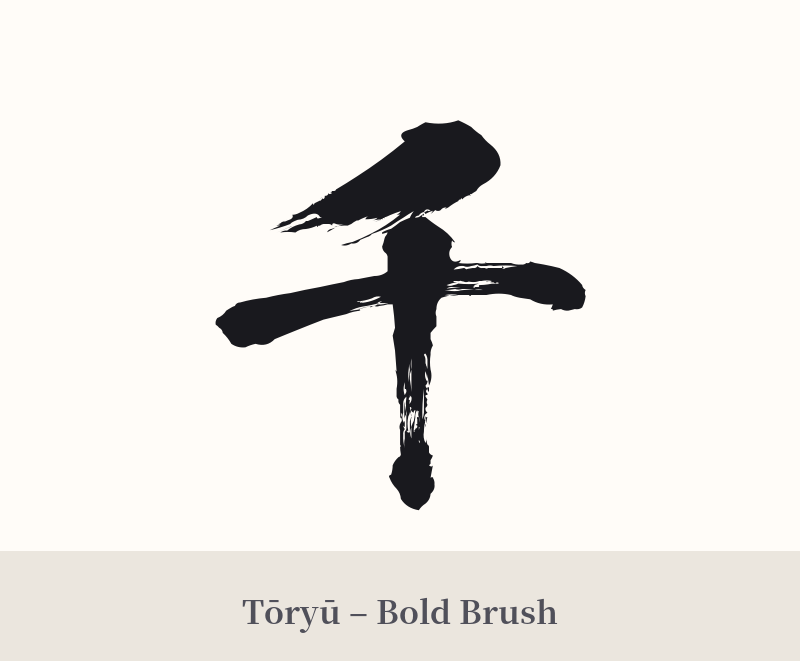
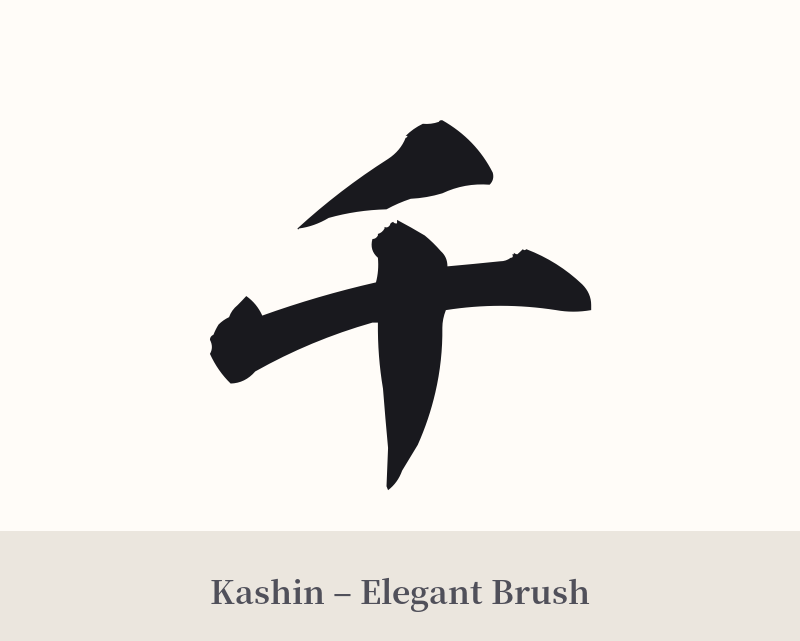
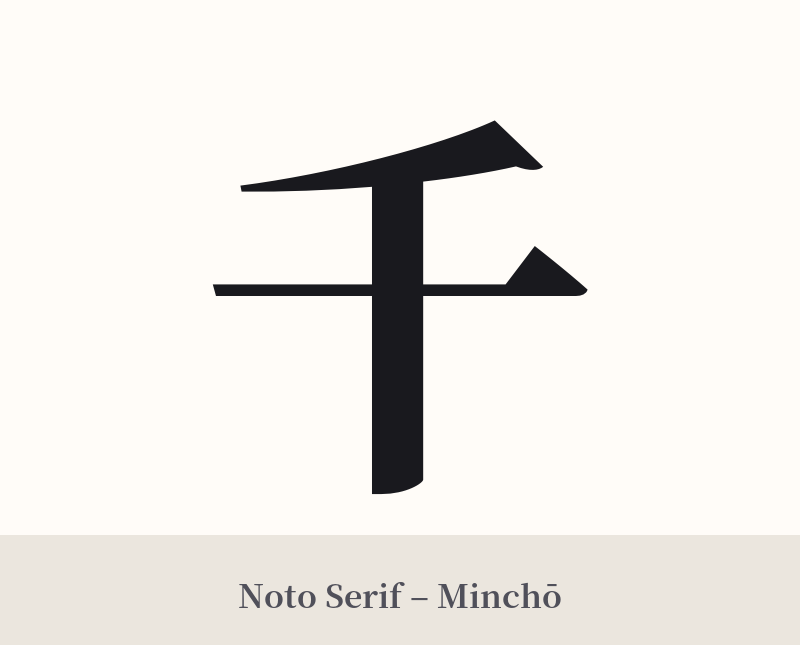
The same kanji can look dramatically different depending on the calligraphy style. Choose a font that matches the mood you want for your tattoo or design.
🎨 Tattoo Suitability
📐 Tattoo Design Guide
The kanji 千 (sen) is a versatile character for tattoo design due to its clean lines and simple structure.
– Placement: Its simplicity makes it ideal for smaller, more discreet placements like the wrist, behind the ear, or on the ankle. For a bolder statement, it can be rendered on the forearm or nape of the neck, where its elegant form can be appreciated.
– Style: A minimalist approach works exceptionally well. A clean, crisp 'Kaisho' (block script) emphasizes its balanced structure. For a more personal and fluid feel, a 'Gyōsho' (semi-cursive) or 'Sōsho' (cursive) style can add a touch of artistry and movement.
– Visuals: Consider pairing 千 with a single origami crane (tsuru) to directly evoke the hopeful symbolism of 'Senbazuru'. It can also be integrated into a larger piece, perhaps as part of the proverb 'Senri no michi mo ippo kara', or subtly placed within a landscape of mountains or waves to represent vastness.
Comments