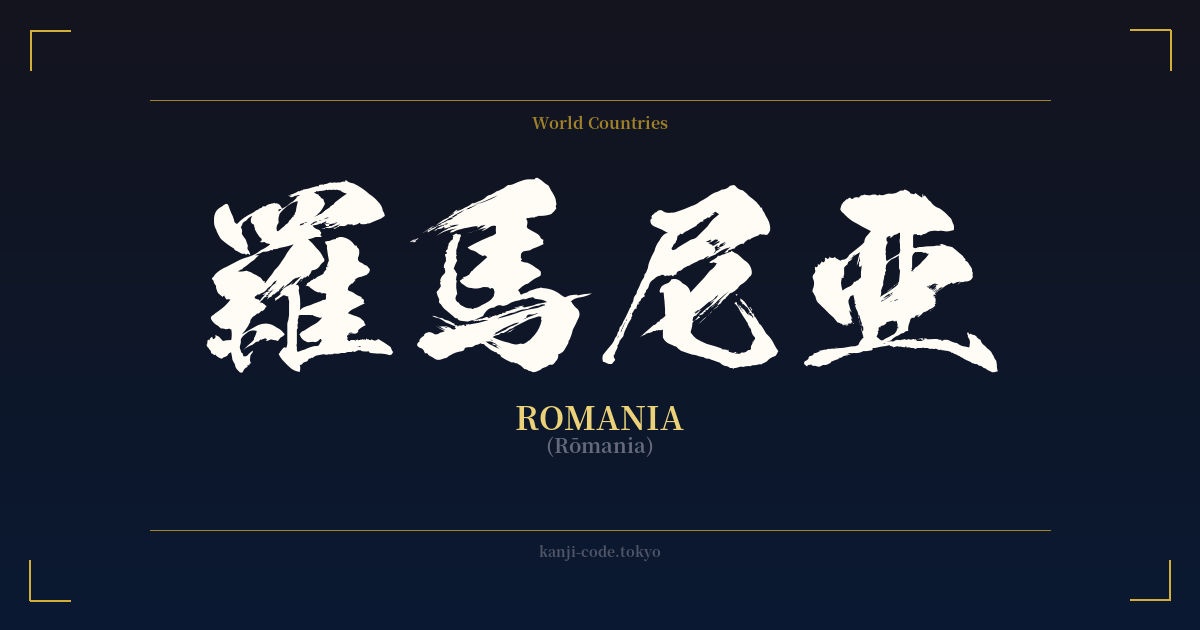
✍️ 羅馬尼亜 (Rōmania) — Cultural Context
The word 羅馬尼亜 is a fascinating window into a bygone era of the Japanese language. It represents a practice known as 'ateji' (当て字), where kanji characters are used to phonetically transcribe foreign words. Before the widespread adoption of the katakana script for foreign loanwords, this was the primary method for writing names of people, places, and concepts from outside Japan.
In this case, the characters were chosen to approximate the sound of 'Romania': – 羅 (Ro) – 馬 (Ma) – 尼 (Ni) – 亜 (A)
Crucially, the individual meanings of these kanji—'gauze/thin silk,' 'horse,' 'nun,' and 'Asia'—are completely disregarded. Their selection is based solely on their phonetic values. This is a vital concept to grasp, as many non-Japanese speakers mistakenly believe that ateji compounds hold a secret, poetic meaning derived from the sum of their parts. In reality, the meanings are irrelevant; only the sound matters.
Today, the use of 羅馬尼亜 is considered archaic and has been almost entirely replaced by the modern katakana spelling, ルーマニア (Rūmania). You might still encounter these kanji spellings for countries in historical texts, formal documents, or in names of companies and products aiming for a classic, old-world feel. For example, other countries have similar ateji, such as 亜米利加 (Amerika) for the USA, 仏蘭西 (Furansu) for France, and 独逸 (Doitsu) for Germany.
Understanding 羅馬尼亜 is less about understanding Romania and more about understanding the flexibility and historical evolution of the Japanese writing system. It’s a linguistic artifact, a testament to Japan's efforts to incorporate the wider world into its own unique script before modern conventions were standardized.
🖌️ Font Styles for 羅馬尼亜
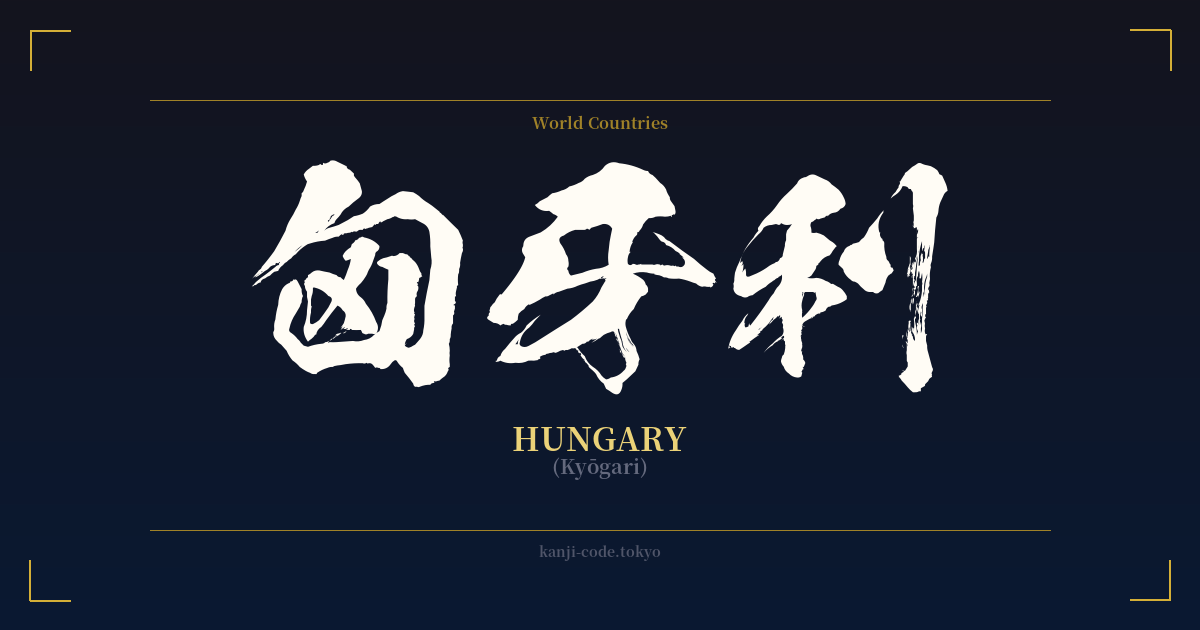
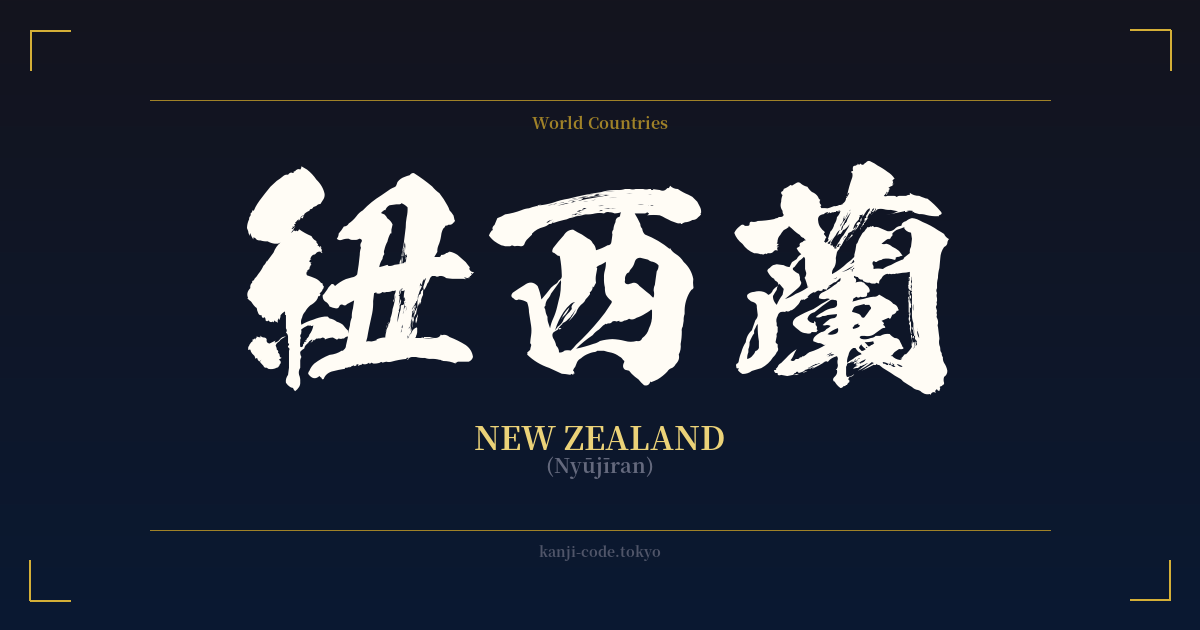
The same kanji can look dramatically different depending on the calligraphy style. Choose a font that matches the mood you want for your tattoo or design.
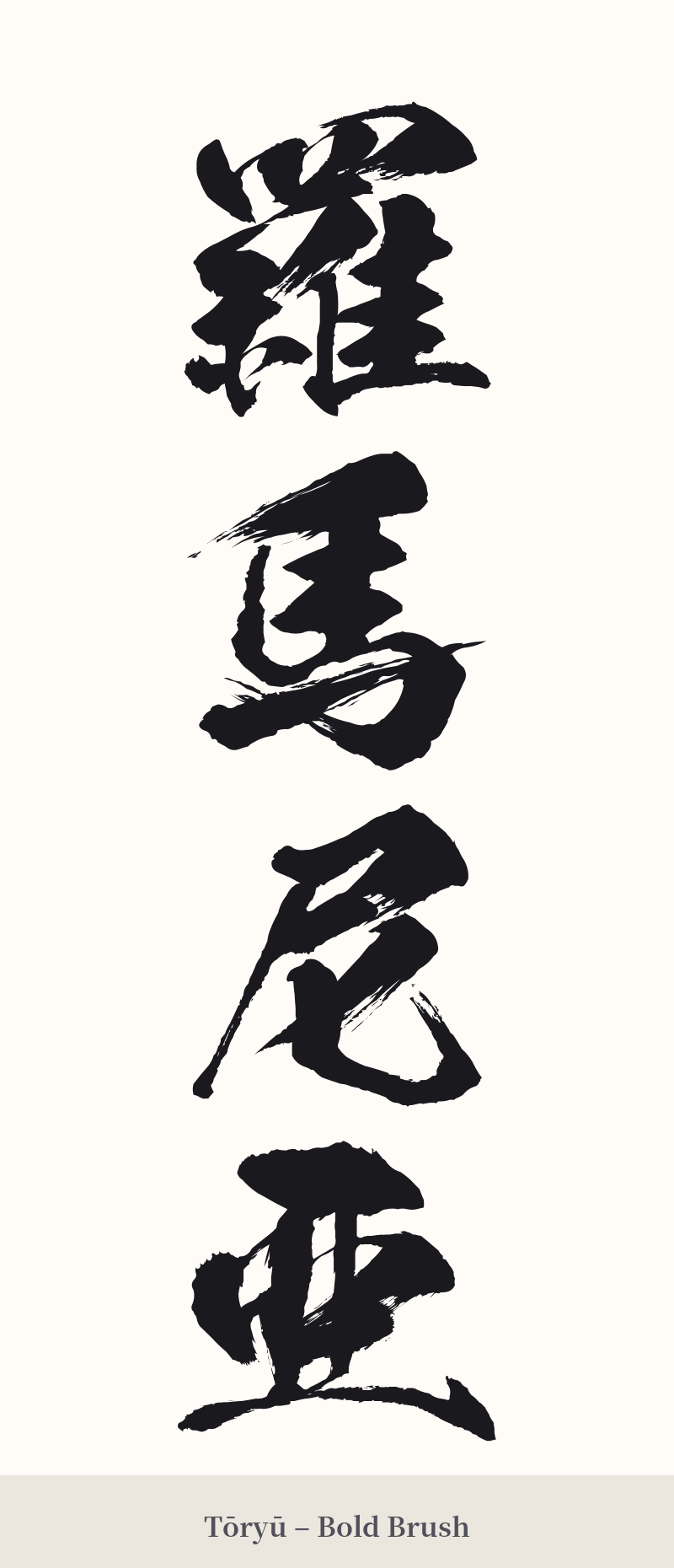
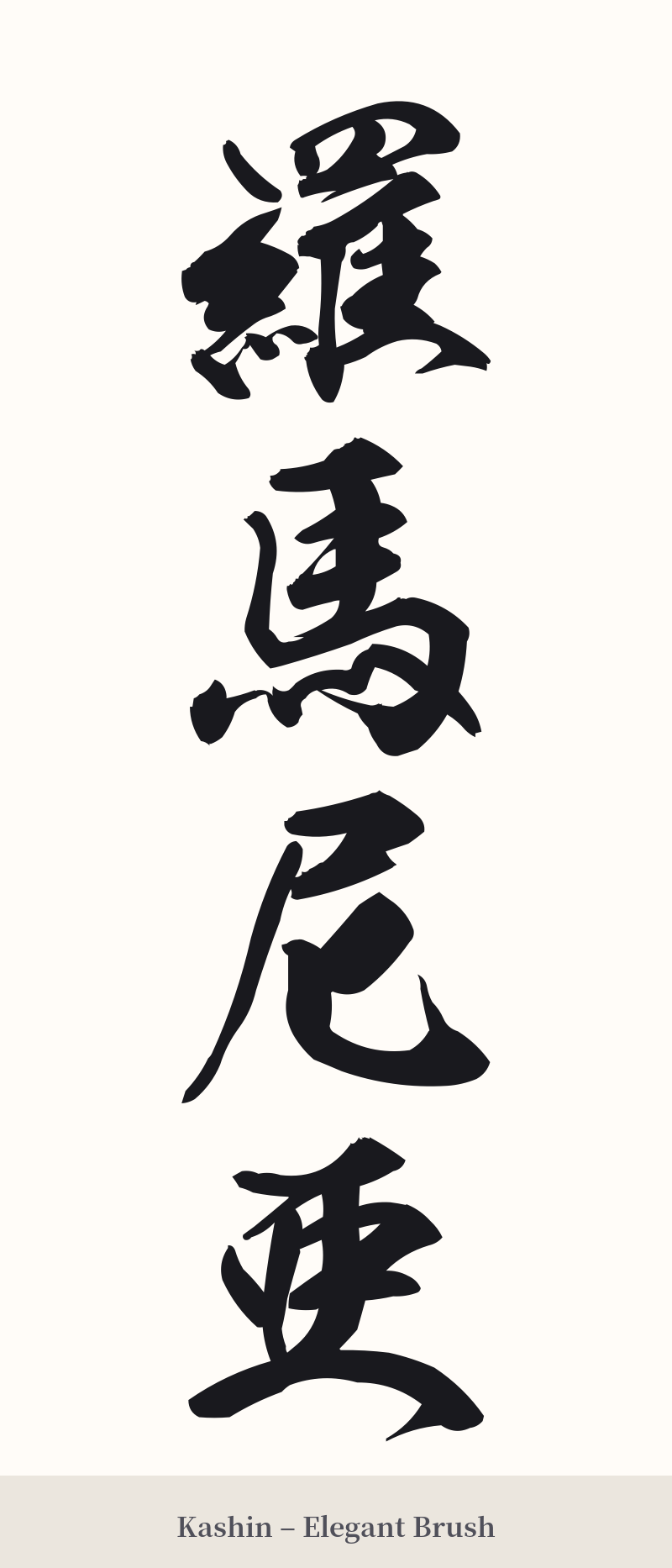
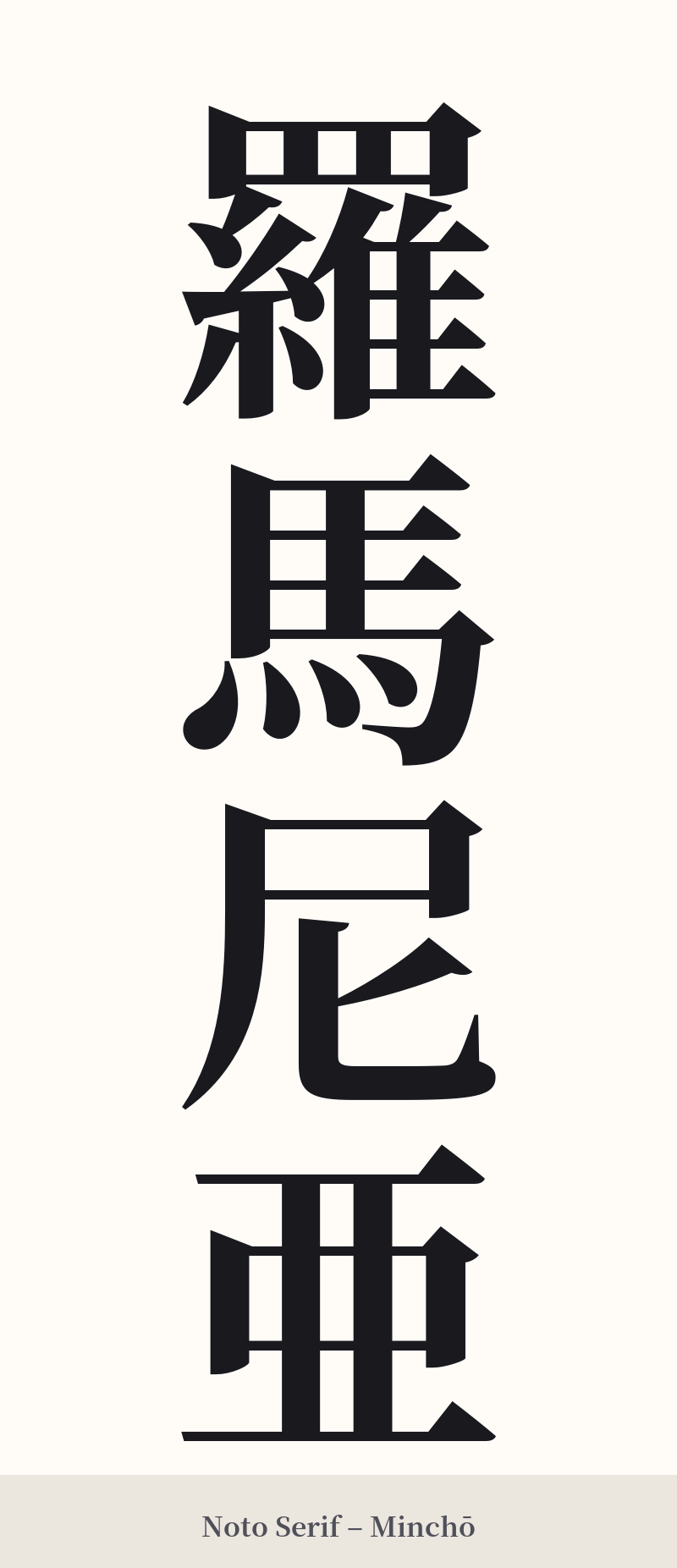
🎨 Tattoo Suitability
📐 Tattoo Design Guide
For a tattoo of 羅馬尼亜, the length of the four-character compound heavily influences design choices. It is particularly well-suited for vertical arrangements.
– Placement: A vertical column of characters would look striking along the spine, forearm, or running down the calf. For a horizontal layout, the chest or upper back provides a wide enough canvas to keep the characters clear and legible.
– Font Style: Traditional calligraphic styles are the best fit. A crisp, formal Kaisho (block script) would emphasize the complexity of each character, especially the 19-stroke 羅. Alternatively, a slightly more fluid Gyosho (semi-cursive) could link the characters together with a sense of motion and elegance.
– Visual Tips: The tattoo must be sized appropriately. The first character, 羅, is very dense. If tattooed too small, its intricate lines could blur together over time, becoming an illegible smudge. Ensure your artist is experienced with complex kanji to maintain the balance and negative space within each character.
Comments