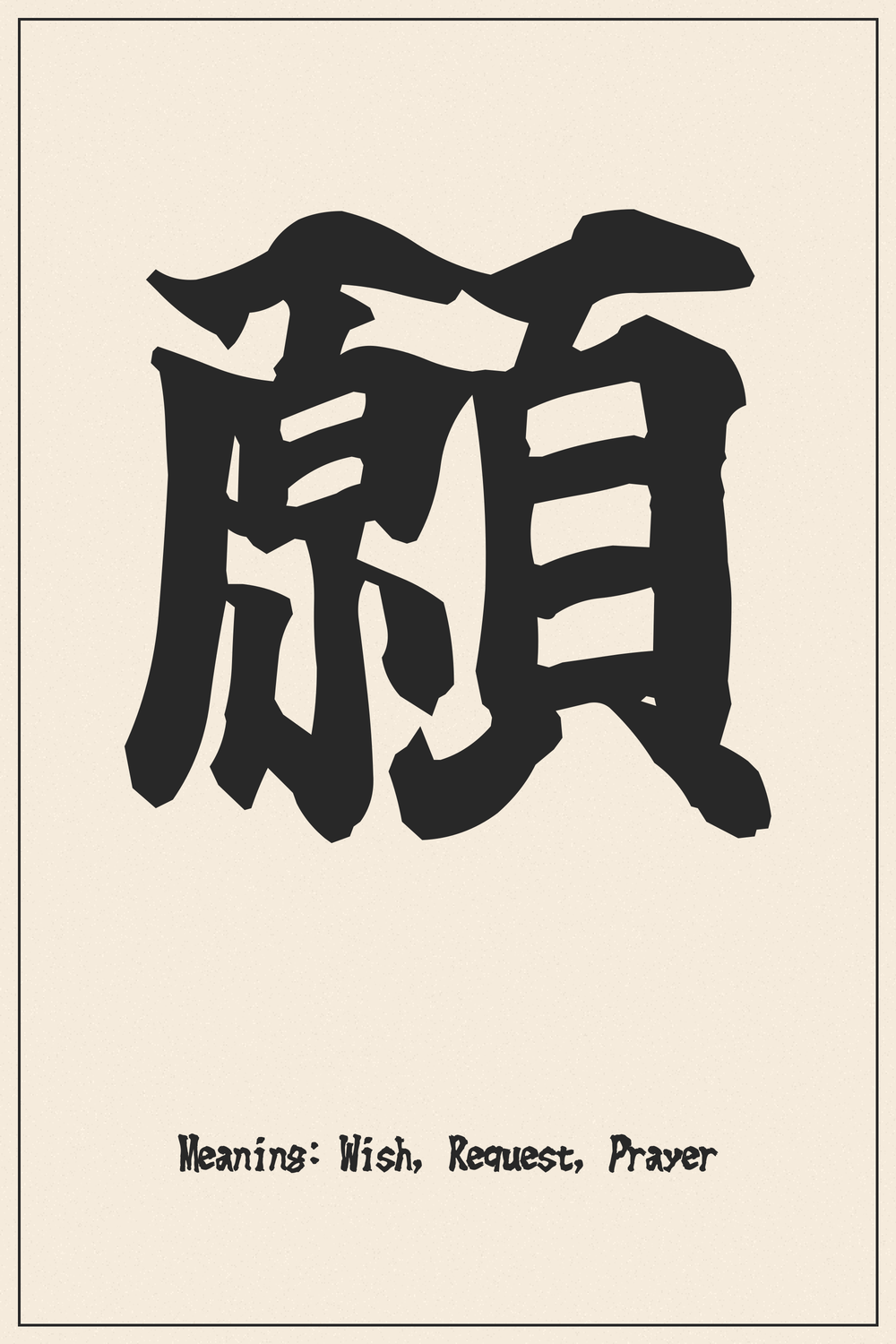
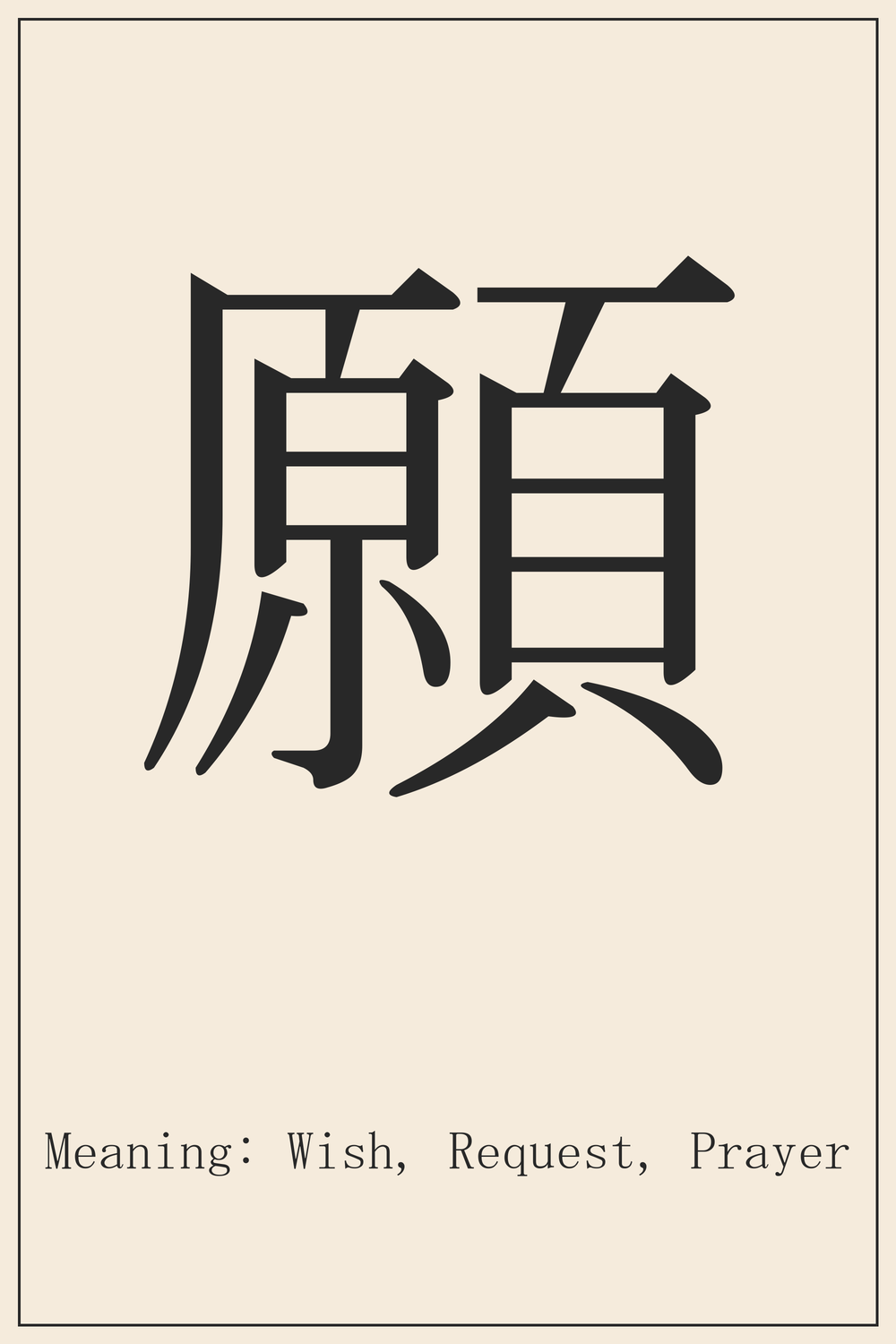
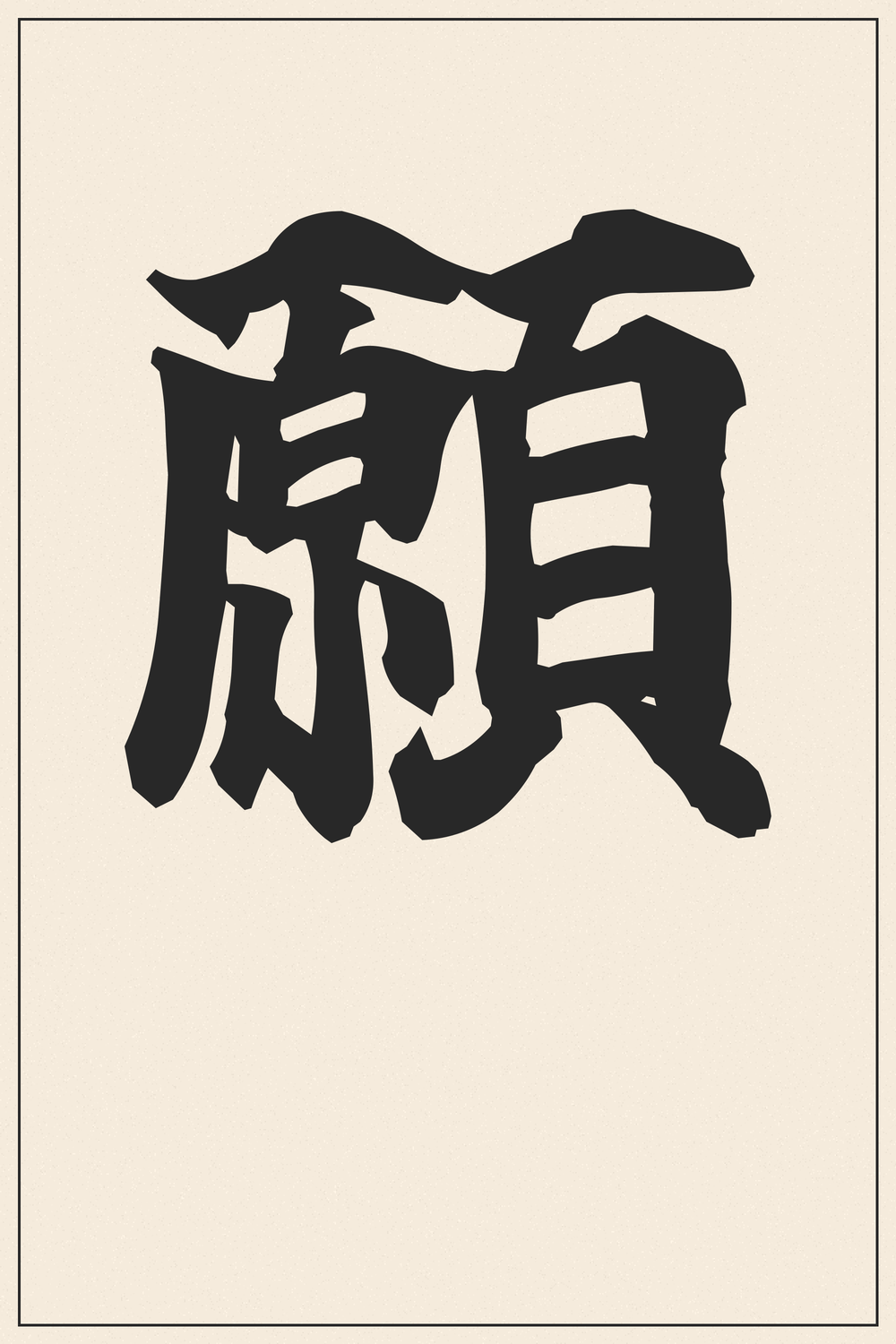
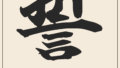
The Kanji 願 embodies the profound human capacity for hope and aspiration. It represents the earnest desire to see dreams manifest, reflecting deep personal convictions and heartfelt prayers.
The atmosphere of a Kanji character changes dramatically depending on the font style. A character that looks elegant in a brush style might look bold and modern in a different font.
Recommendation:
Since a tattoo is permanent, we strongly recommend comparing various font styles beyond what is shown here. Use our designs as a trusted reference for the correct structure, but feel free to explore different artistic variations to find the perfect match for your vision.
The Deep Meaning Behind 願
The Kanji 願 (gan) profoundly captures the essence of wishing, requesting, or vowing. Its etymology reflects an internal, heartfelt desire, embodying the human tendency to look towards the future with hope and intent.
Culturally, 願 is prevalent in various Japanese contexts, from personal goal-setting to spiritual practices. It is commonly seen in expressions of prayer at temples and shrines (e.g., 絵馬, ema), symbolizing the act of offering a deep-seated wish to a higher power or making a solemn vow.
Kanji Breakdown
The Kanji 願 (gan) beautifully combines two elements, each contributing to its profound meaning of wish or prayer.
Meaning: Head, face, page. This radical often relates to the head’s actions such as thinking, speaking, or showing reverence (e.g., bowing). In 願, it signifies the mental or intentional aspect of directing one’s thoughts and will towards a specific desire or request.
Meaning: Original, source, plain. This component depicts a spring gushing from a cliff, representing a fundamental or original source. In 願, it metaphorically points to a deep-seated, heartfelt longing, signifying that the wish originates from the core of one’s being.
Conclusion
The Kanji 願 is a powerful symbol of deep aspiration, spiritual yearning, and personal commitment. It encapsulates the human spirit’s capacity to hope, envision, and work towards a desired future.
Choosing 願 for a tattoo is a declaration of your most earnest desires and unwavering resolve. It serves as a constant reminder of the goals you cherish and the prayers you hold closest to your heart, embodying a journey of hope and manifestation.
Comments