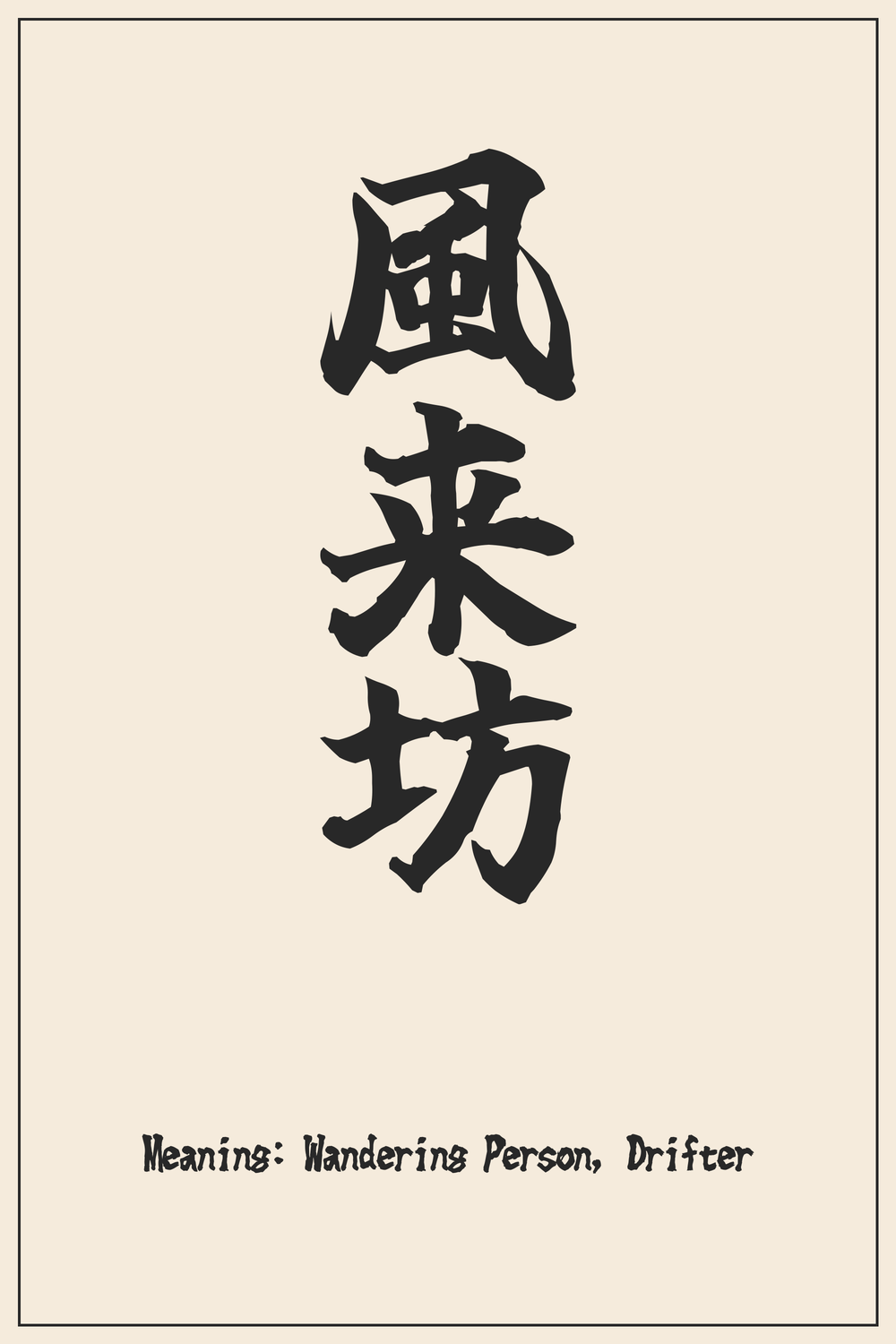
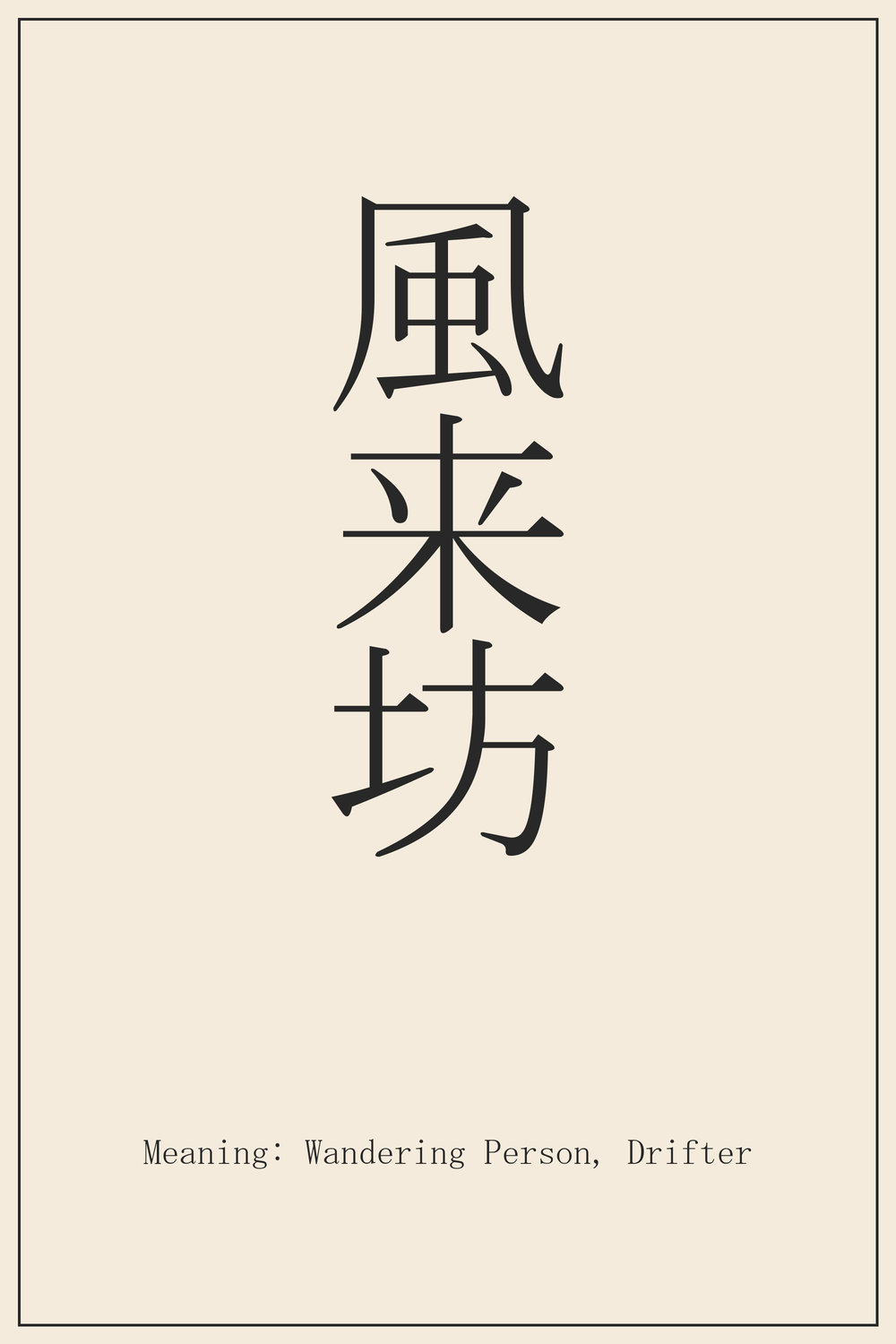
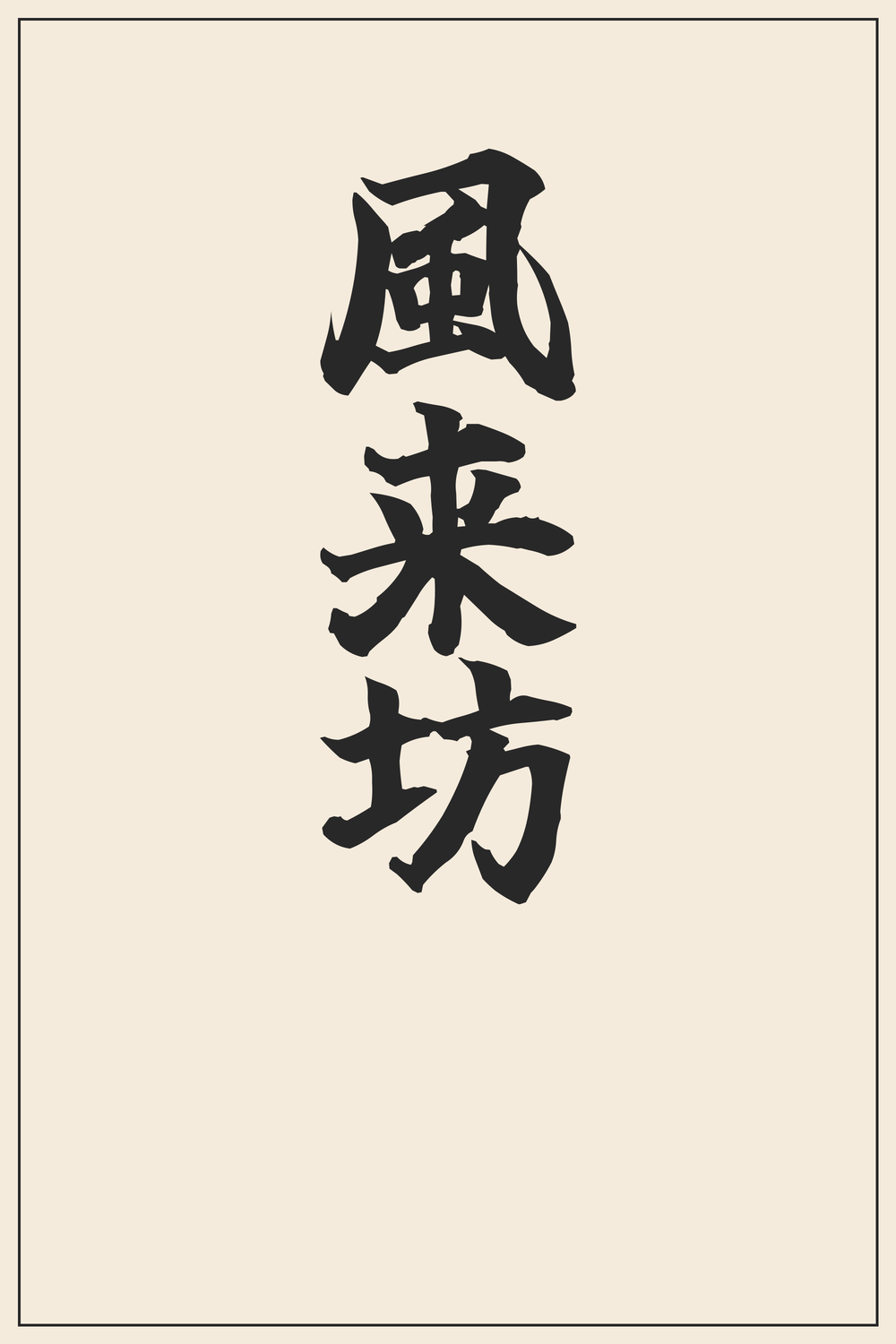
Embrace the spirit of unbridled freedom with 風来坊 (Fūraibō), a Kanji expression that beautifully captures the essence of a wandering soul. This term speaks to those who live life on their own terms, guided by the winds of destiny rather than societal expectations.
The atmosphere of a Kanji character changes dramatically depending on the font style. A character that looks elegant in a brush style might look bold and modern in a different font.
Recommendation:
Since a tattoo is permanent, we strongly recommend comparing various font styles beyond what is shown here. Use our designs as a trusted reference for the correct structure, but feel free to explore different artistic variations to find the perfect match for your vision.
The Deep Meaning Behind 風来坊
“Fūraibō” is a compound word formed from 風 (fū, wind), 来 (rai, to come), and 坊 (bō, referring to a person, often a monk or boy). Literally, it translates to “one who comes with the wind.”
This imagery evokes a sense of transience and spontaneous movement, like a leaf carried by the breeze with no fixed destination. In Japanese culture, the “fūraibō” archetype is often romanticized, embodying a person who is free from worldly attachments and social obligations. They are figures who journey through life independently, embracing adventure and new experiences. This concept resonates deeply with themes of personal liberty and the pursuit of an unconventional path, holding a certain mystique and allure.
Kanji Breakdown
The charm of 風来坊 lies in the individual meanings of its constituent Kanji, each contributing to the evocative power of the whole.
Meaning: Wind, style, custom. This character primarily signifies “wind,” representing movement, change, and an uncontainable force. It also carries connotations of atmosphere or a prevailing mood.
Meaning: To come, to arrive. “Come” or “arrive,” this Kanji denotes movement towards a point. In “Fūraibō,” it signifies the act of arriving and, implicitly, moving on.
Meaning: Priest, boy, often used as a suffix for a person or group. While historically referring to a Buddhist priest or a young boy, in compound words like “Fūraibō,” it functions more broadly to denote a person or a type of individual, here, one characterized by their wandering nature.
Conclusion
“Fūraibō” is more than just a word; it is a philosophy of life, celebrating the individual who chooses a path less traveled. It embodies the spirit of exploration, self-discovery, and profound independence.
For those who see themselves as perpetual travelers or free spirits, a “Fūraibō” tattoo serves as a powerful emblem. It’s a reminder to always follow your own course, embracing the unknown with courage and an open heart.
Comments