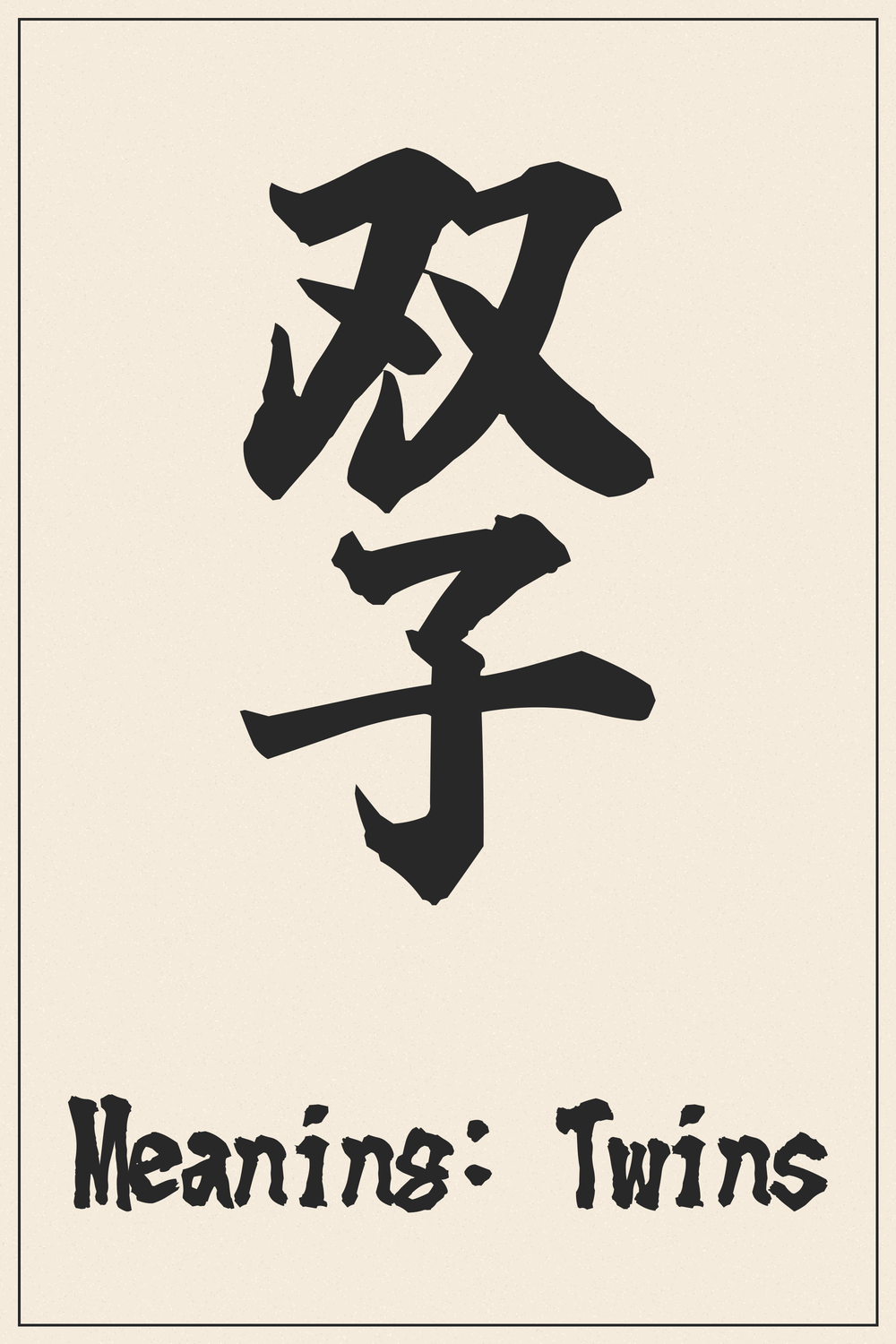
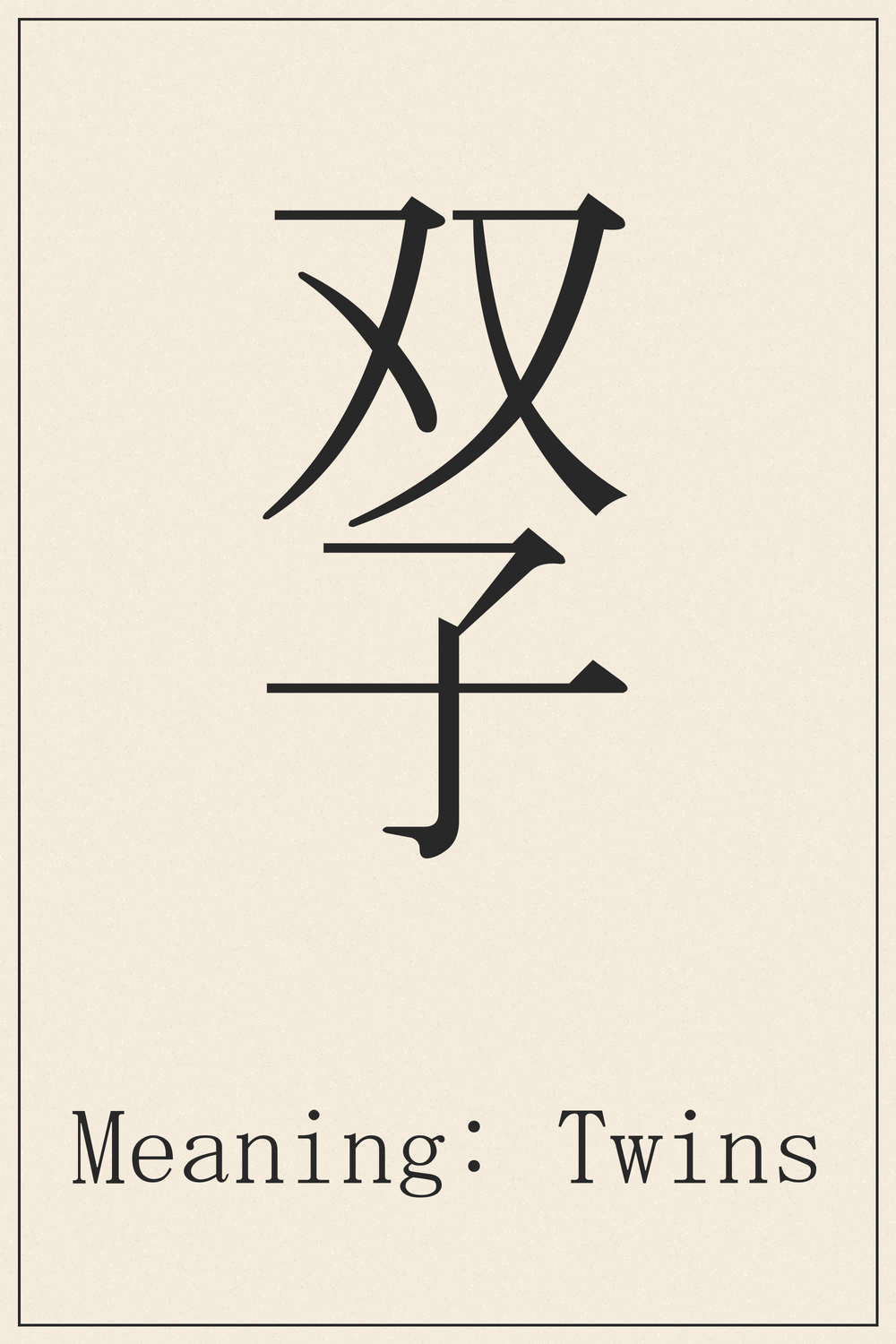
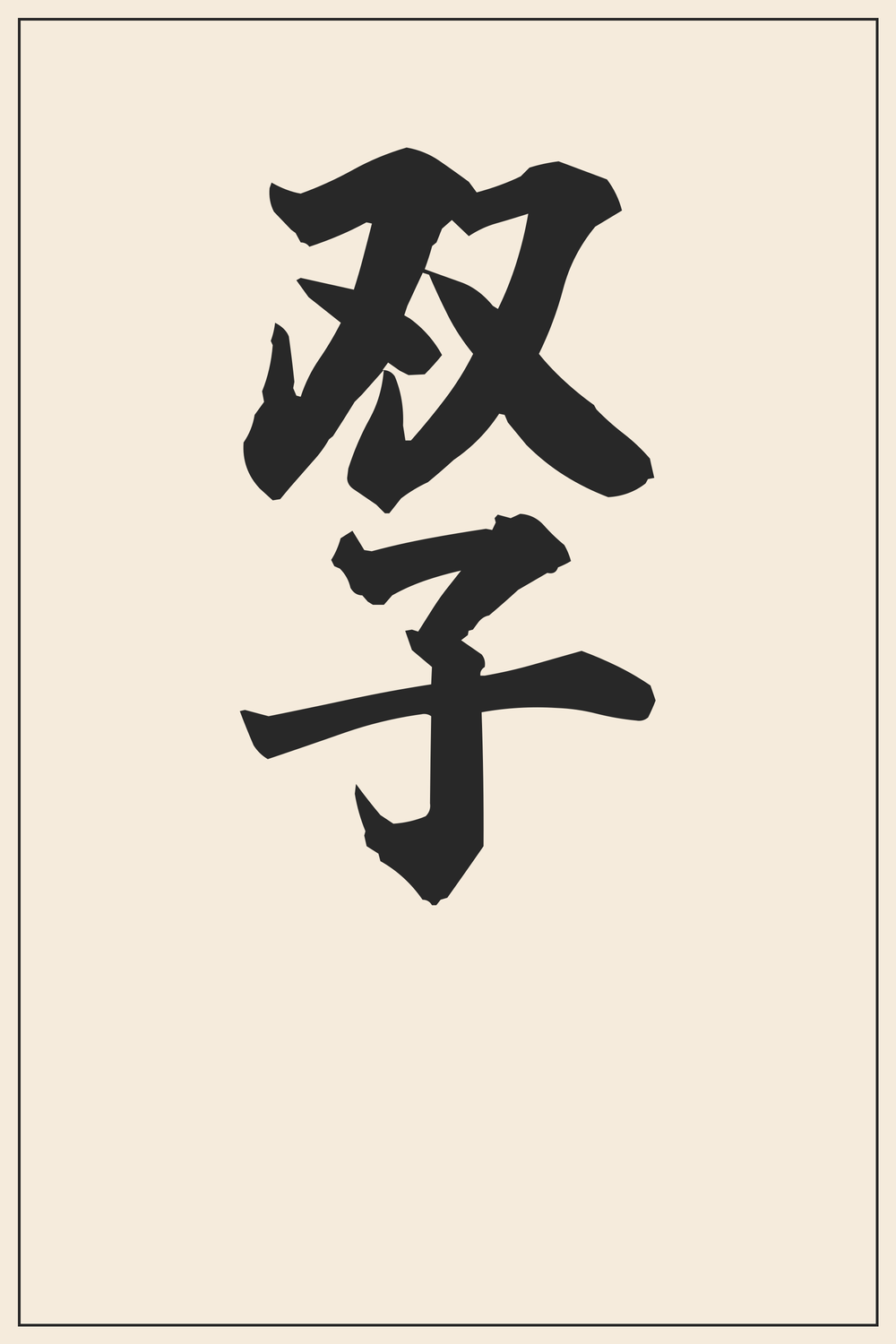
The Kanji for ‘Twins’ (双子) beautifully encapsulates the profound bond shared between two individuals linked from birth. It speaks to a unique connection, often mirroring a shared destiny and intrinsic understanding.
The atmosphere of a Kanji character changes dramatically depending on the font style. A character that looks elegant in a brush style might look bold and modern in a different font.
Recommendation:
Since a tattoo is permanent, we strongly recommend comparing various font styles beyond what is shown here. Use our designs as a trusted reference for the correct structure, but feel free to explore different artistic variations to find the perfect match for your vision.
The Deep Meaning Behind 双子
The term 双子 (futago) is a compound Kanji that directly translates to ‘twins.’ It is formed by combining 双 (sou), meaning ‘a pair’ or ‘both,’ and 子 (ko), meaning ‘child.’ This combination literally signifies ‘two children,’ elegantly capturing the essence of twinship.
In Japanese culture, as in many others, twins are often seen as unique, representing a special bond, shared destiny, and profound connection. The concept extends beyond mere biology to symbolize inherent closeness, mutual support, and a dual nature that is deeply intertwined.
Kanji Breakdown
The compound Kanji 双子 (futago) is comprised of two distinct characters, each contributing to its overall meaning and visual representation.
Meaning: Pair, both, twin. This character is thought to be a pictograph depicting two birds or two hands, emphasizing duality and connection.
Meaning: Child. A simple pictograph representing a small child with outstretched arms, symbolizing offspring.
Conclusion
The Kanji 双子 (Futago) is a beautiful and direct representation of the unique relationship between twins, embodying themes of shared origin, inherent connection, and lifelong companionship. It’s a testament to an unbreakable bond that transcends words.
Choosing 双子 for a tattoo serves as a powerful and elegant declaration of this special connection. Its clear form and profound meaning make it a timeless choice for anyone wishing to honor the irreplaceable bond of twinship with grace and precision.
Comments