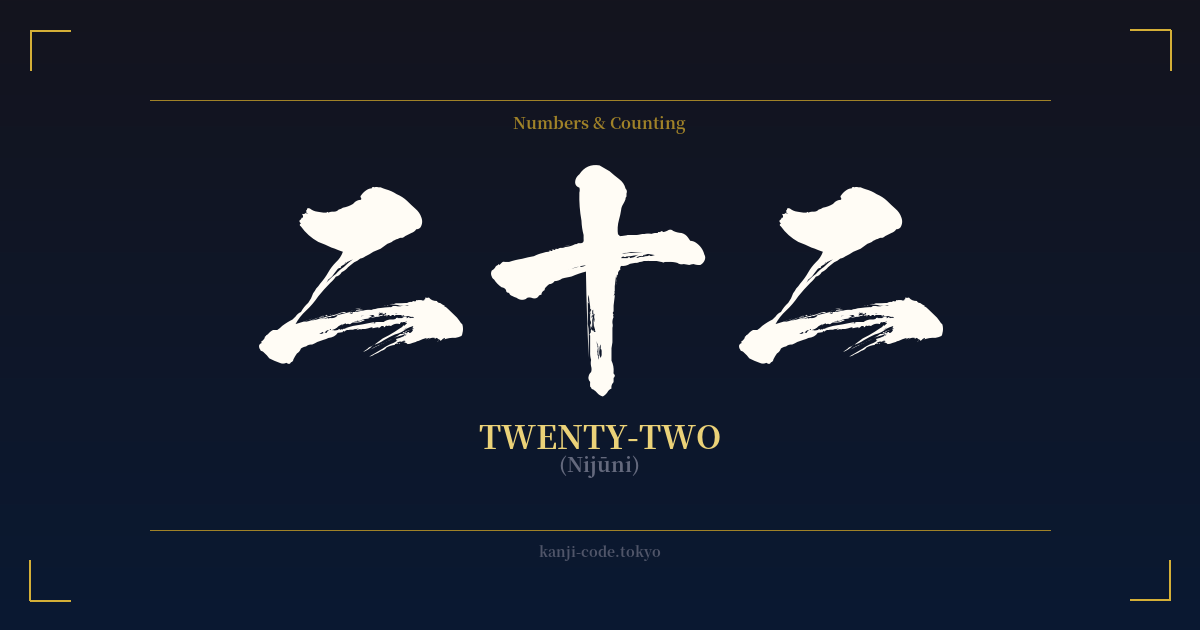
✍️ 二十二 (Nijūni) — Cultural Context
The Japanese word for twenty-two is 二十二, read as 'Nijūni'. Its construction is a perfect example of the logical, straightforward nature of the Sino-Japanese numeral system. Unlike English, which has unique words like 'eleven' or 'twenty', Japanese builds its numbers by simple addition and multiplication. Here, 二十二 is literally 'two-ten-two' (二十 / ni-jū for 'twenty', plus 二 / ni for 'two'), a transparent and elegant system that makes counting large numbers intuitive.
This system was imported from China along with kanji characters. Japan, however, maintains two sets of number readings: the native Japanese 'kun'yomi' (hitotsu, futatsu, mittsu…) and the Chinese-derived 'on'yomi' (ichi, ni, san…). For counting individual items up to ten, the native system is often used. But for larger numbers like twenty-two, the on'yomi reading 'Nijūni' is standard. You see this practicality in everyday life, where kanji numerals are still used in formal documents, traditional restaurant menus, and vertical writing, though they often coexist with the universally understood Arabic numerals (22).
While some numbers in Japan are fraught with superstition—like 4 (四, shi), which sounds like 'death' (死), or 9 (九, ku), which can sound like 'suffering' (苦)—the number 22 carries no such negative baggage. In fact, it can have some lighthearted and positive associations. Because it's a pair of twos, it can evoke a sense of 'couples' or 'pairs.' This is seen in wordplay, or 'goroawase.' For example, November 22nd (11/22) is celebrated as 'Good Couple Day' (いい夫婦の日, Ii Fūfu no Hi) because the date can be read as 'ii fūfu' (good married couple). Similarly, February 22nd (2/22) is 'Cat Day' because 'ni ni ni' sounds like 'nyan nyan nyan,' the Japanese onomatopoeia for a cat's meow.
So, while 二十二 itself doesn't possess the profound philosophical weight of words like 'Bushido' or 'Kaizen', it represents a fundamental aspect of the Japanese language: a system of elegant logic and structure. It is a building block of the language, a simple cog in a beautiful machine, reflecting a cultural appreciation for order and clarity.
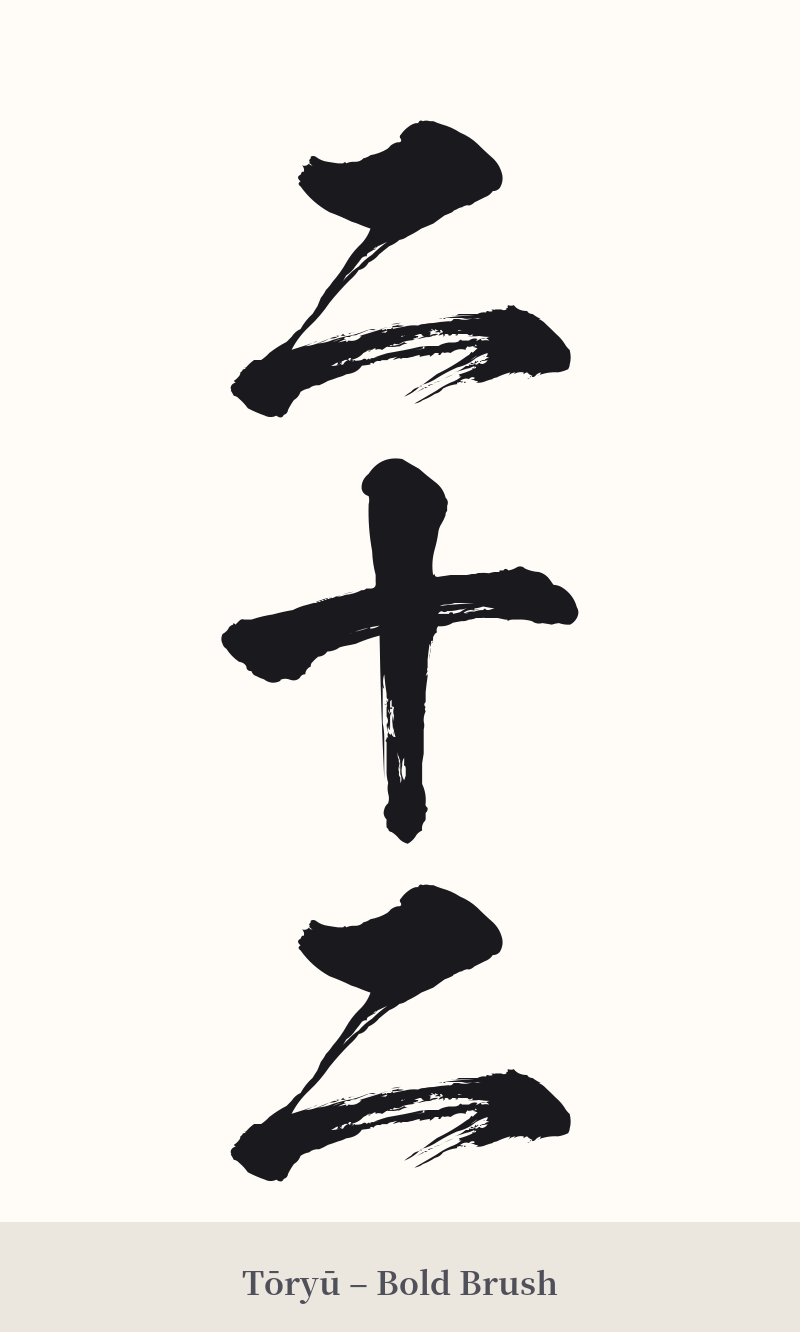
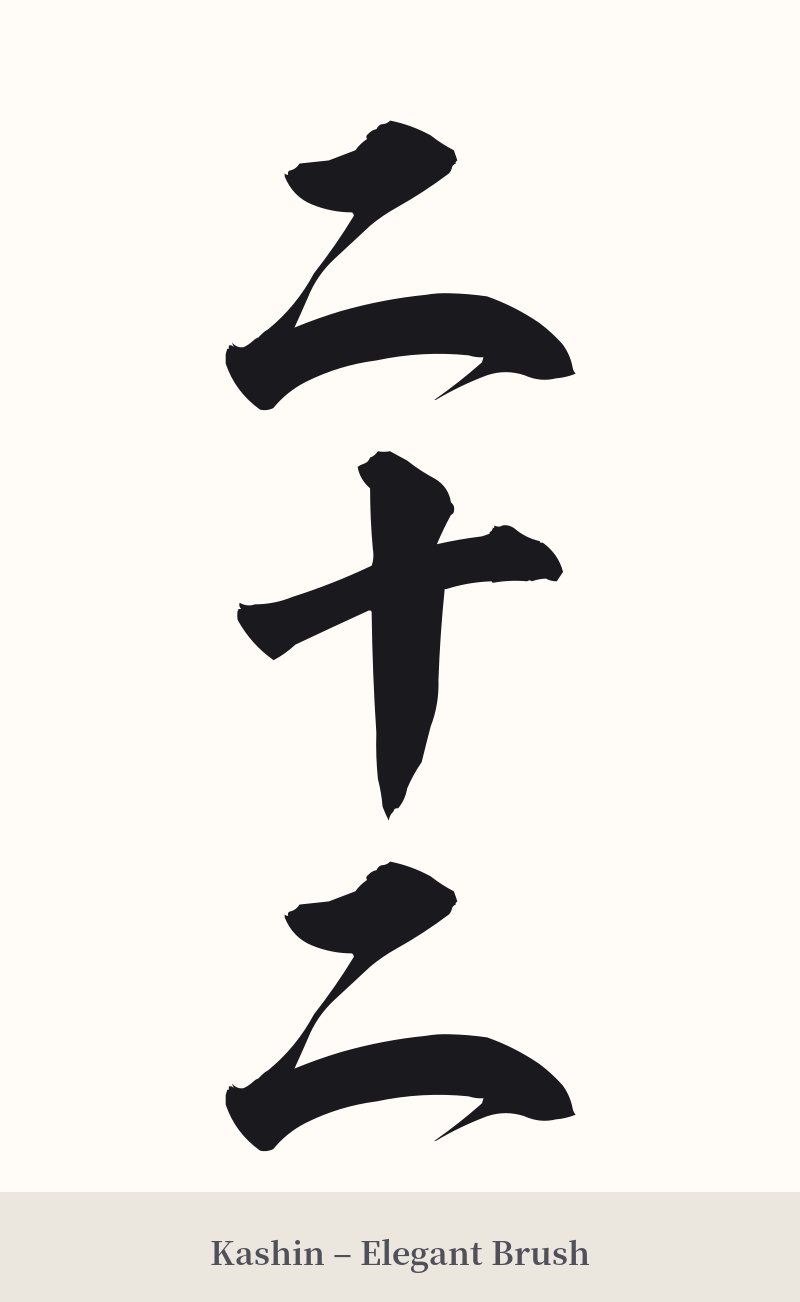
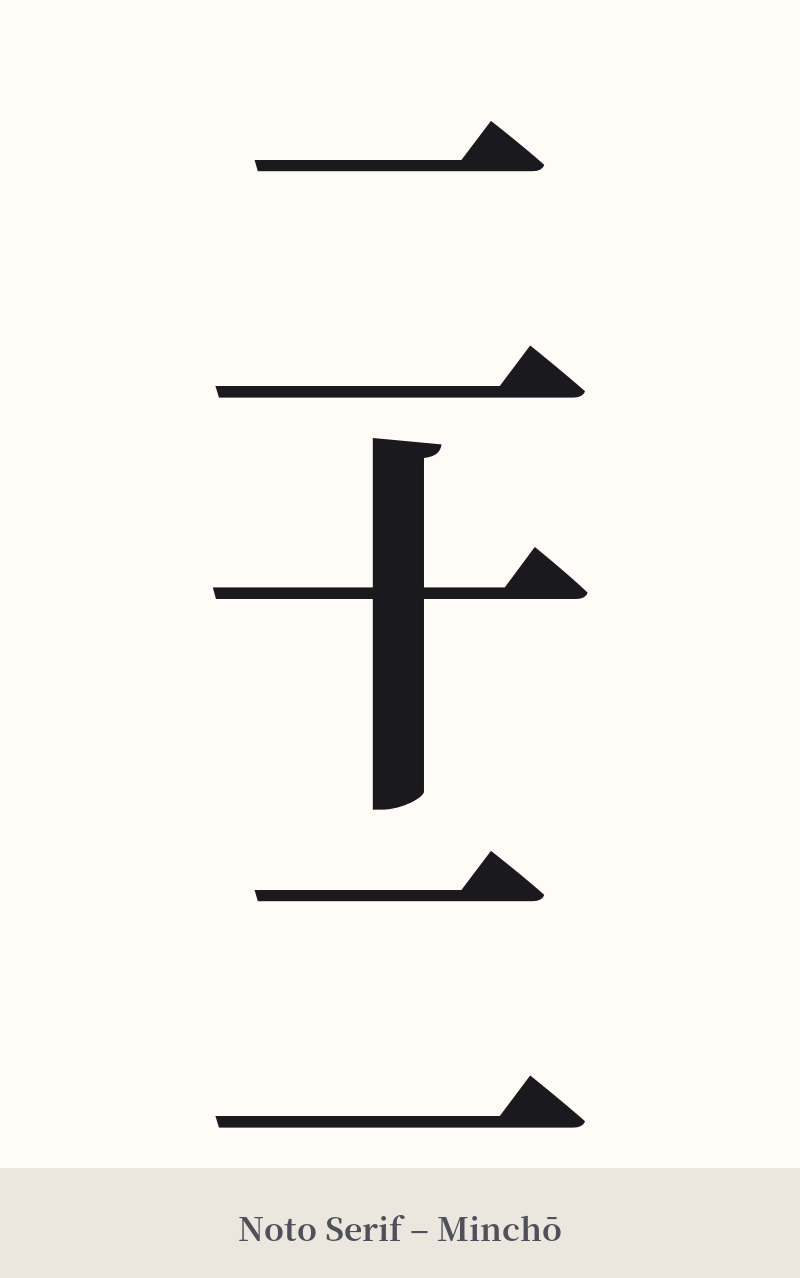
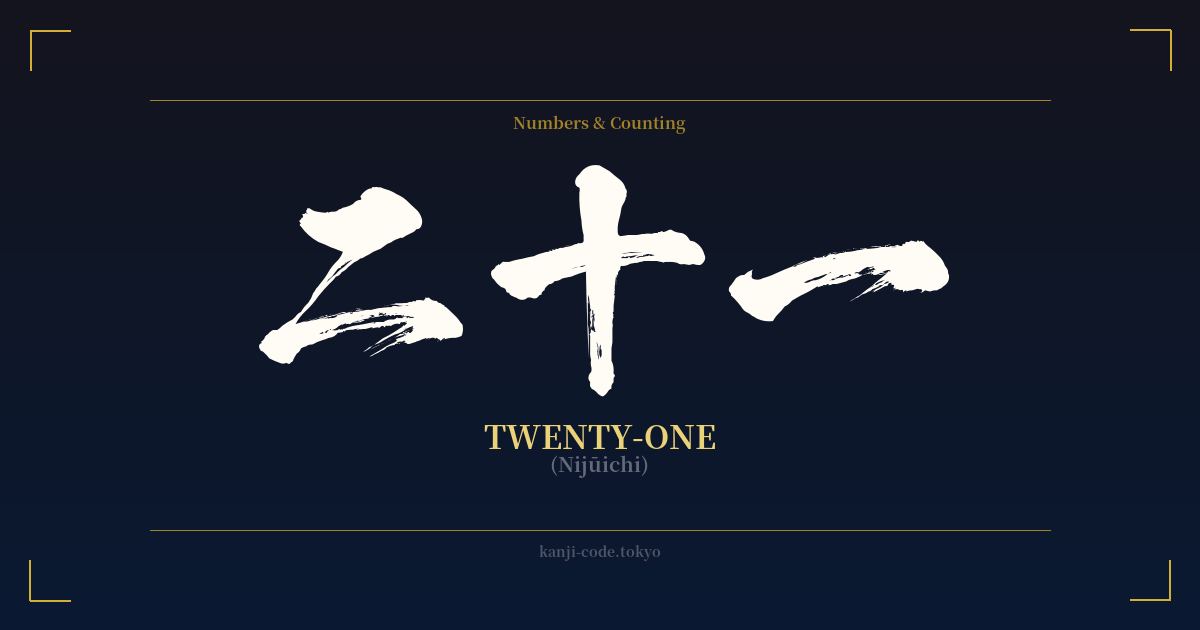
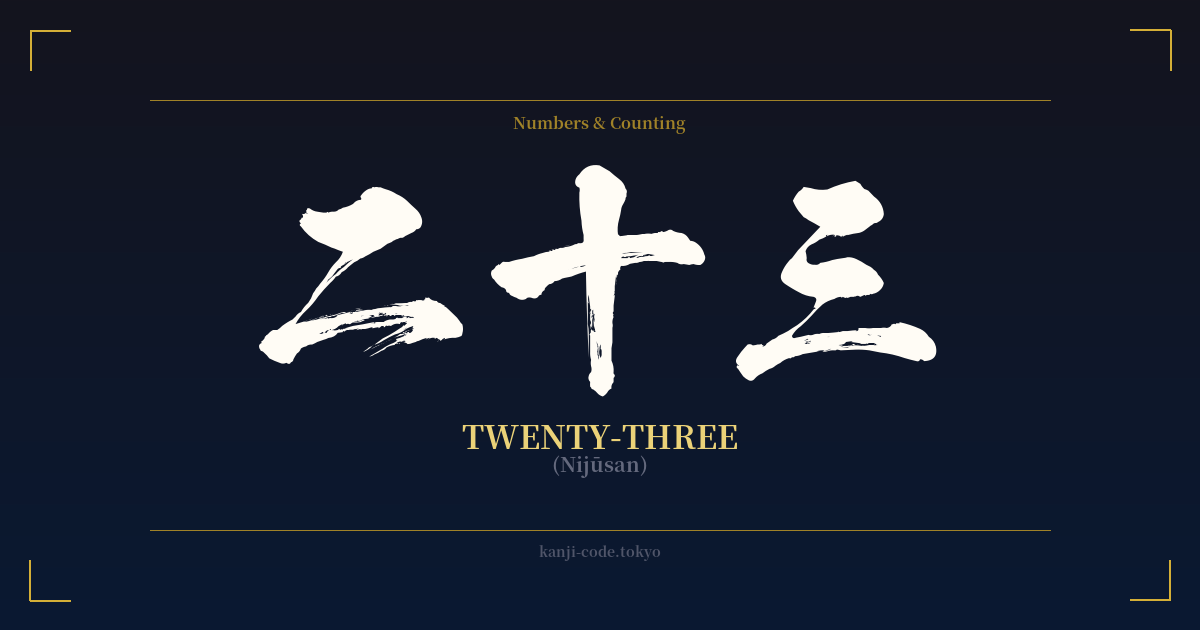
🖌️ Font Styles for 二十二
The same kanji can look dramatically different depending on the calligraphy style. Choose a font that matches the mood you want for your tattoo or design.
🎨 Tattoo Suitability
📐 Tattoo Design Guide
Given that 二十二 is not generally recommended for a tattoo, if you are set on it for personal reasons, the design requires careful consideration to avoid looking plain or awkward.
– Placement: A small, discreet location is often best. Consider the inner wrist, behind the ear, on an ankle, or along the collarbone. Treating it as a small, personal mark is more effective than a large, central piece. – Orientation: A vertical orientation (上から下へ, from top to bottom) is the most traditional and aesthetically pleasing for multi-kanji words. This will look more intentional than a horizontal layout. – Font Style: Avoid overly aggressive or complex calligraphy (shodō) styles, as the simplicity of the characters can make such fonts look forced. A clean, minimalist Mincho (serif) font or a simple Kaisho (block) style would be more fitting, emphasizing the number's straightforward nature.
Comments