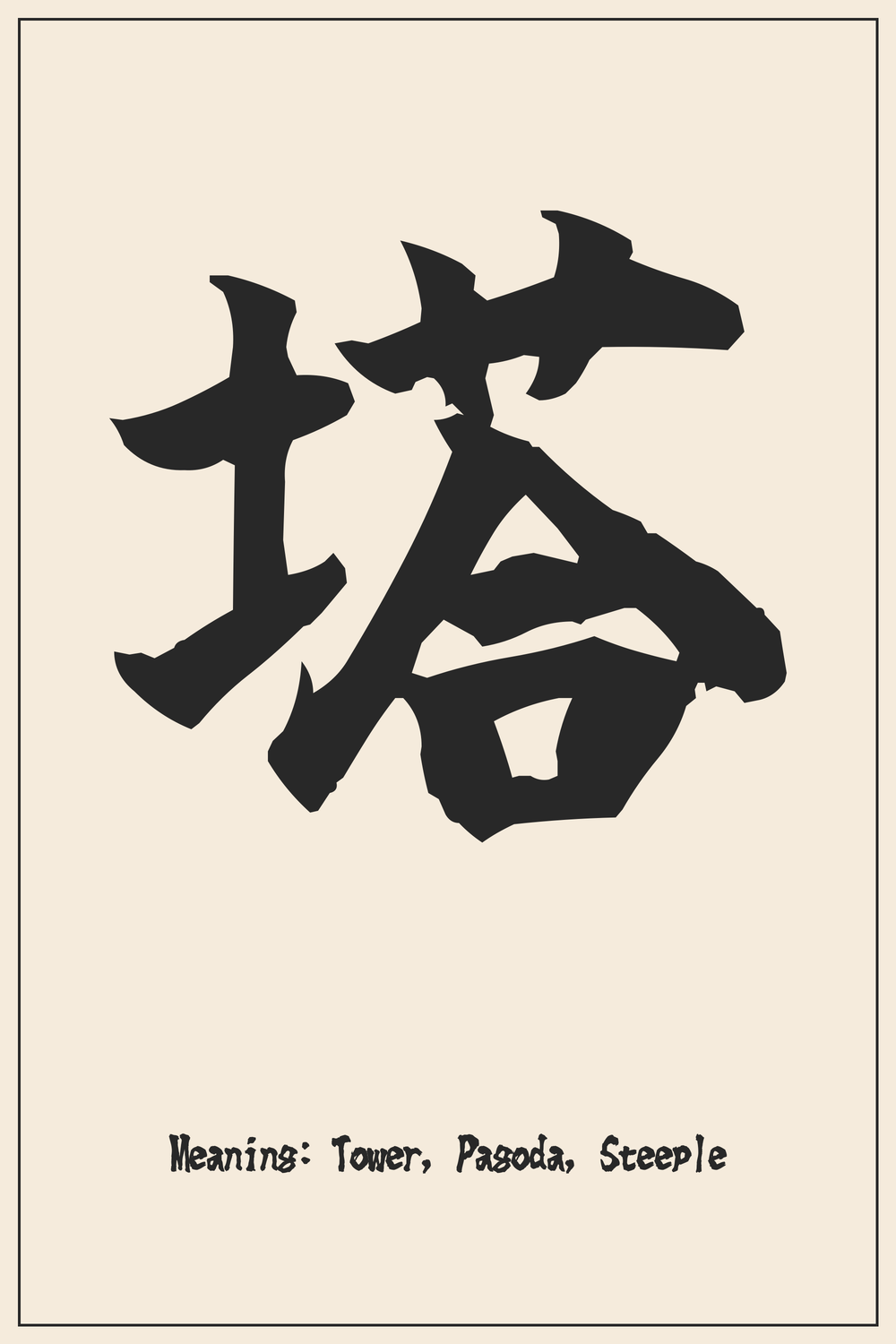
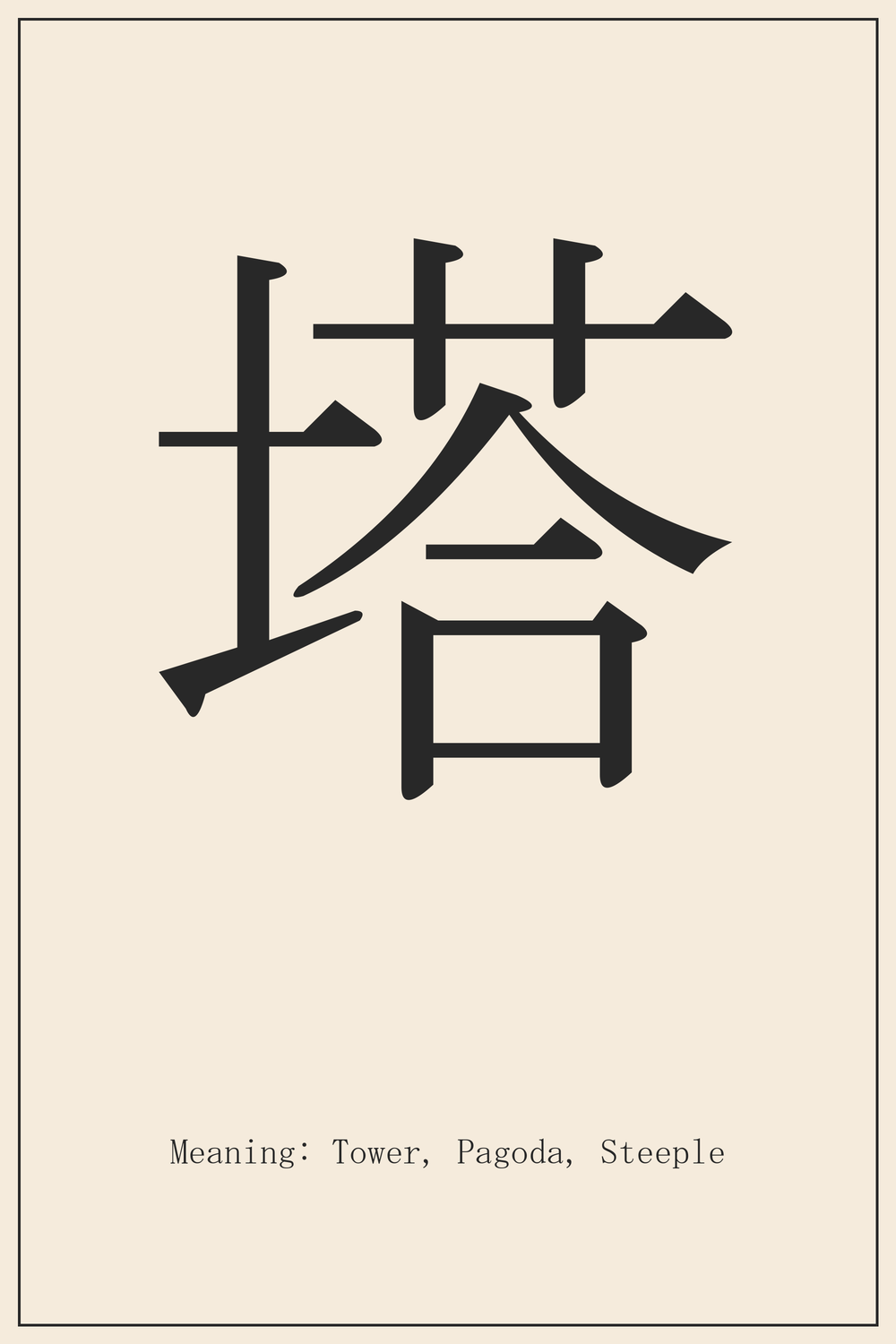
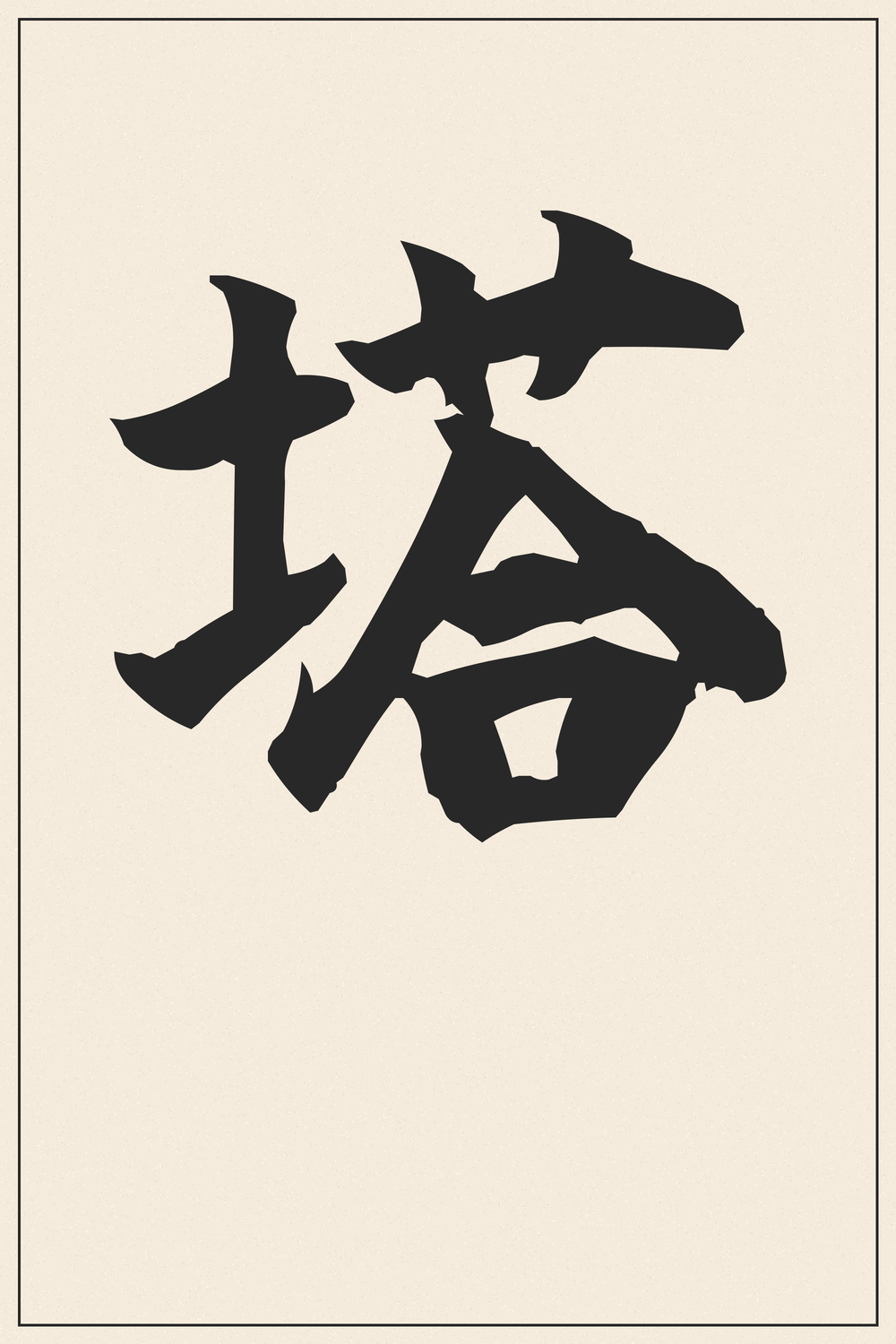
The Kanji 塔 embodies the stately presence of structures that pierce the sky. It represents not just a physical building, but a timeless symbol of aspiration and elevation.
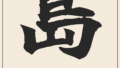
The atmosphere of a Kanji character changes dramatically depending on the font style. A character that looks elegant in a brush style might look bold and modern in a different font.
Recommendation:
Since a tattoo is permanent, we strongly recommend comparing various font styles beyond what is shown here. Use our designs as a trusted reference for the correct structure, but feel free to explore different artistic variations to find the perfect match for your vision.
The Deep Meaning Behind 塔
The character 塔 (tō) is a phono-semantic compound. Its left radical, 木 (ki), signifies ‘wood,’ reflecting the primary material used in constructing many traditional Asian towers and pagodas.
The right component, 沓 (tō), serves primarily as a phonetic indicator for the ‘tō’ sound, while also carrying an ancient sense of ‘piling up’ or ‘stacking,’ perfectly describing the tiered construction of a tower.
In Japan, 塔 often specifically refers to a pagoda (五重塔, gojūnotō, five-storied pagoda), which are sacred structures found at Buddhist temples. These magnificent edifices symbolize reaching towards the heavens, housing relics, and representing spiritual enlightenment and peace.
They stand as enduring landmarks of faith and wisdom, connecting the earthly realm with spiritual aspirations.
Kanji Breakdown
The Kanji 塔 is elegantly formed from two distinct parts, each contributing to its meaning and pronunciation.
Meaning: Wood, Tree. This radical indicates the material from which traditional pagodas and many towers were historically constructed. It conveys a sense of natural strength and organic growth reaching upwards.
Meaning: Pile Up, Stack, (phonetic). While primarily functioning as a phonetic component providing the ‘tō’ sound, 沓 intrinsically suggests the action of ‘piling up’ or ‘layering,’ which is fundamental to the construction and appearance of a multi-storied tower or pagoda.
Conclusion
The Kanji 塔 encapsulates the grandeur and spiritual significance of a tower or pagoda. It is a symbol of reaching for higher ideals, enduring presence, and a connection to historical and spiritual landscapes.
For a tattoo, 塔 represents not just a physical structure, but a personal aspiration towards growth, stability, and enlightenment. It is an artistic choice that conveys depth and a strong sense of purpose.
Comments