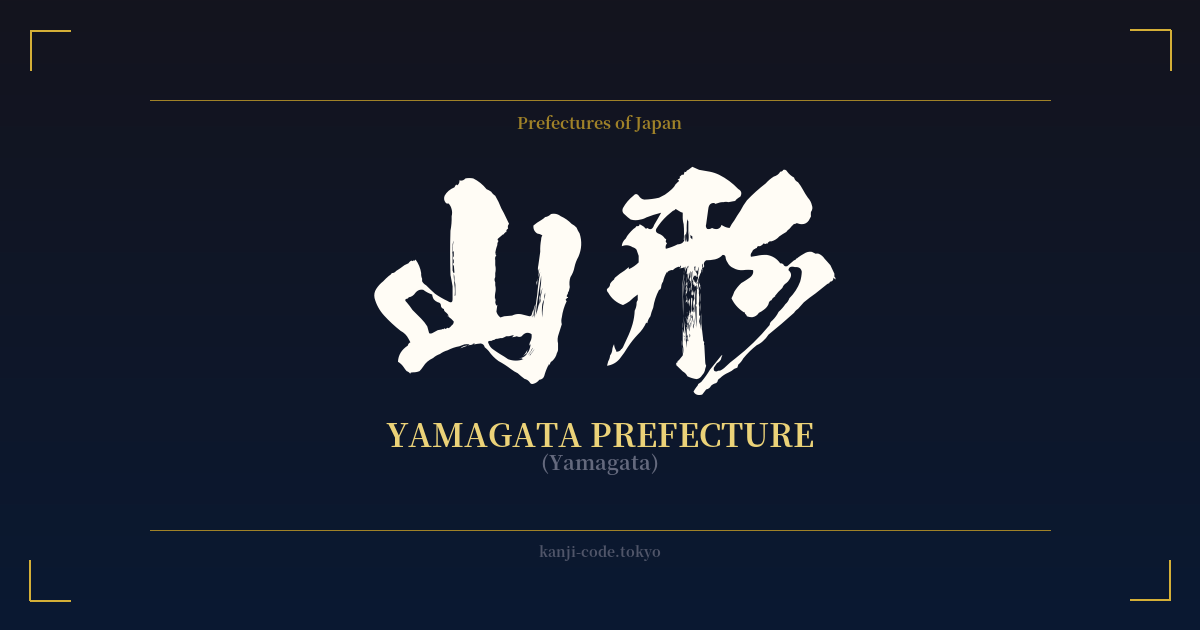
✍️ 山形 (Yamagata) — Cultural Context
The kanji 山形 (Yamagata) translates literally to 'mountain shape,' a name that perfectly encapsulates the geography and spirit of this beautiful prefecture in Japan's Tōhoku region. The landscape is dominated by mountain ranges, which have shaped not only the terrain but also the culture, history, and spiritual life of its people.
The most significant of these are the Three Mountains of Dewa (出羽三山, Dewa Sanzan): Mount Haguro, Mount Gassan, and Mount Yudono. These sacred peaks are a central pilgrimage site for Shugendō, a syncretic faith blending Buddhism, Shinto, Taoism, and folk traditions. Practitioners, known as Yamabushi (mountain ascetics), undergo rigorous training in these mountains, seeking spiritual enlightenment through a deep connection with nature. This spiritual heritage imbues the name 'Yamagata' with a sense of ancient reverence and natural power.
Beyond its spiritual heartland, Yamagata's identity is tied to its natural bounty. The prefecture is famously known as the 'Cherry Kingdom,' producing the vast majority of Japan's prized cherries. The image of cherry blossoms against a backdrop of snow-capped mountains is a quintessential Yamagata scene. In winter, the Zao mountain range becomes famous for its 'snow monsters' (樹氷, Juhyō), where trees on the high slopes are encased in ice and snow by fierce winds, creating surreal and otherworldly sculptures.
The Mogami River, one of Japan's swiftest, carves its way through the prefecture and was immortalized in a famous haiku by the poet Matsuo Bashō during his journey documented in 'The Narrow Road to the Deep North.' Historically, the region was a crucial source of safflower (紅花, benibana), which produced a valuable red dye used for textiles and cosmetics in Kyoto, linking this remote, mountainous land to the heart of imperial culture.
Therefore, 山形 is more than just a name on a map. It represents a place where nature is not just a backdrop but an active participant in life—a source of spiritual power, agricultural wealth, and artistic inspiration. It speaks of resilience, the beauty of the four seasons, and a deep, enduring bond between people and their mountainous home.
🖌️ Font Styles for 山形
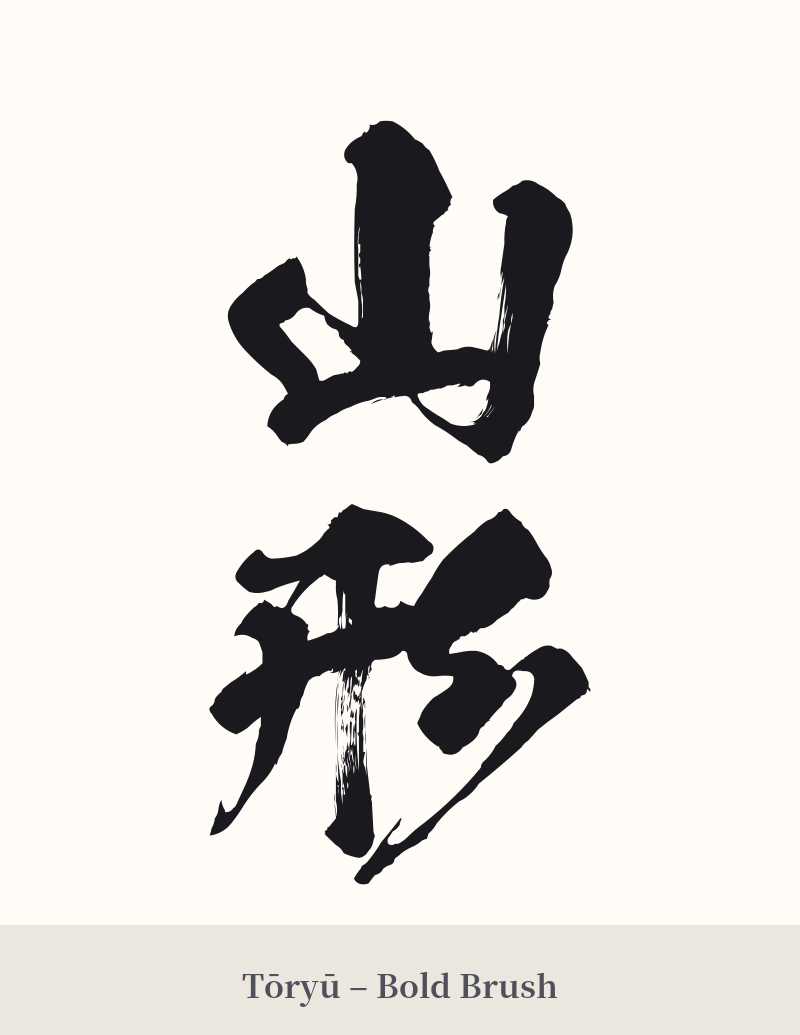
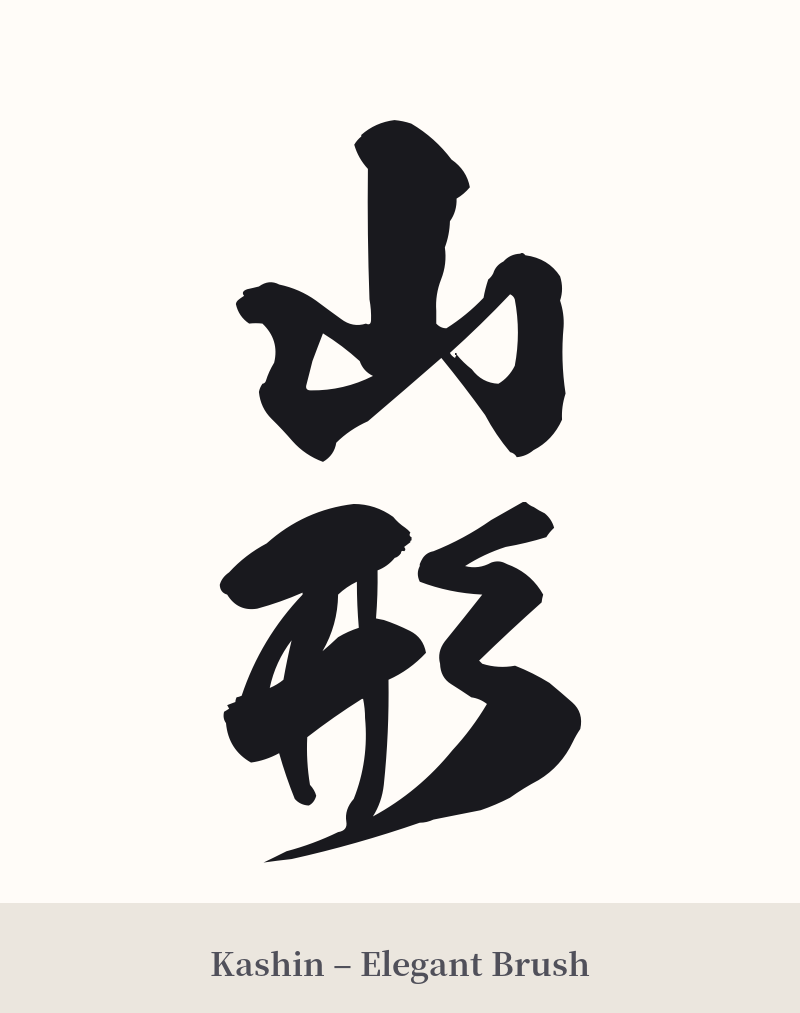
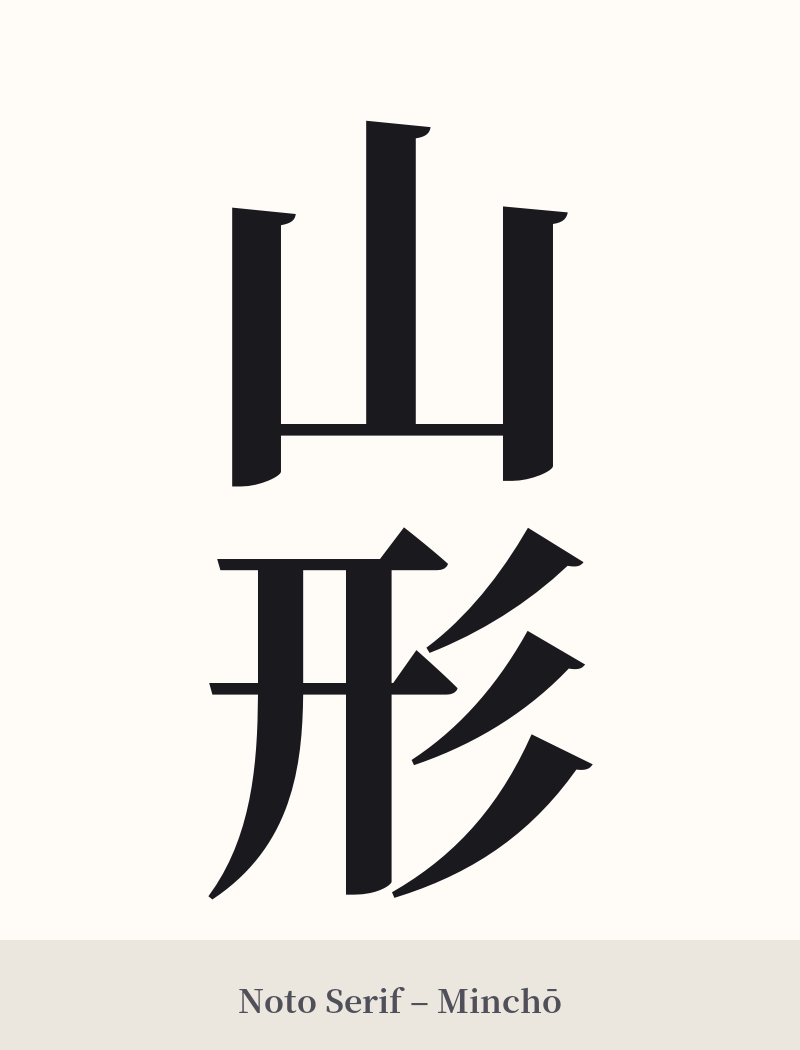
The same kanji can look dramatically different depending on the calligraphy style. Choose a font that matches the mood you want for your tattoo or design.
🎨 Tattoo Suitability
📐 Tattoo Design Guide
For a tattoo of 山形, the design choices should reflect its meaning as either a specific place or the literal concept of 'mountain shape.'
– Placement: If the tattoo is a personal homage to the prefecture, consider a place you see often, like the forearm or inner bicep. For a more subtle nod, the back of the shoulder or ankle works well.
– Font Style: A strong, stable font like a bold Kaisho (block script) emphasizes the solid, unmoving nature of mountains. A flowing Gyosho (semi-cursive) or Sosho (cursive) script can evoke the wind sweeping through the mountain passes or the flow of the Mogami River.
– Visual Elements: This is a word that benefits greatly from accompanying imagery. Consider incorporating the kanji into a larger design, such as a silhouette of the Dewa Sanzan, a few falling cherry blossoms, or a stylized 'snow monster' from Zao. This provides context and transforms the piece from a simple name into a narrative artwork.
Comments