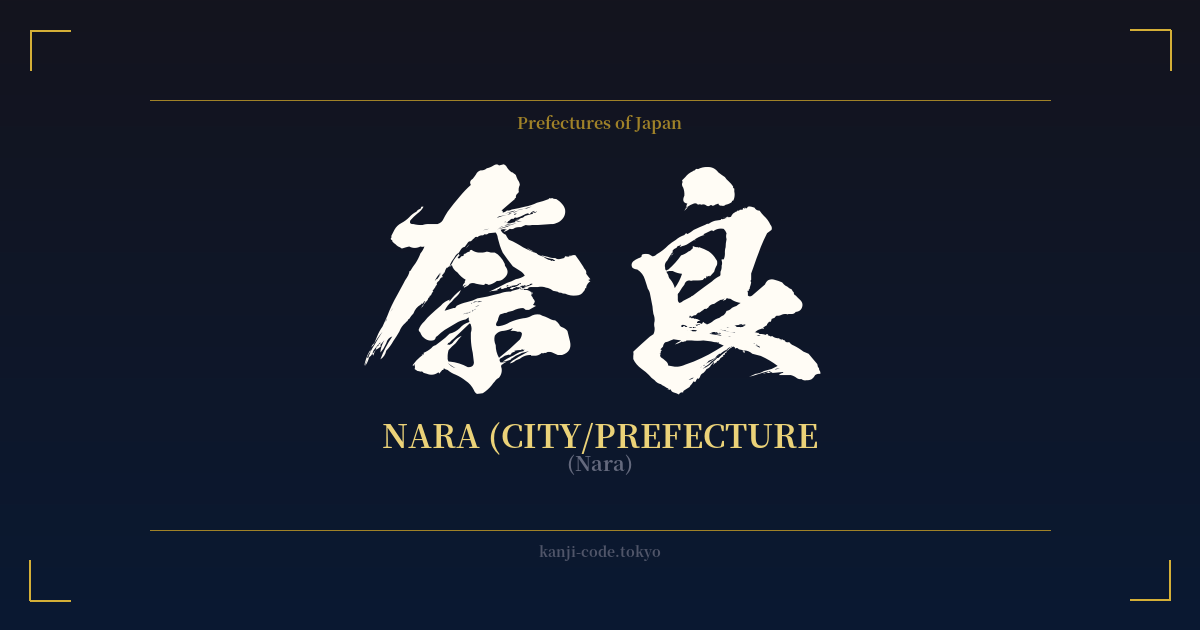
✍️ 奈良 (Nara) — Cultural Context
The kanji 奈良 (Nara) refers to Japan's first permanent capital, a city that stands as a cradle of Japanese civilization, art, and religion. Its name carries the weight of an entire era, the Nara period (710-794 AD), a time when Japan was actively importing and assimilating culture from Tang China, fundamentally shaping its own identity.
Before the establishment of the capital at Heijō-kyō (present-day Nara), the capital would move with the reign of each new emperor. Nara changed this, becoming a fixed center of political and spiritual power. It was here that Buddhism, newly arrived from the mainland, flourished under imperial patronage. This legacy is immortalized in the city's magnificent temples, most famously Tōdai-ji, which houses the colossal bronze statue of the Great Buddha (Daibutsu).
One of the most enduring symbols of Nara is its population of Sika deer. According to local Shinto folklore, the deity Takemikazuchi-no-mikoto arrived in Nara riding a white deer to act as its protector. Since then, the deer have been considered sacred messengers of the gods. Today, they roam freely through the city and its vast park, coexisting peacefully with residents and tourists, embodying a unique harmony between civilization and nature.
The etymology of the name 'Nara' itself is debated, but a popular theory suggests it comes from the verb 'narasu' (均す), meaning 'to make level' or 'to flatten.' This is believed to refer to the work of soldiers who leveled the land to build the new capital. While the individual kanji 奈 (na) and 良 (ra) are used phonetically, their combination has become synonymous with this profound historical and spiritual heritage.
To choose the kanji 奈良 is to invoke more than just a place on a map. It is to connect with a sense of ancient history, spiritual tranquility, and the gentle spirit of the sacred deer. It represents a time of foundational growth for Japan and a place where the past feels palpably present.
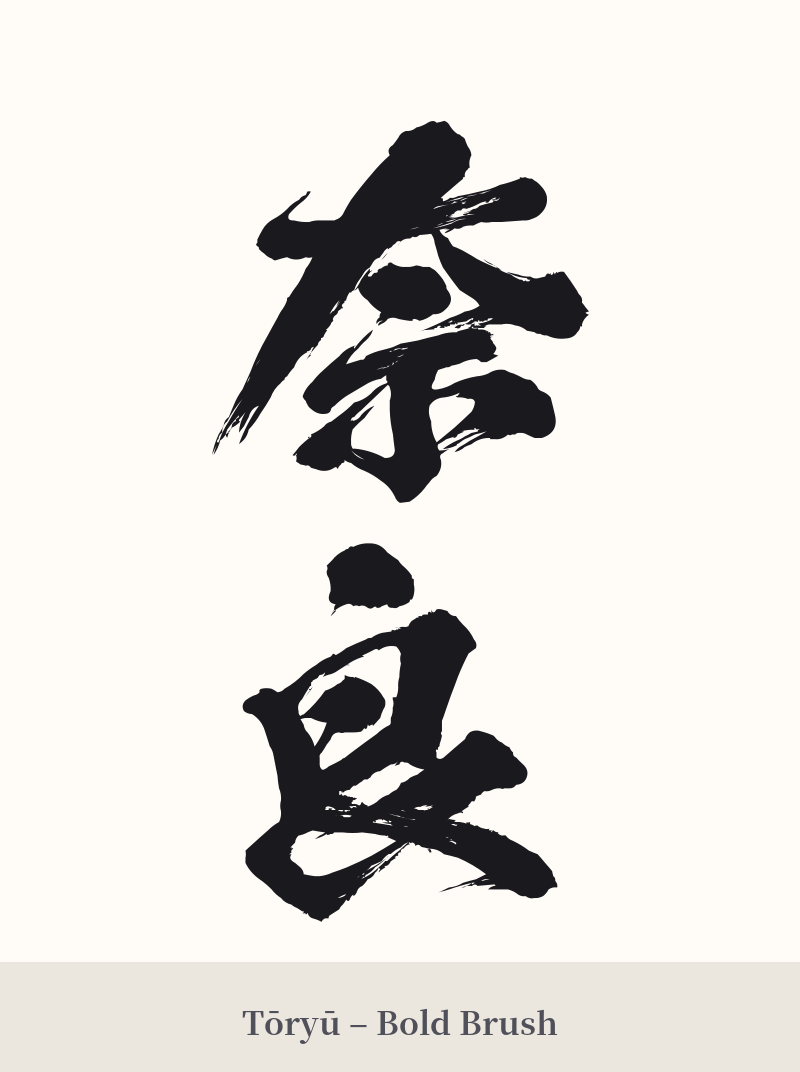
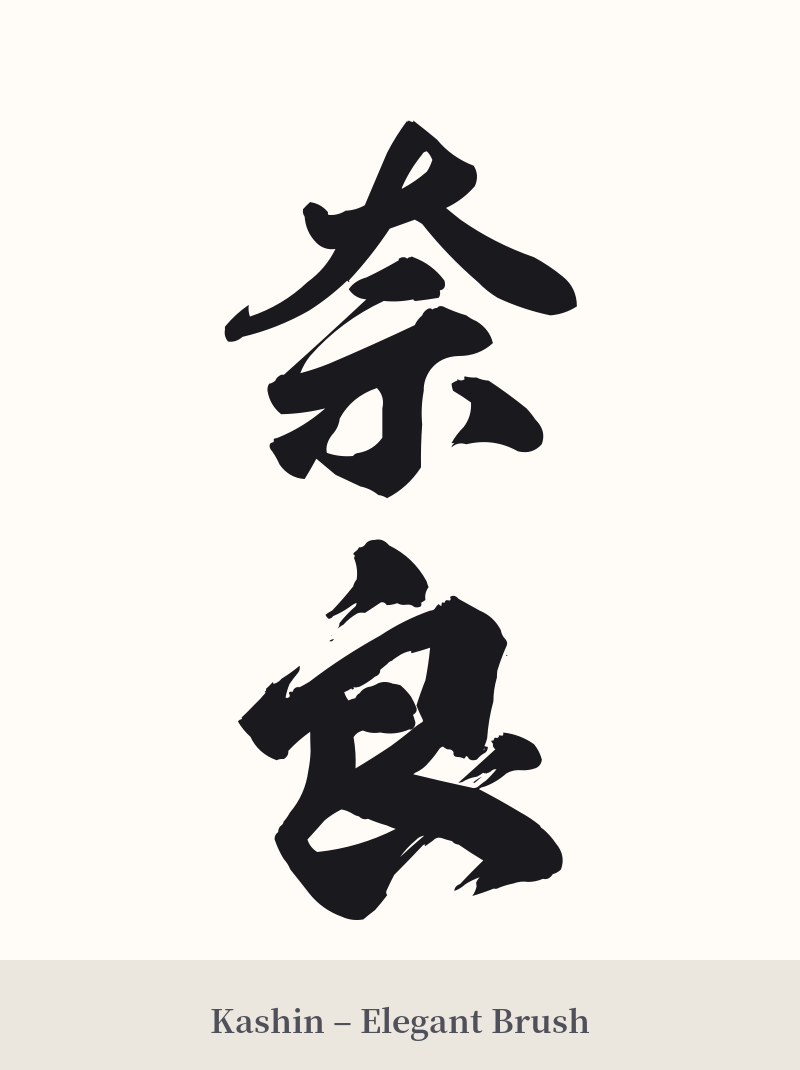
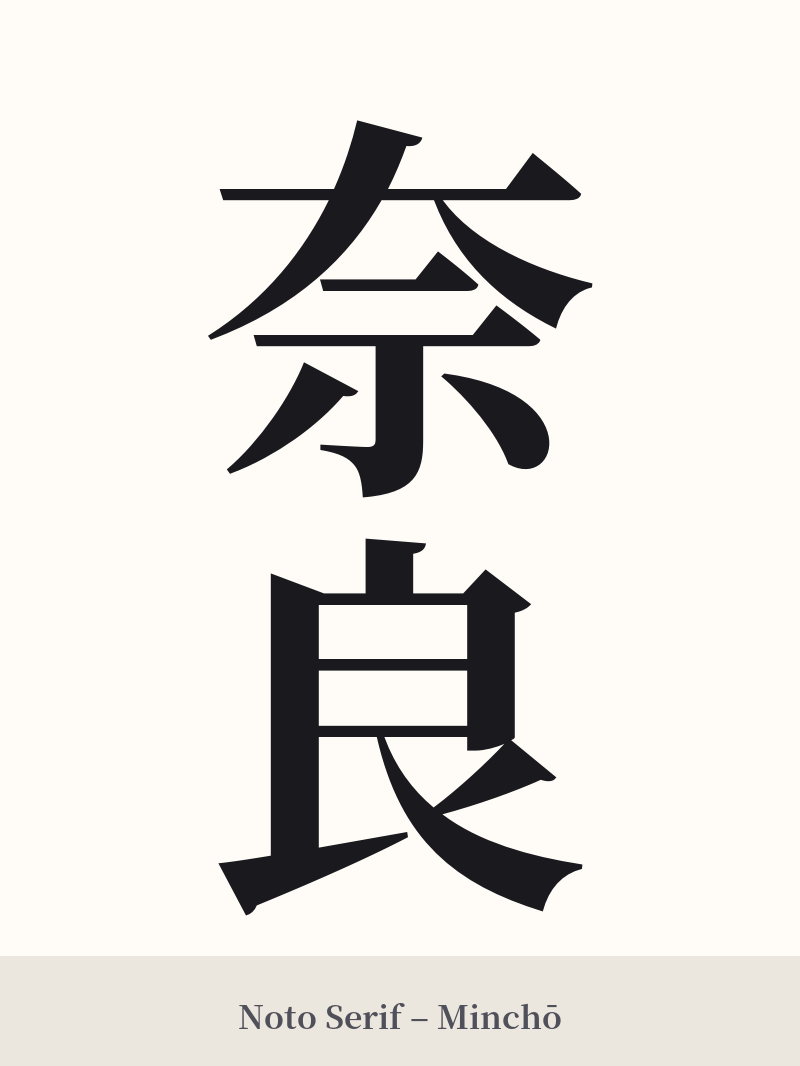
🖌️ Font Styles for 奈良
The same kanji can look dramatically different depending on the calligraphy style. Choose a font that matches the mood you want for your tattoo or design.
🎨 Tattoo Suitability
📐 Tattoo Design Guide
The kanji 奈良 offers a balanced and elegant aesthetic that works well for a variety of tattoo designs.
– Placement: Vertical alignment is classic and highly recommended. It looks excellent running down the forearm, the back of the calf, or along the spine. For a horizontal design, the inner bicep or across the collarbone are strong choices.
– Font Style: A traditional calligraphy style (shodō) is a perfect match. A semi-cursive gyōsho script can add a sense of flow and history, while a crisp kaisho block script emphasizes the characters' structure. Avoid overly stylized or generic 'chopstick' fonts that can look cheap and inauthentic.
– Visual Elements: Consider pairing the kanji with imagery associated with Nara. A silhouette of a Sika deer, the outline of a pagoda from a temple like Kōfuku-ji, or a single lotus flower (a symbol of Buddhism) can add layers of meaning and create a more complete and personal piece.
Comments