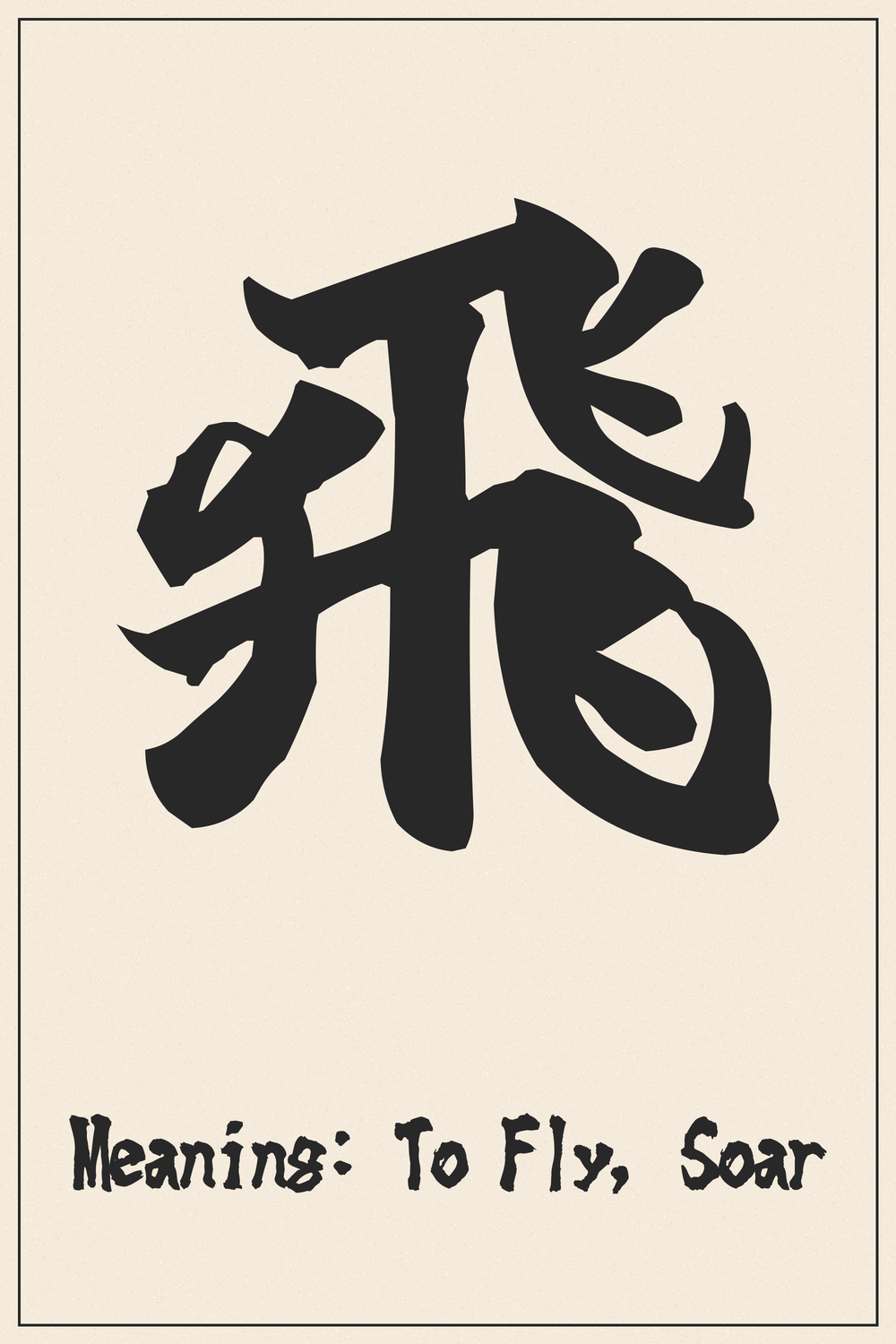
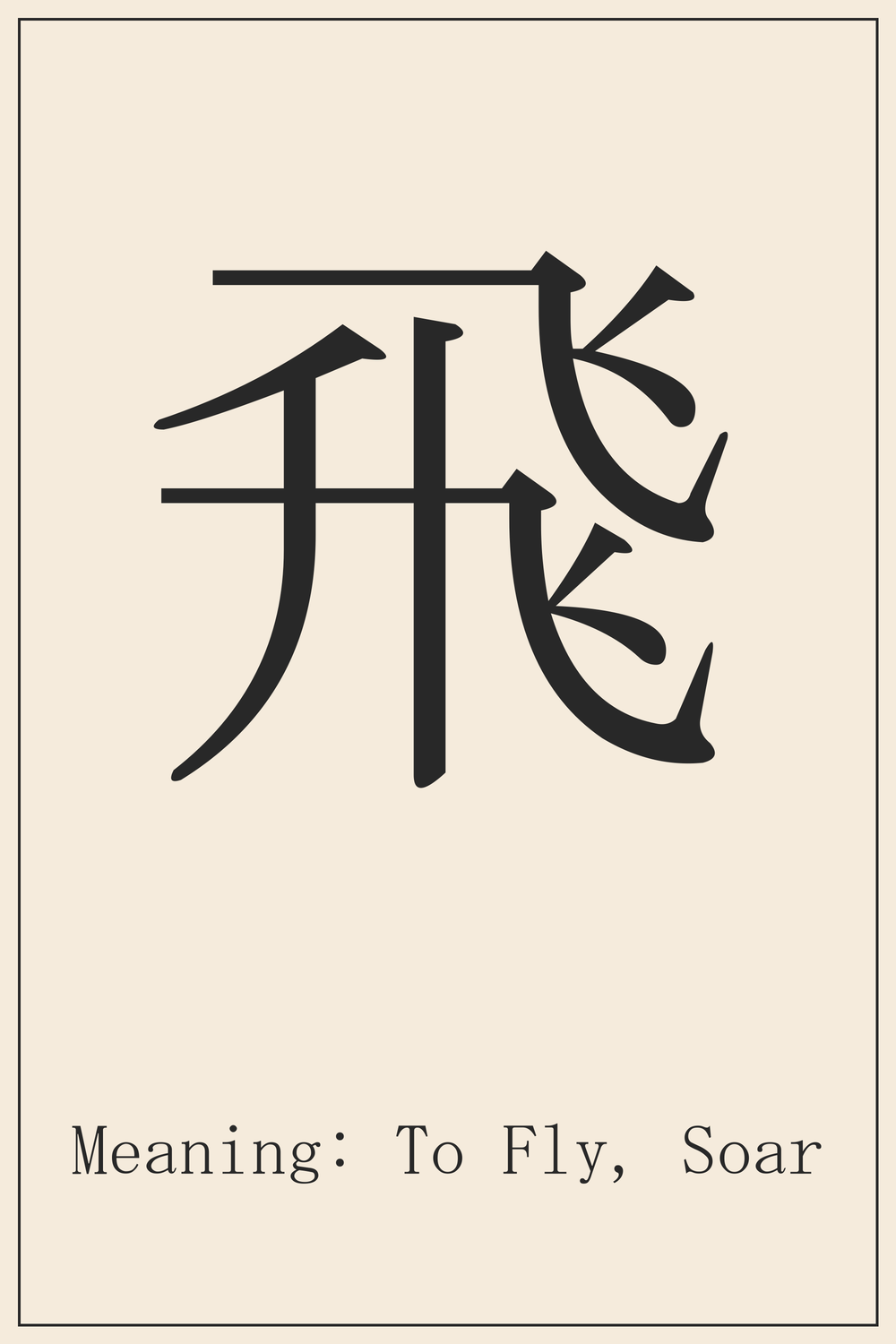
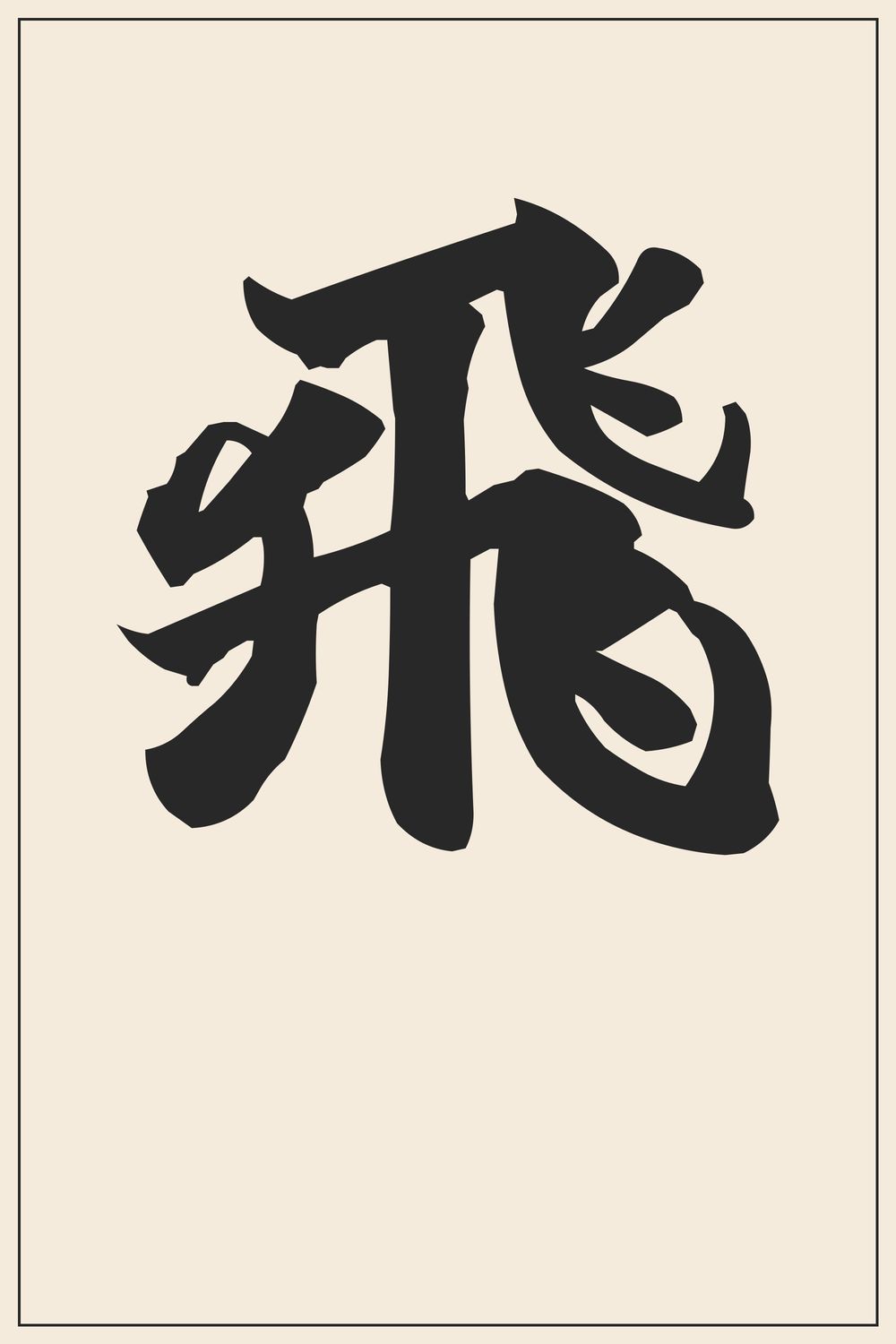
The Kanji 飛 encapsulates the profound sensation of soaring and liberation. It speaks to the human spirit’s desire for transcendence and unhindered movement.
The atmosphere of a Kanji character changes dramatically depending on the font style. A character that looks elegant in a brush style might look bold and modern in a different font.
Recommendation:
Since a tattoo is permanent, we strongly recommend comparing various font styles beyond what is shown here. Use our designs as a trusted reference for the correct structure, but feel free to explore different artistic variations to find the perfect match for your vision.
The Deep Meaning Behind 飛
The Kanji 飛 (hi, tobu) beautifully captures the essence of flight. Its ancient form originated as a pictograph depicting a bird with outstretched wings in motion, vividly conveying the act of soaring through the sky.
Culturally, 飛 symbolizes not just physical flight but also freedom, ambition, and the overcoming of obstacles. It represents aspiration—the desire to rise above challenges and achieve new heights, much like a bird effortlessly navigates the expanse of the heavens.
Kanji Breakdown
The Kanji 飛 is a fascinating example of a character that evolved directly from a visual representation of its meaning. It is best understood as a singular ideogram.
Pictographic Origin: The character 飛 is a pictograph that vividly depicts a bird taking flight. Its top elements suggest the bird’s head and the initial upward surge, while the central and lower strokes represent the outstretched wings, conveying dynamic movement and ascent.
Conclusion
The Kanji 飛 embodies the powerful concepts of flight, freedom, and the aspiration to transcend limitations. It serves as a potent reminder of our innate drive to explore, achieve, and soar towards our dreams.
Choosing 飛 for a tattoo is a declaration of an unyielding spirit and a constant pursuit of personal liberty and growth. It’s a timeless symbol for those who seek to live unbound and reach for the skies.
Comments