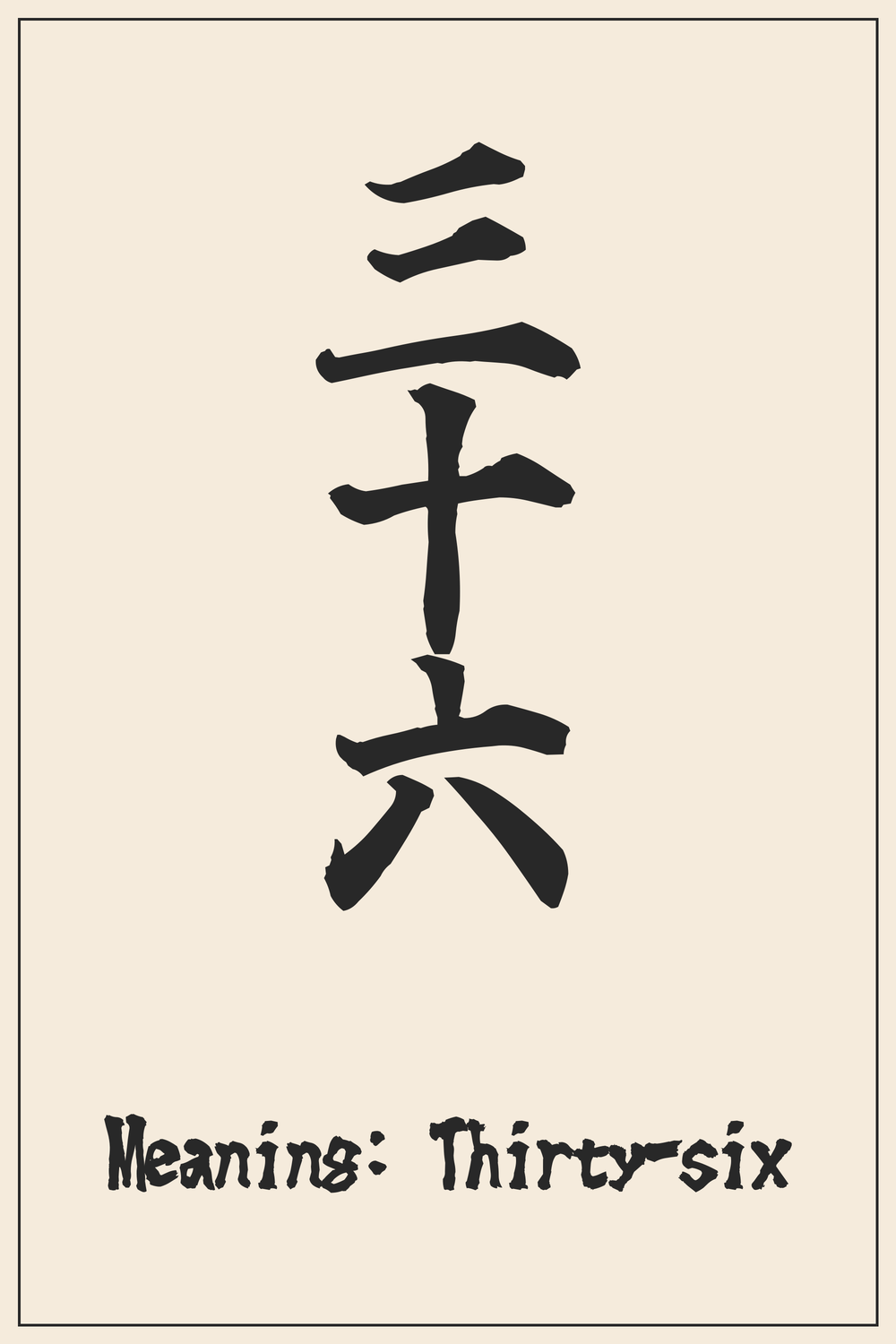
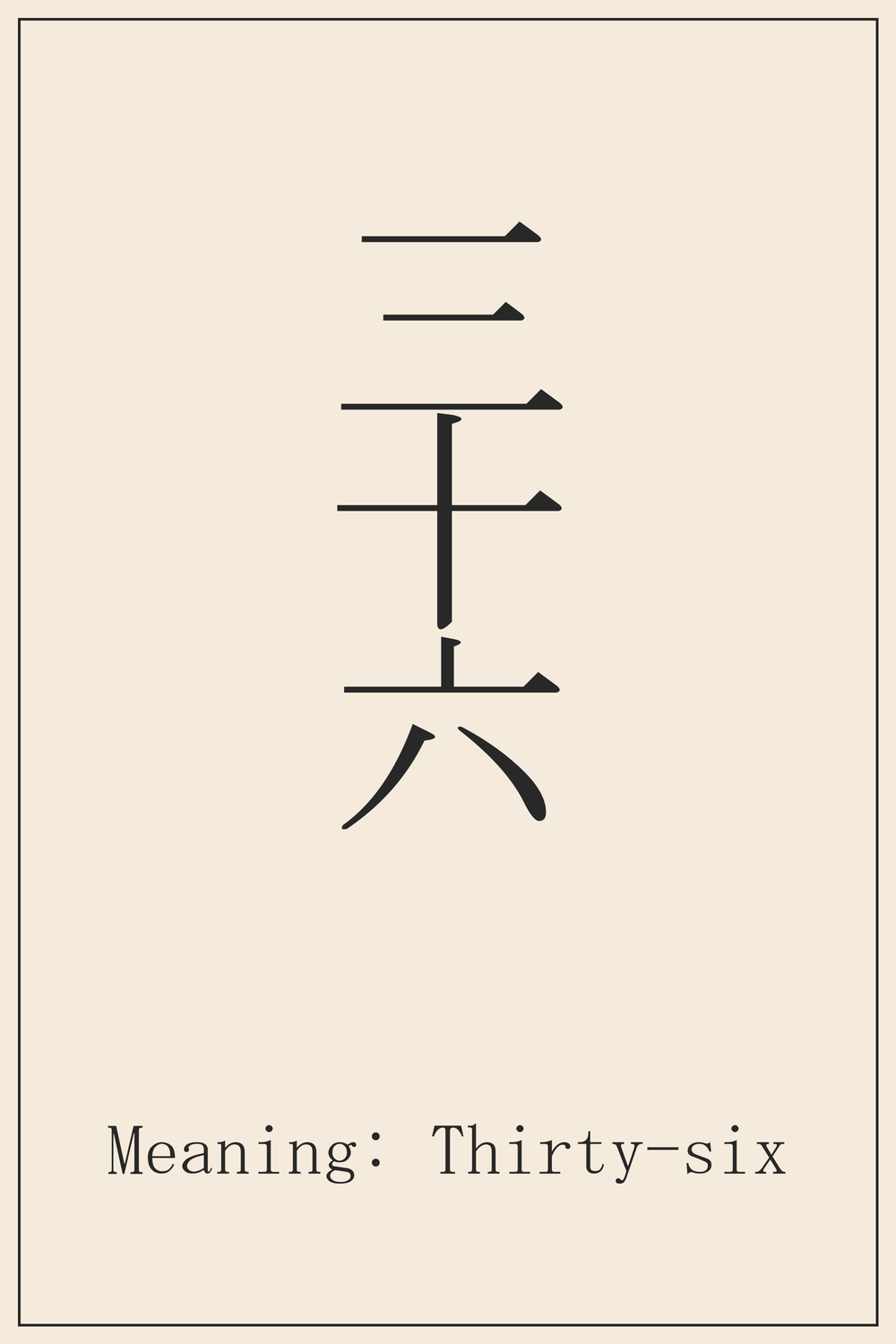
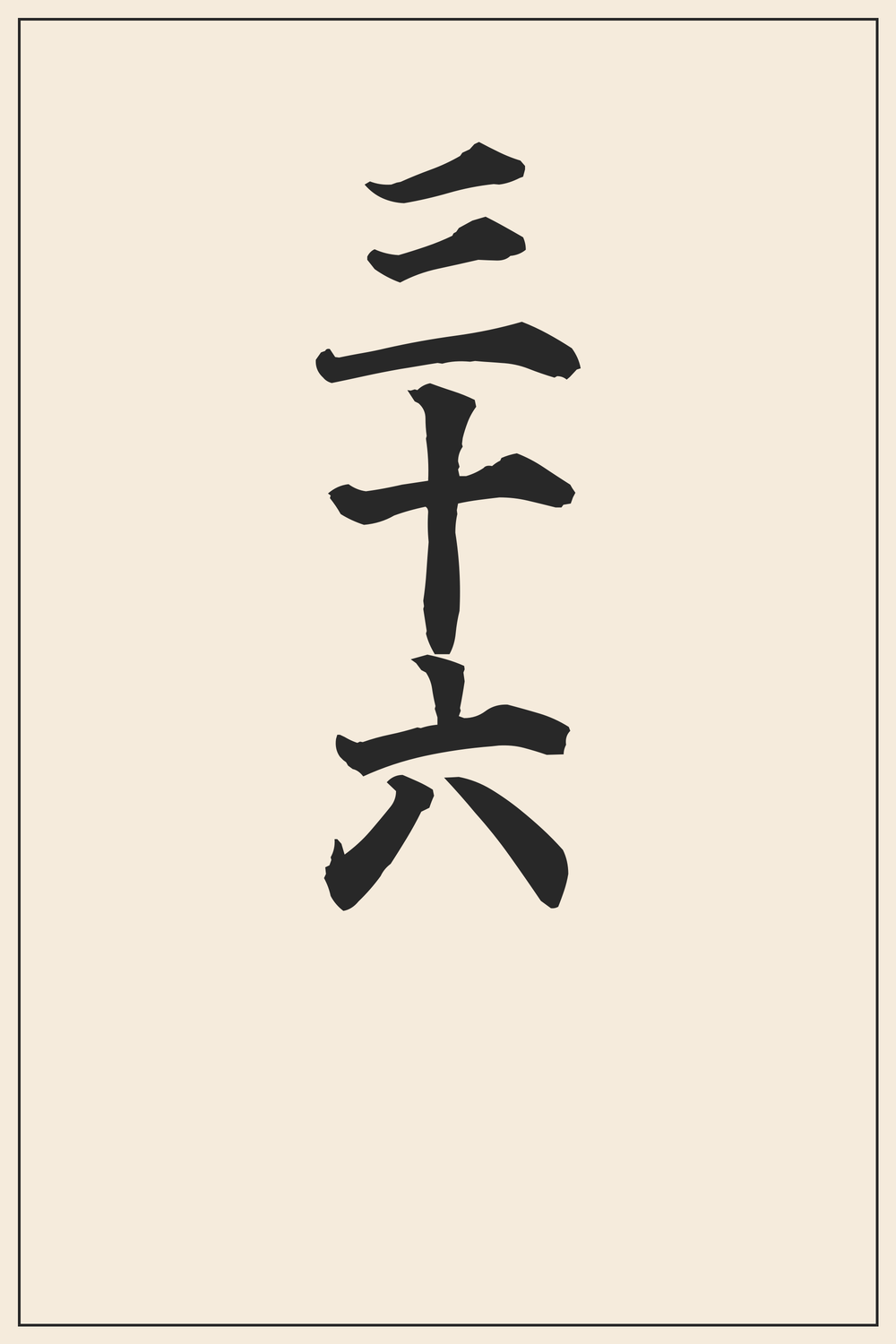
The Kanji 三十六 represents the number thirty-six, a foundational concept in mathematics and everyday life. While seemingly simple, numbers mark significant moments and sequences in our journey.
The atmosphere of a Kanji character changes dramatically depending on the font style. A character that looks elegant in a brush style might look bold and modern in a different font.
Recommendation:
Since a tattoo is permanent, we strongly recommend comparing various font styles beyond what is shown here. Use our designs as a trusted reference for the correct structure, but feel free to explore different artistic variations to find the perfect match for your vision.
The Deep Meaning Behind 三十六
The representation of ‘thirty-six’ in Kanji, 三十六 (Sanjūroku), is a direct additive combination. It comprises three fundamental numerical characters: ‘三’ (san) signifies three, represented by three horizontal strokes; ‘十’ (jū) signifies ten, an ancient pictograph of a needle or a cross shape; and ‘六’ (roku) signifies six, depicting a structure with a roof, later simplified.
While primarily a numerical value, numbers often carry symbolic weight in various cultures, marking age, significant events, or a count of blessings and challenges throughout one’s life. The number thirty-six, beyond its mathematical function, can resonate with personal milestones or a specific count important to an individual’s journey or destiny.
Kanji Breakdown
The composition of 三十六 is straightforward, built from three distinct numerical Kanji:
Meaning: Three: Represents the quantity three. Visually, it is three horizontal strokes, reflecting ancient tally marks.
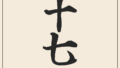
Meaning: Ten: The base for counting multiples of ten. Its form is thought to derive from a representation of a needle or a cross, signifying completion or a full cycle in ancient numbering.
Meaning: Six: Represents the quantity six. Its original form is debated but often linked to a small enclosure or hut, evolving into the current abstract shape.
Conclusion
The Kanji 三十六 offers a clear and precise way to represent the number thirty-six. It’s a testament to the elegant simplicity of Kanji in denoting fundamental numerical concepts.
For a tattoo, 三十六 can serve as a personal marker for an age, a significant date, a count of important experiences, or a symbol of a specific quantity deeply meaningful to the wearer’s life path. Its clean lines ensure a timeless and versatile design.
Comments