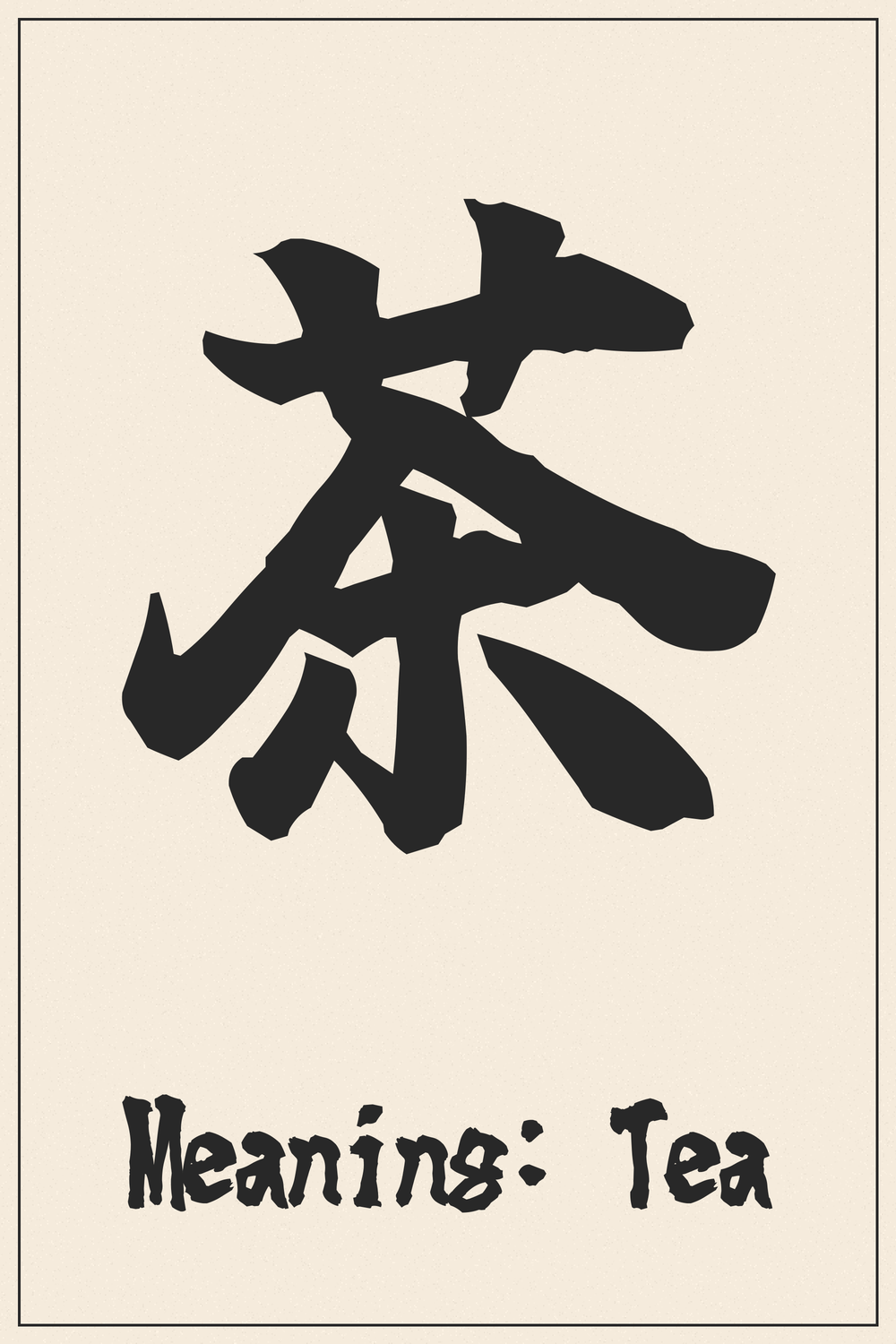
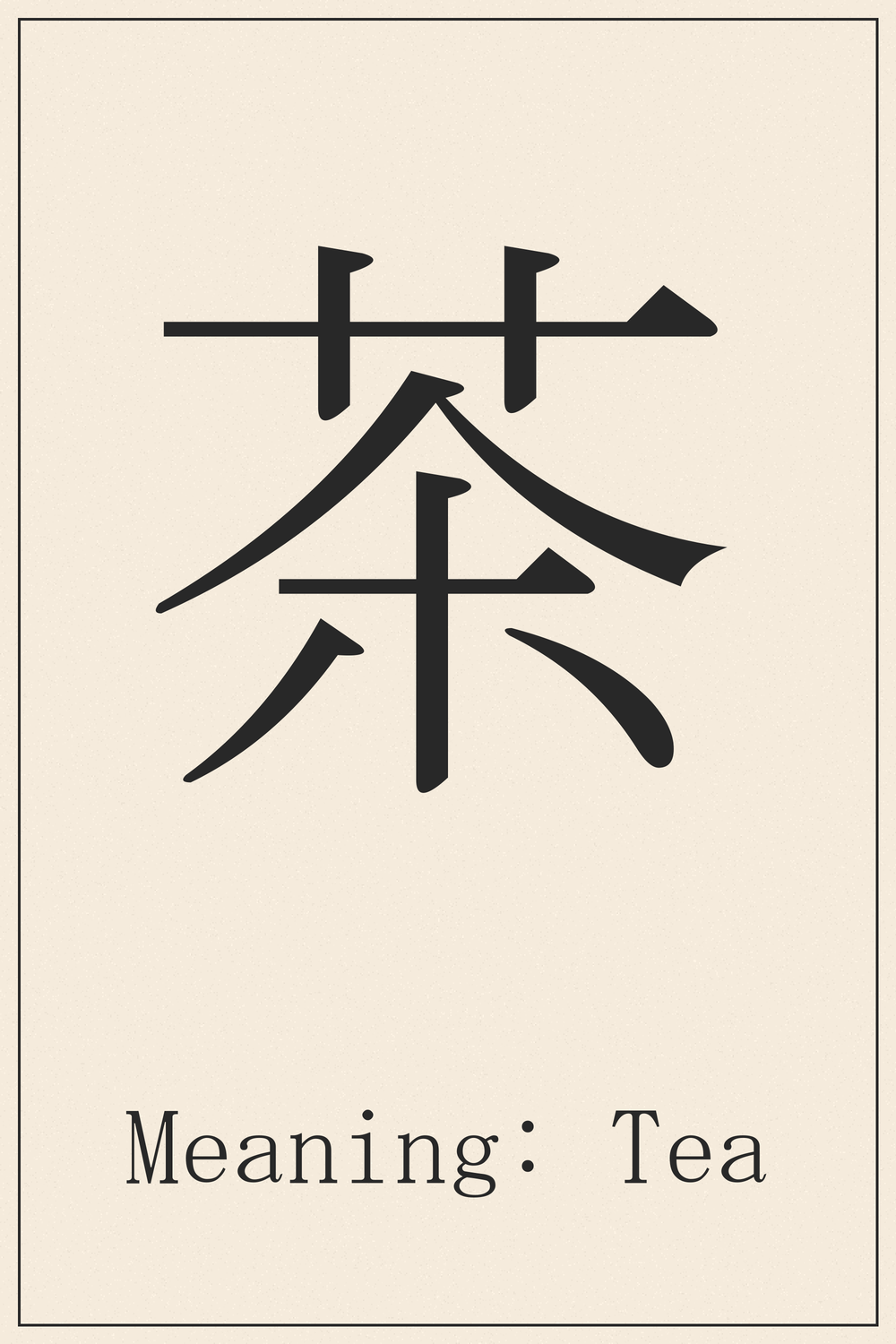
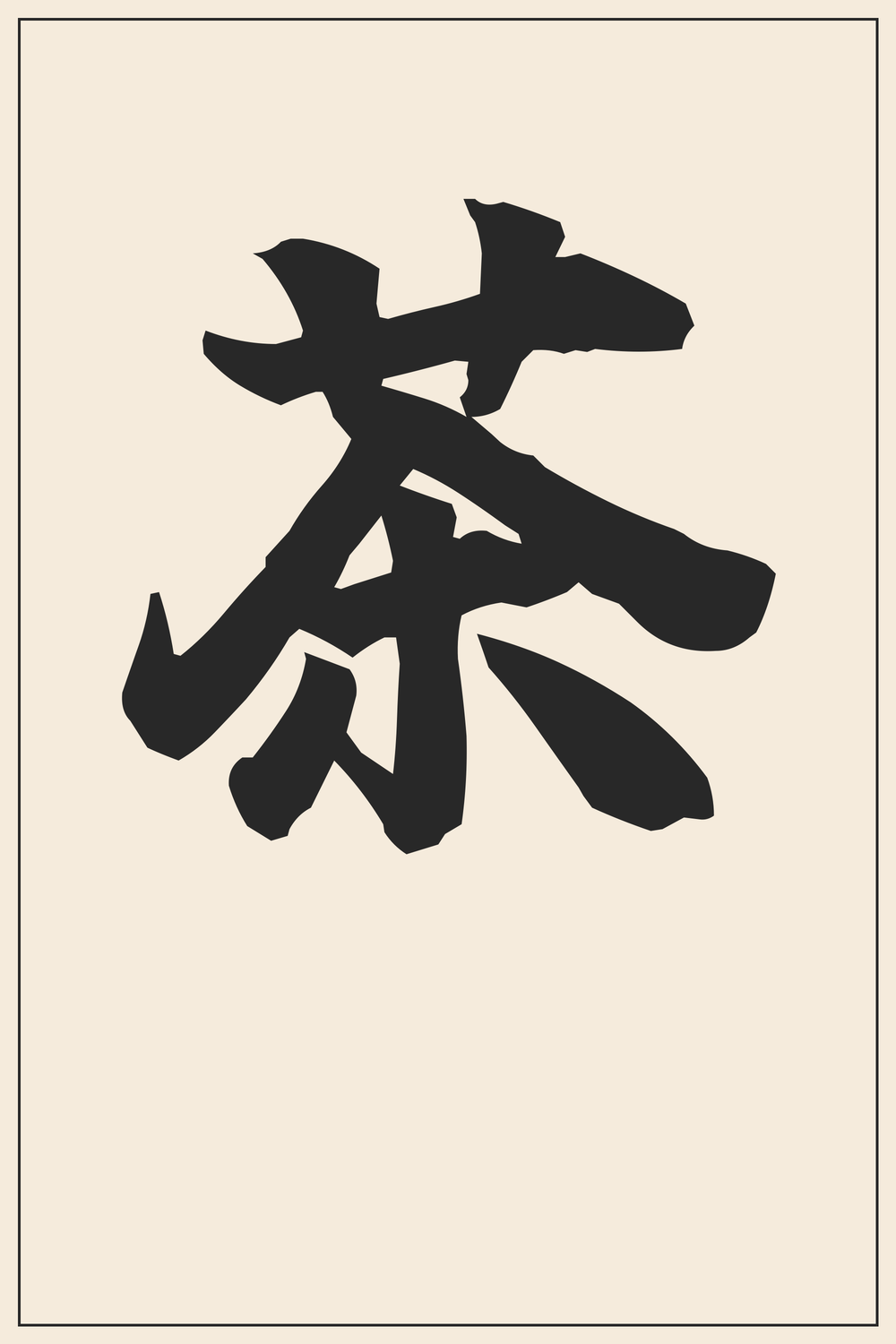
The Kanji for ‘Tea’, 茶, carries the essence of a revered beverage deeply embedded in Japanese culture and daily life. It symbolizes not just a drink, but moments of tranquility, hospitality, and connection to nature.
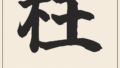
The atmosphere of a Kanji character changes dramatically depending on the font style. A character that looks elegant in a brush style might look bold and modern in a different font.
Recommendation:
Since a tattoo is permanent, we strongly recommend comparing various font styles beyond what is shown here. Use our designs as a trusted reference for the correct structure, but feel free to explore different artistic variations to find the perfect match for your vision.
The Deep Meaning Behind 茶
The Kanji 茶 (cha, sa) originated from ancient Chinese characters, depicting a plant with leaves. Its form has evolved over centuries to concisely represent the tea plant and its processed leaves, emphasizing its botanical origins and natural essence.
In Japan, tea transcends its status as a mere beverage; it is fundamental to the traditional tea ceremony (茶道, Sadō), a revered art form embodying harmony, respect, purity, and tranquility. Beyond ceremonial use, tea is a staple of daily life, symbolizing hospitality, relaxation, and a connection to nature’s simple pleasures.
Kanji Breakdown
The character 茶 is composed of semantic and phonetic elements, contributing to its meaning and form.
Meaning: Grass / Plant radical. This component clearly signifies that 茶 relates to a plant or vegetation, directly linking it to its natural origin as a leaf-based beverage.
Meaning: Remaining / Surplus. While this component primarily functions as a phonetic element contributing to the character’s pronunciation, in the context of tea, it can subtly evoke the abundance of leaves or the ‘remaining’ essence after processing, aligning with the idea of a natural harvest.
Conclusion
The Kanji 茶, meaning ‘tea,’ encapsulates more than just a drink; it represents a deep cultural heritage, daily rituals, and a connection to natural harmony. It is a symbol of tranquility and the Japanese spirit of hospitality.
For those who find profound meaning in the simple act of preparing and consuming tea, or who appreciate its cultural significance in Japan, a tattoo of 茶 can be a personal and understated homage to these values. It’s a design that celebrates tradition, nature, and serene moments.
Comments