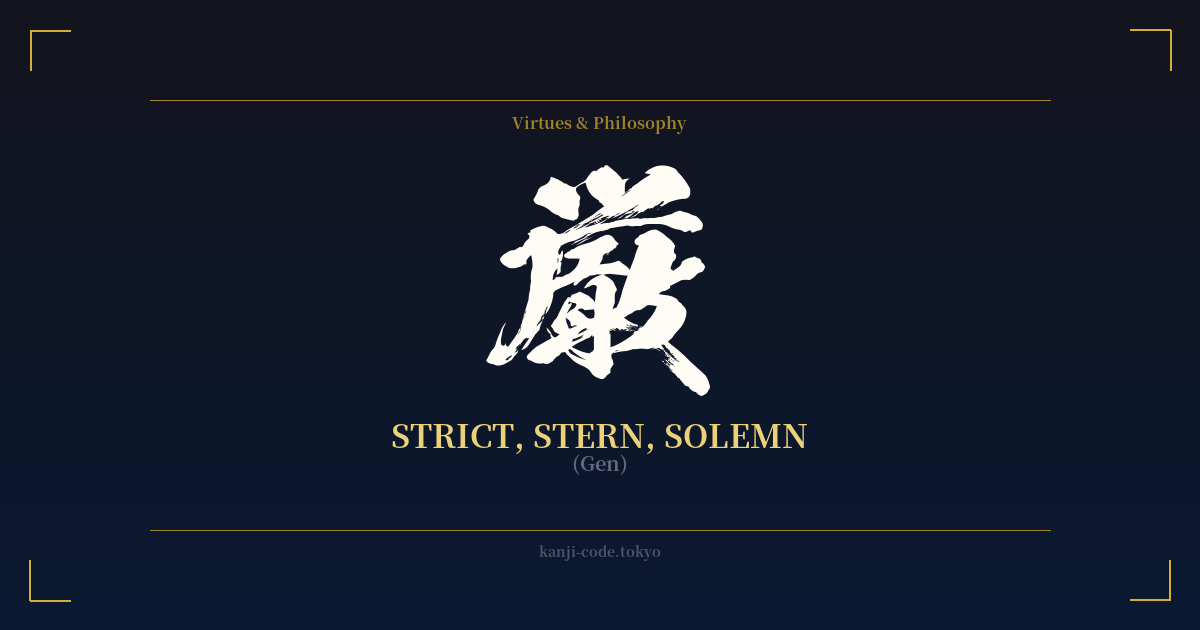
✍️ 厳 (Gen) - Contexto cultural
El kanji 厳, que se lee como «gen» o se encuentra en palabras como «kibishii» (severo) y «ogosoka» (solemne), conlleva una carga de seriedad y autoridad profundamente arraigada en la cultura japonesa. En esencia, significa rigor, pero no se trata simplemente de castigo o severidad. Es un concepto que abarca disciplina, rigor y la profunda solemnidad de un entorno sagrado o formal.
En el contexto del Bushido, el camino del samurái, el 厳 era un principio fundamental. Representaba la inquebrantable autodisciplina que se exigía a un guerrero, la estricta adhesión a un código de honor y la gravedad de las situaciones de vida o muerte. El entrenamiento de un samurái era «kibishii» —riguroso y exigente— para forjar no solo a un hábil luchador, sino a una persona de inmensa fuerza interior y fortaleza.
Esta idea se extiende al mundo de las artes tradicionales y las artes marciales (budō). Un dojo, o sala de entrenamiento, es un lugar de calma y concentración. El ambiente es tranquilo, respetuoso y centrado. El sensei (maestro) suele ser estricto, no por crueldad, sino para impulsar a los alumnos más allá de sus límites y asegurar que las técnicas se transmitan con precisión y respeto. Esta rigurosidad fomenta una mente disciplinada y un espíritu que puede mantener la calma bajo presión.
Más allá de lo marcial, 厳 es un elemento clave de la vida espiritual japonesa. El término 'sōgon' (荘厳) combina 厳 con un carácter que significa 'villa' o «formalidad», para referirse a solemnidad o majestuosidad. Describe la imponente atmósfera de un gran santuario sintoísta o un tranquilo templo budista. Es la sensación de quietud y reverencia que se experimenta en un espacio apartado del mundo cotidiano, un lugar donde se siente la presencia de algo antiguo y poderoso. Esta solemnidad inspira respeto sin necesidad de palabras.
En el Japón moderno, si bien los contextos han cambiado, el sentimiento de 厳 (religión, solemnidad y respeto) perdura. Se manifiesta en la etiqueta formal de la ceremonia del té, en la intensa concentración de un maestro artesano y en las expectativas, a la vez severas y justas, de un anciano o mentor respetado. Es un recordatorio de que algunas cosas exigen nuestra plena atención, nuestro más profundo respeto y nuestro esfuerzo más disciplinado. Es la cualidad que distingue lo sagrado de lo profano, al maestro del aprendiz y lo significativo de lo trivial.
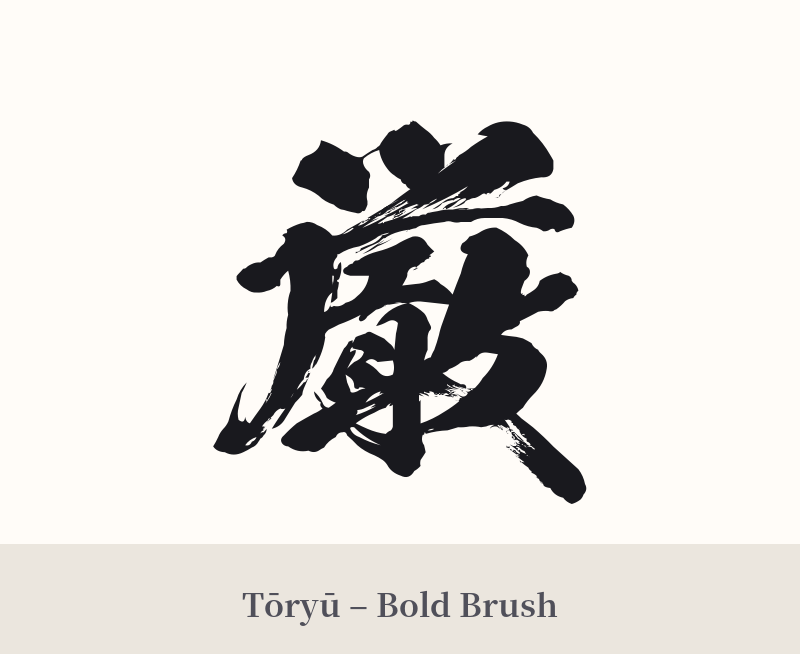
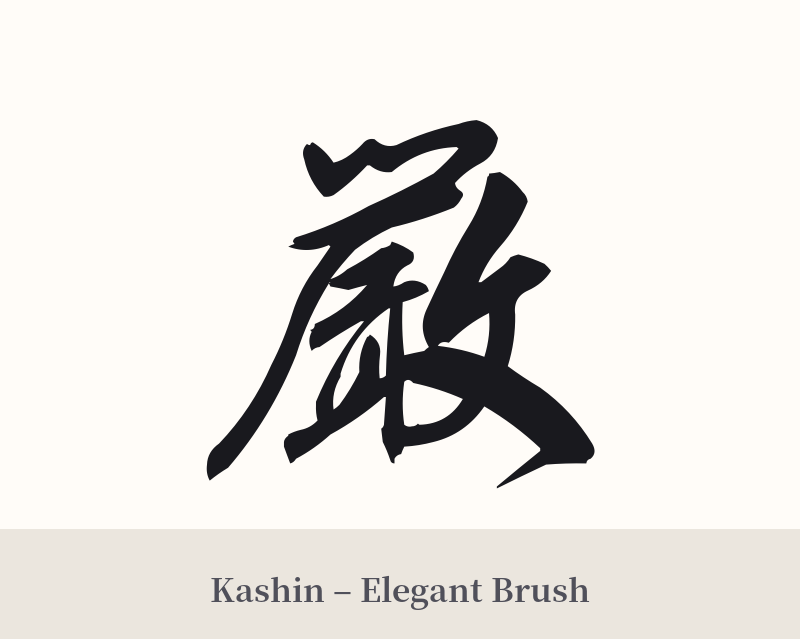
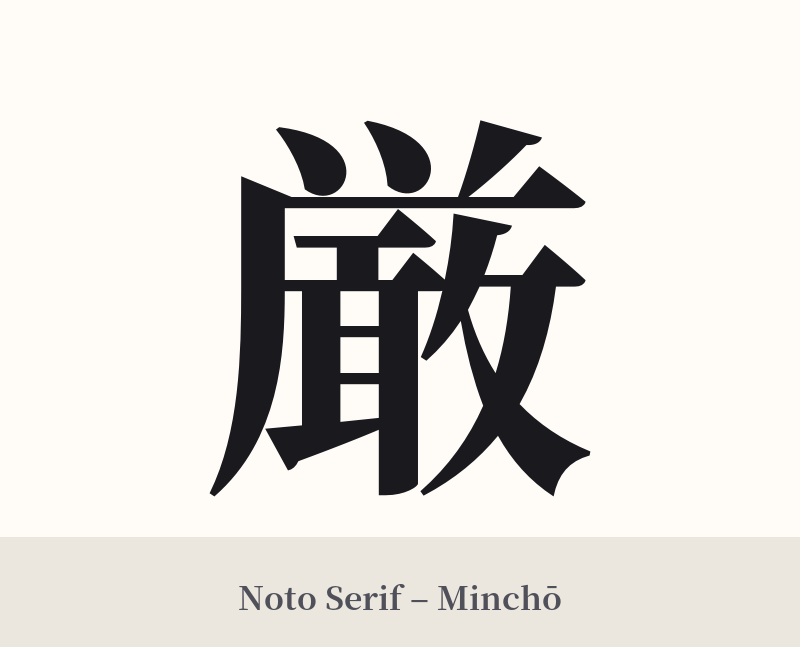
🖌️ Estilos de fuente para 厳
Los mismos caracteres kanji pueden verse muy diferentes según el estilo de caligrafía. Elige una fuente que se ajuste al ambiente que deseas para tu tatuaje o diseño.
🎨 Idoneidad para tatuajes
📐 Guía de diseño de tatuajes
El kanji 厳 tiene una presencia imponente y autoritaria, y el diseño de tu tatuaje debe reflejarlo. Su complejidad es a la vez una fortaleza y un desafío.
– Ubicación: Elija una superficie plana y relativamente grande para que los 17 trazos tengan espacio suficiente. El antebrazo, la parte interna del bíceps, la pantorrilla o la parte superior de la espalda son excelentes opciones. Evite las zonas muy curvas, como las costillas o las manos, ya que la geometría precisa del personaje podría distorsionarse.
Tamaño: Este kanji no es para un tatuaje pequeño y discreto. Para evitar que los trazos se difuminen con el tiempo, debe ser de un tamaño considerable. Consulta con tu tatuador el tamaño mínimo adecuado para garantizar una buena legibilidad a largo plazo.
– Estilo de fuente: Una tipografía tradicional y robusta es la más adecuada. La tipografía «Kaishotai» (de imprenta) realzará su estructura rígida y formal. Una tipografía «Gyoshotai» (semicursiva) en negrita puede añadir un toque de dinamismo sin perder su autoridad. Evite las fuentes finas, delicadas o demasiado estilizadas, ya que restarían fuerza a la tipografía.
Comentarios